The Apothecary Diaries is set in Li, a fictional empire inspired by imperial China. The opening story centers on the imperial palace and the nearby pleasure district where Maomao grew up. It is a Chinese-inspired setting in a Japanese novel series by Natsu Hyuuga.
There is no confirmed Gregorian year for the story. Historical parallels help explain its clothing, institutions, and daily life, but they do not turn Li into a real Chinese dynasty.
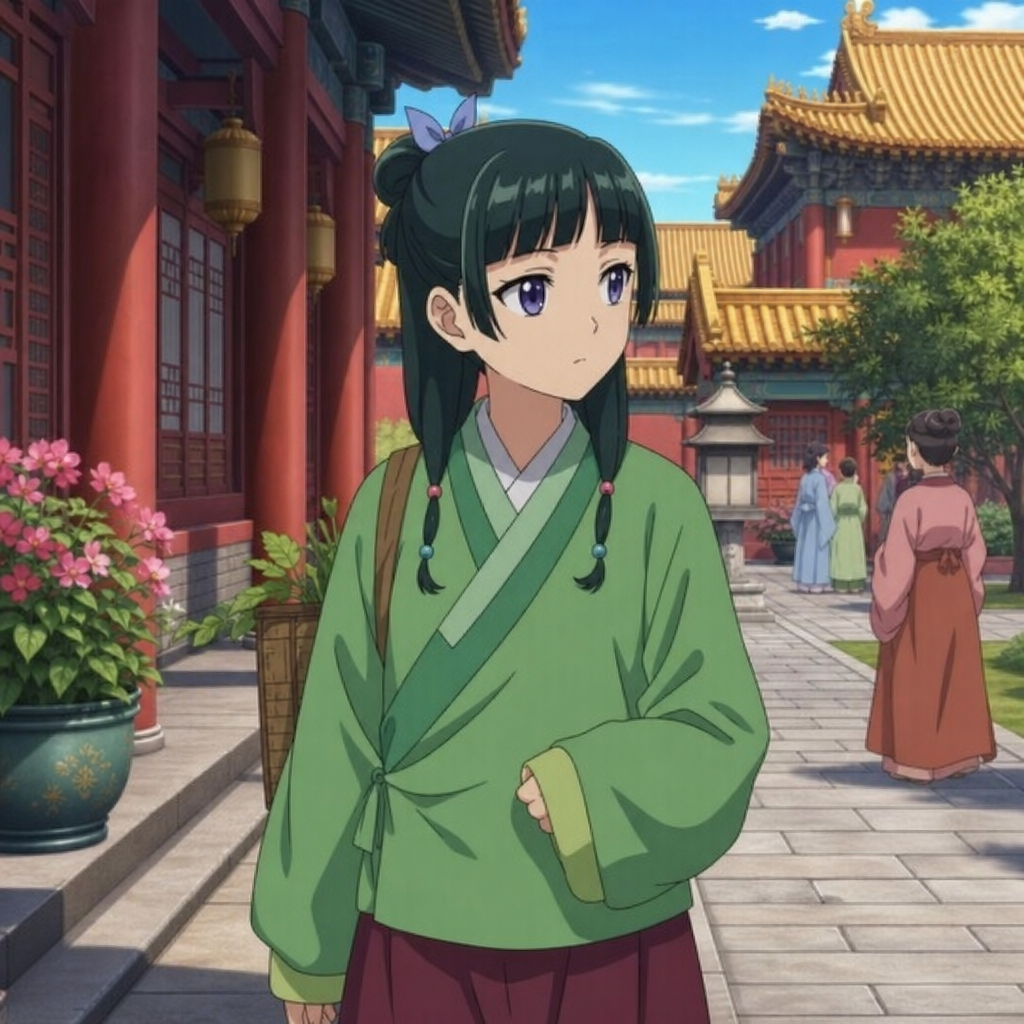
Where Does The Apothecary Diaries Take Place?
The main early locations are the Rear Palace, the wider imperial court, and Maomao’s home in the pleasure district. Each gives her different access to people, medicine, and information.
Does The Apothecary Diaries take place in China? It takes place in a fictional country modeled on aspects of imperial China. Li is not a real country that can be located on a modern map, and its characters and political history belong to the story.
The Chinese influence is visible in the court hierarchy, architecture, dress, and names. Those influences explain why the world feels familiar without requiring every detail to match one historical period.
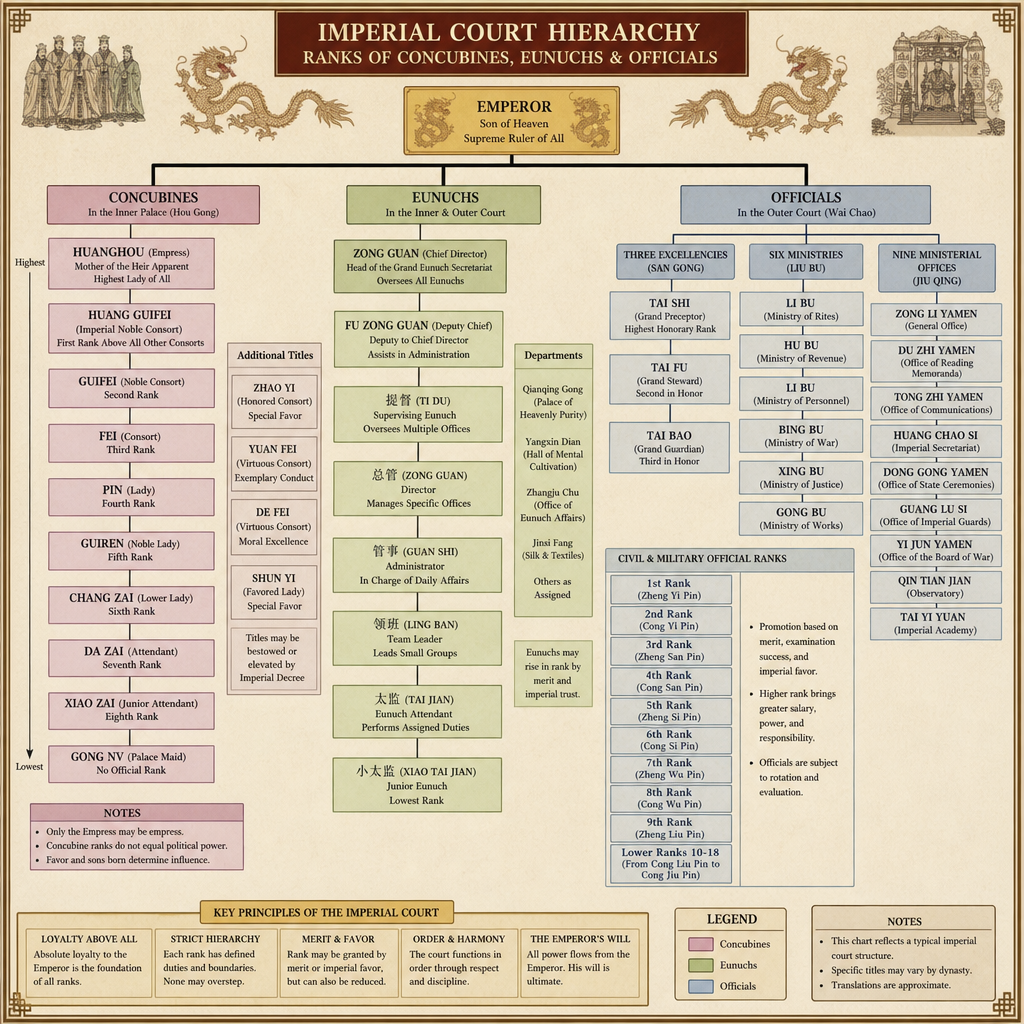
If we look closely at the world-building, we can easily identify the complex social classes in the fictional Li Empire. Society is rigidly stratified, mirroring historical East Asian dynasties:
- The Imperial Family: The Emperor holds absolute divine authority.
- The Inner Court (Rear Palace): High-ranking concubines, lower-ranking consorts, and their attendants.
- The Outer Court: Military generals, scholars, and bureaucrats who passed rigorous civil service exams.
- Commoners: Merchants, farmers, and artisans (like those in Maomao's home, the pleasure district).
Reading Li as a fictional empire with Chinese historical influences is more useful than treating it as a reconstruction of a particular reign.
What Time Period Is The Apothecary Diaries Set In?
The setting evokes premodern imperial China, but the story is not assigned a specific real-world year. A claim such as “it begins in 1469” needs direct evidence from the work; visual similarities alone cannot establish that date.
Is it the Tang dynasty or the Ming dynasty? These are useful historical comparisons, not interchangeable dates for the plot. In a Fashion Tech News interview with Yumi Yonei of Bunka Gakuen University (March 19, 2025), the costumes are discussed through Tang-era hanfu, while Maomao’s outfit is also compared with styles used in later periods.
- Tang comparisons: The interview connects court dress, decorative textiles, and hair ornaments with Tang-era examples.
- Later comparisons: Yonei identifies Maomao’s separate top and skirt as resembling aoqun, a style also worn in the Ming, Qing, and Republican periods.
- What that establishes: The design draws on recognizable traditions and adapts them for the characters. Costume references do not supply an exact year for Li’s history.
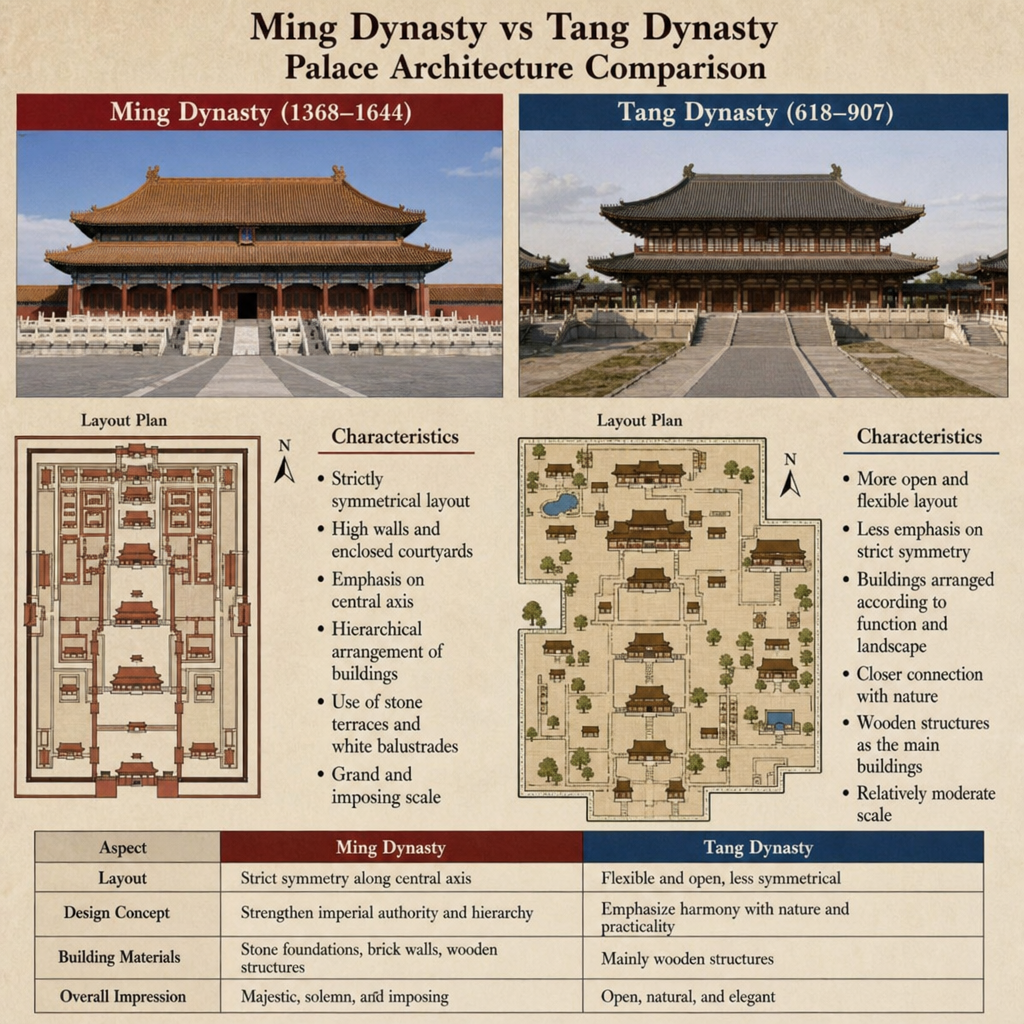
Inside the Rear Palace: Hierarchy and Survival
The Rear Palace houses the Emperor’s consorts and their attendants. Restrictions on access and differences in rank shape who can speak openly, who is believed, and how Maomao investigates a problem.
The life of a concubine in the Rear Palace was rarely the fairy tale one might imagine. In the Li Empire, just as in real history, thousands of women lived in the inner court, but only a select few ever met the Emperor. The hierarchy dictates everything from the food a consort eats to the color of the silk she wears. At the top sit the "Four Great Consorts" (like Consort Gyokuyou and Consort Lihua), who hold immense political power. Below them are countless lower-ranking concubines, ladies-in-waiting, and servant girls like Maomao.
The Keepers of the Palace
Eunuchs administer and work within the restricted palace. Jinshi’s public role helps introduce this arrangement. The story uses court institutions as part of its worldbuilding; it should not be treated as a complete account of how every Chinese dynasty organized its inner court.
The Science of Survival: Medicine and Poison
What truly sets this series apart from other historical dramas is its deep dive into early medical science and forensics. The depiction of traditional Chinese medicine in historical anime is often reduced to mystical tropes, but Maomao's world is refreshingly grounded.
Maomao vs. Modern Science
Maomao observes symptoms, asks what people have eaten, and connects everyday objects with possible causes of illness. That investigative approach drives the mysteries even though she works without modern laboratory equipment.
Maomao’s use of observation, medicinal ingredients, and knowledge passed down by Luomen gives the mysteries their texture. That does not establish that every remedy is historically documented or medically reliable; this is a fictional story, not a pharmacological reference.
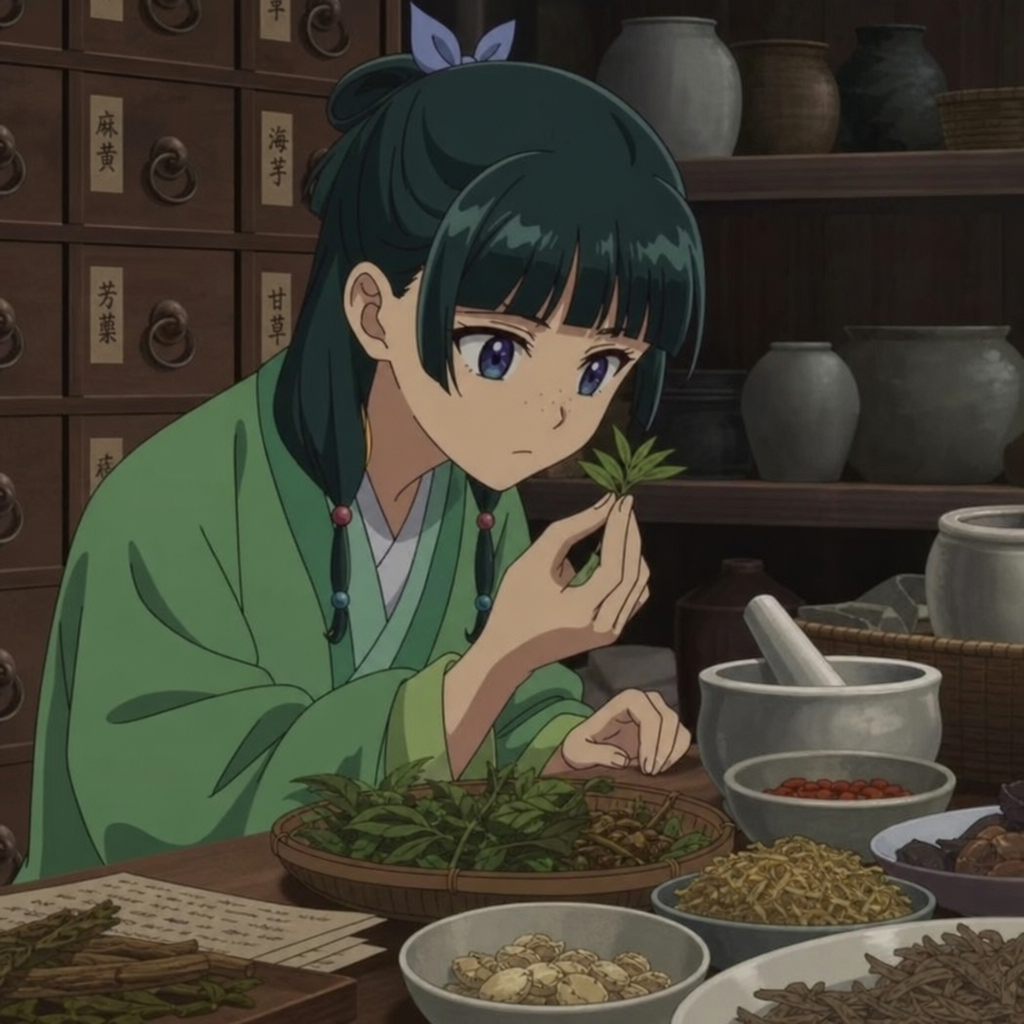
The Deadly Arts: Poison in the Court
Where there is immense political power, there is poison. Maomao's primary role as a poison tester brings us face-to-face with the common poisons used in ancient Chinese courts.
The early face-powder mystery connects court cosmetics with poisoning. It is a useful example of how an ordinary detail of palace life can drive an investigation, rather than a clue that fixes the story to one particular dynasty.
Poison testing also explains why Maomao’s job puts her close to powerful people. Her unusual willingness to investigate dangerous substances is part of the fiction and should not be read as evidence that tasting an unknown substance is safe.
Actionable Tips for Fans Exploring Historical Settings
If The Apothecary Diaries has sparked your interest in history, here are a few ways to deepen your appreciation for the show and the era it represents:
- Analyze the Fashion: Next time you watch an episode, pay attention to the sleeves and collars. Look up traditional Hanfu from the Ming and Tang dynasties. You will start to notice how a character's clothing directly reflects their social standing and origin.
- Compare the Details: Separate the story’s depiction of medicines and plants from independent historical research. A familiar ingredient is not enough to identify a precise dynasty.
- Read the Source Material: If you want more details on the political maneuvering and medical mysteries, read the original light novels. Natsu Hyuuga provides extensive internal monologues that further explain the chemistry behind Maomao's deductions.
- Explore Real Palace Museums: Take virtual tours of the Forbidden City in Beijing. While the Li Empire is fictional, seeing the real-life grand pavilions and courtyards will give you a profound sense of the scale of the Rear Palace.
Conclusion
The answer to where and when The Apothecary Diaries takes place is a fictional empire, Li, with strong Chinese historical influences and no confirmed real-world calendar year.
The palace hierarchy, clothing, medicine, and trade make the setting recognizable. Reading those details as influences leaves room for the story’s own geography and institutions, rather than forcing every element into either the Tang or Ming dynasty.
For a related timeline question, see how old Maomao is at different points in the story; that guide labels later novel and identity spoilers.