Spoiler Warning
This article discusses light novel spoilers for The Apothecary Diaries Volume 6, including Lakan's condition after Fengxian's death, Lahan's visit to his biological father's rural residence, the La family headship conflict, Lushun's intervention, and the sweet potato thread tied to the western crisis.
Scene Locator
The scene happens after Maomao and Lahan return from the west. Instead of going straight back into normal capital business, Lahan brings Maomao to a countryside estate near a landing point. The place is connected to Lahan's biological father, not to Lakan's usual public world as a court strategist.
That distinction is the whole trick. Lahan is not walking into the house because he has received a clear rescue order. He is going to see his father and to pursue a practical lead connected to crops. Only after he arrives does the family behavior expose that Lakan, his adoptive father, has been shut away there.
Volume-level entry only. The source is community-hosted; availability and rights status may vary.
The Short Answer
Lahan Probably Did Not Know Beforehand
The cleanest reading is that Lahan does not know in advance that Lakan is physically inside that residence. His first goal is to meet his own father. He even treats Lakan as someone who should still be in the capital, which tells us he is not entering the estate with a confirmed "Lakan is trapped here" plan.
If Lahan already knew, the scene would play differently. He would not need to test the household's reactions. He would not be caught in the awkward confusion between father, adoptive father, brother, grandfather, and family headship. The tension of the chapter comes from discovery, not from a hidden rescue mission already in motion.
But He Is Not Ignorant Either
That does not mean Lahan is naive. Once he sees his brother's panic, hears the older generation's strange assumptions, and realizes that Lakan has been missing while he and Lushun were away, he starts connecting the pieces very fast. Lahan's strength is not omniscience. It is pattern recognition.
This is why the scene works. The novel lets Lahan be surprised without making him foolish. He does not know the answer before he arrives, but he understands the La family's logic well enough to recognize the shape of the trap once the door opens.
Why Lahan Goes There
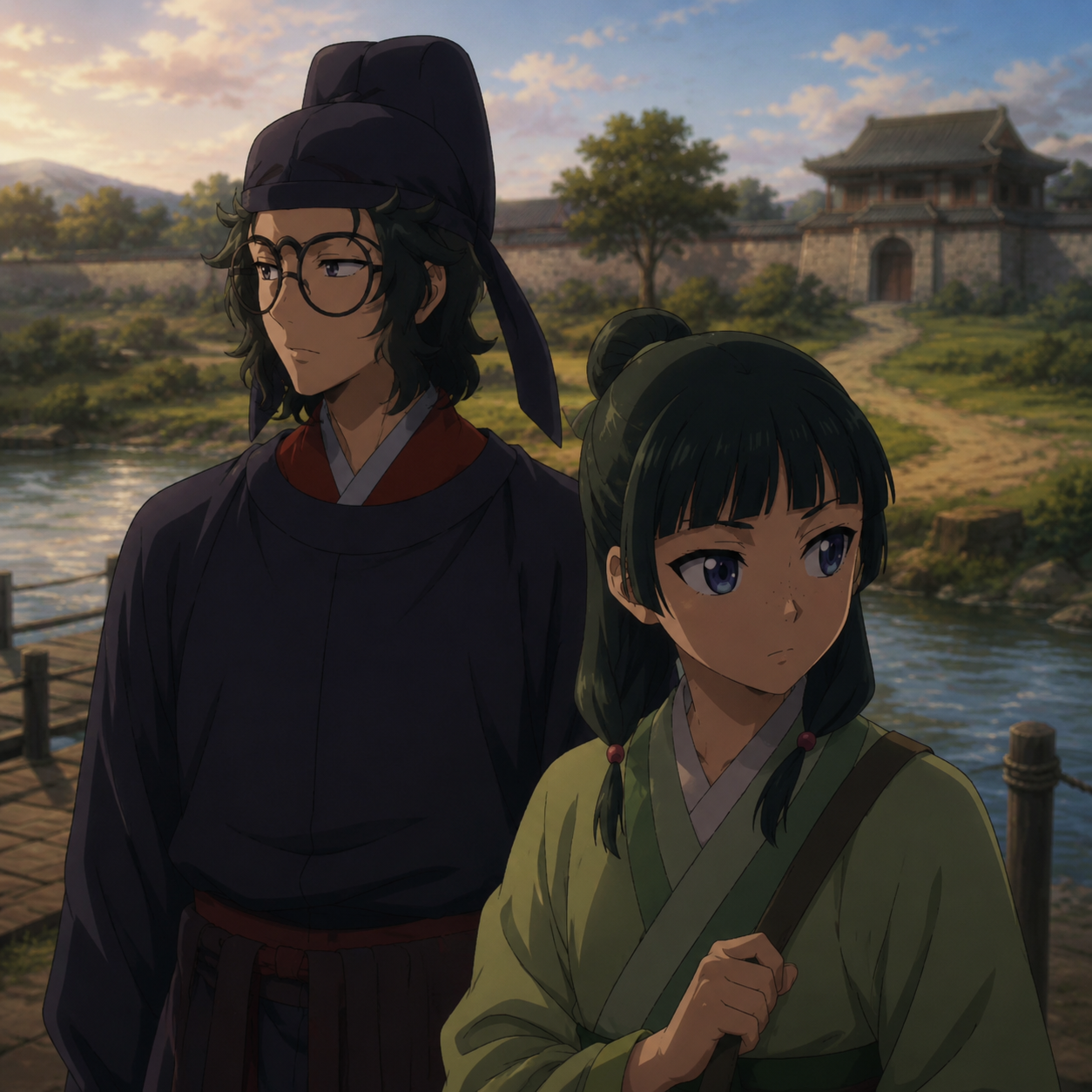
Lahan goes because his father has something he needs. Volume 6 has already enlarged the story from palace mysteries to national survival: the western trip reveals pressure around food supply, possible locust damage, regional instability, and the need for practical solutions. Lahan's family visit is connected to that larger problem.
The estate is surrounded by unfamiliar crops. Maomao notices plants that do not fit ordinary expectations, and Lahan is clearly interested in what his father has been growing. The later sweet potato discussion confirms that this is not just a family call. Lahan is following an agricultural lead that could help answer the food problem raised by the west.
The Visit Has a Real Economic Purpose
This is important because it keeps the plot from becoming too convenient. If Lahan randomly visited the exact house where Lakan was trapped, the scene would feel like coincidence. But Volume 6 gives him a concrete reason: his father has been experimenting with a useful crop, and Lahan needs information, planting material, and cultivation knowledge.
That reason also fits Lahan's personality. He is not being sentimental. He is thinking in quantities, logistics, yields, and usefulness. He wants a solution that can be scaled. The family visit is awkward because it is personal, but Lahan's true operating mode is still calculation.
Maomao Is There Because the Clue Is Practical
Maomao's presence matters too. She notices plants, preparation methods, and odd household details. She is not brought along just to witness family drama. She is the kind of observer who can look at a rural shed, a vine, a processed root, and a household reaction, then understand that the domestic scene is tied to a much larger survival question.
For the larger food-risk context, read the related analysis of what Maomao gains from Shisui, where insects, borders, and national vulnerability become more than background details.
What Gives the Secret Away
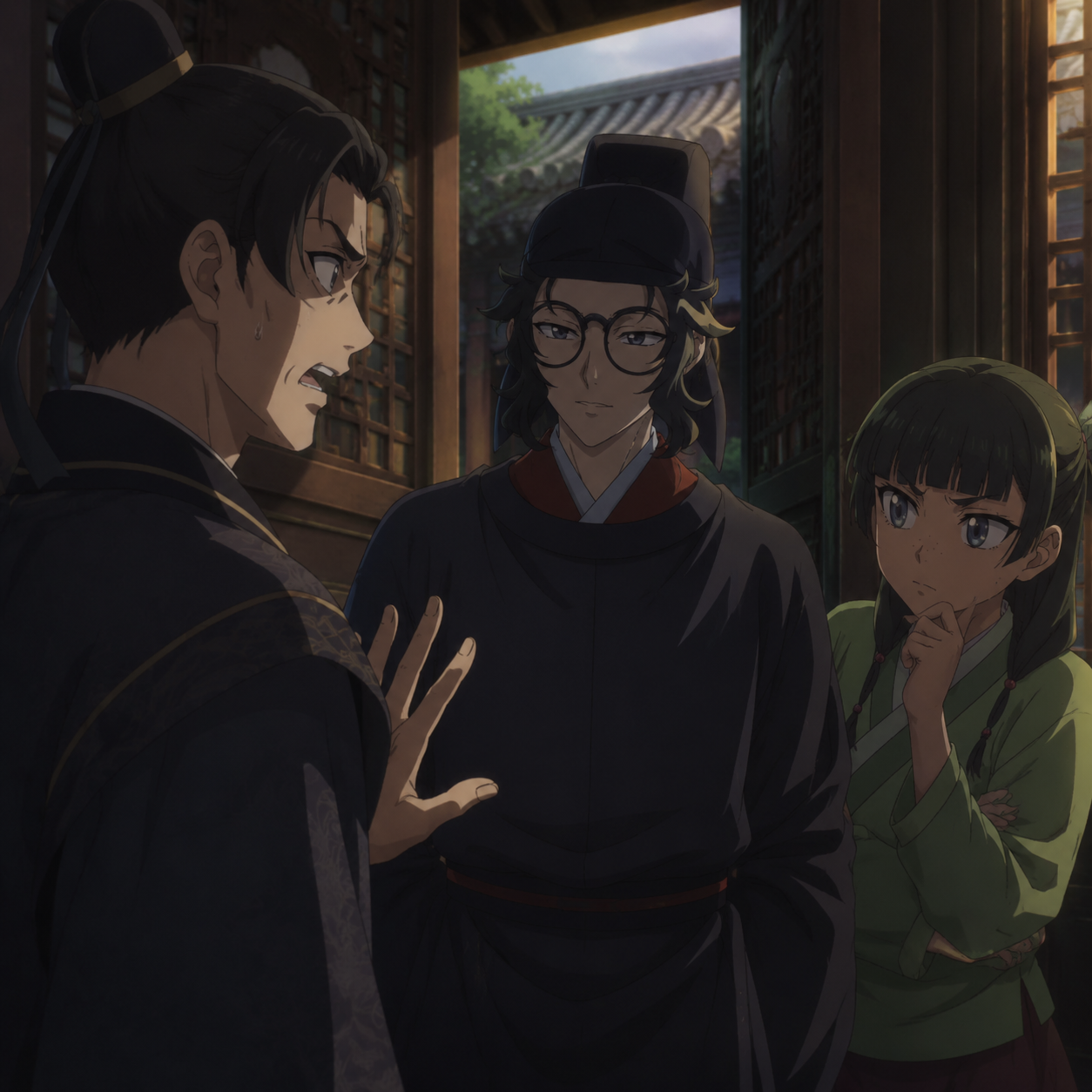
The first giveaway is the brother's reaction. A normal family visit should be awkward at most. Instead, Lahan's brother panics, tries to push him out, and treats Maomao's presence like a threat. That kind of overreaction tells Lahan that the household is hiding something larger than bad feelings between siblings.
The second giveaway is the grandfather's assumption. The older man thinks Lahan must have come because Lakan has been missing for days. That assumption is revealing because Lahan and Maomao have been away from the capital much longer than that. The grandfather accidentally exposes that Lakan's absence has become a problem inside the estate.
The Brother's Panic Is Too Loud
Lahan's brother does not behave like someone merely annoyed by a visiting relative. He behaves like someone trying to keep a secret contained before the wrong people see it. That makes the scene almost comic on the surface, but it is also the first crack in the family's cover story.
The brother is not a grand villain. That is what makes him useful as evidence. His panic feels too ordinary to be a lie designed by a master strategist. He is a weak point in the household's attempt to keep control.
The Grandfather Misreads Lahan's Motive
The grandfather's mistake is even more useful. He assumes Lahan is there because Lakan has been missing, but Lahan has been away. That means the old man is explaining the wrong mystery to the wrong person. He thinks he is dealing with a rescue attempt. In reality, he is revealing the rescue target.
This is the moment where Lahan's ignorance turns into knowledge. He does not need someone to confess cleanly. The mismatch between what the grandfather thinks Lahan knows and what Lahan actually knows gives away the entire shape of the situation.
Why Lakan Is Vulnerable
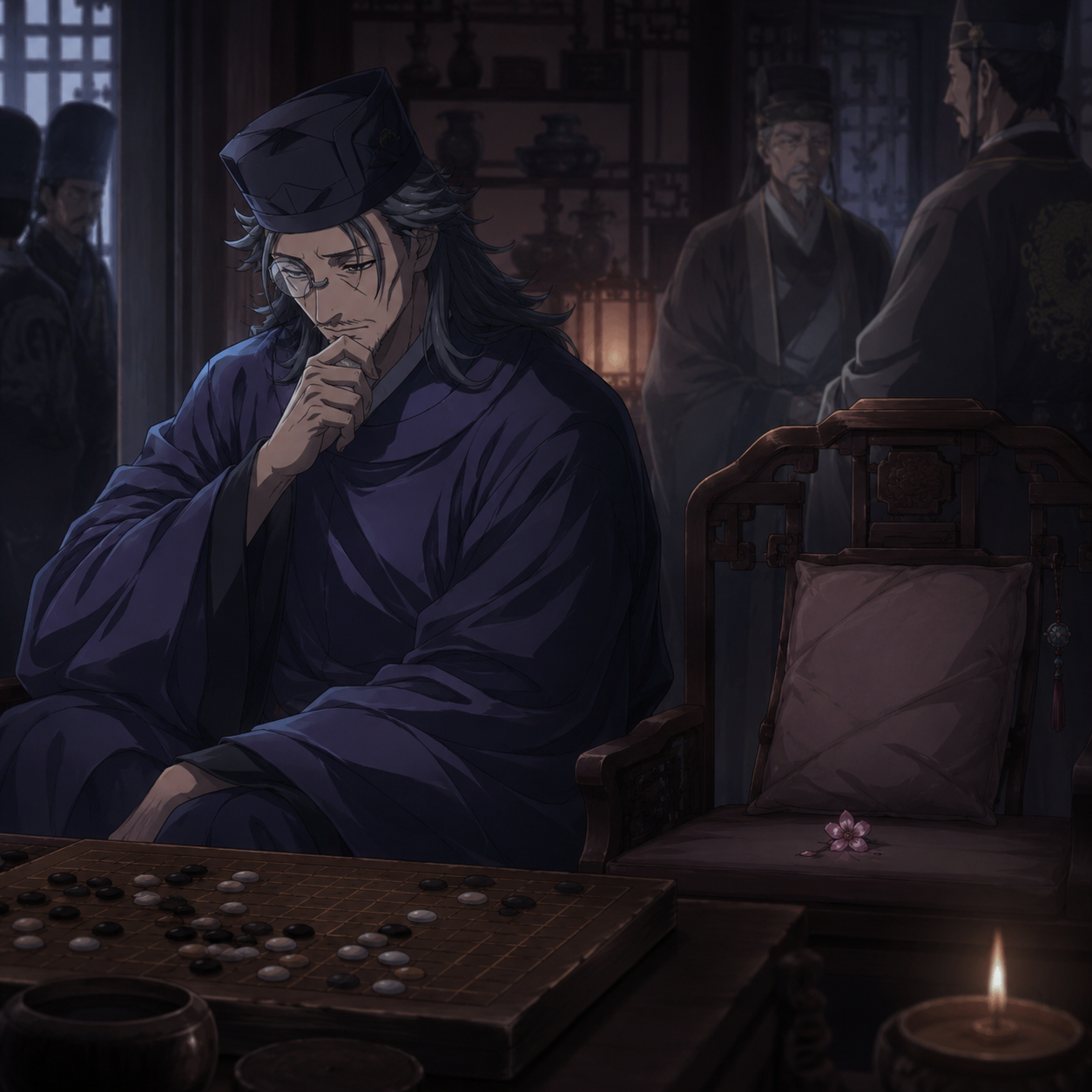
Lakan's vulnerability comes from Fengxian's death and from the absence of the people who usually watch him closely. Volume 6 has already shown that Lakan is not functioning normally after losing Fengxian. He is not simply eccentric; he is disheveled, withdrawn, and mentally trapped in the remains of the game and the relationship he cannot continue.
That is why the La family can move. They are not stronger than Lakan in a normal contest. They are exploiting a moment when the person who usually turns every room into a board has stopped playing.
Family Headship Is the Prize
The family pressure is not just about embarrassing Lakan. It is about the family headship and the recognized authority attached to it. Volume 6 explains that the position is tied to ritual, status, and a court-recognized object. In other words, the old family faction is not only trying to punish a troublesome relative. It is trying to regain symbolic power.
This detail makes the estate scene feel nastier. Lakan's grief becomes useful to people who resent him. His private collapse becomes a political opening.
Lahan and Lushun Being Away Matters
The timing is also important. Lahan and Lushun have both been away on western business. Those are exactly the kind of people who might notice Lakan's absence, understand the administrative consequences, and push back. Their absence gives the old faction room to act.
That is why Lushun's arrival later feels less like a heroic rescue and more like containment. He comes because the situation has become visible to the right people. The household's trick works only while the people who can interpret it are not in position.
For the emotional half of this trap, read what happened to Lakan in Volume 6, which focuses on Fengxian, the Go records, and why Lakan's grief makes him movable.
The Sweet Potato Purpose
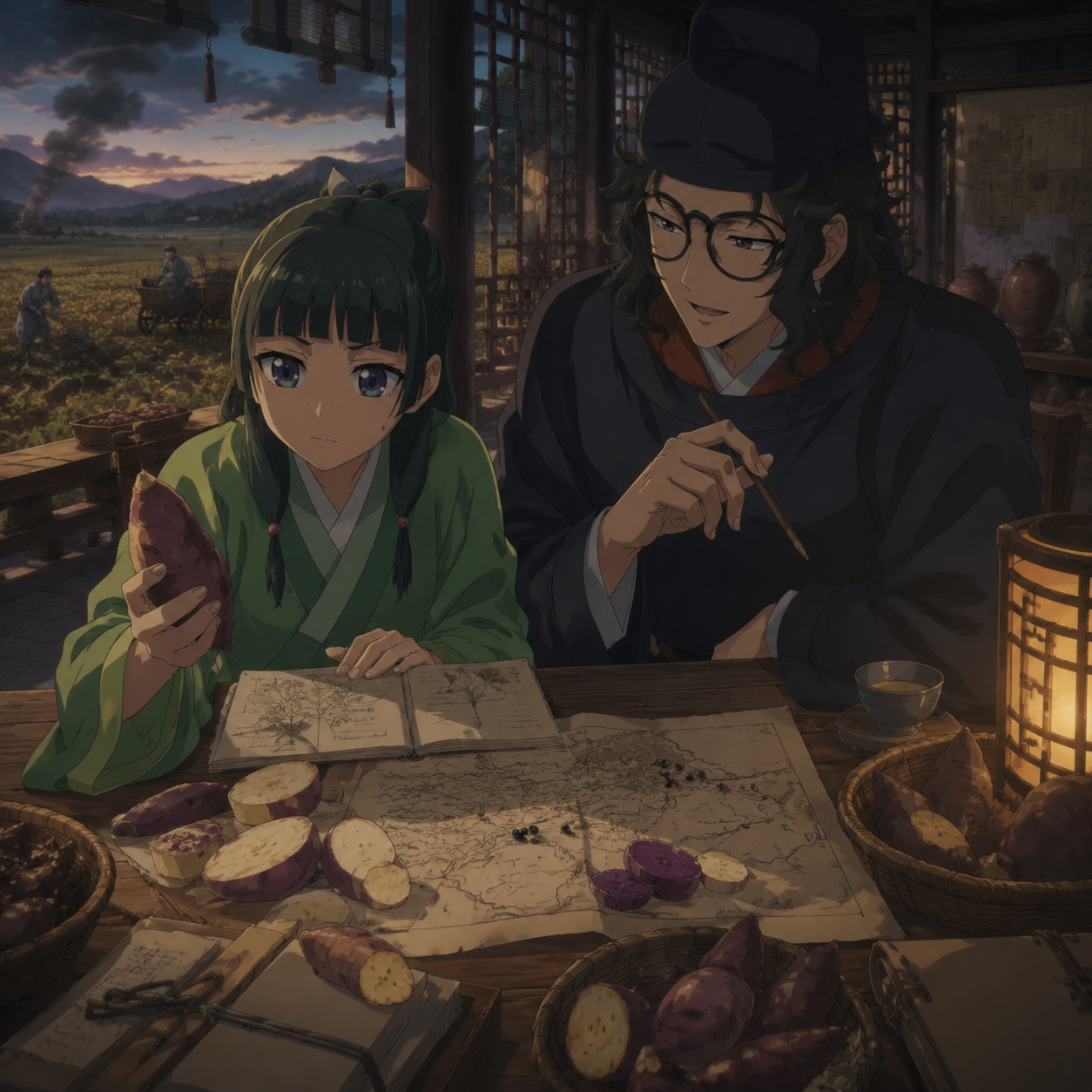
The sweet potato thread is not a random joke after the family crisis. It explains why Lahan came to the estate in the first place and why his father matters. The crop is hardy, productive, and potentially useful in poor soil. That makes it relevant to the larger anxiety about food, insects, and regional survival after the west arc.
Lahan is interested in more than tasting something sweet. He wants vines, seed material, knowledge, and a way to move the crop into a larger system. His father, despite living outside the polished capital world, has stumbled into exactly the kind of practical resource Lahan needs.
The Rescue and the Crop Share One Logic
This is why the chapter is clever. The family rescue and the agricultural lead are not separate accidents. Both depend on Lahan entering a neglected branch of the La family and discovering hidden value there. One hidden thing is ugly: Lakan being trapped by family pressure. The other hidden thing is useful: a crop that may help answer future scarcity.
The estate is therefore both a prison and a resource. Volume 6 likes that kind of double use. A place that looks backward, petty, and embarrassing turns out to contain one of the practical answers to a national problem.
Lahan's Father Is the Missing Resource
Lahan's father is not important because he is politically glamorous. He is important because he knows what he has been growing. In a court story full of titles, secrets, and beautiful lies, Volume 6 quietly lets field knowledge matter.
That makes Lahan's visit more than family trivia. He is building a bridge between palace crisis and rural practice. The same trip that exposes Lakan's captivity also produces a possible tool against scarcity.
Why This Detail Matters
It Keeps Lahan Smart Without Making Him Omniscient
The best answer is not "Lahan knew everything." That would flatten him. What makes Lahan interesting is that he can be surprised and still recover faster than almost anyone else in the room. He arrives for one reason, discovers a second crisis, and immediately begins reading the household's contradictions.
That is a better kind of intelligence for this story. The Apothecary Diaries often rewards people who observe, test, and infer. Lahan belongs in that pattern. He does not need magical foresight; he needs a few wrong reactions from the La family, and then the numbers start lining up.
It Makes the La Family Feel Dangerous in a Petty Way
The La family conflict is not majestic evil. It is petty, resentful, opportunistic, and bureaucratic. That makes it believable. The old faction does not need to be smarter than Lakan forever. It only needs one moment when grief, isolation, and paperwork can be used against him.
This is why the estate scene feels uncomfortable. The danger is not a grand conspiracy in a palace hall. It is family members turning a grieving man into an administrative opportunity.
It Reframes Lahan's Role Beside Lakan
Lahan's role is not just comic relief or financial calculation. Volume 6 shows that he is one of the people who understands how the La family machine works. He knows enough to be useful, enough to be disgusted, and enough to turn the trip toward a practical outcome.
That is why this small question matters: whether Lahan knew in advance changes how we read him. If he knew everything, he is simply plotting. If he did not know but inferred quickly, he becomes more interesting: a man whose intelligence activates under pressure.
FAQ
Did Lahan know Lakan was at his father's residence?
Probably not before he arrived. The scene suggests Lahan came to see his own father and pursue the sweet potato lead. He realizes Lakan is there after the household's reactions and the grandfather's assumptions reveal the secret.
Why was Lakan at the residence?
Lakan had become vulnerable after Fengxian's death, and the older La family faction seems to have used that opening to confine him and pressure the family headship issue.
Why did Lahan visit his father?
The visit is tied to crops, especially sweet potatoes. Lahan needs practical knowledge and planting material because the western crisis raises larger questions about food supply, insects, and survival.
Why does Lushun arrive later?
Lushun's arrival shows that the rescue response is reactive. Once the situation becomes visible to people outside the household's control, the old faction loses its advantage.
Is this connected to Jinshi going west?
Yes, indirectly. The same western crisis that pushes Jinshi into action also makes food supply and agricultural solutions more urgent. See the analysis of why Jinshi had to go west for that wider political frame.
What should I read next?
Read what happened to Lakan in Volume 6 for the grief side of this plot, then visit the character relationship map for Lakan's place in the wider La family web.