Spoiler Warning
This article discusses light novel spoilers for Volume 5 and Volume 6, including Lishu's trip west, Ah-Duo's role, the possible marriage conversation around Jinshi, Lishu's return to the rear palace, the tower incident, and the aftermath involving Basen.
Scene Locator
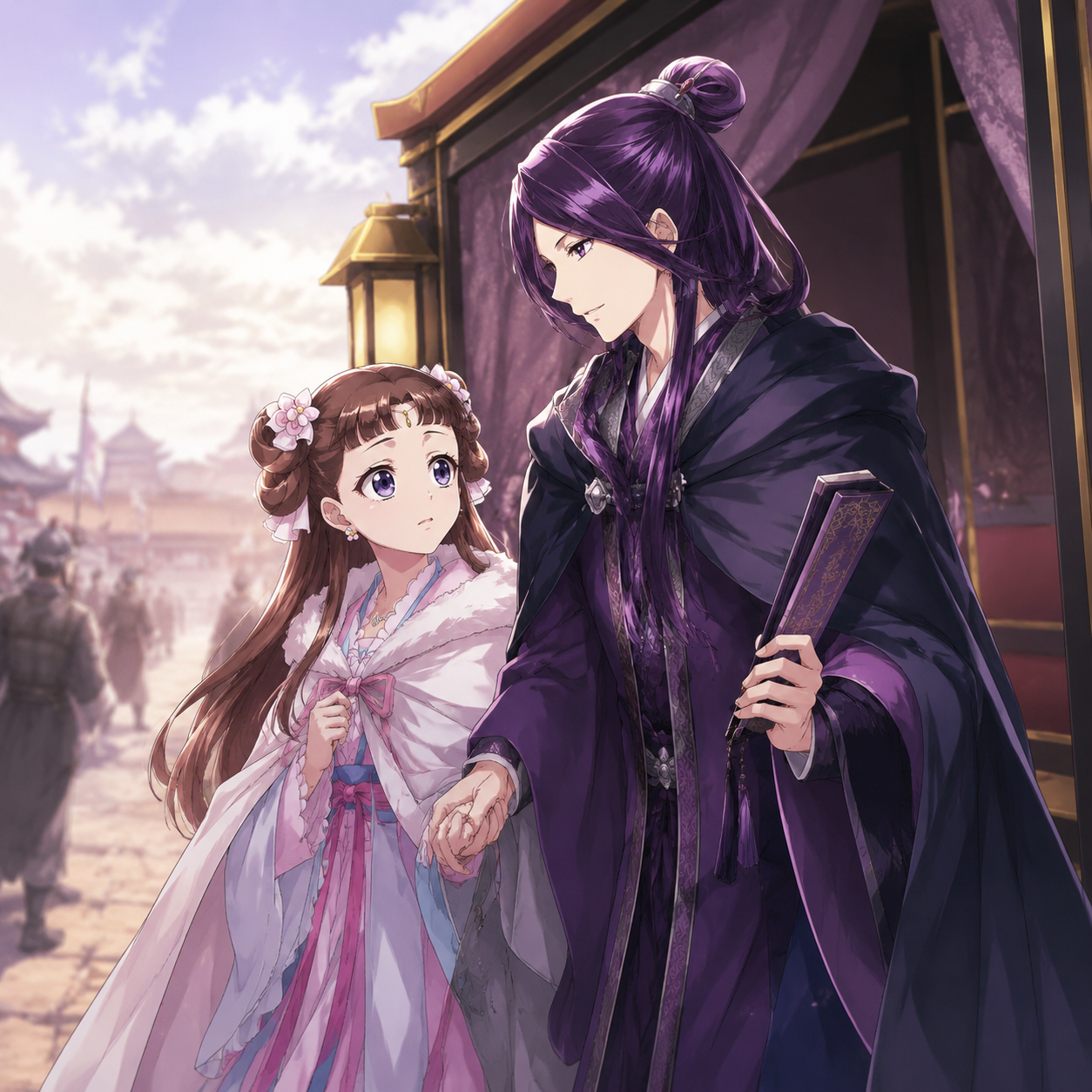
The key setup appears in Volume 5, when Maomao learns that Ah-Duo and Lishu are also traveling west. The journey is not presented as a casual outing. Jinshi's party is moving for western talks and inspection, while Ah-Duo's side has a separate purpose: Lishu's presence is tied to the possibility of choosing a consort for the imperial younger brother.
That is why the question matters. Lishu is physically traveling with Ah-Duo, but politically she is being moved between possible futures. One future is her return to the rear palace as a high-ranking consort. Another is a marriage arrangement that could remove her from the rear palace. Behind both futures sits the same uncomfortable fact: Lishu is still a girl whose life has been negotiated by adults, fathers, nobles, and protectors.
Volume 6 then follows the consequences after the western journey. Lishu returns knowing that her position as a consort can no longer be excused by youth. She faces suspicion, servants who do not fully protect her, the White Lady incident, confinement, hallucination, and a near-fatal fall. The western trip does not magically free her. It exposes how fragile her safety has always been.
Volume-level entry only. The source is community-hosted; availability and rights status may vary.
The Short Answer
Not Chains, But Not Freedom
Lishu was not forced to go west like a captive. She is not shown being physically dragged away, and Ah-Duo is not acting like a villain who wants to ruin her. But if "forced" means whether Lishu had meaningful adult freedom to refuse the trip, the answer is much closer to yes.
She is a consort, a political daughter, and a young woman whose household already treated her as a tool. Her father's side sent attendants around her. Her original placement in the rear palace was political. Her possible removal from the rear palace is also political. Even Ah-Duo's kindness works inside that same system. Ah-Duo can protect Lishu, but she protects her by choosing a safer path for her, not by handing Lishu full control over her future.
So the cleanest answer is this: Lishu was not dragged west, but she was carried west by circumstances stronger than her. The journey is protective, strategic, and coercive all at once.
Why the West Matters
The west is not only a destination. It is a sorting ground. Jinshi's western trip is tied to court pressure, regional politics, and marriage possibilities, which is why it connects naturally to the companion analysis on why Jinshi had to go west. Lishu's trip is smaller in political scale but emotionally sharper because she has less power to interpret what is happening to her.
For Jinshi, the west is a place where he is expected to act as a political figure. For Maomao, the west becomes a place where clues, bodies, plants, scent, and court danger overlap. For Lishu, the west is a place where other people test possible exits from her current life. That is why her story feels so sad: even the exit door is held by someone else.
Why Lishu Was Sent West
Ah-Duo's Protection Is Real, But It Is Still Control
Ah-Duo is one of the few adults who sees Lishu as more than a disposable political piece. Volume 5 makes that clear when Maomao thinks through why Ah-Duo may have brought her. Lishu is not suited to the rear palace's brutal flower garden. She lacks the appetite for dominance, the political instinct, and even the household support that stronger consorts possess. Her servants have already mocked her, isolated her, and endangered her before.
Ah-Duo's solution is not cruel. In fact, it may be the most merciful option available inside the rules of the court. If Lishu can be matched elsewhere, she might escape a position where she is too young, too timid, and too politically exposed. Ah-Duo is trying to keep her from being crushed.
But mercy does not automatically become freedom. Ah-Duo's protection still works by arranging Lishu's path from above. This is the central tension of Lishu's arc: the kindest people around her still treat her future as something to manage. That is why the western trip feels both generous and suffocating.
Her Father Already Used Her Before the West
Lishu's father is the harsher side of the same pattern. Volume 5 reminds readers that Lishu's placement in the old emperor's rear palace was not a fairy-tale elevation. It was her family using her status as an instrument. After the old emperor died, the same family pressure did not disappear. Her father considered another marriage that would have handed her to a much older, unsuitable man, and Ah-Duo and the emperor had to block that future.
That backstory changes the meaning of the western journey. Lishu is not a sheltered girl being offered a fun chance to travel. She is someone who has already been traded once and nearly traded again. When a trip west becomes connected to another possible marriage arrangement, readers should feel the pattern repeating even if the new option appears safer.
This is why Lishu asks Maomao about whether a parent-child bond can be judged. On the surface, it sounds like a naive question. Underneath, it is a devastating one. She wants to believe a father should not treat a daughter this way. Maomao's colder perspective makes the scene sharper: biological relation does not guarantee love, and political families often turn kinship into leverage.
Jinshi's Marriage Politics Put Lishu in the Frame
The western trip also intersects with Jinshi's marriage pressure. Ah-Duo says the other purpose involves choosing a consort for the imperial younger brother. Lishu does not fully know what she wants from this possibility. Earlier in the story, she admired Jinshi's beautiful and courteous public face. But by Volume 6, she understands that his kindness was not special affection aimed only at her.
That realization matters because it makes Lishu's possible marriage to Jinshi less romantic and more political. If she had accepted the idea blindly, the story could have made her a comic romantic rival. Instead, it lets her grow just enough to see that she is not the woman Jinshi is looking at. In a story filled with people who misunderstand his face, that is a quiet but important piece of maturity.
Her position also helps explain why Maomao's western trip is so charged. In the article on why Jinshi took Maomao to the west, the focus is Maomao's usefulness and Jinshi's emotional challenge to her. Lishu's side of the same arc shows the cost paid by women who are officially "appropriate" choices but emotionally unprepared for the system choosing through them.
What Lishu Actually Wanted
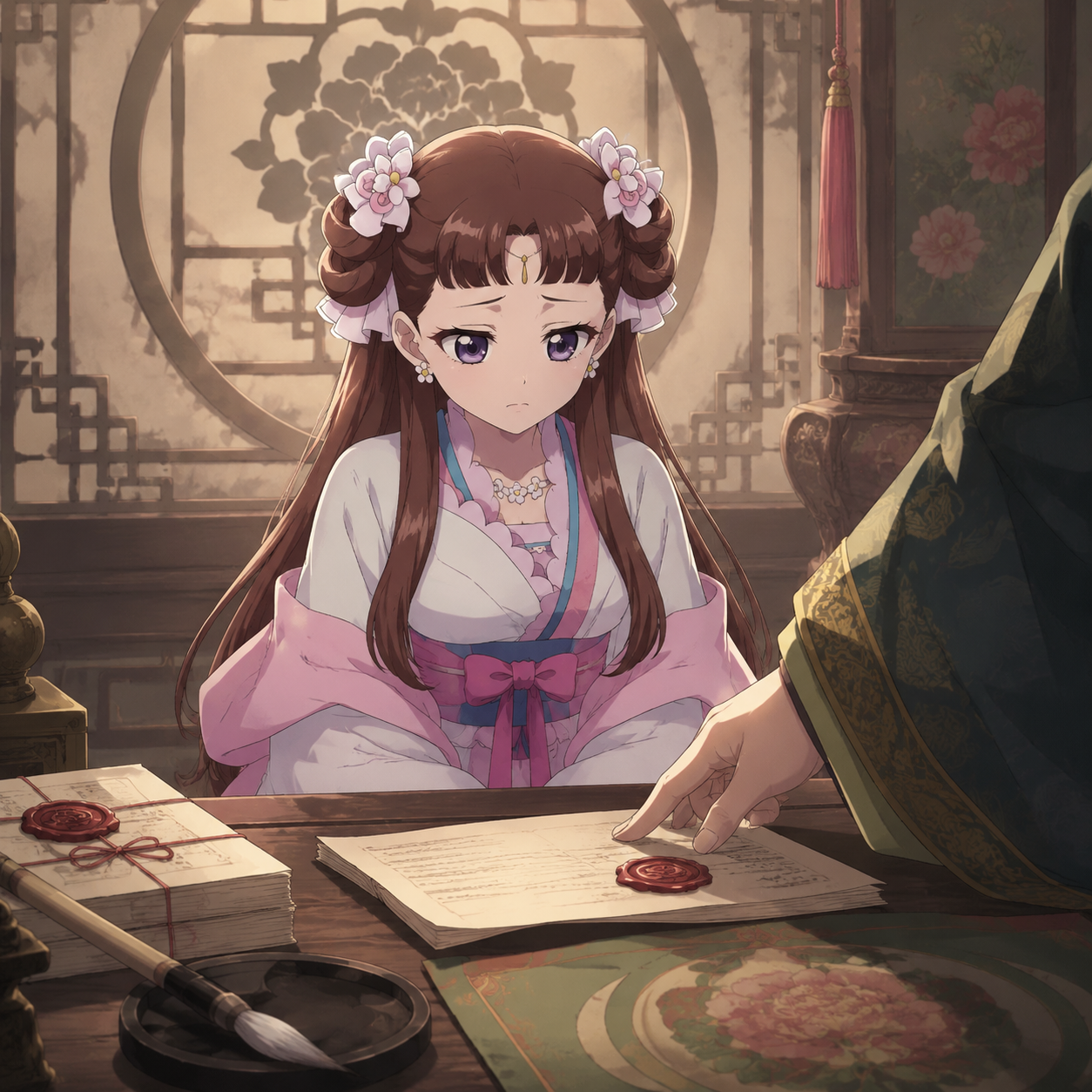
Lishu's tragedy is that even she does not fully know what she wants. That is not bad writing; it is the point. She has spent too much of her life being pushed into roles before she was old enough to understand them. She knows how to be frightened, embarrassed, grateful, and ashamed, but she has not had much practice wanting something with confidence.
Volume 6 makes this painfully clear when Ah-Duo asks whether she is all right returning to the rear palace. Lishu says she is fine, but the question has a hidden blade. Returning means facing the duties of a consort more directly. The old excuse of being too young can no longer shield her. She is aware enough to fear that reality, yet not powerful enough to refuse the position cleanly.
Her feelings toward Jinshi are also not a simple crush by this point. She once admired him because he seemed like the perfect beautiful gentleman. Later, she sees a more ordinary smile from him and understands that the smile she received was part of his public mask. Instead of becoming angry, she becomes clearer. She knows he has someone or something else pulling his real attention.
At the same time, Lishu still loves Ah-Duo in the way a lonely girl loves the adult who once protected her. She worries that her presence in the rear palace makes her an obstacle between Ah-Duo and the emperor. That fear is not legally precise, but emotionally it is sincere. Lishu sees herself as someone who causes trouble simply by occupying a position she never truly chose.
That is the hidden answer to the title. Lishu did not go west because she had a strong personal dream. She went because the adults around her were trying to solve the problem of where a politically inconvenient, emotionally fragile young consort could be placed. The west becomes a temporary answer to a question Lishu never got to ask in her own words: where can I live without being used?
Volume 6 Proves the Point
The Return Check Shows Her Body Is Still Political
After the trip, Lishu's return to the rear palace is not simple. Because she has been away for nearly two months, her body itself becomes a subject of palace verification. The delayed monthly cycle creates suspicion, and Maomao is drawn into proving that Lishu has not secretly violated the rules around consort purity.
This is one of the most important pieces of evidence in the forced-or-free question. If Lishu had truly escaped the system through the western trip, her return would not immediately turn into an inspection of her body, reputation, and eligibility. The palace does not ask what she felt about the journey first. It asks whether her body still fits the rules.
That scene is also why Lishu's story is not just about romance or shyness. Her political value is tied to assumptions about virginity, marriageability, obedience, and scandal. A late period can become a crisis. A rumor can become a sentence. A young woman's body is treated like state paperwork with a heartbeat.
The Tower Incident Shows Protection Can Become Another Cage
The tower incident in Volume 6 deepens the same theme. The emperor confines Lishu partly because he fears someone may try to kill her. In intention, it is protection. In experience, it becomes another enclosure. Lishu is again moved somewhere for her safety without being given real control over the terms of that safety.
Then the situation becomes worse because she is placed near the White Lady and exposed to a dangerous scent connected to hallucinations. Lishu's body, already sensitive to this kind of drug-like effect, becomes vulnerable again through no fault of her own. She is not plotting. She is not trying to cause scandal. She is simply unlucky inside a system where other people's schemes keep finding her.
The detail about the White Lady also matters because it keeps Lishu's story connected to the larger court mystery. Her suffering is not isolated melodrama. It is part of the same world where foreign envoys, hidden drugs, official embarrassment, and palace secrecy overlap. Lishu is not powerful enough to move those forces, but she is exposed enough to be hurt by them.
Basen's Rescue Gives Her One Human Answer
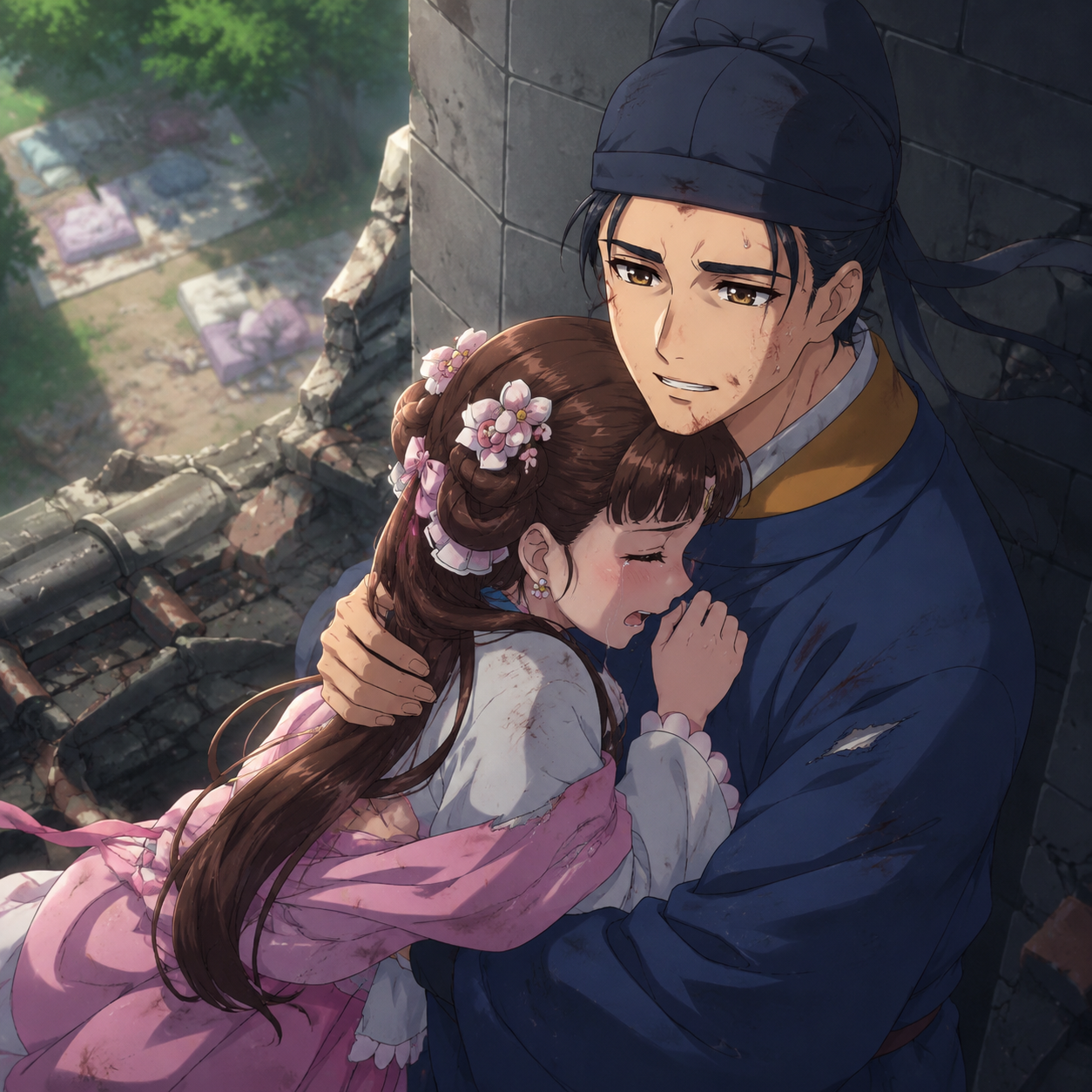
Basen's rescue is the emotional counterweight to the political machinery around Lishu. When she falls, he does not stop to calculate whether saving her is useful. He acts because he believes she should be saved. That is why the scene lands so differently from the earlier attempts to protect her.
Ah-Duo protects Lishu by arranging. The emperor protects Lishu by confining and later punishing her in a way that preserves public order. Basen protects Lishu with his body. He does not ask whether she is a good consort, a valuable bride, a clean political asset, or a useful daughter. He treats her life as worth saving before any explanation is required.
This does not erase the rest of her tragedy. Lishu is still sent away to a temple for a year, stripped of her consort position afterward, and returned to her family rather than handed a fully free life. But the rescue changes the emotional direction of her story. For once, someone sees Lishu not as a problem to be placed but as a person who deserves to keep living.
That is why Volume 6 is essential to answering the Volume 5 question. If we only look at the western trip, we might say Ah-Duo simply took Lishu for her own good. If we look through the Volume 6 aftermath, the answer becomes more layered: the west was one step in a long chain of adults trying to move Lishu into a safer position, while never fully breaking the habit of deciding for her.
Common Misreadings
Misreading 1: Ah-Duo cruelly forced Lishu west
This is too harsh on Ah-Duo. The story gives Ah-Duo a protective motive, and Lishu clearly has emotional trust in her. Ah-Duo is not trying to sacrifice Lishu. She is trying to prevent worse outcomes. The problem is that protection inside the court still looks like management from above.
Misreading 2: Lishu freely chose the western trip
This is too generous to the system. Lishu is not positioned like an independent adult weighing travel options. She is a consort, a daughter, and a political object. Her "choice" is surrounded by fatherly pressure, palace rank, marriage arrangements, and people deciding which future is least harmful for her.
Misreading 3: The west was just a matchmaking comedy
The Jinshi marriage angle has comedic surface moments, but Lishu's story is not light comedy. She is a young woman whose life has repeatedly been redirected through marriage politics. The west is funny only if readers ignore what those arrangements mean for her body, reputation, and safety.
Misreading 4: Lishu is only weak
Lishu is timid, but the story is careful about why. She has been mocked by servants, used by family, placed in adult roles too early, and punished by systems she does not understand. Her weakness is not a punchline. It is a record of being denied enough room to become strong.
FAQ
Was Lishu forced to go west?
Not in the physical prisoner sense, but yes in the broader political sense. Lishu had very little meaningful freedom to refuse. Her trip west was shaped by Ah-Duo's protection, her father's political use of her, and the marriage politics surrounding Jinshi.
Why did Ah-Duo take Lishu west?
Ah-Duo appears to be trying to give Lishu a safer future than the rear palace or a bad family-arranged marriage. The trip is connected to western talks and the possibility of choosing a consort for the imperial younger brother, which makes Lishu's presence politically useful.
Did Lishu want to marry Jinshi?
Earlier, Lishu admired Jinshi's beautiful public persona. By Volume 6, she understands that his smile was not special affection for her, and she does not seem to believe she is the right person for him. Her feelings are less a clear romance than a mixture of admiration, insecurity, and painful self-awareness.
What does Volume 6 add to Lishu's story?
Volume 6 shows that the western trip did not free Lishu from the court's control over her body and reputation. Her return check, tower confinement, exposure to the White Lady's dangerous scent, and Basen's rescue all prove how fragile her position remains.
What should I read next?
Read why Jinshi had to go west for the larger political context, then Jinshi and Ah-Duo's hidden connection for the older palace history that makes Ah-Duo's protectiveness feel so loaded.