Spoiler Warning
This article discusses light novel spoilers from The Apothecary Diaries Volumes 6 and 8, including Fengxian's death, Lakan's Go records, the publication of his Go book, the later tournament, and the explanation of why the book matters to Lakan's family history.
Scene Locator
The emotional starting point is Volume 6, Chapters 6-7, where the La family crisis follows Fengxian's death and the recorded games become a way for Maomao to reach Lakan. Volume 6, Chapter 7 is the clearest checkpoint for the idea that Lakan wants to compile a Go book.
The public side develops in Volume 8. Chapter 1 shows the Go teaching book formally printed. Chapters 4-5 show the book circulating and the Go interest becoming a wider social event. Chapters 14-20 connect the book to the tournament, instruction, and the later explanation of why Lakan wanted more people to play.
Volume-level entries only. These sources are community-hosted; availability and rights status may vary.
The Short Answer
The Private Origin
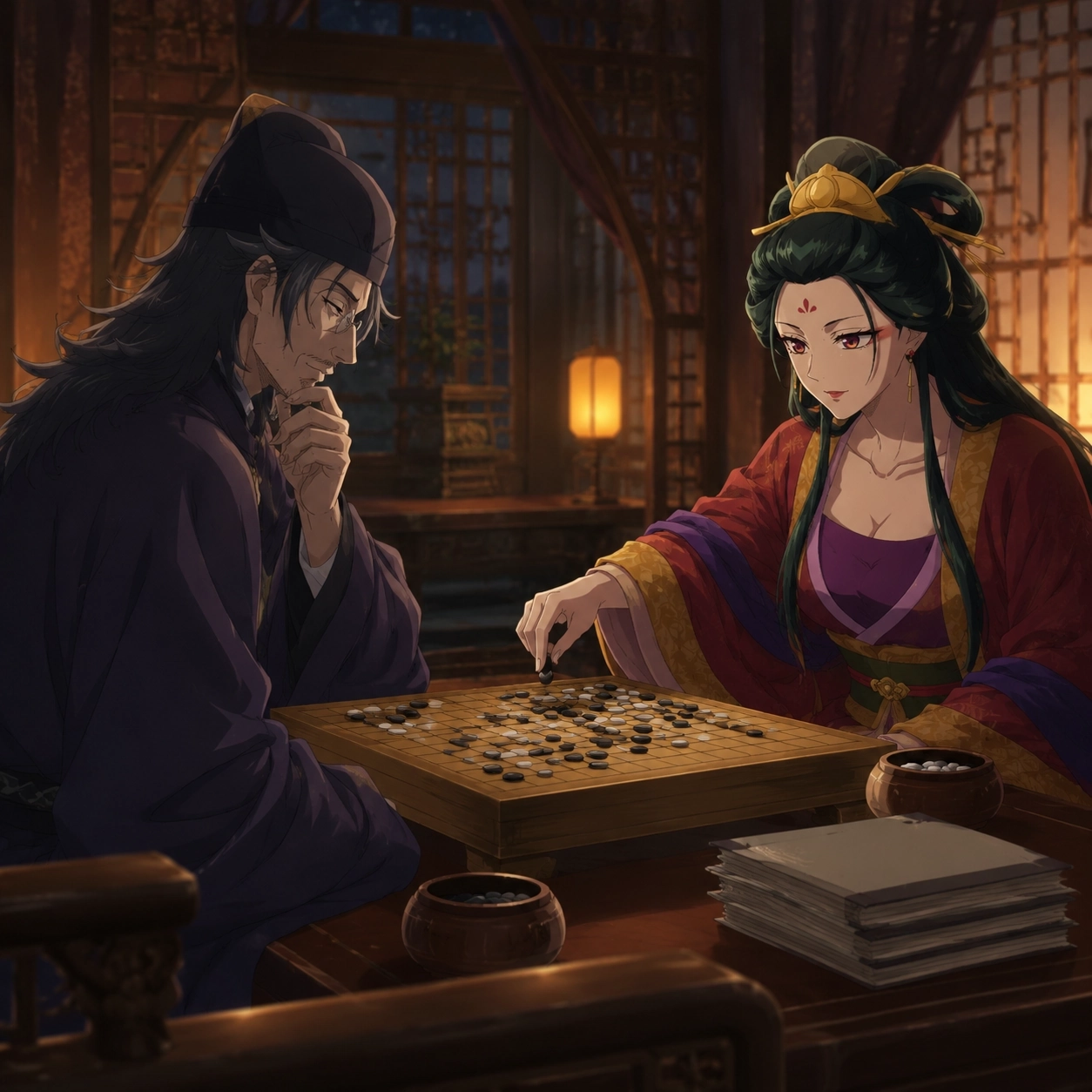
Lakan publishes the Go book because the games he played with Fengxian were too important to let disappear. The book preserves their shared language, organizes the records into something that can be studied, and carries the shape of that relationship into a future Fengxian cannot enter.
Not Just a Memento
That answer is still incomplete if it stops at mourning. The novel shows the book becoming a teaching text, circulating widely, encouraging more people to play, and helping create a tournament. Lakan is preserving a private past, but he is also deliberately making Go public.
So the best reading has four layers: memory, method, cultural spread, and legacy. The Go book is neither a simple commercial project nor a private memorial disguised as a hobby. It is Lakan's way of keeping Fengxian's games alive while allowing the game itself to move beyond them.
Volume 6: A Private Record of Fengxian
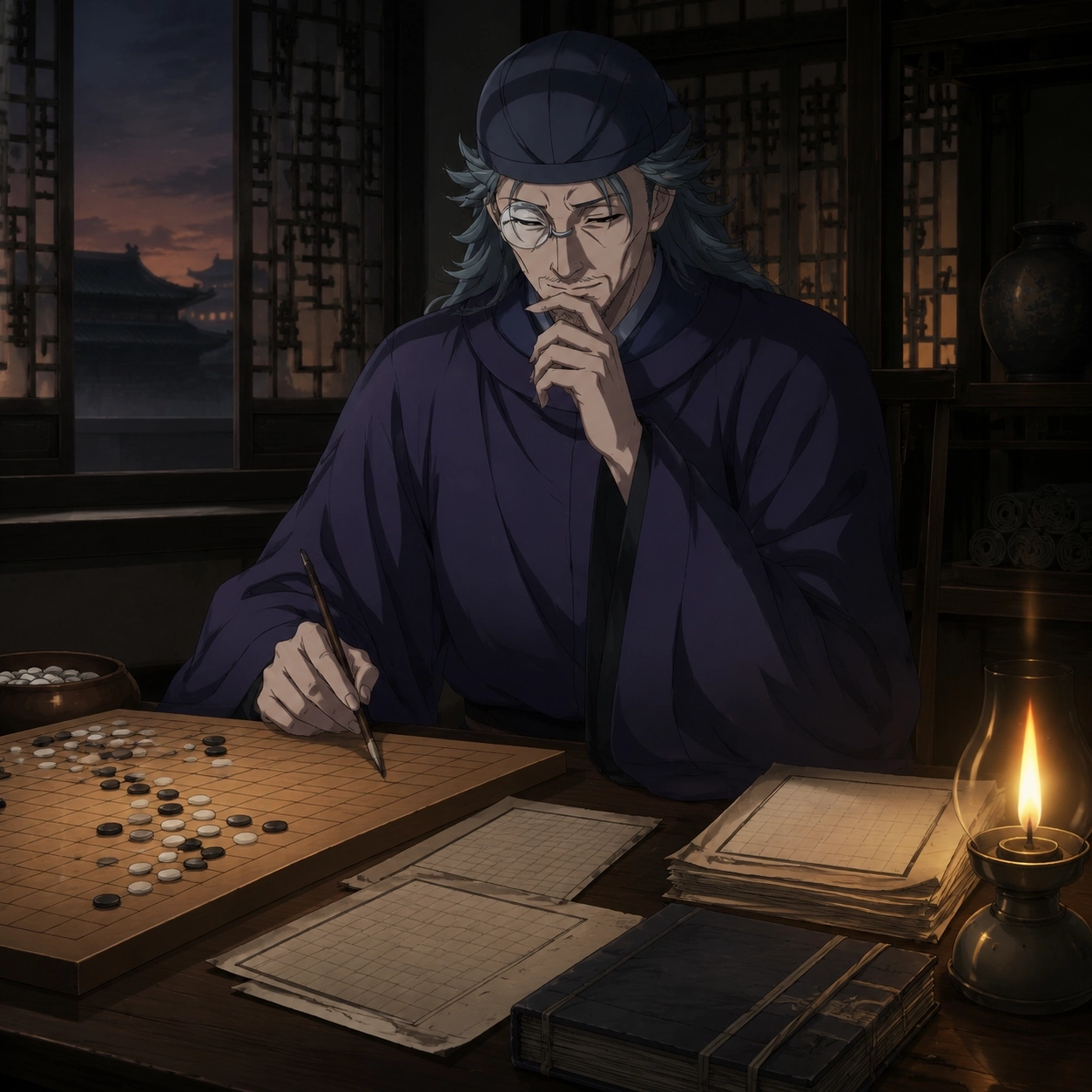
Volume 6 supplies the emotional pressure behind the later publication. After Fengxian's death, Lakan is no longer functioning as the untouchable strategist who can turn every person into a position. He is trapped in grief, in the unfinished feeling of their exchanges, and in the evidence left behind by the games they played.
Maomao's intervention works because the Go records are not neutral notes. They are a trace of Fengxian's mind. Replaying the moves lets Lakan return to a conversation that has stopped in the physical world. His recovery is therefore not a conventional emotional confession. It begins when someone uses the one record that still speaks to him.
The Board Is Their Language
Lakan and Fengxian do not need to explain their bond in ordinary romantic language for the games to matter. A move is an answer. A pattern is a habit. A surprising position is a reminder that the other person remains impossible to reduce to a formula.
That is why the Go records carry more emotional weight than a diary would. A diary would describe what Lakan felt. The board preserves what happened between them. It keeps both players active: Fengxian makes a move, Lakan answers, and the exchange remains open to interpretation.
Why Writing It Down Matters
Writing the games into a book gives Lakan a structure for grief. He cannot restore Fengxian's health or make the past behave differently. He can, however, arrange the record, examine the positions, and preserve the sequence of decisions that made their relationship real.
This is very much Lakan's method. He processes the world through patterns, positions, and systems. The book does not make his mourning ordinary, but it makes it survivable in the language he actually possesses.
For the wider Volume 6 context, read what happened to Lakan after Fengxian's death. That article focuses on the family pressure and Maomao's Go-record intervention that make the book's origin legible.
Volume 8: The Private Record Becomes a Public Book
Volume 8 changes the scale of the project. The Go teaching book is formally printed, so Lakan's private archive is no longer limited to the people who knew Fengxian or saw the original games. The record becomes an object that strangers can open, study, and pass onward.
This transformation matters because publication changes the meaning of memory. The games still come from a relationship that cannot be extended, but the book gives them a second life among readers who never met either player. Lakan's grief is no longer only inward-facing. It becomes a contribution to a living practice.
A Book People Can Use
The book is presented as more than a bundle of sentimental records. It contains game records, board explanations, and different styles of play. That design makes it teachable. A reader can use the book to learn, compare positions, and understand why a move works instead of merely admiring Lakan's reputation.
That is the key difference between preserving an object and preserving a skill. Lakan does both. He keeps the old games, but he also builds a route by which another person can learn to see what he and Fengxian saw.
In this sense, the book is a quiet answer to death. Fengxian cannot play another game, but someone else can learn from the record and place a new stone on a new board.
Why the Go Book Leads to a Tournament
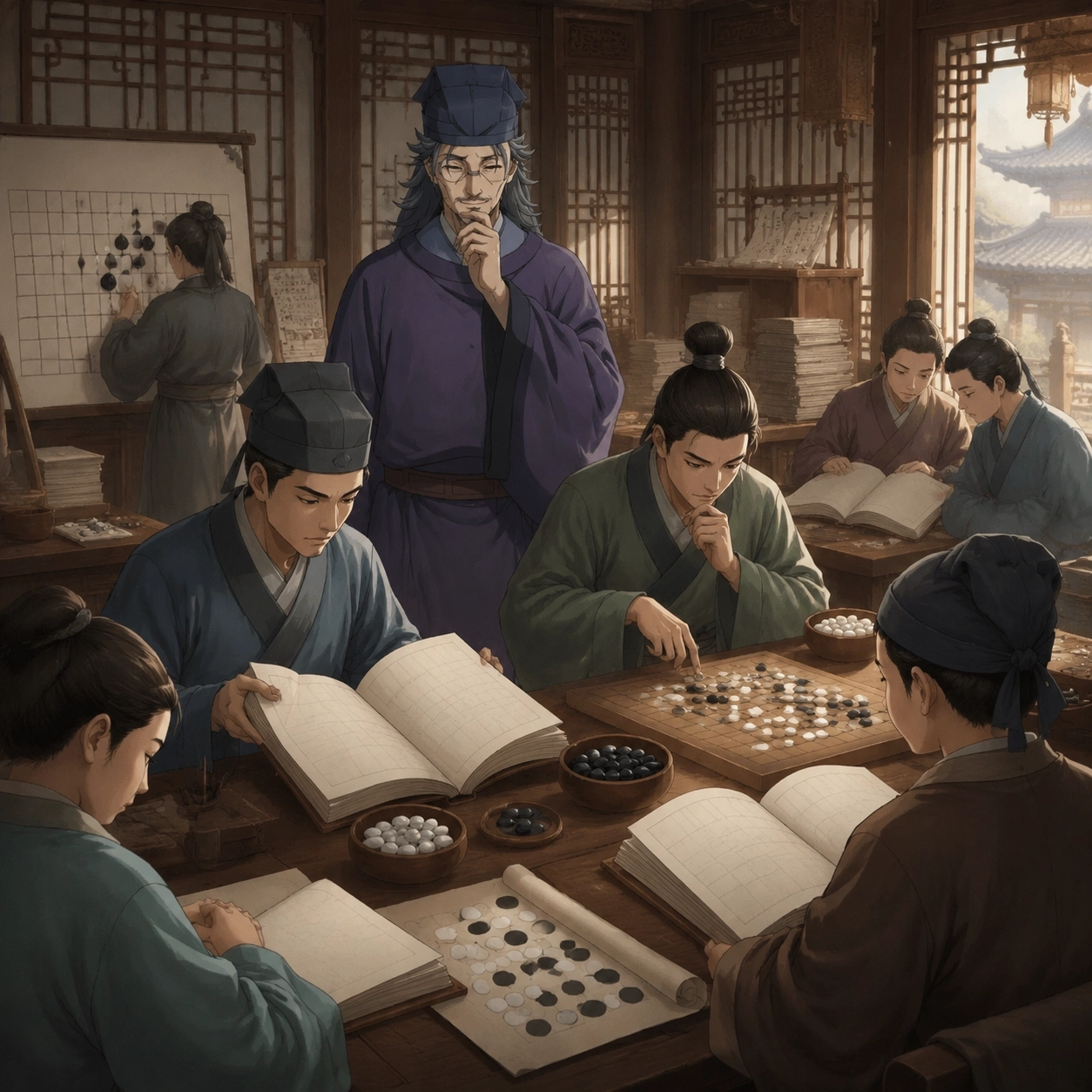
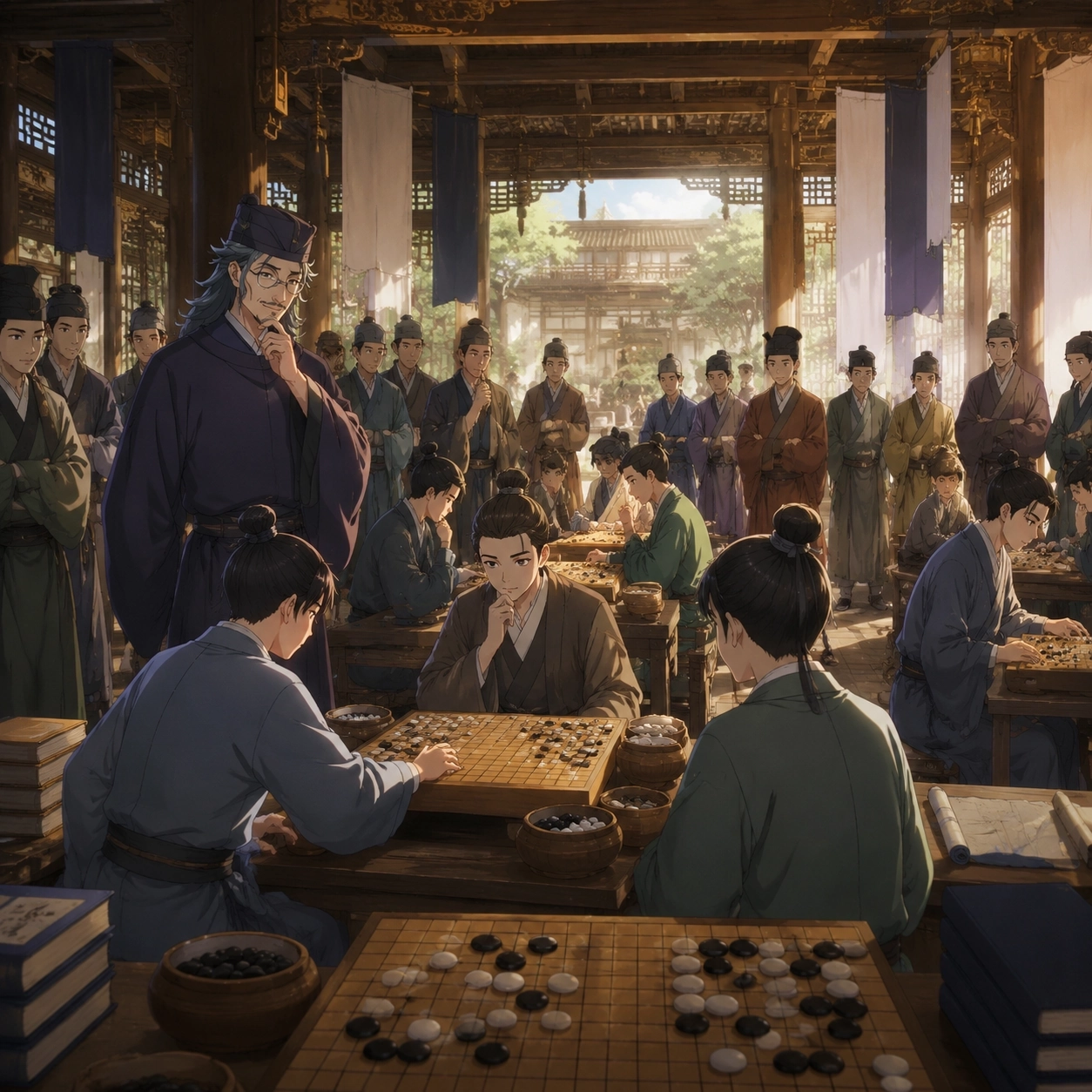
Once the book circulates, Go stops being only Lakan's eccentric personal project. Volume 8 turns the growing interest into a tournament and into public instruction. That development shows that Lakan did not want the book to sit unopened as a memorial.
He wanted more people to play. A tournament creates exactly the kind of continuation a private archive cannot create by itself: new opponents, new games, new mistakes, and new players who are not bound to repeat the old positions.
From Preserved Games to New Games
The tournament is important because it gives the book an active afterlife. Readers do not merely consume Lakan's past. They use it as a starting point for their own play. The value of the old records is measured by what they make possible next.
That also explains why instruction and simultaneous games matter in the later chapters. Lakan's knowledge is being placed into other people's hands. The book is no longer only proof of how much he understood. It is an invitation for others to become better players.
He Wants a Community, Not Only an Audience
A commercial author might want readers. Lakan's actions point toward something more demanding: players. The difference is important. An audience admires a finished work; a Go community answers it by playing.
That is why the public tournament feels like a continuation of the Fengxian thread rather than a distraction from it. The private game survives most faithfully when it generates new exchanges. Lakan is not trying to freeze the past. He is trying to make sure the past keeps producing life.
The article on Lakan's move and Jinshi's survival explores his strategic thinking in a political crisis. The Go project reveals the same mind working in a different direction: not merely controlling a board, but teaching other people how to enter it.
Legacy, Not Simple Commercialism
It would be too easy to say that Lakan published the book for money or reputation. The story gives no reason to treat those as the central motive. The public success matters, but the emotional beginning comes earlier, when he is trying to hold on to something that cannot be replaced.
At the same time, it would be just as narrow to say that every page is only a memorial to Fengxian. The book is organized for readers, the game becomes more popular, and the tournament looks toward future players. Lakan's private loss is the starting point, not the complete destination.
What the Book Lets Lakan Leave Behind
Lakan cannot leave Fengxian a future together. He can leave the world a record of the way they met each other across a board. The book makes that record durable, portable, and useful.
It also lets him leave behind a version of himself that is not only the court's eccentric strategist. In the Go book, Lakan is an analyst, teacher, editor, and curator of another person's skill. Those roles do not erase his uglier behavior, but they reveal a form of care that he rarely expresses directly.
Why the Future Player Matters
The possible future player is the emotional endpoint of the project. Someone may read the book, study the old games, and become strong enough to create a new style of play. That person would not replace Fengxian. They would prove that her games were not allowed to become a closed tomb.
This is why the later explanation of the publication carries such weight. The book preserves an unrepeatable past, but Lakan also hopes that the record can help create another exceptional player. Memory and ambition are not opposites here. They are the two reasons the book keeps moving.
What the Family Explanation Adds
The later explanation from Lakan's family makes the publication feel more deliberate. Many of the recorded games come from Lakan and a woman whose past cannot be expanded with new matches. That limitation is the heart of the project: the original exchange is over, so the only way to continue it is to preserve it and teach it.
The explanation also frames the book as an attempt to leave something for later generations. Lakan is not simply collecting proof that he once played an extraordinary opponent. He is sending a pattern forward, hoping someone in the future will understand it deeply enough to create something new.
Fengxian Is Present Without Being Reduced to a Symbol
There is a risk in reading the book as a memorial: Fengxian could become only a symbol of Lakan's grief. The game records resist that reduction. They preserve her decisions, her style, and her ability to surprise him. She remains a player, not merely the person who died.
That distinction matters. Lakan's book remembers Fengxian by keeping her difficult to solve. The record does not turn her into a perfect, silent image. It leaves behind the friction that made the games meaningful.
The Book Is a Conversation Across Time
In the end, Lakan publishes because he wants a conversation to continue across different kinds of distance: between himself and Fengxian, between the old games and new players, and between the private past and the public future.
That makes the Go book one of the most revealing objects in Lakan's story. It is a grief record, a teaching manual, a public invitation, and a legacy project at the same time.
FAQ
Why did Lakan publish a Go book in The Apothecary Diaries?
He published it to preserve the Go games connected to Fengxian, turn those games into a studyable record, spread Go to more people, and leave something that could continue into the future.
Was Lakan's Go book only a memorial to Fengxian?
No. Fengxian and the private games are the emotional origin, but Volume 8 shows the book becoming a teaching text that encourages new players and leads to a tournament.
When does Lakan first think about writing the book?
The idea appears in the Volume 6 material after Fengxian's death and the Go-record intervention. Volume 8 then shows the teaching book formally printed and circulating.
Why is Go so important to Lakan and Fengxian?
Go is the shared language through which they challenge, answer, and understand each other. The records preserve the exchange itself, not just Lakan's description of his feelings.
Why does the Go book lead to a tournament?
Because Lakan wants the game to be played by more people. The tournament turns the book from a preserved archive into an active source of new games and new players.
What should I read next?
Read Lakan's Volume 6 grief arc, then visit the Lakan character card for his connections to Maomao, Fengxian, Lahan, and the court.
Continue the character discussion