Spoiler Warning
This article discusses Volume 13, Chapter 14, Ah-Duo's account of her relationship with the Emperor, the warning she gives Maomao, Jinshi's hidden identity, and the court pressure surrounding Maomao and Jinshi. Anime-only readers should stop here.
Scene Locator
The primary scene is Volume 13, Chapter 14, “Ah-Duo's Truth.” Ah-Duo explains her past to Maomao and recognizes that Maomao may be walking toward a version of the same loss of freedom that shaped her own life.
Ah-Duo tells Maomao that there is still time to escape and offers to help. The point is not that Maomao has already suffered the exact same fate. The point is that Ah-Duo can see the court's pattern early enough to warn her.
For the earlier explanation of what Ah-Duo lost, compare why Ah-Duo says her dream was shattered at fourteen. For the identity pressure behind this conversation, see Ah-Duo's direct confession about Jinshi.
Volume-level entry only. The source is community-hosted; availability and rights status may vary.
The Short Answer
Ah-Duo fears that Maomao may follow her path because Maomao is becoming emotionally and politically tied to a powerful imperial man. Ah-Duo knows that such a relationship can begin with genuine affection and still end with the woman losing control over where she lives, what role she performs, and which choices remain available to her.
Her warning is therefore about structural repetition, not identical biography. Ah-Duo was pulled from an unequal friendship into the role of a consort. She worries that Maomao could also discover too late that love, rank, duty, and court expectation have combined into a life she did not freely design.
Maomao hears the warning clearly. She does not simply dismiss it, but she also does not accept that leaving is the only intelligent response. Her answer is to negotiate, preserve leverage, and keep as much self-direction as possible.
What Ah-Duo Is Afraid Maomao Will Repeat
A Private Relationship Becoming a Public Role
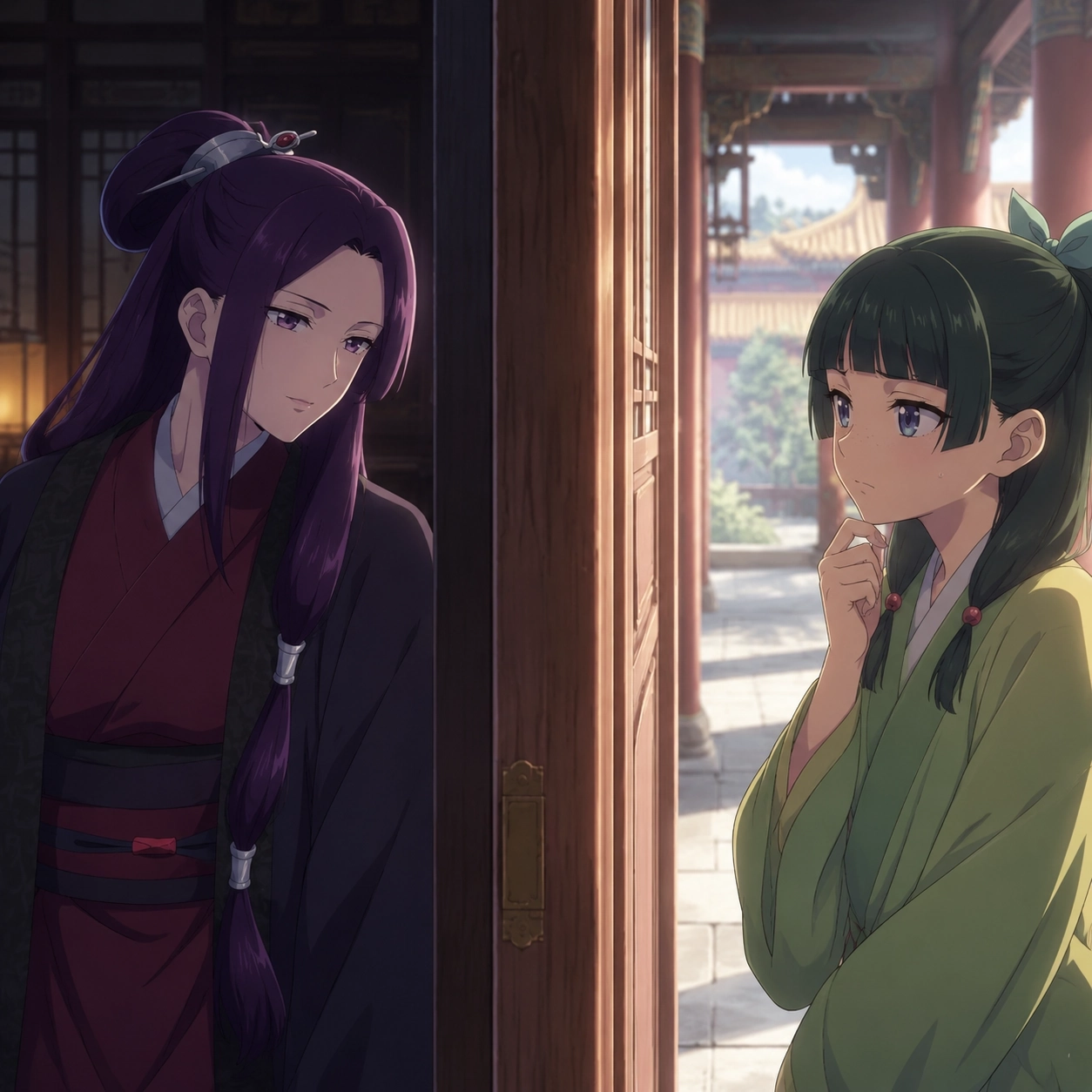
Ah-Duo's past began with a relationship she understood as friendship. She wanted to remain beside Yang as an equal, but the court did not preserve that equality. Once their identities and positions became politically useful, the relationship was translated into an imperial role.
That translation is what Ah-Duo fears for Maomao. Maomao may think about Jinshi as a person, while the court will keep reading him as a royal center of power. A personal bond around him can therefore acquire duties and expectations that neither person can control alone.
Freedom Disappearing in Small Decisions
Ah-Duo's warning is powerful because loss of freedom does not have to arrive as one dramatic command. It can appear in where a woman is allowed to go, whom she may answer, which family interests she must protect, and how much of her private life can remain private.
Maomao's medical knowledge and practical independence make her especially alert to those pressures. Ah-Duo sees both her strength and her vulnerability: Maomao is capable of surviving the court, but capability can also make powerful people decide that she belongs inside it.
Why Fourteen Still Matters
When Ah-Duo speaks about fourteen, she is identifying the moment when her future stopped being fully hers. The age is not a decorative detail. It marks the point where the court converted a private wish into a public institution.
That is why Ah-Duo can look at Maomao and think that there may still be time. Maomao has not yet been completely absorbed into the role the palace could assign her. She can still ask what she wants, what she will accept, and whether her relationship with Jinshi can exist without consuming her identity.
The warning is compassionate precisely because Ah-Duo does not pretend that affection makes the danger disappear. She remembers how easily a person can mistake continued closeness for continued freedom.
This also explains why Ah-Duo's distance from Jinshi is so painful. Their lack of an ordinary mother-and-son conversation is part of the same system of roles and secrets described in the analysis of why Jinshi and Ah-Duo never speak directly.
Why Maomao Is Not Simply Ah-Duo Again
Maomao Has a Different Kind of Leverage
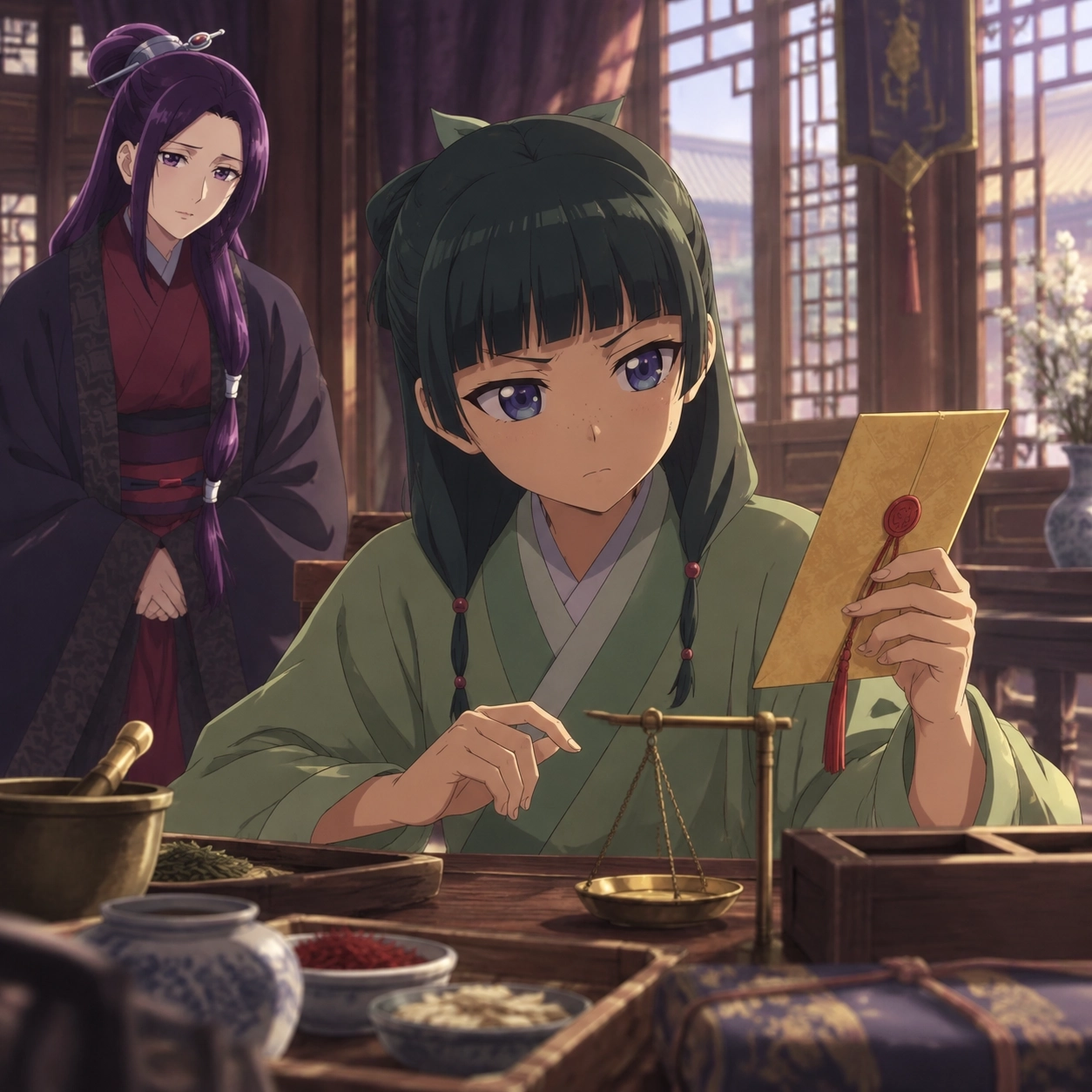
Ah-Duo's comparison does not mean the two women are interchangeable. Maomao enters this relationship with a medical skill, a habit of testing assumptions, and a willingness to refuse the emotional script other people expect her to follow.
Her position is still dangerous, but she can use knowledge as leverage. She can identify risks, understand bodies and medicines, and make herself valuable in ways that are difficult for the court to replace. That does not make her free in an absolute sense. It gives her more tools for negotiating the terms of unfreedom.
Maomao Understands the Political Cost
Maomao also knows that Jinshi's position is connected to succession, Gyokuyou's child, and the hidden family history Ah-Duo has just confirmed. Her choice to remain close is not a romantic refusal to see reality. It is a decision made after calculating the danger.
That practical calculation connects this warning to Jinshi and Maomao's night visit and to the broader map of their relationship. Maomao does not stop noticing political consequences simply because she cares about Jinshi.
Why Maomao Negotiates Instead of Running
Maomao's response is not “Ah-Duo is wrong.” It is closer to “I understand the risk, but I need to decide what to do with it.” She does not accept a simple choice between surrender and disappearance.
Negotiation suits Maomao because she rarely approaches a problem through one dramatic gesture. She gathers information, identifies the pressure points, and preserves an exit where she can. Her relationship with Jinshi is treated in the same practical way: feeling matters, but so do status, pregnancy risk, family consequences, and the limits of the palace.
This makes the conversation unusually respectful. Ah-Duo offers help because she wants Maomao to retain a choice. Maomao's decision to stay does not erase that gift. It means she uses the warning to make a more informed decision rather than allowing fear to make the decision for her.
Ah-Duo Is Not Merely Opposing Jinshi
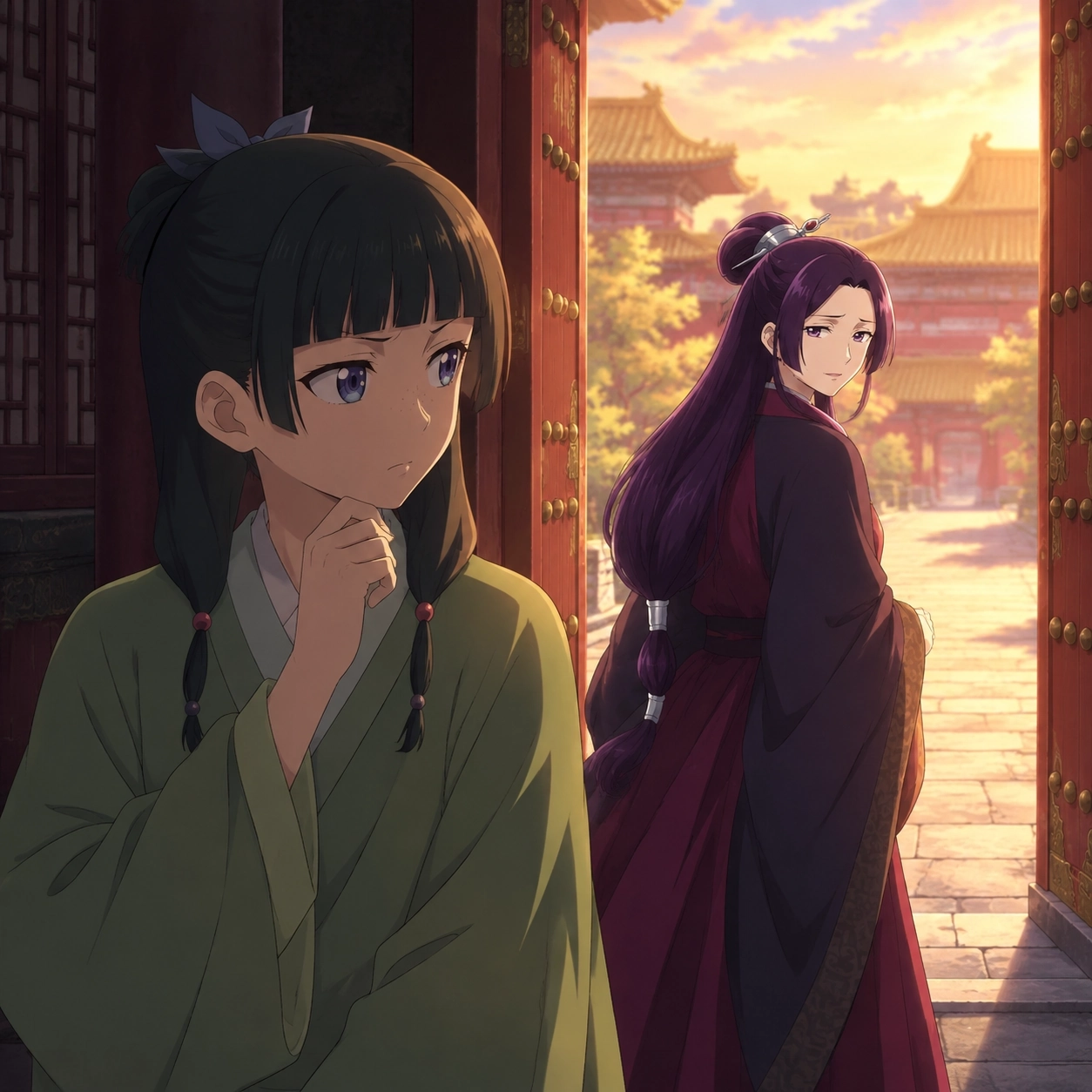
It would be too simple to read Ah-Duo's warning as hatred of Jinshi or as a demand that Maomao abandon him. Ah-Duo understands Jinshi's sincerity, and she also understands how sincere people can still participate in a system that takes choices away from others.
Her concern comes from memory. She knows what it means for a relationship to be interpreted through imperial rank until the private person inside it is no longer allowed to define the terms. She is warning Maomao about that machinery, not declaring Jinshi a villain.
The related article on Ah-Duo's lost dream explains the original wound. This article's narrower point is that she recognizes the same machinery beginning to approach Maomao, and she wants Maomao to see it before it becomes irreversible.
What the Novel Does Not Confirm
The novel does not say that Maomao will definitely become a consort, that she will lose all freedom, or that Jinshi will force her into Ah-Duo's exact role. It also does not present Ah-Duo's warning as proof that Maomao must leave Jinshi.
What the scene does establish is more precise: Ah-Duo sees a meaningful resemblance between her past and Maomao's growing connection to Jinshi; she believes Maomao still has time to escape; and Maomao chooses to confront the danger through practical negotiation rather than pretending it is harmless.
The emotional force comes from that uncertainty. Ah-Duo cannot give Maomao a guaranteed safe future. She can only offer a warning based on lived experience and preserve a door that the court would prefer to close.
FAQ
Why does Ah-Duo think Maomao may follow her path?
Because Maomao is becoming tied to Jinshi, an imperial man whose personal relationships are shaped by rank, succession, and court duty. Ah-Duo recognizes the risk that Maomao's private choices could become a public role.
Does Ah-Duo want Maomao to leave Jinshi?
She tells Maomao that there is still time to escape and offers help, but the scene is a warning and an offer of choice rather than a simple command to abandon Jinshi.
Is Maomao's fate exactly the same as Ah-Duo's?
No. The novel establishes a parallel in the danger of losing freedom, not an identical biography or confirmed future.
Why does Maomao stay after hearing the warning?
Maomao understands the political danger and decides to negotiate with it. Her choice reflects her practical temperament, not ignorance of Ah-Duo's experience.
Which chapter contains Ah-Duo's warning?
The primary scene is Volume 13, Chapter 14, “Ah-Duo's Truth.”
Can I ask Ah-Duo or Maomao about this scene?
You can continue the character discussion with Ah-Duo or Maomao. Their replies are an interactive character feature, not a replacement for the novel text.
Continue the character discussion