Spoiler Warning
This article discusses the Volume 13, Chapter 14 reveal about Jinshi's biological mother, the infant exchange involving Ah-Duo and Anshi, Jinshi's public identity, and the succession danger surrounding the truth. Anime-only readers should stop here.
Scene Locator
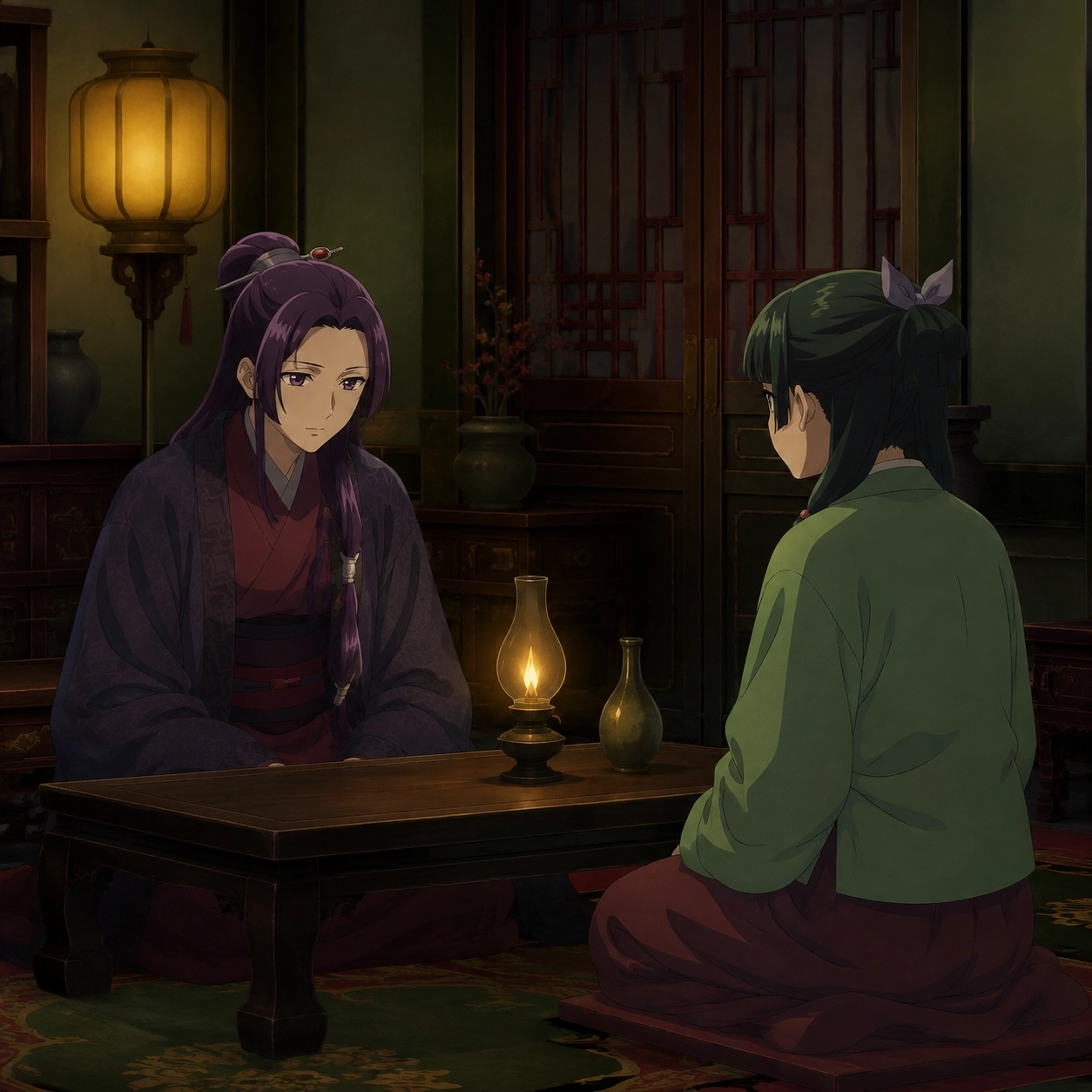
The exact reveal is in Volume 13, Chapter 14, “Ah-Duo's Truth.” Ah-Duo speaks privately with Maomao and says that “Moon” is her biological son. The chapter also explains the earlier exchange of infants and why Jinshi must continue living under a false public status.
This is the primary anchor for the confession. The older article Jinshi's journey to Ah-Duo's secret covers the wider identity trail, while this page focuses on Ah-Duo's explicit admission.
Volume-level entry only. The source is community-hosted; availability and rights status may vary.
The Short Answer
Ah-Duo Says Jinshi Is Her Son
Yes. In the Volume 13 conversation, Ah-Duo does not leave the answer at resemblance, timing, or Maomao's deduction. She explains that the reason she ordered Chue to make Jinshi happy is that Jinshi is her biological son. This is a direct statement from Ah-Duo to Maomao, not a fan theory and not merely a clue assembled by the reader.
The wording matters because Ah-Duo has spent years treating the truth as something that must remain behind official names and roles. She can call him “Moon” and care for him through trusted servants, but she cannot safely behave like his mother in public.
The Infant Exchange Made His Identity Dangerous
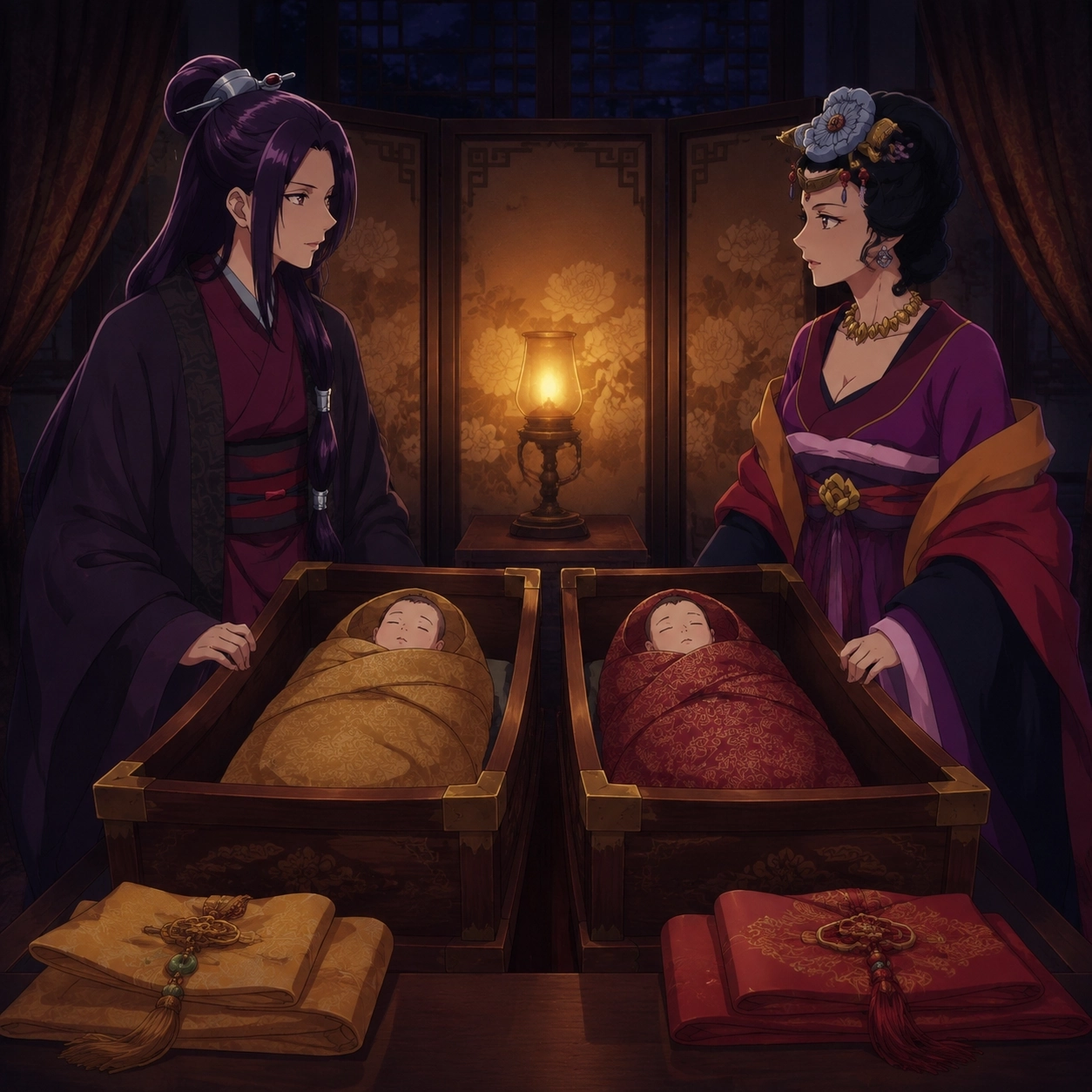
Ah-Duo then confirms the older history: she and the Empress Dowager Anshi planned an exchange between the infants. The child publicly recognized as the Emperor's younger brother was actually Ah-Duo's biological child. The child presented as Ah-Duo's son was Anshi's biological child.
That exchange protected a vulnerable child and stabilized the palace story, but it also split biology from public identity. Jinshi inherited the life of a younger imperial brother while carrying the bloodline of the Emperor's son. Ah-Duo therefore has a biological truth she cannot turn into a public title.
What Maomao Understands in That Moment
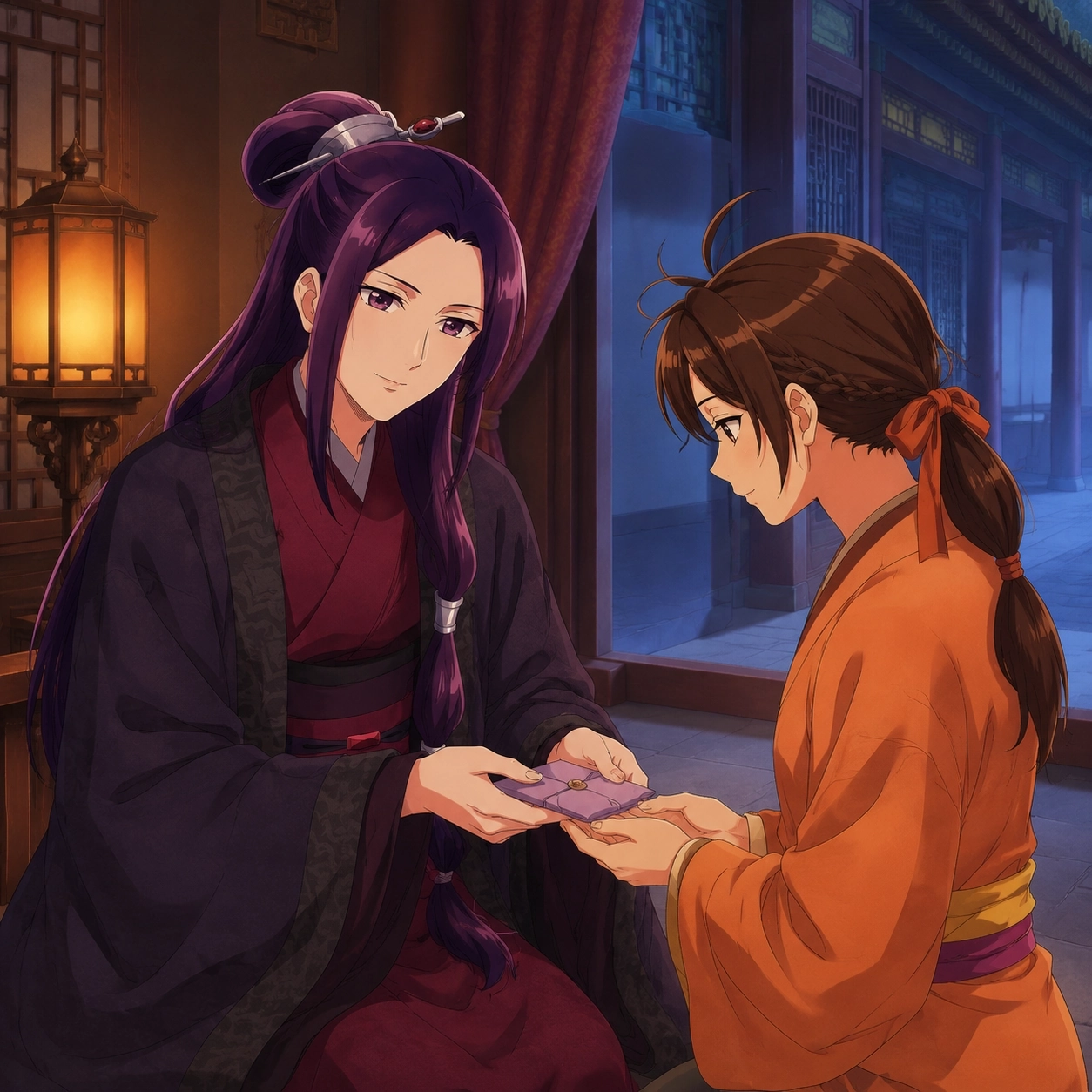
Maomao is not shocked because she has already noticed that the family history does not fit the official labels. What unsettles her is being forced to receive the answer directly. Her reaction is less “I never imagined this” and more “I wish I did not have to know this with certainty.”
Once Ah-Duo confirms the relationship, Maomao immediately recalculates the consequences of Jinshi's relationship with her. Jinshi is not simply a royal younger brother. If he is Ah-Duo's son, then his position touches the Emperor's succession and the security of Gyokuyou's child.
That practical reading connects this scene to Jinshi and Maomao's night visit and to Maomao's pregnancy-risk calculation. Those pages explore later decisions, but the emotional and political pressure begins with Ah-Duo's disclosure.
What the Confession Changes
It Turns a Theory into Ah-Duo's Testimony
The biggest change is evidentiary. Readers no longer have to treat Ah-Duo's resemblance to Jinshi or the palace timeline as the final proof. The person who knows the truth says it aloud to Maomao.
It Reframes Ah-Duo's Distance
Ah-Duo's restraint becomes a form of protection rather than emotional indifference. She cannot offer Jinshi an ordinary family relationship, so she keeps his happiness in view through people she trusts. The arrangement is painful precisely because the maternal feeling is real while the public role is impossible.
It Makes Jinshi's Status More Tragic
Jinshi's public identity is not just a disguise he chose for convenience. It is the result of an old decision that placed safety above recognition. His later struggle with succession has a personal foundation: the role he is expected to occupy is built on a truth the palace cannot acknowledge.
For the Emperor's side of this structure, compare whether the Emperor treats Jinshi as a brother or a son. For the broader family pressure, see the Anshi secrets guide.
FAQ
Does Ah-Duo explicitly say Jinshi is her biological son?
Yes. In Volume 13, Chapter 14, Ah-Duo tells Maomao that Moon, the person known as Jinshi, is her biological son.
Which volume contains Ah-Duo's confession?
The direct confession is in Volume 13, Chapter 14, “Ah-Duo's Truth.”
What happened to the two infants?
Ah-Duo and Anshi planned an exchange. Ah-Duo's biological child was raised under the public identity of Anshi's child, while Anshi's biological child was presented as Ah-Duo's son.
Does the chapter show Jinshi hearing the confession?
No. The explicit conversation shown here is between Ah-Duo and Maomao. The chapter confirms Ah-Duo's knowledge and testimony; it should not be rewritten as a public mother-and-son confrontation.
Why does Ah-Duo keep the truth hidden?
Because revealing the exchange would threaten Jinshi's safety and destabilize the imperial family's succession structure. Her care therefore travels through trusted people rather than a public claim.