Spoiler Warning
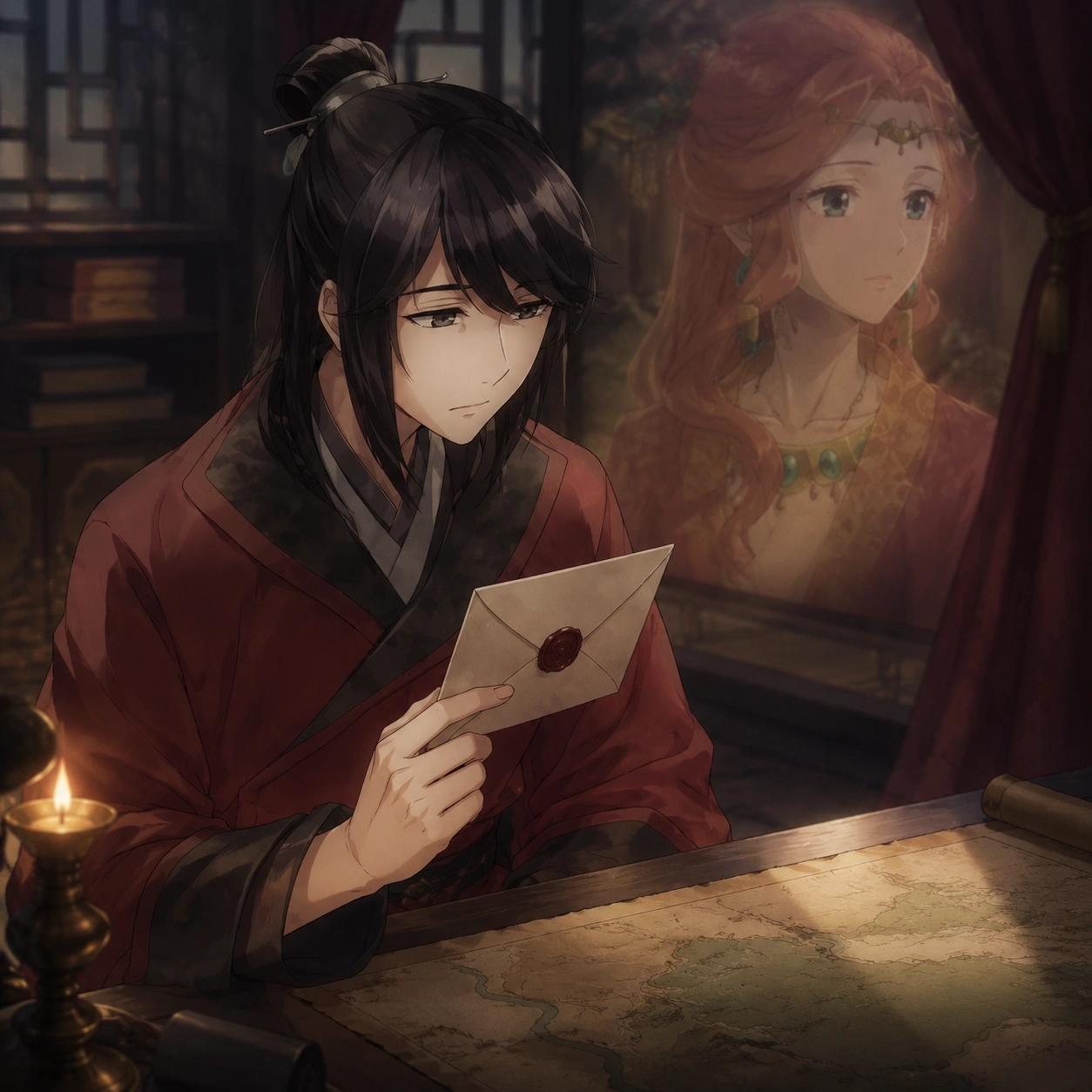
This article discusses the Volume 11 Western Capital endgame, including Yuying's responsibility for Rikuson's family tragedy, Gyokuyou's letter, Rikuson's killing of Yuying, and the staged explanation that follows.
Scene Locator
The relevant sequence belongs to Volume 11's late Western Capital chapters and final chapter. The story connects Yuyuan's decision, Gyokuyou's indirect reply, Rikuson's hesitation, Yuying's death, and the political work required to keep the Western Region from collapsing into another conflict.
Volume-level entry only. The source is community-hosted; availability and rights status may vary.
The Short Answer
Gyokuyou does not send a direct kill order
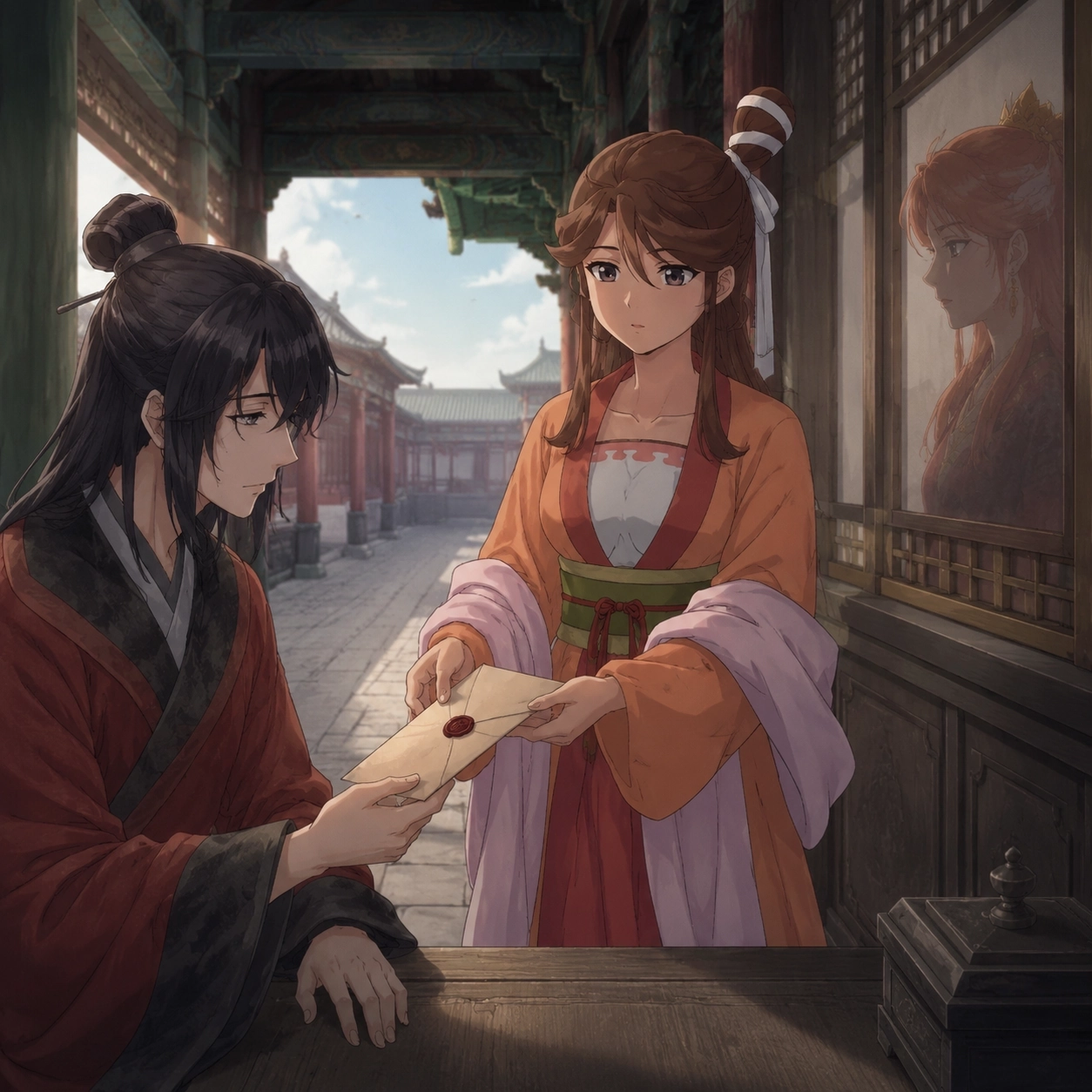
The novel never gives Gyokuyou a public or explicit command saying that Rikuson must kill Yuying. Instead, Yuyuan chooses Rikuson as the person who can watch Yuying and act as an executioner if the situation becomes unavoidable. Gyokuyou understands that decision and sends Rikuson a short message through Baiyu.
The message amounts to "act as you see fit." In context, that is informed permission or tacit approval, not a detailed instruction about timing, method, or evidence. The difference is important because it keeps the final act with Rikuson.
Rikuson still makes the choice
Rikuson does not treat the letter as an automatic command. He struggles with it for a long time and wishes that Yuying might correct himself. His hesitation shows that Gyokuyou's approval removes one political barrier, but it does not remove Rikuson's fear, anger, or responsibility.
When the confrontation finally reaches its fatal point, Rikuson acts after Yuying's conduct has made the danger immediate. He then rearranges the scene so the public story can blame the attacking farmer rather than expose a planned internal killing.
What Gyokuyou's Letter Means
Knowledge becomes consent
Gyokuyou's role is not passive. She knows what her father has decided, understands why Rikuson has been placed near Yuying, and chooses to send a written reply rather than deny the plan. Their exchange is therefore correspondence-based acknowledgment, not a face-to-face conversation. Her brief wording is powerful precisely because she does not need to explain every political detail to Rikuson.
That is why "approval" is a fair interpretation, provided it is used carefully. Gyokuyou accepts that Rikuson may act if the situation demands it. She does not personally describe the killing as a public order, and the novel does not show her planning the staged scene.
Why the communication stays indirect
Rikuson and Gyokuyou do not sit down for a direct conversation about assassinating her half-brother. Their communication is carried through correspondence, with Baiyu serving as the intermediary who delivers the private letter. That distance protects both sides: Gyokuyou can acknowledge the decision without creating a visible court record, while Rikuson can decide whether the moment has truly arrived.
The letter also fits Gyokuyou's political position. As Empress, she has to protect her children, her household, and her relationship with the central court. A direct order against a powerful western relative would be dangerous even if the target deserved to be stopped. Indirect language gives her room to accept the necessity without turning the act into an official palace command.
Why Rikuson Acts
Family revenge remains part of it
Yuying is tied to the deaths of Rikuson's mother and elder sister. Rikuson once had to continue working under the man connected to that tragedy, because his sister's final words pushed him toward protecting the Western Region rather than destroying it in anger.
Gyokuyou's letter does not create Rikuson's hatred. It gives him permission to stop pretending that personal revenge can never be part of the answer. The wish he has buried for years is finally allowed to meet the political danger in front of him.
Protecting the Western Region is the second motive
Rikuson is not acting only as a grieving survivor. Yuying's willingness to use the Western Region against Sha'ou threatens the people and institutions Rikuson has been told to protect. If Yuying turns the region into fuel for a war, the cost will not fall only on the men who made the plan.
This is why the novel places revenge beside administration, famine, and political succession. Rikuson's choice is personal, but it is also a decision about whether the west will remain a place where ordinary people can live after the old leadership breaks apart.
What the Novel Confirms
Gyokuyou knew about the decision
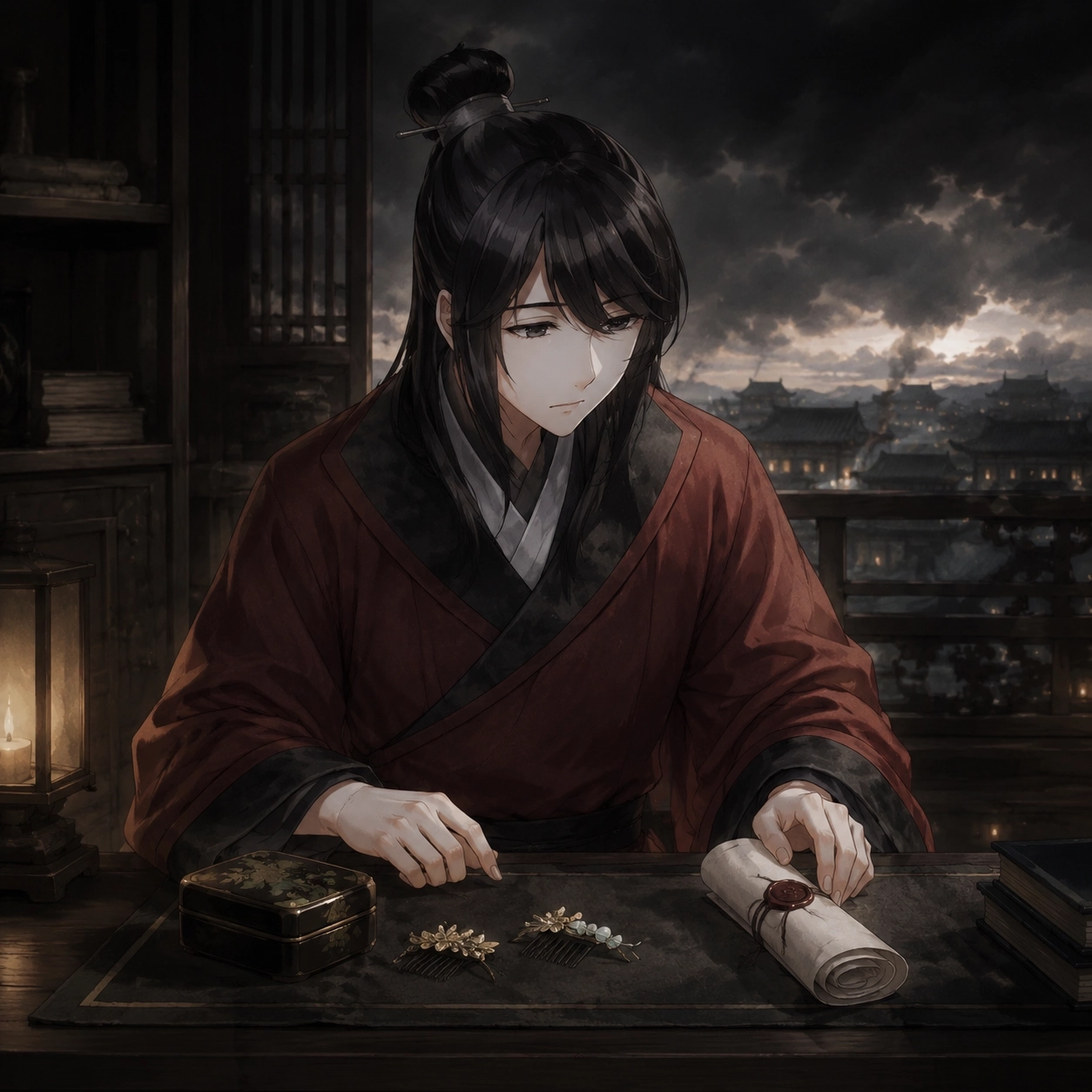
The text says that Gyokuyou was aware of Yuyuan's decision. She did not remain uninformed while Rikuson was positioned near her brother. Her letter is therefore meaningful evidence that she accepted the possibility of Rikuson acting.
Rikuson was chosen as a watcher and possible executioner
Yuyuan's decision gives Rikuson a dual role: monitor Yuying and deal with him if necessary. That role explains why Rikuson is placed so close to the danger, but it does not turn the killing into a routine public appointment.
The letter does not specify the method
Nothing in the letter tells Rikuson to use a farmer's knife, stage a rebel attack, or choose a particular day. Those details belong to the crisis as it unfolds and to Rikuson's own response after Yuying kills the attacking farmer.
The aftermath shows Rikuson's guilt
After the long revenge he has carried is fulfilled, Rikuson does not feel cleanly victorious. He feels emptied out and morally compromised. The emotional aftermath is another reason the novel does not frame Gyokuyou's approval as a simple royal pardon.
Common Misreadings
Misreading 1: Gyokuyou directly ordered the assassination
The letter supports informed approval, but not a detailed direct order. Treating it as a spoken command makes Gyokuyou more explicit than the novel does.
Misreading 2: Rikuson was only following Gyokuyou
Rikuson receives permission, not a script. He hesitates, evaluates Yuying's threat, acts at the decisive moment, and carries the consequences himself.
Misreading 3: The letter means Gyokuyou hated her brother
Gyokuyou's conflict with Yuying is political and moral. The novel can acknowledge that he is not simply an evil caricature while still showing that his certainty and decisions have become dangerous.
Misreading 4: Rikuson's revenge is unrelated to the region
His family history and the Western Region's safety are deliberately joined. Rikuson's private wound becomes politically decisive only because Yuying continues to endanger the same place Rikuson was told to protect.
FAQ
Did Gyokuyou approve Rikuson's killing of Yuying?
Yes, the most careful reading is that she gave informed permission through a brief letter. It is tacit approval rather than a public or detailed assassination order.
Did Gyokuyou and Rikuson discuss the killing face to face?
No. Their communication is indirect. Gyokuyou learns of Yuyuan's decision and sends her reply through Baiyu, so the letter carries the approval that a direct meeting never states aloud.
Why did Gyokuyou use a letter?
A letter preserves distance and deniability. It lets Gyokuyou acknowledge the necessity of Rikuson's role without creating a public court instruction against her half-brother.
Was Rikuson acting only for revenge?
No. Revenge for his mother and elder sister is central, but stopping Yuying from sacrificing the Western Region to a war plan is the other major motive.
Where does this happen in the light novel?
The local source index places the relevant Western Capital endgame in Volume 11, Chapters 18-22 and the final chapter. The article uses the full sequence because the letter, killing, and emotional aftermath are connected across the volume.
What should I read next?
Continue with why Rikuson killed Yuying, why Gyokuyou trampled Yuying's letter, and Rikuson's response to the locust plague.