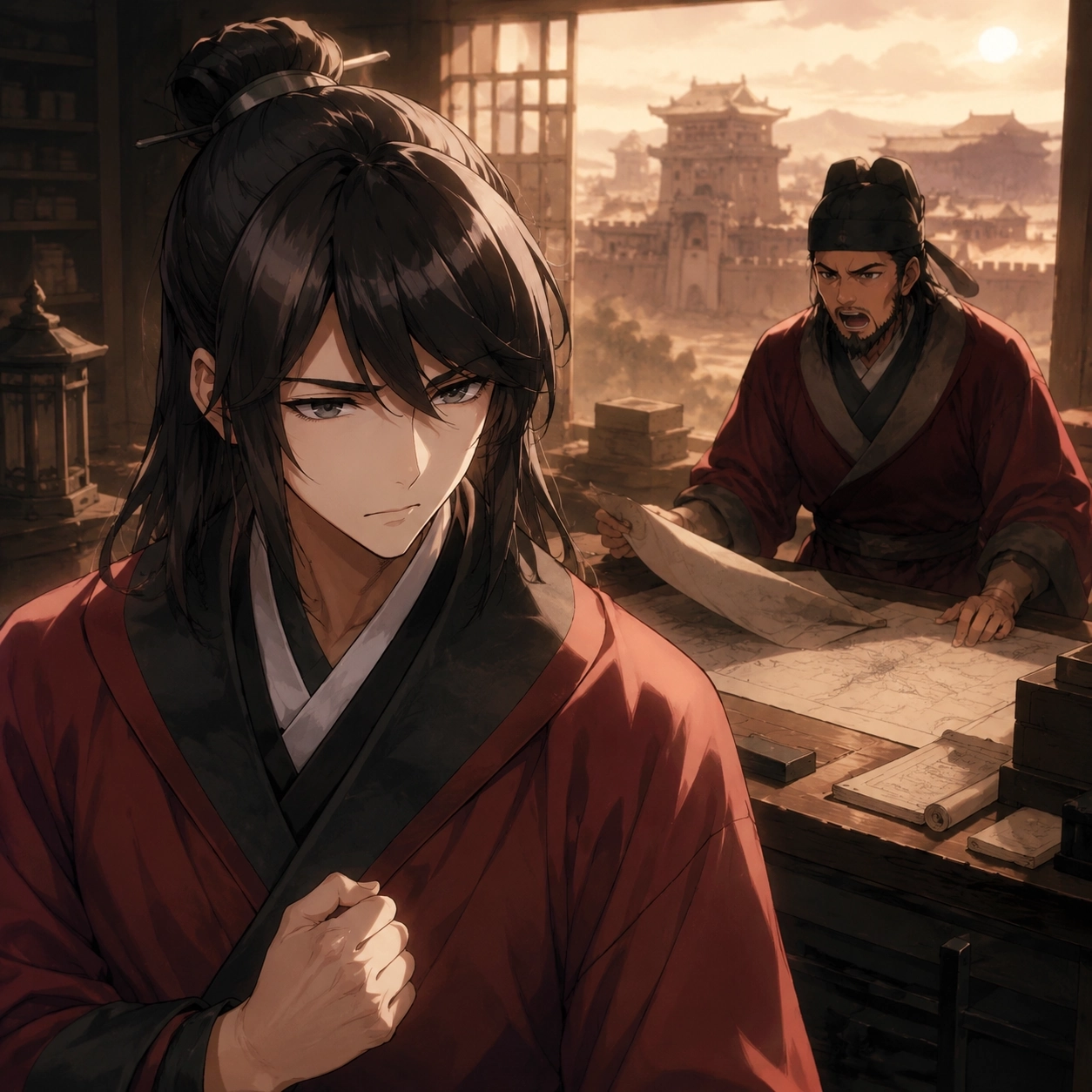
Spoiler Warning
This article discusses late Western Capital events from the light novel, including Yuying's responsibility for the deaths of Rikuson's mother and elder sister, the proposed war against Sha'ou, the farmer's attack, and the staged explanation of Yuying's death.
Scene Locator
The relevant material belongs to the Volume 11 Western Capital endgame. The local novel index places the surrounding Rikuson and Yuying material across Chapters 18-22 and the final chapter. The sequence moves from Yuying's war posture and family secrets to the farmer's attack, Rikuson's rearrangement of the scene, and the political consequences that follow.
Volume-level entry only. The source is community-hosted; availability and rights status may vary.
The Short Answer
Rikuson kills Yuying for two connected reasons
First, Yuying is the man who killed Rikuson's mother and elder sister. Rikuson had to keep serving under him after the Western Region's political collapse because his sister's final instruction was to protect the region. That forced obedience turns the later confrontation into a personal reckoning.
Second, Yuying is willing to use the Western Region as a weapon against Sha'ou. Rikuson cannot treat that as a private family dispute because the plan would expose the region's people to war and further destruction. His decision therefore combines revenge with an attempt to stop Yuying from endangering the place Rikuson's family told him to protect.
The staged story protects the Western Region from a second disaster
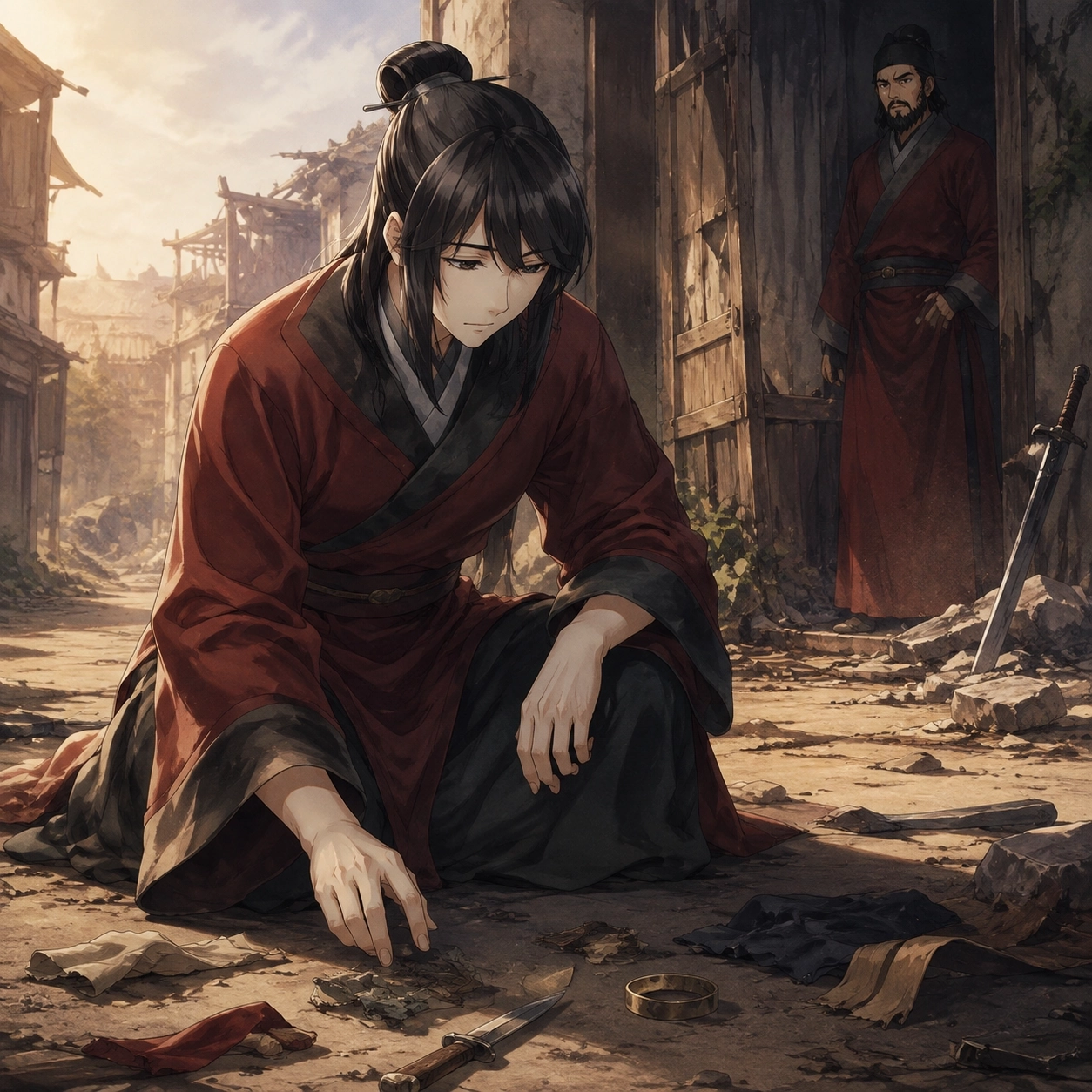
Yuying first kills the farmer who attacks him. Rikuson then rearranges the scene, gives the farmer the small knife he is carrying, takes Yuying's sword, and helps create the public explanation that Yuying was already dead when the group arrived and that the rebel farmer was responsible.
This cover story is not a decorative trick. It prevents the death from immediately becoming a public accusation against the Western Region, its people, or the officials who would inherit the political fallout. Rikuson's violence is hidden because the region cannot afford the consequences of an openly acknowledged internal execution.

What the Novel Confirms
Yuying was responsible for Rikuson's family tragedy
The later account is direct: Rikuson learns that Yuying was the person responsible for killing his mother and elder sister. This is not a theory about an unnamed old conspiracy, and it is not a revenge story about Rikuson's father. The family connection is specific, and the people Rikuson loses are his mother and sister.
The distinction matters because earlier misunderstandings about Rikuson's background can make him look like a generic survivor seeking justice. The text gives him a more precise burden: he remembers the two women who protected him, remembers the duty his sister left him, and then discovers that the man he must work under is the same man tied to their deaths.
Rikuson endured working under Yuying
Rikuson does not immediately get the freedom to confront Yuying. After the Western Region's political settlement, he remains in a position where Yuying is effectively his superior. When he arrives in the Western Capital and hears that name attached to his direct superior, he nearly loses control.
That endurance is part of the motive. Rikuson stays alive and stays useful because his sister's last words require him to protect the Western Region. The delay does not erase his anger; it shows that his personal revenge has been constrained by a duty larger than his own release.
Yuying endangered the Western Region
Yuying's objective is not the same as the policy of developing the Western Region. His inferiority toward Yuyuan turns the region into a tool for attacking Sha'ou. The plan is dangerous because it treats the people and resources of the west as fuel for a personal and political contest.
Rikuson therefore has a second reason to act: Yuying is not merely a man from his past. He is an immediate threat to the region's future. That is why the novel places Rikuson's revenge beside the question of who can actually preserve the west after the old order collapses.
Revenge and Protection Are Connected
It was not just revenge
Calling the killing revenge is correct but incomplete. Rikuson has a personal reason to hate Yuying, yet the scene is shaped by the same protective logic that governed his mother's and sister's final choices. They hide him because he is the only male child left in the family. His sister later tells him to protect the west. Rikuson follows that instruction even when it means working beside the man he despises.
When Yuying begins to endanger the region, the personal and political lines meet. Rikuson can finally stop the man who harmed his family, but he does so at the moment when Yuying's actions also threaten the people Rikuson was ordered to protect.
It was not just a political maneuver
The staged narrative is politically useful, but it does not make Rikuson a cold administrator who kills only to stabilize a government. The novel keeps his grief and anger visible. He has spent years suppressing the impulse to strike back, and the scene works because the reader understands what that restraint cost him.
At the same time, the text refuses to make the moment a simple heroic execution. Rikuson must manipulate evidence, accept suspicion, and continue living as a kind of "wind" whose work is to protect the region without demanding public credit. The result is morally uncomfortable on purpose.
Why the Staged Scene Matters
It keeps blame from falling on the Western Region
If Rikuson openly announced that he had killed Yuying, the death could be read as an uprising by the Western Region or as a factional assassination. Either interpretation would give the central court a reason to punish the region and would make the local population carry the cost of a political transition.
By presenting the farmer as the killer, Rikuson narrows the official story to a rebel incident. That version is still dangerous, but it is less damaging than exposing a planned internal killing by the person who understands both Yuying's crimes and the region's political fragility.
It lets Rikuson remain useful after the killing
Rikuson does not disappear once Yuying is dead. He remains involved in the settlement, the questions around household records, and the future of the Western Region. The disguise gives him room to continue protecting the region rather than turning himself into the next political crisis.
It explains why Rikuson is not publicly celebrated
The public account has no place for a clean avenger. Rikuson's success depends on the story being accepted as an ugly but ordinary act of rebellion. The silence around his real action is therefore part of the price of his success.
Common Misreadings
Misreading 1: Rikuson killed Yuying only because of his family
That leaves out Yuying's plan to use the Western Region against Sha'ou. Rikuson's family revenge is one motive, but protecting the region is the other half of the answer.
Misreading 2: Rikuson's father is the center of the revenge plot
The source-supported account centers on Rikuson's mother and elder sister. The novel does not require a father-revenge explanation here, so adding one changes the story.
Misreading 3: Rikuson was openly appointed as Yuying's executioner
The text shows Rikuson arranging the scene after Yuying kills the attacking farmer. It does not establish a formal executioner assignment from Yuying. The concealment is part of Rikuson's own decision.
Misreading 4: Yuyuan and Yuying have the same role
They do not. Yuyuan becomes a difficult but important example for Rikuson because he chooses the Western Region's development over personal honor. Yuying instead risks the region through inferiority and war. Confusing the two erases the contrast that shapes Rikuson's final choice.
FAQ
Why did Rikuson kill Yuying?
Because Yuying was responsible for the deaths of Rikuson's mother and elder sister, and because Yuying was willing to endanger the Western Region by using it to attack Sha'ou. Rikuson's action combines revenge with protection.
Did Rikuson kill Yuying after the farmer attacked him?
Yes. Yuying killed the attacking farmer first. Rikuson then rearranged the scene and helped make the death look like the farmer's work.
Why did Rikuson hide that he killed Yuying?
Because an openly acknowledged internal killing could have brought greater political punishment and instability to the Western Region. The rebel explanation limited the immediate fallout.
Was Rikuson's motive only revenge?
No. Revenge explains the personal force of the scene, but Rikuson is also acting to stop Yuying from turning the Western Region into a battlefield.
Where does this happen in the light novel?
The local source index places the surrounding Western Capital endgame in Volume 11, Chapters 18-22 and the final chapter. The article uses that range rather than inventing a single chapter number for the entire sequence.
What should I read next?
Continue with Rikuson's response to the locust plague, whether Rikuson deliberately provokes Jinshi, and why Gyokuyou rejects Yuying's letter.