Spoiler Warning
This article discusses major light novel spoilers through Volume 8, including Gyokuyou's rise to empress, her brother Yuying's role in the western territories, the family conflict around his moral certainty, and Gyokuyou's thoughts about how he may treat her son and daughter.
Scene Locator
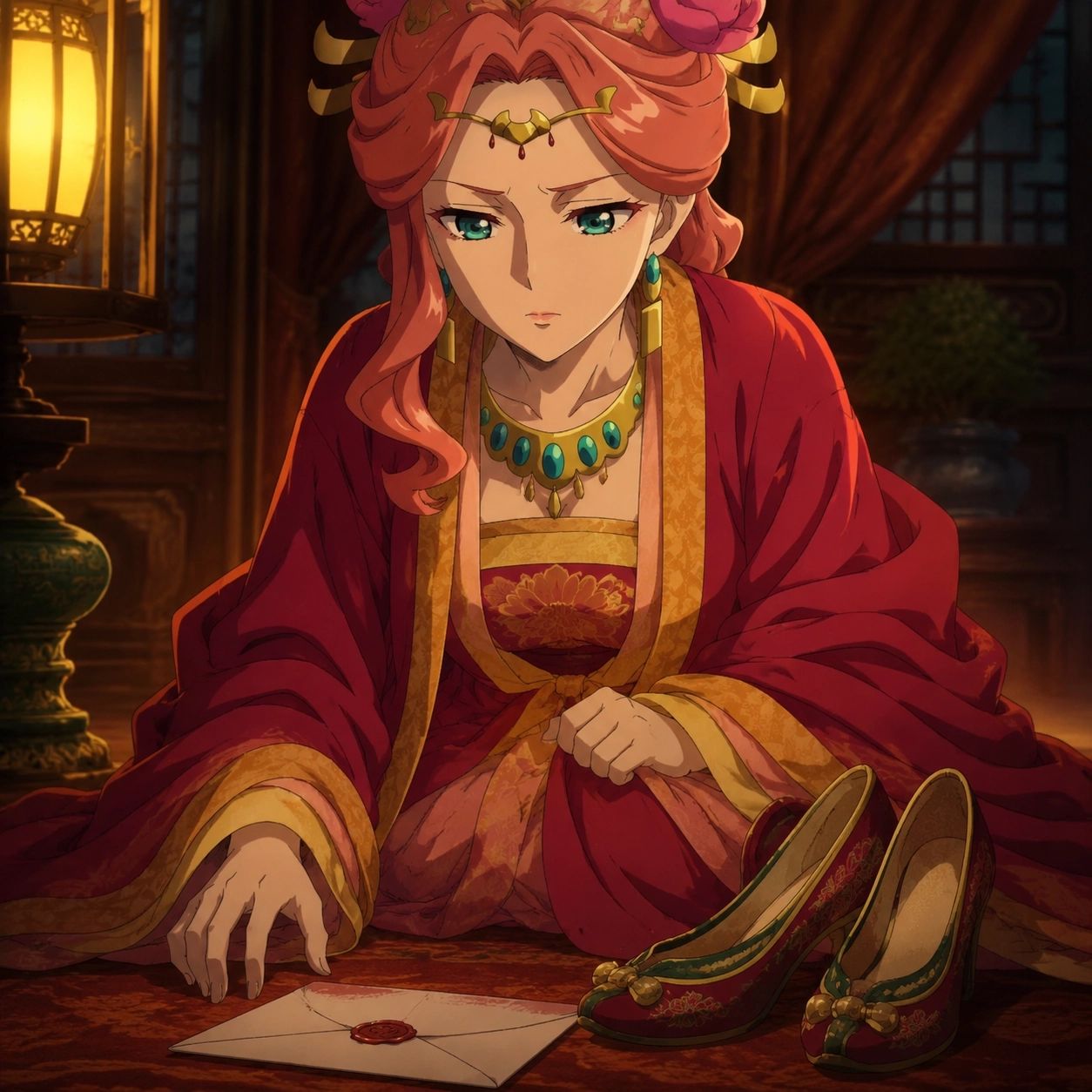
The scene appears in the Volume 8 final chapter, after the larger imperial and western tensions have already changed Gyokuyou's position. Gyokuyou returns to her residence, thinks about the mark Jinshi has left as a public promise, and then faces the private problem represented by a letter from her maternal half-brother Yuying.
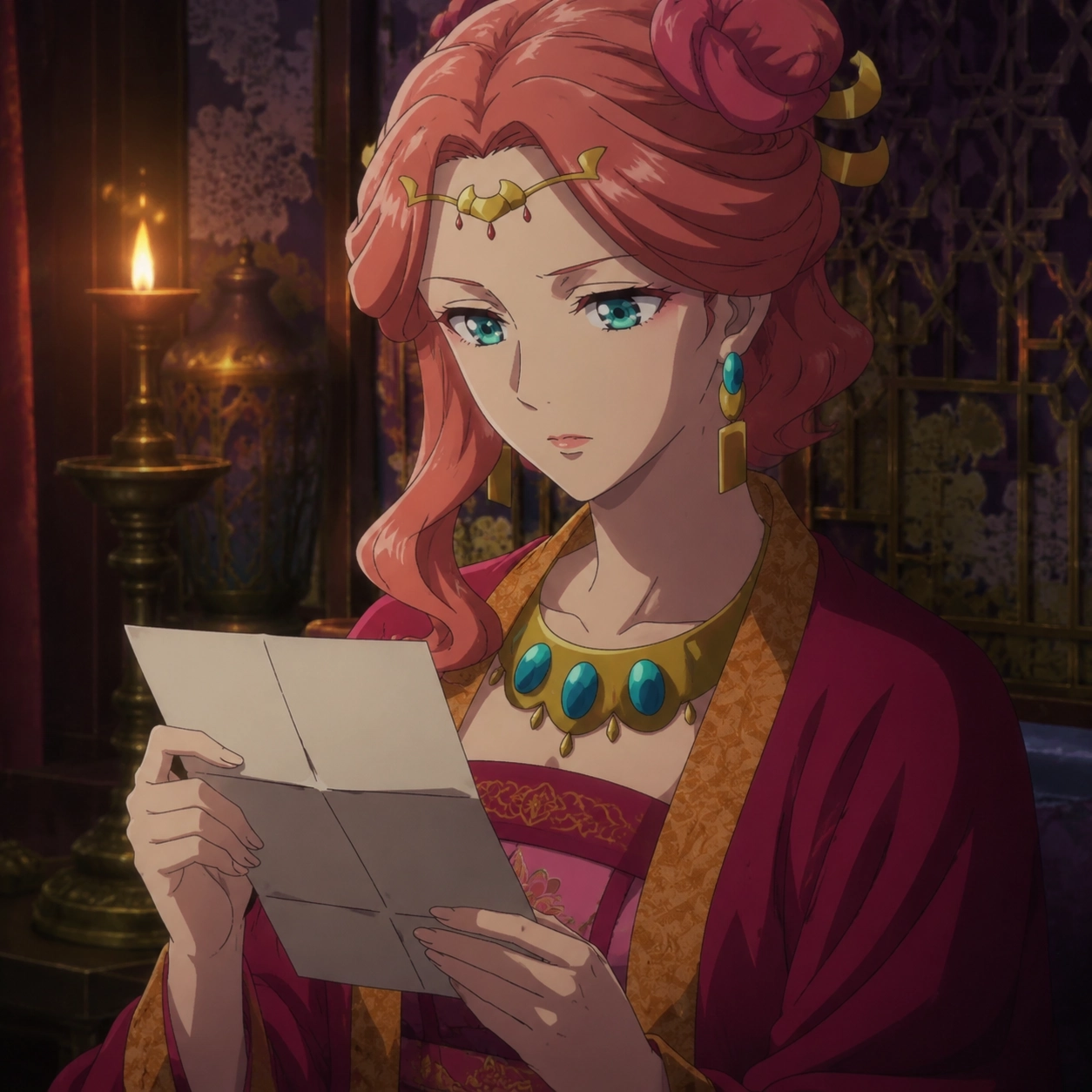
The chapter does not reproduce the whole letter for the reader. Instead, it gives the surrounding context: Yuying believes that his own moral judgment is justice, regards Gyokuyou as a bad person, and still appears interested in drawing her side back into his orbit. Gyokuyou lets the letter fall, says she will not let him have his way, and slowly tramples it.
For the earlier warning about Yuying's methods and the dangers surrounding Gyokuyou's household, read why Gyokuyou wants Maomao close. For the wider political structure around her rise, see Gyokuyou's road to empress.
Volume-level entry only. The source is community-hosted; availability and rights status may vary.
The Short Answer
It Is Not a Simple Sibling Quarrel
Gyokuyou tramples the letter because she recognizes that Yuying's contact is not emotionally neutral. He is not merely an older brother checking on a younger sister. He is a powerful family figure whose sense of right and wrong can turn into pressure, punishment, or recruitment.
Her response therefore has three layers. She rejects his right to define her as an evil person. She refuses to let him treat her children as possible allies or useful heirs. And she makes clear that the woman who entered the palace as a family asset is no longer available for the family's old plans.
The Letter Is a Test of Power
A letter can look private, but in The Apothecary Diaries private messages often carry public consequences. Yuying's letter crosses distance, family hierarchy, and court politics. It asks Gyokuyou to acknowledge a relationship on terms he can still control.
Gyokuyou refuses that test. She does not answer with a long explanation, and she does not argue that she is secretly innocent. She reduces the message to an object on the floor, then uses her own body and status to deny it authority.
Who Yuying Is in Gyokuyou's Memory
The novel does not frame Yuying as a cartoon villain. Gyokuyou can understand that he is not acting from random cruelty. He believes in his own justice. That is exactly what makes him dangerous. A person who knows he is manipulating others can sometimes be negotiated with. A person who believes his pressure is morally correct may never recognize the harm he causes.
Yuying's position also comes from family hierarchy. He is the legitimate elder son, while Gyokuyou is the daughter of a secondary wife and visibly marked by her foreign appearance. His resentment is therefore tied to both personal prejudice and a social order that gives him the confidence to judge her.
The western family background matters here. Gyokuyou's father, Yuyuan, taught his children that foreigners should be treated as neighbors and friends, yet Yuying rejects part of that lesson when he judges Gyokuyou's red hair and green eyes. His moral language sounds universal, but it is filtered through pride, inheritance, and discomfort with someone who does not fit his idea of the proper family.
Why Being Called an Evil Person Matters
Gyokuyou has survived court danger by learning how other people name her. To be called beautiful, foreign, favored, ambitious, or useful can each create a different kind of risk. Yuying's label is more serious because it turns a family disagreement into a moral verdict.
Once he calls her a bad person, any action against her can be presented as correction. He can interfere with her household while believing he is protecting justice. He can approach her children while believing he is rescuing them from a corrupt mother. Gyokuyou understands that the label is not only insulting. It is a permission slip.
Why Gyokuyou Steps on the Letter
1. She Rejects His Claim to Own Justice
Gyokuyou's first refusal is intellectual. She will not accept that Yuying gets to decide who is righteous and who is wicked. He may sincerely believe that he is correct, but sincerity does not turn a personal standard into universal law.
This is why her anger is colder than a normal family argument. She is not trying to persuade him that she is good. She is denying the court of judgment he has built inside his own mind. The letter represents a verdict from someone who has never earned the right to rule over her conscience.
2. She Protects Her Son and Daughter from His Calculations
The most frightening part of the scene is Gyokuyou's question about her children. She expects Yuying might try to win over a son because a boy can be treated as a future political connection. She is less certain that he would value a daughter in the same way.
That thought exposes the gendered logic behind the family pressure. Yuying may look at children through rank, usefulness, and succession value. Gyokuyou looks at them as people whose safety and dignity come before the family's strategic needs. The difference is not cosmetic. It is the reason she cannot let him back into her household on his own terms.
Gyokuyou's protection is also consistent with her wider character arc. Her rise to empress is built around children, household survival, and the ability to turn affection into responsibility. The letter threatens that structure because it comes from someone who may treat the children as extensions of a family argument.
3. She Refuses to Be Recruited Back into the Family's Power Game
Yuying's attempt to approach Gyokuyou is difficult to read as pure affection because he has already judged her and still wants something from the relationship. That contradiction is the point. He can condemn her and recruit her at the same time because he sees her value as a political asset.
Gyokuyou's answer is a refusal to become useful in that way again. The younger woman who was once sent toward the center as part of a long-term family plan has become a court power in her own right. She is not going to let her brother treat her imperial household as a branch office of the western family.
Gyokuyou Is No Longer the Girl from the West
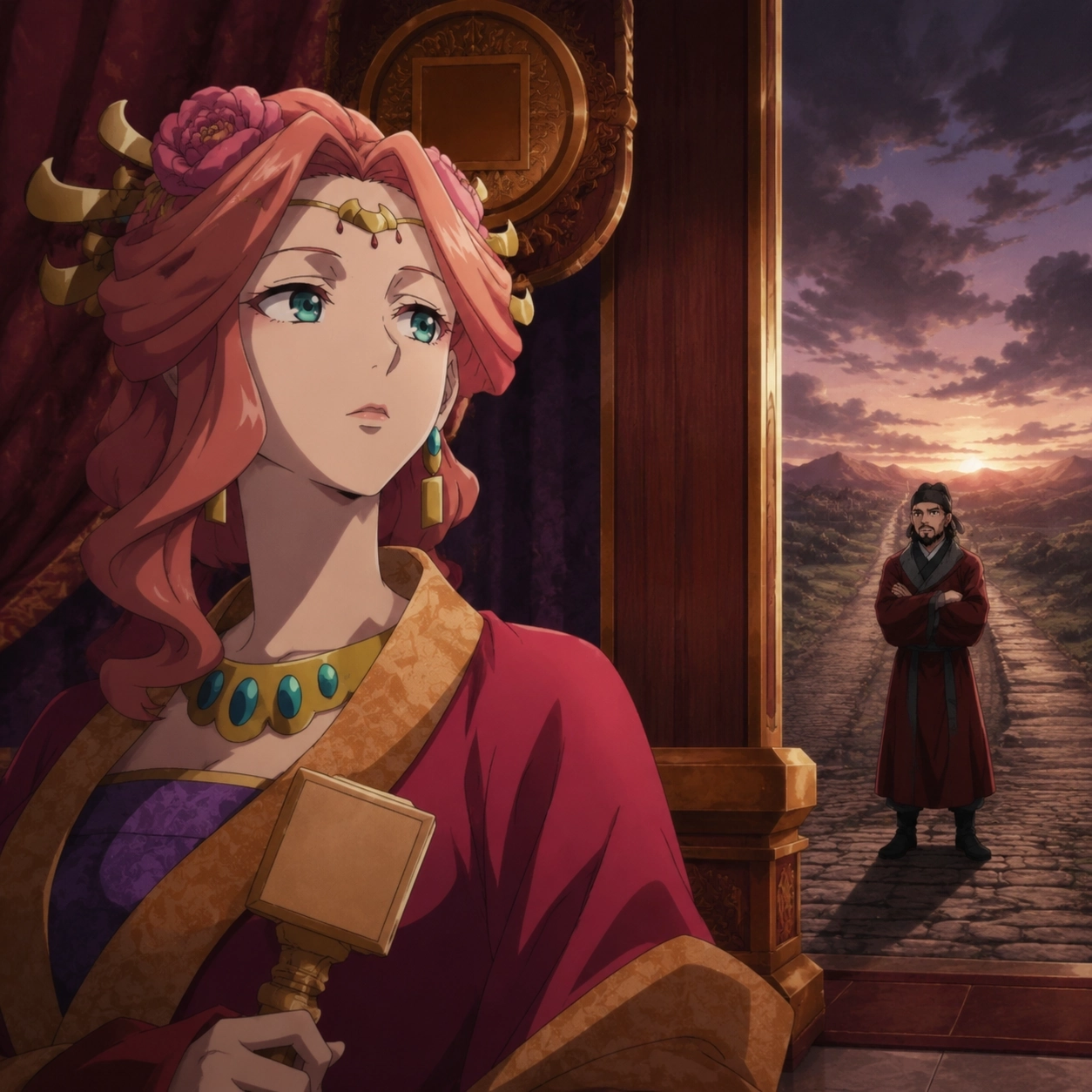
Gyokuyou's final thought is a statement of transformation. People still describe her as someone who keeps a youthful or girlish side, but she knows that this can become a trap. It invites relatives and outsiders to imagine that she is still the easygoing girl who can be pushed, praised, or redirected.
She is not that girl anymore. The palace has taught her that survival is not the same as obedience, and motherhood has made the consequences of political pressure more immediate. Her kindness remains, but it now has boundaries.
Her Rise Changes the Meaning of Family
Before Gyokuyou's elevation, a family conflict could be treated as something she had to endure for the sake of the household. After she becomes empress, her household is no longer only her father's or brother's concern. It includes the emperor's children, attendants, political allies, and the future of the court.
That change gives Gyokuyou a new standard for loyalty. She is not required to preserve a relationship simply because it is biologically old. If an older family tie threatens the people under her protection, refusing it can be the more responsible form of love.
Why She Does Not Need to Explain Herself
Gyokuyou does not write a counterargument because explaining herself would accept Yuying's premise that he is the judge and she is the defendant. Her silence is not helplessness. It is a refusal to enter a courtroom he built without her consent.
That restraint fits Gyokuyou's political style. As discussed in the article on why Jinshi does not want to become Gyokuyou's enemy, her power comes from understanding what a conflict would cost before she makes it public. Stepping on the letter is private, controlled, and unmistakable.
The Political Meaning of the Foot
The physical action matters because the novel could have ended the scene with Gyokuyou burning the letter, tearing it, or putting it away. Trampling is slower and more deliberate. It turns the body part that carries a person forward into an instrument of judgment.
The letter arrives from the west with Yuying's authority behind it. Gyokuyou answers from the palace, where her position has become larger than the family role he remembers. Her foot says that his message no longer stands above her. It is beneath her, and she decides whether it remains there.
Who Will Be Trampled?
Gyokuyou's question about who will be trampled is not a promise that she will destroy Yuying immediately. It is a warning that moral certainty can reverse direction. A person who believes he is walking over the wicked may discover that his own methods have made him vulnerable.
This is one of the series' recurring political ideas. Power is rarely safe just because it calls itself righteous. The people who speak for justice can still become threats, and the people labeled dangerous can still be the ones protecting a future. Gyokuyou understands that distinction because she has lived on the receiving end of other people's categories.
How This Connects to Gyokuyou's Empress Arc
The scene is a compact version of Gyokuyou's whole empress arc. She protects her children, reads the motives behind polite gestures, distinguishes personal affection from political leverage, and chooses a future that cannot be controlled by the family that first sent her to court.
That does not make her anti-family. It makes her selective about which form of family deserves access. The broader faction analysis of Anshi and Gyokuyou shows the same pattern at a larger scale: personal history matters, but institutions and future obligations decide what a woman can safely permit.
Common Misreadings
Misreading 1: Gyokuyou is angry only because Yuying insulted her
The insult matters, but the scene is larger than hurt feelings. Gyokuyou is worried about the authority behind his judgment and the way he might approach her children.
Misreading 2: Yuying is simply a cruel villain
The novel makes him more unsettling than a straightforward villain. He believes he is right, and that conviction allows him to hurt people while treating his actions as moral correction.
Misreading 3: Gyokuyou wants to destroy her western family
She is not rejecting every family connection. She is rejecting the idea that family status gives Yuying permission to define her or claim her children as political resources.
Misreading 4: The letter is only a symbol of a private argument
It is a private object carrying public stakes. Yuying's beliefs, Gyokuyou's children, western influence, and the future of the imperial household all sit behind that small piece of paper.
FAQ
Why does Gyokuyou trample her brother's letter?
She tramples it because she refuses Yuying's moral judgment, distrusts his attempt to draw her back into his influence, and fears that he may treat her children according to political usefulness rather than personal dignity.
Who is Gyokuyou's brother in this scene?
He is Yuying, Gyokuyou's maternal half-brother and the elder legitimate son who governs the western territory after their father's withdrawal from active rule.
Does Yuying hate Gyokuyou?
The scene is more complicated than simple hatred. He regards Gyokuyou as a bad person because she violates his idea of justice, yet he also appears willing to approach or recruit her. That mixture makes him difficult for Gyokuyou to trust.
Why is Gyokuyou worried about her children?
She suspects Yuying may try to win over a son because of political value while treating a daughter differently. That possibility shows how carefully Gyokuyou guards her children from family strategy and gendered succession thinking.
Does this scene mean Gyokuyou becomes Yuying's enemy?
It means she will resist him. The scene does not require personal hatred; it shows Gyokuyou setting a boundary against a family member whose certainty and political intentions could endanger her household.
What should I read next?
Read Gyokuyou's road to empress, why Gyokuyou wants Maomao close, and the Anshi and Gyokuyou faction analysis for the connected family and court-politics threads.
Continue the character discussion