Spoiler Warning
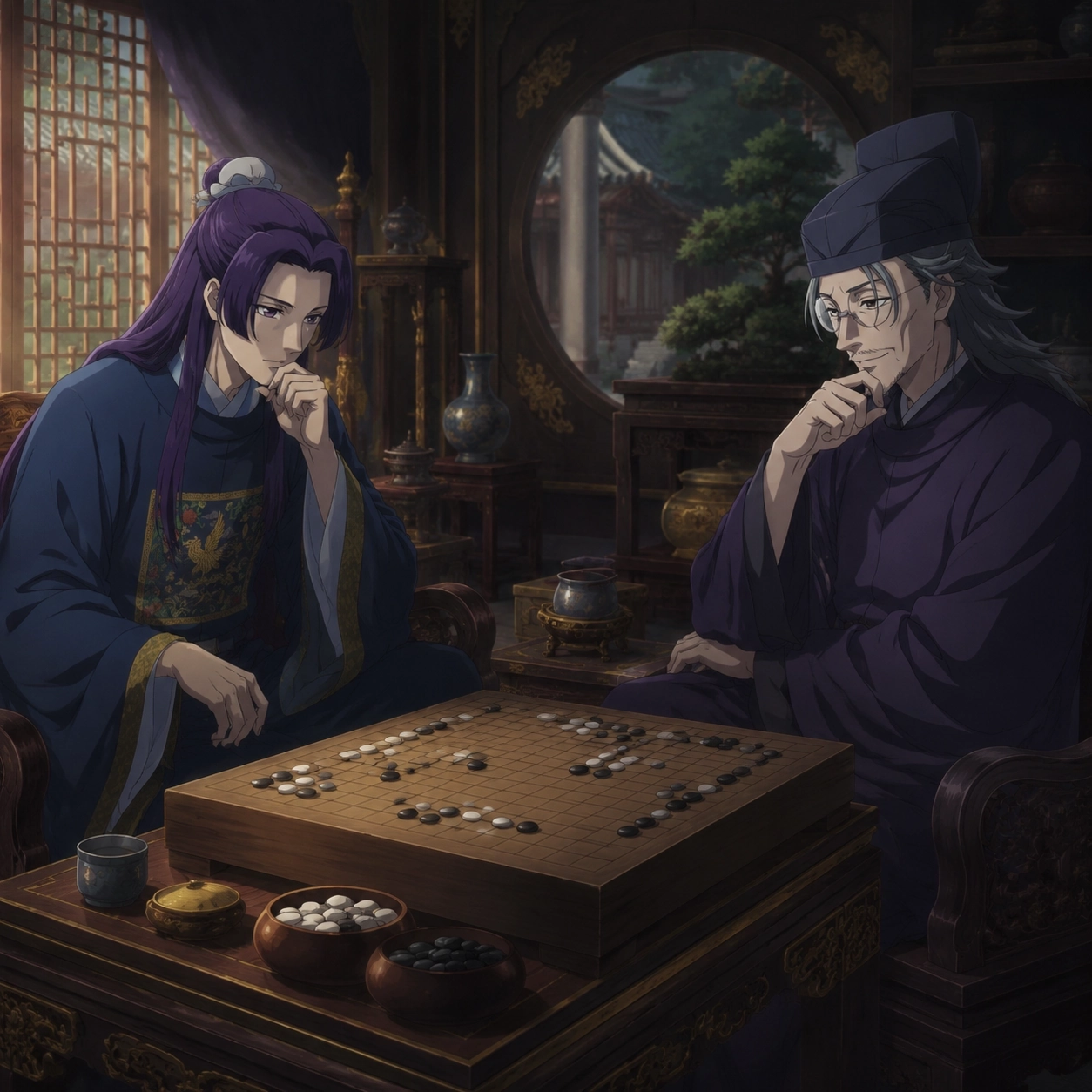
This article discusses light novel Volume 8 spoilers, including the printed Go book, the White Bell Theater tournament, Jinshi's training with the Go saint, his extra-board strategy, Lakan's post-match review, and the explanation of why Lakan wants Go to continue beyond his own games.
Scene Locator
The relevant material is in Volume 8. Chapter 1 introduces the printed Go teaching book. Chapters 14-16 cover the tournament preparation and the match involving Jinshi and Lakan. Chapter 19, titled “The Go Saint,” shows Jinshi's preparation and the conversation after the interrupted game, where Lakan's purpose becomes clearer.
The most important distinction is between the tournament's public purpose and the private purpose of the match. Lakan says he wants as many people as possible to play Go. Jinshi, meanwhile, changes the venue, returns paperwork to Lakan, studies under the Emperor's Go teacher, and searches for a way to win.
Volume-level entry only. The source is community-hosted; availability and rights status may vary.
The Short Answer
Jinshi Wants to Beat Lakan
Jinshi's immediate purpose is competitive. He does not join the event as a neutral participant. Lakan is a rare opponent who can make Jinshi feel genuinely outclassed, so Jinshi wants to find a way to defeat him, even if that means using every legal advantage available.
That is why Jinshi borrows the Emperor's Go teacher and spends his spare time studying. His effort is not a symbolic appearance. He is preparing for a real match against someone he believes he cannot beat through ordinary skill alone.
Jinshi Also Uses the Tournament to Push Work Back to Lakan
The tournament gives Jinshi an administrative opening. He moves the event from the palace training ground to the White Bell Theater, then uses the larger public event and its preparation to return a substantial pile of official work to Lakan. Jinshi is not only moving stones. He is moving responsibility.
That makes his motive more mischievous and more practical than a simple rivalry. He wants to win the game, but he also wants Lakan to stop escaping the work that belongs to him.
Why Jinshi Changes the Tournament Venue
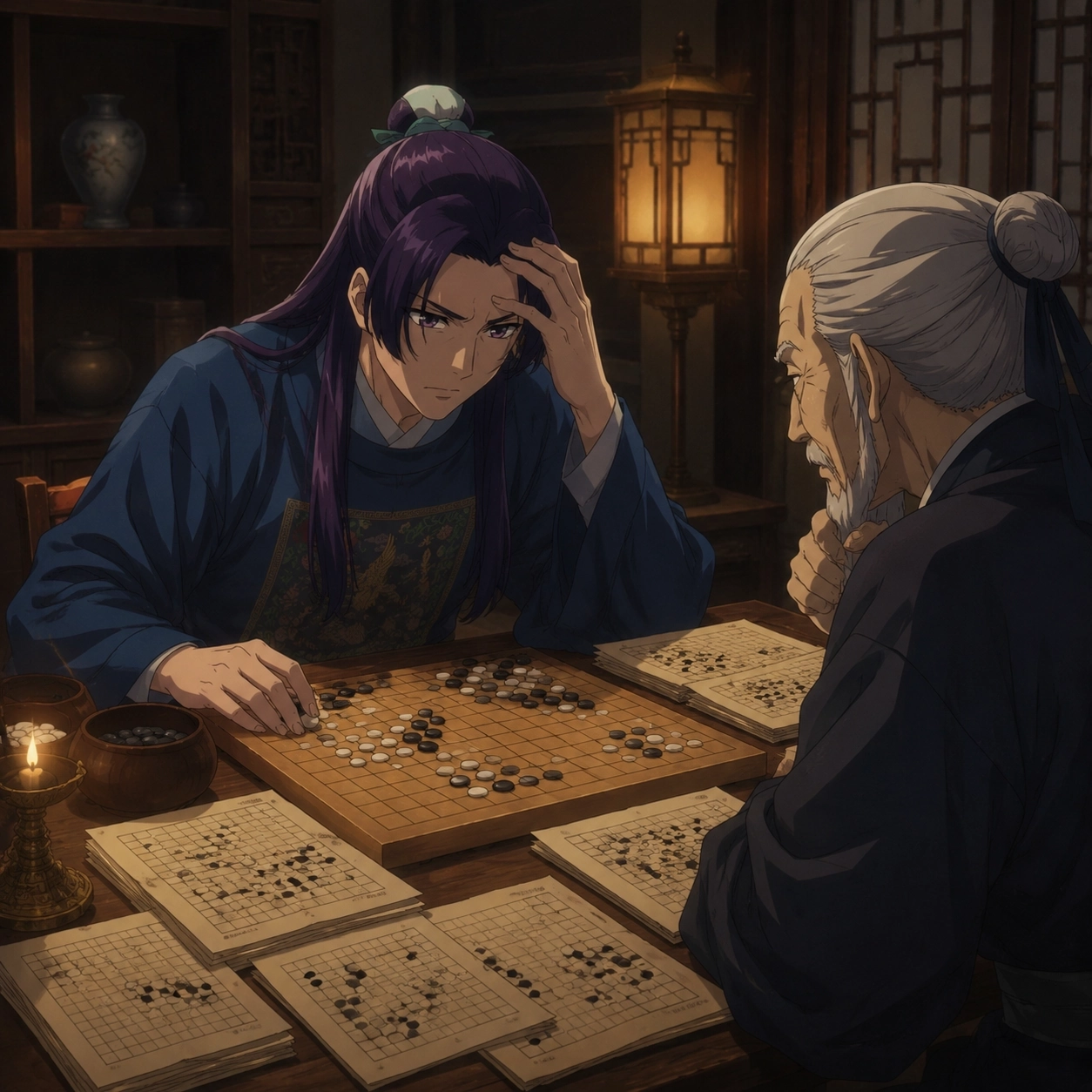
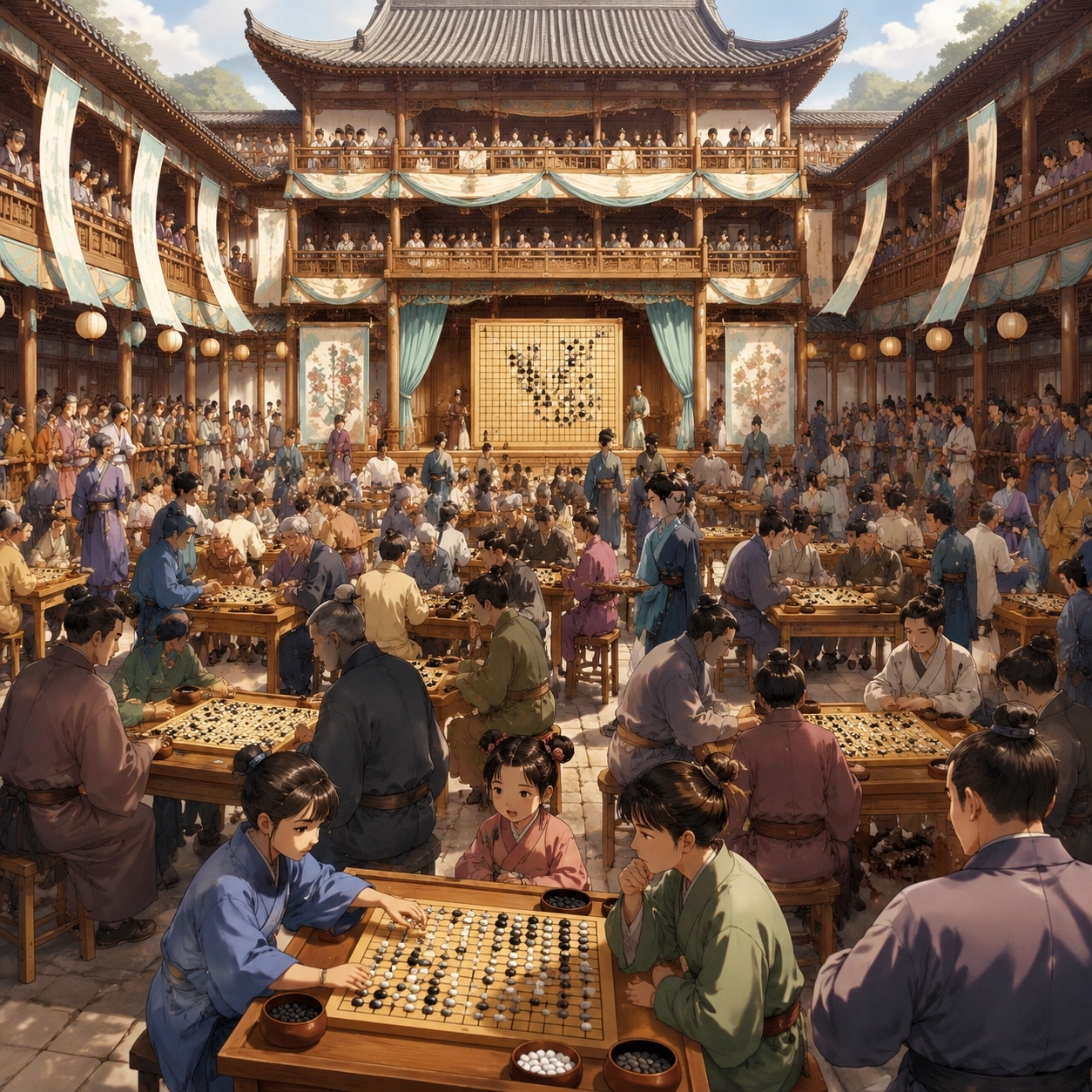
Lakan originally plans to hold the tournament at a palace training ground. Jinshi objects to the location, not because he objects to Go, but because the venue would keep the event too close to court insiders. The White Bell Theater is open to the street and can hold ordinary people and children as well as court-connected players.
The choice also gives the closed theater a controlled way to reopen. The venue had been shut after the White Fairy affair, so an event with guards, doctors, and a visible organizer provides a safer public test than simply allowing normal business to resume without a clear reason.
Jinshi's Administrative Trick
Jinshi presents the venue as a reasonable improvement, then has Mamei return Lakan's neglected paperwork to him. The plan is almost perfectly suited to Jinshi: it is legal, useful to the public, and irritating to the person he wants to pressure.
Moving the tournament also increases the workload. A larger audience means more boards, more scheduling, more medical preparation, and more questions about entry limits. Jinshi knows Lakan will have to deal with the consequences of the event he started.
What Lakan Wants from the Tournament
Lakan's purpose is broader than the match itself. He says he does not want to limit the number of entrants because his aim is to let as many people as possible play Go. The printed book is not meant to remain a private curiosity. It is designed to be studied, used, and passed to people who never knew the original players.
That does not erase the personal history behind the book. Many of the records preserve games with a woman who mattered deeply to Lakan, and the later explanation makes clear that those games are irreplaceable to him. But the tournament shows that memory is only the starting point. Lakan wants the record to produce new games.
A Private Record Becomes a Public Practice
The earlier article on why Lakan published the Go book focuses on that transformation. In Volume 8, the transformation becomes visible: the book is printed, the game spreads, and a public competition gives new players a reason to sit down and play.
Lakan is therefore not chasing an audience that only admires him. He is trying to create opponents. The difference matters because a Go tradition survives through people who answer old moves with new ones.
One Board, Two Very Different Purposes
The match works because Jinshi and Lakan are using the same event for different reasons. Jinshi sees a difficult opponent, a practical trap, and an opportunity to force responsibility back onto Lakan. Lakan sees a growing community around a game that carries the memory of a lost relationship.
That contrast explains why the scene never settles into a simple political duel. Jinshi is absolutely using the tournament to manipulate the situation, but Lakan is not secretly running the same kind of scheme. His interest is in the game and in what may come after him.
Jinshi Treats the Board as a Problem to Solve
Jinshi is capable and disciplined, but the Go saint tells him that his thinking outside familiar patterns remains ordinary. That diagnosis explains the desperation in Jinshi's preparation. He can learn standard formations, yet Lakan's unusual moves leave him searching for a method that is not simply “play better.”
This connects to Lakan's strategic move in Jinshi's survival. Lakan's mind is difficult to confront because he does not treat people or positions as fixed categories. Jinshi knows that intelligence alone will not automatically give him the advantage.
Lakan Treats the Board as an Ongoing Conversation
After the match, Lakan reviews the position and comments on what he should have played. That reaction matters. He remembers the game, examines the turning points, and admits that Jinshi's method was interesting even though he does not understand Jinshi's purpose.
For Lakan, the value of the match is not exhausted by the result. The moves remain worth discussing. A good opponent adds another layer to the game, and that is exactly the kind of continuation his book and tournament are meant to encourage.
Why Jinshi Borrows the Go Saint
Jinshi borrows the Emperor's Go teacher because he needs a path toward victory that ordinary practice cannot provide. The teacher is stronger than Lakan in formal skill and tells Jinshi bluntly that a normal game offers almost no hope.
The advice is not to cheat. It is to understand the conditions under which Lakan becomes vulnerable and to use a legal “battle outside the board.” In other words, Jinshi is looking for a permitted way to disturb the match before the stones alone decide it.
This is the clearest evidence that Jinshi's purpose is to win, not merely to support Lakan's cultural project. He asks for instruction, accepts harsh criticism, and practices repeatedly because he wants a chance, however small, to take the match.
What the Aftermath Reveals
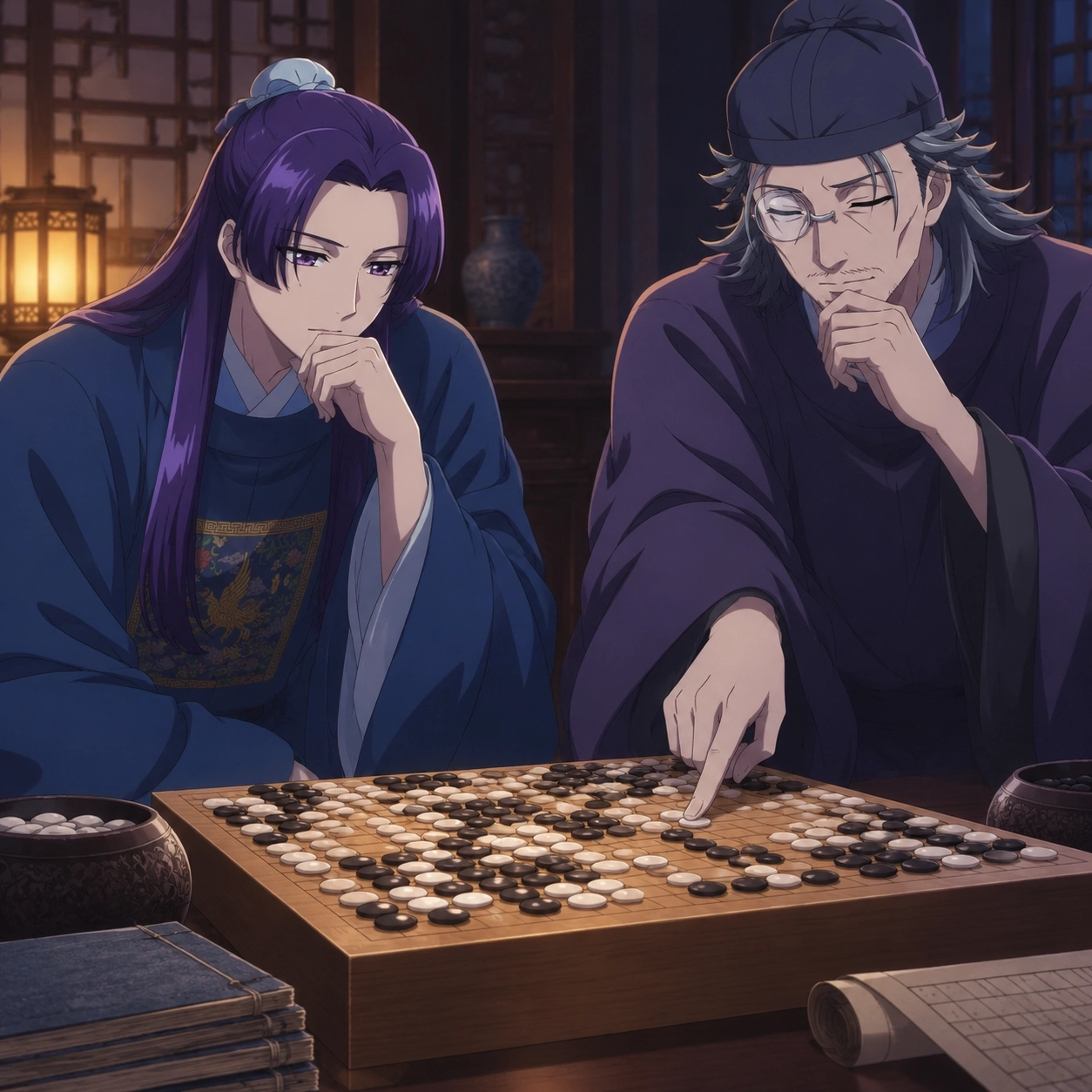
The aftermath gives the most balanced answer to the question. Lakan does not claim to understand Jinshi's motive, but he says the method was interesting. He then goes through the position and performs a review, something his family says he normally does not do.
That means Lakan recognizes Jinshi as a worthwhile opponent. The match has become meaningful even though it was built on Jinshi's practical tricks. At the same time, Jinshi is left frustrated because the carefully prepared strategy still does not give him the clean victory he wants.
The Match Is a Test of Jinshi's Character
Jinshi's preparation shows persistence, pride, and a willingness to use bureaucracy as part of his strategy. It also shows his limits. He can arrange the conditions, borrow the best teacher, and study the opponent, but he cannot force Lakan to become an ordinary player.
That is why the result feels so revealing. Jinshi does not lose because he is foolish. He loses because Lakan's way of seeing the board is not easily contained by the tools Jinshi normally trusts.
The Match Extends Lakan's Legacy
For Lakan, Jinshi's challenge is one more new exchange generated by the public life of the book. The original games remain the emotional center, but they no longer form a closed archive. New players now create new positions, new rivalries, and new stories around the game.
For more context on Lakan's grief and family history, see what happened to Lakan in Volume 6. The Go match belongs to a later phase, when his private record has begun to operate in public.
FAQ
Why does Jinshi play Go against Lakan?
Jinshi wants to defeat Lakan, and he also uses the tournament to move the event into a public venue and return a large amount of official work to Lakan.
Does Jinshi organize the tournament so more people can play Go?
No. That is primarily Lakan's stated purpose. Jinshi changes the venue in a way that allows more ordinary people and children to participate, but his personal motive is to win and to pressure Lakan through the extra work.
Why is the White Bell Theater important?
It is a larger public venue than the palace training ground, and the tournament gives the closed theater a controlled way to reopen while guards and medical staff are present.
Why does Jinshi ask the Go saint to teach him?
Because Lakan is too strong to beat through ordinary preparation. The Go saint helps Jinshi understand the conditions and legal outside-the-board tactics that might create a chance.
What does Lakan think of Jinshi's strategy?
Lakan says he does not know Jinshi's purpose, but he finds the method interesting. He also reviews the game afterward, which suggests that Jinshi earned his respect as an opponent.
What should I read next?
Read Lakan's Go book analysis, then visit the Lakan character card or Jinshi character card.
Continue the character discussion