Spoiler Warning
This article discusses major light novel spoilers for The Apothecary Diaries, including White Fairy's Volume 5 stage performance, the mercury and incense tricks, the hidden pigeon-message network, Lishu's tower incident, Jinshi's response, the Shaoh envoys Aylin and Ayla, and the later White Priestess reveal. Anime-only readers should stop here.
Scene Locator
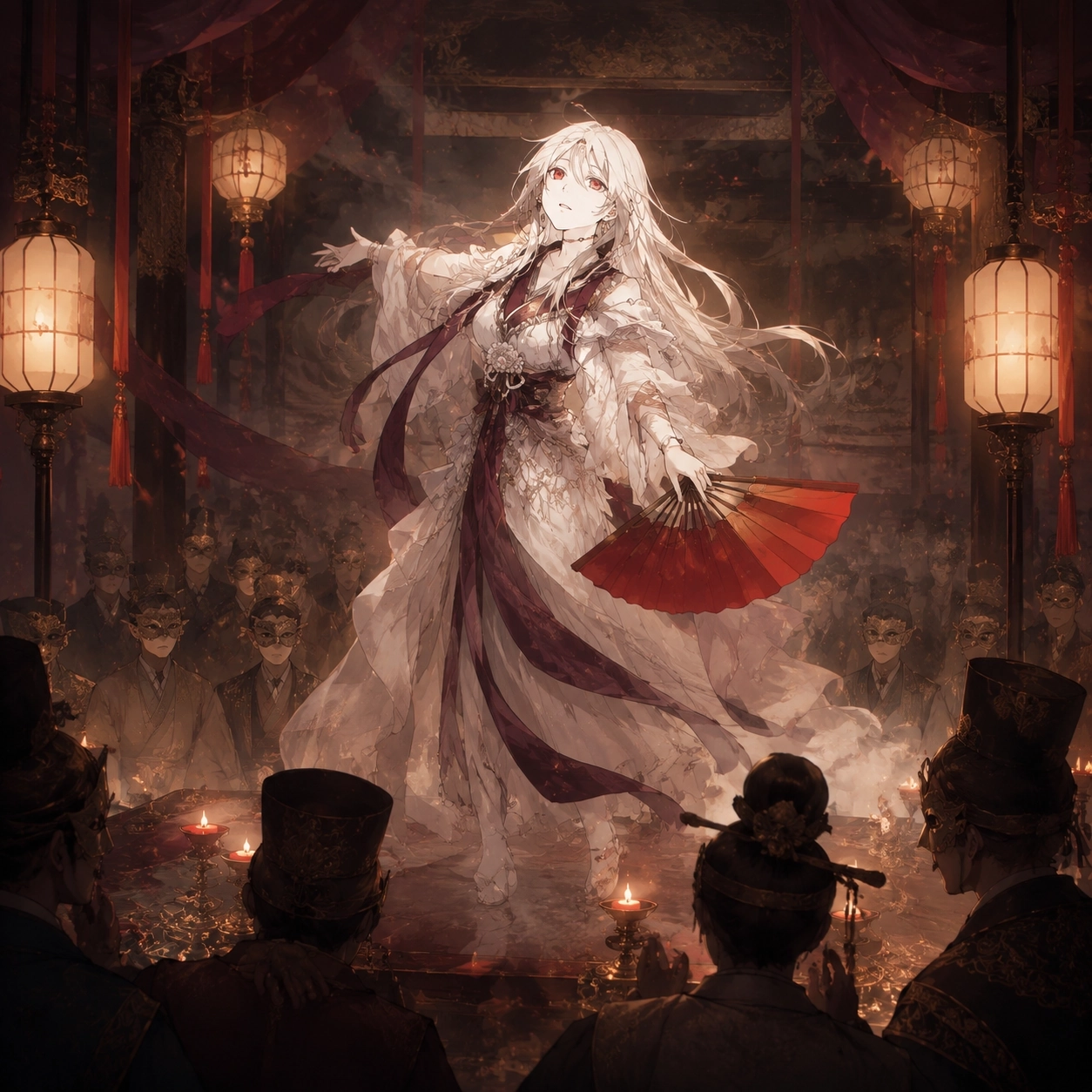
White Fairy first enters the plot through rumor. In Volume 5, the pleasure district hears of a pale young woman with white hair and red eyes, more unusual than even the famous Three Princesses of the Verdigris House. Her show draws nobles, merchants, and officials into a theater where everyone can hide behind masks and pretend they are not there to watch something vulgar.
That setup is already a clue. White Fairy is not working from a tiny roadside booth. She has a prime venue, rich customers, helpers, prepared equipment, and a crowd willing to believe that beauty plus secrecy equals divinity. Maomao notices that someone must be paying for this.
The story later pulls the thread westward. White Fairy's methods echo in the western region, in the Lishu incident, and in the question of how information can travel faster than normal messengers. By the time the Shaoh envoys and the White Priestess line enter the answer, White Fairy has stopped being a single trickster and become evidence of a political network.
For the damage this plot does to Lishu, pair this article with why Basen acts on his own to save Lishu and Ah-Duo and Lishu's relationship. For another example of myth turned into statecraft, see the Shrine of Choosing analysis.
Volume-level entry only. The source is community-hosted; availability and rights status may vary.
The Short Answer
White Fairy's conspiracy is a layered operation. On the surface, she sells miracles to elites: mind reading, turning metal into precious metal, burning stones, vanishing butterflies, and drinking a shining silver liquid. Under that spectacle sit ordinary but dangerous tools: chemistry, smoke, alcohol, suggestive atmosphere, possible narcotics, hidden incense, helpers, and staged information.
The deeper purpose is not just money. Her show creates belief among powerful people, gives conspirators a way to approach nobles and merchants, and leaves behind poisonings and rumors that make the court chase shadows. Later, the same pattern appears around Lishu and the western region. White Fairy's tricks become a method for manipulating a vulnerable consort and causing a scandal that the Emperor cannot ignore.
The final answer is even colder: White Fairy is probably not the ultimate mastermind. She is a rare albino woman with religious and political value in Shaoh, tied to the White Priestess bloodline and used by others. Aylin and Ayla's dispute reframes her as a pawn in a foreign succession struggle, not merely a villain who wandered into Li for fun.
So the conspiracy is best understood in three layers: a stage fraud that manufactures faith, a criminal network that moves drugs and messages, and a Shaoh political tool meant to weaken rivals around the White Priestess.
The Stage Trick: Why the Miracle Works
White Fairy's first great weapon is not poison. It is atmosphere. The theater is dim, smoky, expensive, and socially forbidden enough that wealthy men are ready to be impressed before the show begins. The audience wears masks. Lamps sway. Drinks circulate. The performer appears in white clothing with white skin, white hair, and red eyes. In that room, even obvious stagecraft feels like a religious event.
Maomao sees through the mood because she watches mechanisms instead of status. She notices that White Fairy's eyesight is poor, which makes real sight-based mind reading unlikely. She notices the helper. She notices the seating setup. She notices that the drinks are not strong but are arranged to make the atmosphere work better. The audience does not need to be fully poisoned. It only needs to be nudged into belief.
The metal-changing trick is also more chemistry than divinity. The performance makes copper appear to become silver and then gold, but Maomao reads it as a controlled effect using prepared materials and heat. The same is true of burning stones and vanishing butterflies. White Fairy's talent is not magic. It is show design: one strange body, one room full of prepared conditions, and enough science to make superstition look expensive.
The mercury moment is the warning sign. White Fairy appears to drink a shining silver liquid, which Maomao identifies as a deadly material if handled the wrong way. Whether White Fairy truly drinks it or stages the act, the point is clear: she is willing to put danger on display because danger makes faith stronger. That is why the stage show is not harmless entertainment. It trains powerful people to admire a woman who can make poison look sacred.
The Hidden Network: Pigeons, Helpers, and Fast Rumors
After the show disappears, White Fairy does not disappear from the plot. Her shadow appears in strange incidents across different regions. Maomao's problem is practical: White Fairy cannot physically be everywhere at once. If similar methods appear in the capital and the west, then either she has impossible travel speed or she has accomplices who can imitate her methods.
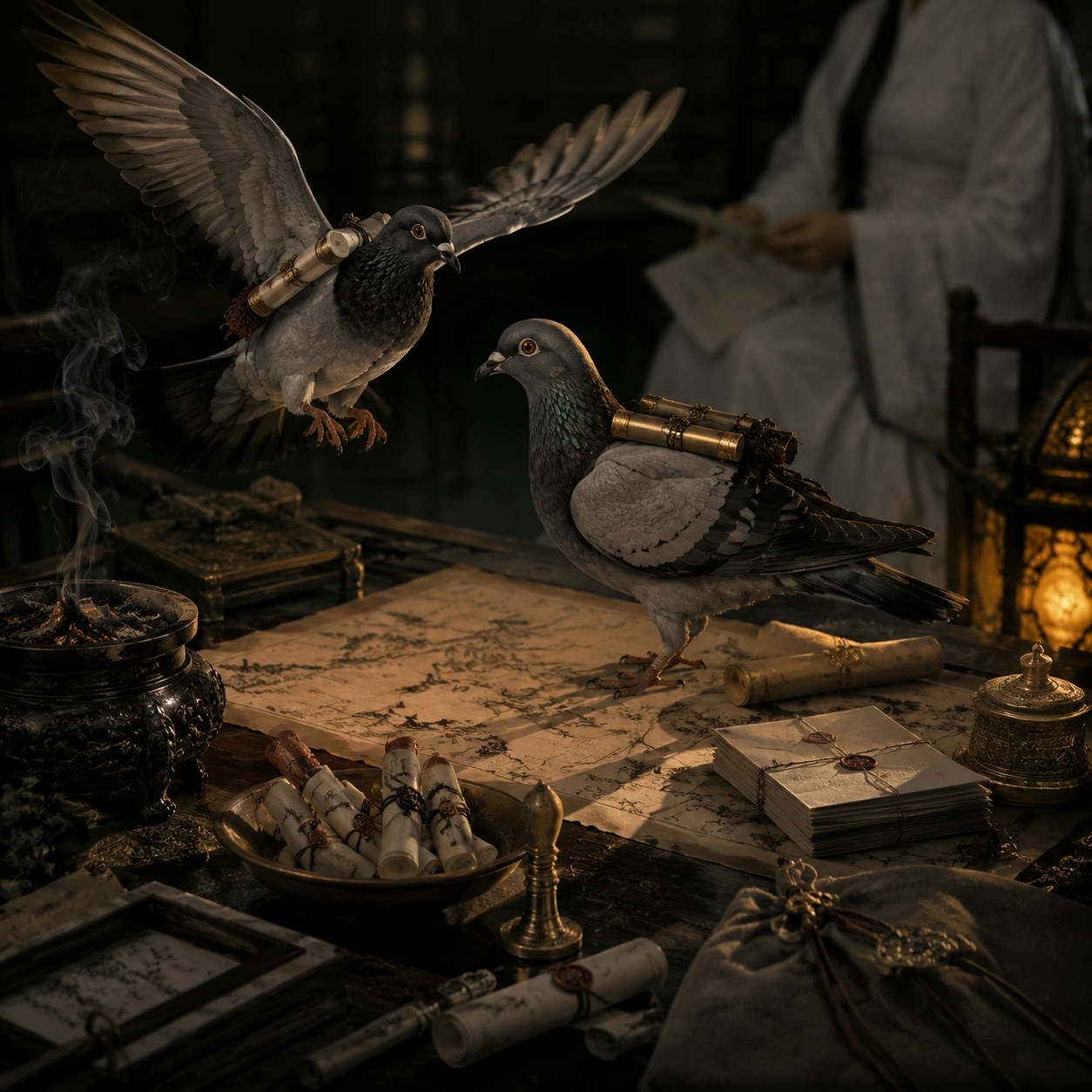
The answer is communication. The novel points to carrier pigeons as the missing technology that lets information move faster than ordinary travel. Once Maomao sees how messages can pass between locations, the scattered incidents begin to look less like supernatural haunting and more like coordinated work.
This is the real shape of the conspiracy. White Fairy is the face, but the face is supported by handlers, couriers, staged rumors, criminal associates, and people who know how to weaponize local belief. Some details suggest possible opium or other drug traffic, and other details point to thieves using the same white-snake signs. None of this requires one omnipotent mastermind. It requires a network that knows exactly how useful a beautiful "fairy" can be.
That is why White Fairy is frightening even after she is captured. A single performer can be locked away. A network can keep moving, especially if it has people inside trade routes, foreign delegations, and households that can pass messages without attracting attention.
Why Lishu Becomes the Target
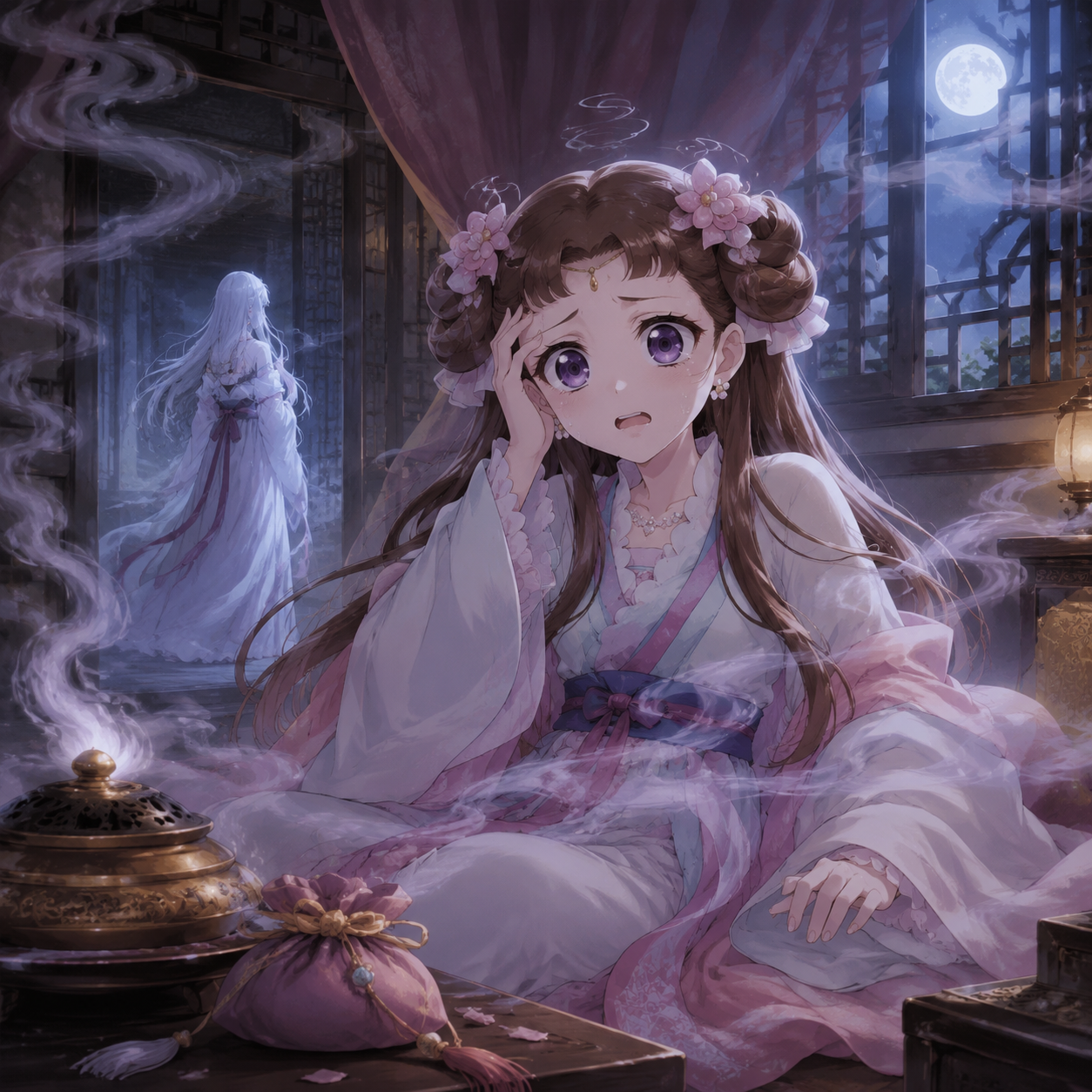
The Lishu incident proves that White Fairy's methods can leave the stage and enter palace politics. Lishu is found in a dangerous tower situation after breathing a sweet, bitter incense. Maomao recognizes the scent as the same kind of smell attached to White Fairy. When Maomao searches White Fairy directly, she finds a packet hidden with a thread in her mouth.
That detail matters because it shows preparation. White Fairy is searched before entering the tower, but she still carries the material inside her body. The trick is theatrical, but the purpose is practical: deliver a mind-altering scent into a controlled space without being caught by normal security.
Lishu is a painfully effective target because she is young, sensitive, isolated, and already treated as a political inconvenience. If she panics, hallucinates, or causes public disorder, the court can punish her while outsiders shrug and call it another foolish consort incident. That is exactly how palace power often works in The Apothecary Diaries: the person harmed by the scheme can still be forced to pay the social cost.
This is where the conspiracy becomes more than fraud. White Fairy's methods create a scene that the Emperor has to answer. Lishu's later removal from the rear palace is not simply a private tragedy. It is one of the ways the conspiracy changes the shape of people's lives. Basen's rescue and the Emperor's follow-up questions show that the court understands she was not merely "acting strange," even if official face still requires punishment.
The Shaoh Layer: Why White Fairy Is Also a Pawn
The later Shaoh material changes how readers should judge White Fairy. She is not just a mysterious criminal from nowhere. Her white hair, white skin, and red eyes connect her to albino bloodlines that carry religious value in Shaoh. The story eventually links her to the village that produces the White Priestess and suggests she should have been trained as a future candidate or protected figure.
That means her body is political before she ever steps onto a stage. In Li, she can be sold as a miracle performer. In Shaoh, the same whiteness can threaten the authority of the current White Priestess or become proof that someone has hidden a rival sacred body. This is why foreign envoys care so much about her fate.
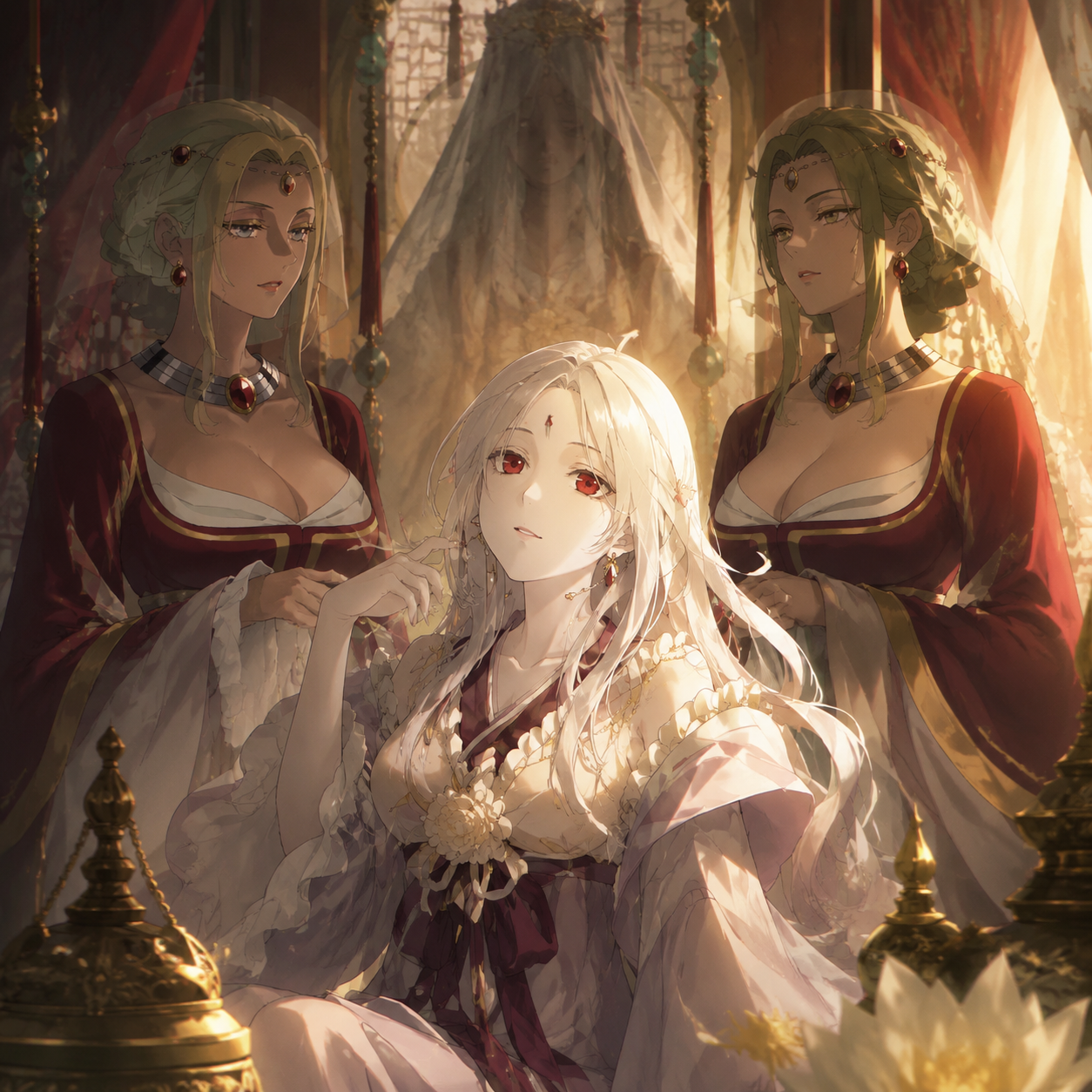
Aylin and Ayla's roles are especially important because they shift the question from "What did White Fairy do?" to "Who found White Fairy useful?" One side can blame the other for sending her out. One side can use her existence to pressure the White Priestess. One side can request her return or protection because her death, captivity, or exposure creates diplomatic leverage.
In other words, White Fairy's conspiracy is also a conspiracy against White Fairy. She is dangerous, but she is also exploited. The novel keeps that uncomfortable duality: she harms people, but her own rarity makes her easy for more powerful actors to weaponize.
What Maomao Solves
Maomao's brilliance in this arc is that she refuses to be satisfied by the word "fairy." She separates the visual wonder from the mechanism. White hair and red eyes explain why people stare. They do not explain how messages cross the country, how Lishu is drugged, how theater patrons become sick, or why foreign envoys treat one captured performer like a state matter.
Her method is the same one that drives many of the best Apothecary Diaries mysteries. She asks what the body can do, what a substance can do, what a room arrangement can do, and what people would gain by making others believe the wrong story. Once she follows those practical questions, White Fairy stops looking divine and starts looking logistical.
That is also why the arc fits beside the Shrine of Choosing. Both stories use sacred language to hide a technical truth. The shrine looks like divine selection until Maomao thinks about color perception and bloodline. White Fairy looks like a supernatural woman until Maomao thinks about chemistry, incense, eyesight, carrier pigeons, and political motive.
The difference is tone. The shrine is an old system that still shapes legitimacy. White Fairy is a modern exploitation of that same human weakness: if a ruler, merchant, or crowd wants to believe that special blood equals special power, someone will eventually learn to sell that belief back to them.
Common Misreadings
Misreading 1: White Fairy Is Just a Fraud Magician
She is a fraud performer, but "just" is the trap. Her performance is connected to poisonings, drugs, hidden communication, Lishu's scandal, and Shaoh diplomacy. The stage trick is only the entry point.
Misreading 2: White Fairy Is the Sole Mastermind
The later reveals make that too simple. White Fairy makes choices and causes harm, but she is also being used by people with stronger political positions. The conspiracy works because she is both agent and instrument.
Misreading 3: The White Priestess Reveal Is Separate
It is not separate. The White Priestess reveal explains why White Fairy's body has value beyond entertainment. Her whiteness is not merely an aesthetic detail. It is the reason multiple factions can treat her as proof, weapon, liability, or bargaining chip.
Misreading 4: Lishu's Incident Is Only Personal Bad Luck
Lishu is unlucky, but the incident is engineered. The incense, the tower, the hidden packet, and the timing all point to deliberate manipulation. Her later punishment shows how a political scheme can use a vulnerable person's reputation as part of the damage.
FAQ
Who is White Fairy in The Apothecary Diaries?
White Fairy, also called White Lady or White Snake Fairy in translation, is a pale albino woman who first becomes famous for miracle-like stage performances in Volume 5. Later material connects her to Shaoh politics and the White Priestess bloodline.
Was White Fairy actually supernatural?
No. The story frames her miracles as stagecraft, chemistry, atmosphere, and drug manipulation. Her appearance makes the trick easier to sell, but Maomao reads the case through practical evidence rather than divinity.
What did White Fairy do to Lishu?
White Fairy is tied to the incense that causes Lishu to experience frightening hallucinations in the tower incident. Maomao later finds that White Fairy hid a packet of incense with a thread in her mouth, bypassing the search before entering.
Why are pigeons important to the conspiracy?
Pigeons explain how information could move between the capital and the western region faster than ordinary travel. Once Maomao sees the messenger route, the scattered "fairy" incidents start to look coordinated rather than supernatural.
Was White Fairy used by Aylin or Ayla?
The later Shaoh revelations suggest that White Fairy was used in the political struggle around the White Priestess. Aylin and Ayla's conflict reframes her as a tool for damaging or pressuring the priestess system, not as a lone criminal acting without a larger purpose.
What should I read next?
Read why Basen saves Lishu, Ah-Duo and Lishu's relationship, and the Shrine of Choosing article for related themes of ritual, reputation, and political damage.