Spoiler Warning
This article discusses light novel spoilers for The Apothecary Diaries Volumes 5 and 6, including Ah-Duo taking Lishu west, the possible Jinshi marriage discussion, Lishu's father using her politically, Lishu's return to the rear palace, the false-letter incident, her tower confinement, and the aftermath of the Volume 6 crisis.
Video Note
Scene Locator
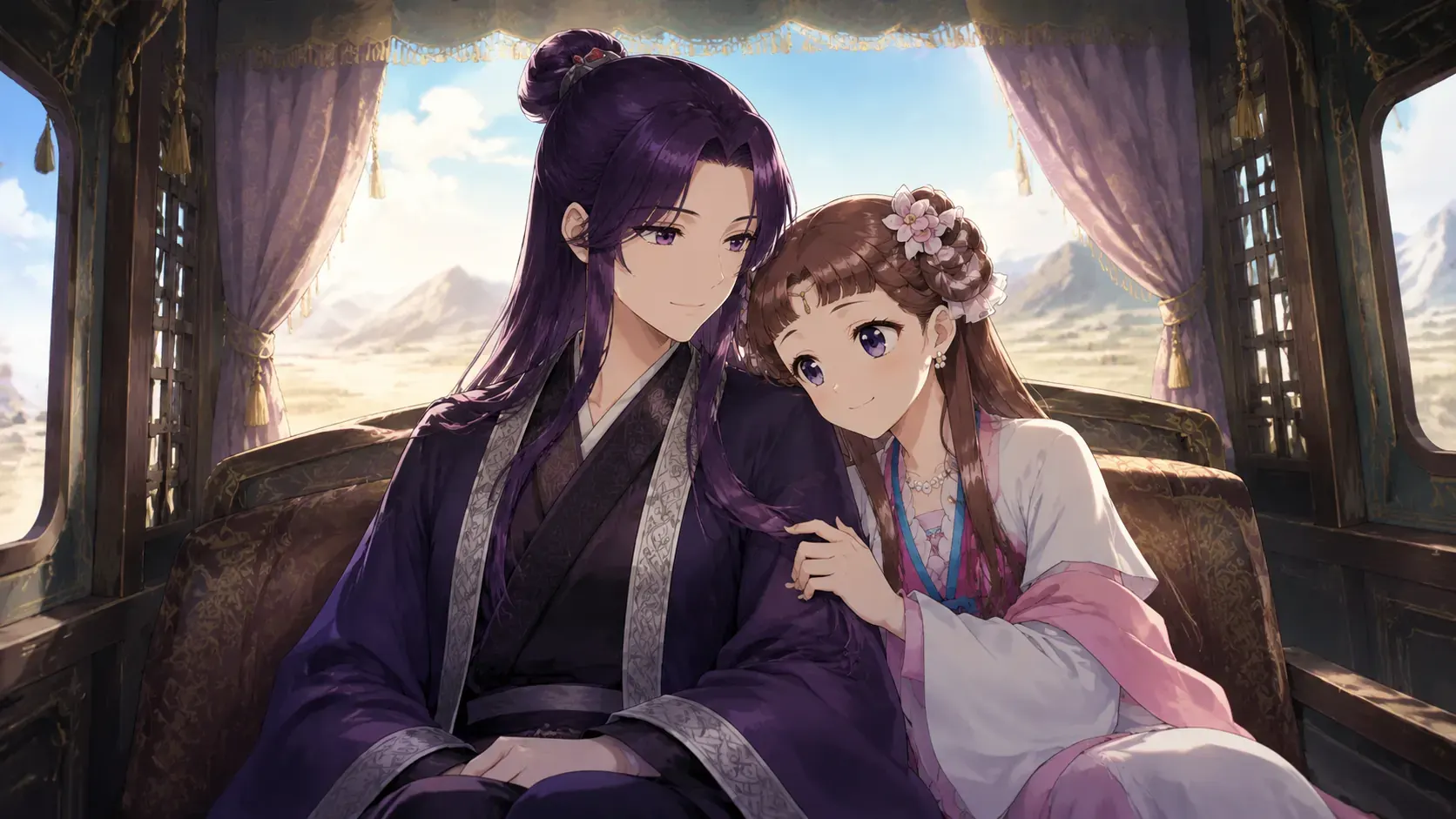
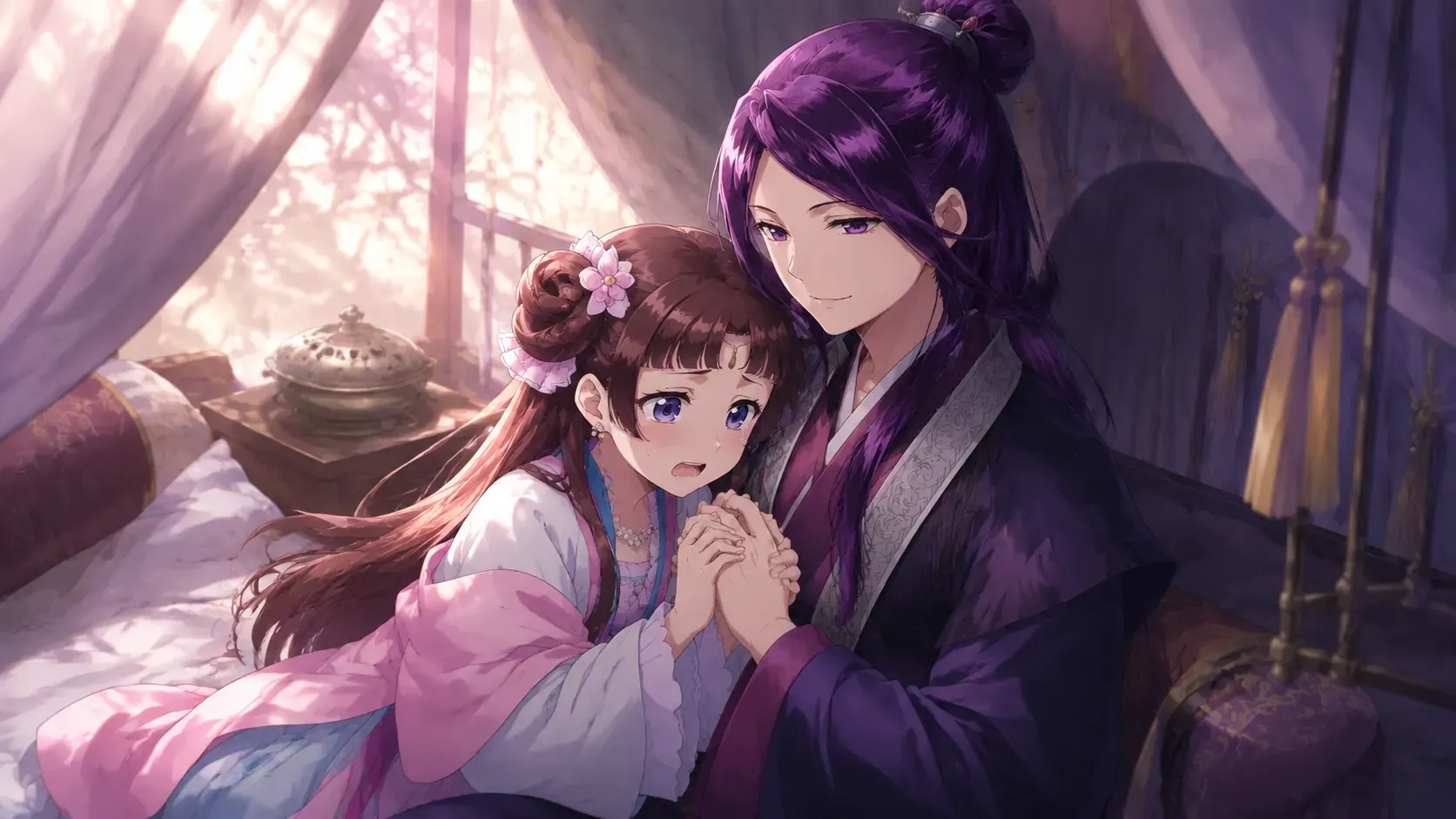
The main relationship evidence begins in Volume 5, after Ah-Duo and Lishu appear on the western journey. Lishu is shaken after the attack on Ah-Duo's party and holds onto Ah-Duo in the tent. Maomao then learns that Ah-Duo's westward trip is not a casual visit: it is connected to talks in the west and to the possibility of choosing a consort for the imperial younger brother.
Volume 5 also explains why Ah-Duo matters so much to Lishu. Lishu's mother is gone, her father has treated her as a political tool, and an earlier plan would have married her off to a much older southern governor. Ah-Duo and the emperor helped stop that path and instead placed Lishu in a position that looked safer at the time, even if it later became another trap.
Volume 6 then tests that relationship after the journey ends. Lishu returns with Ah-Duo, still physically and emotionally leaning on her, but the rear palace cannot let that closeness solve everything. Once scandal surrounds Lishu, Ah-Duo can investigate and worry, yet she cannot simply carry Lishu out of the consequences. That is where the relationship becomes most painful.
Volume-level entry only. The source is community-hosted; availability and rights status may vary.
The Short Answer
Not Mother and Daughter, But Not Distant Either
Ah-Duo and Lishu are not biological mother and daughter. The novels point elsewhere: Lishu's mother was an old friend of Ah-Duo and the emperor, and Lishu's father is still treated as her father even when Lishu briefly wonders whether that bond can be questioned. Ah-Duo's closeness to Lishu comes from old palace history, friendship with Lishu's mother, and Ah-Duo's own sense that Lishu has been pushed into adult court roles too early.
That distinction matters because the relationship is easy to misread. Ah-Duo is maternal toward Lishu, but she is not simply the mother. She is closer to a protective former consort, guardian-like patron, and older woman who understands how the rear palace breaks girls who lack power. Lishu responds to that with the trust of someone who has very few safe adults left.
So the best label is not mother-daughter in the literal sense. It is a quasi-maternal protector relationship shaped by court politics. Lishu clings to Ah-Duo because Ah-Duo is warm enough to feel like family and powerful enough to shield her, but Ah-Duo is still operating inside a system that decides young women's futures through rank, marriage, and usefulness.
Protector, Patron, and Emotional Anchor
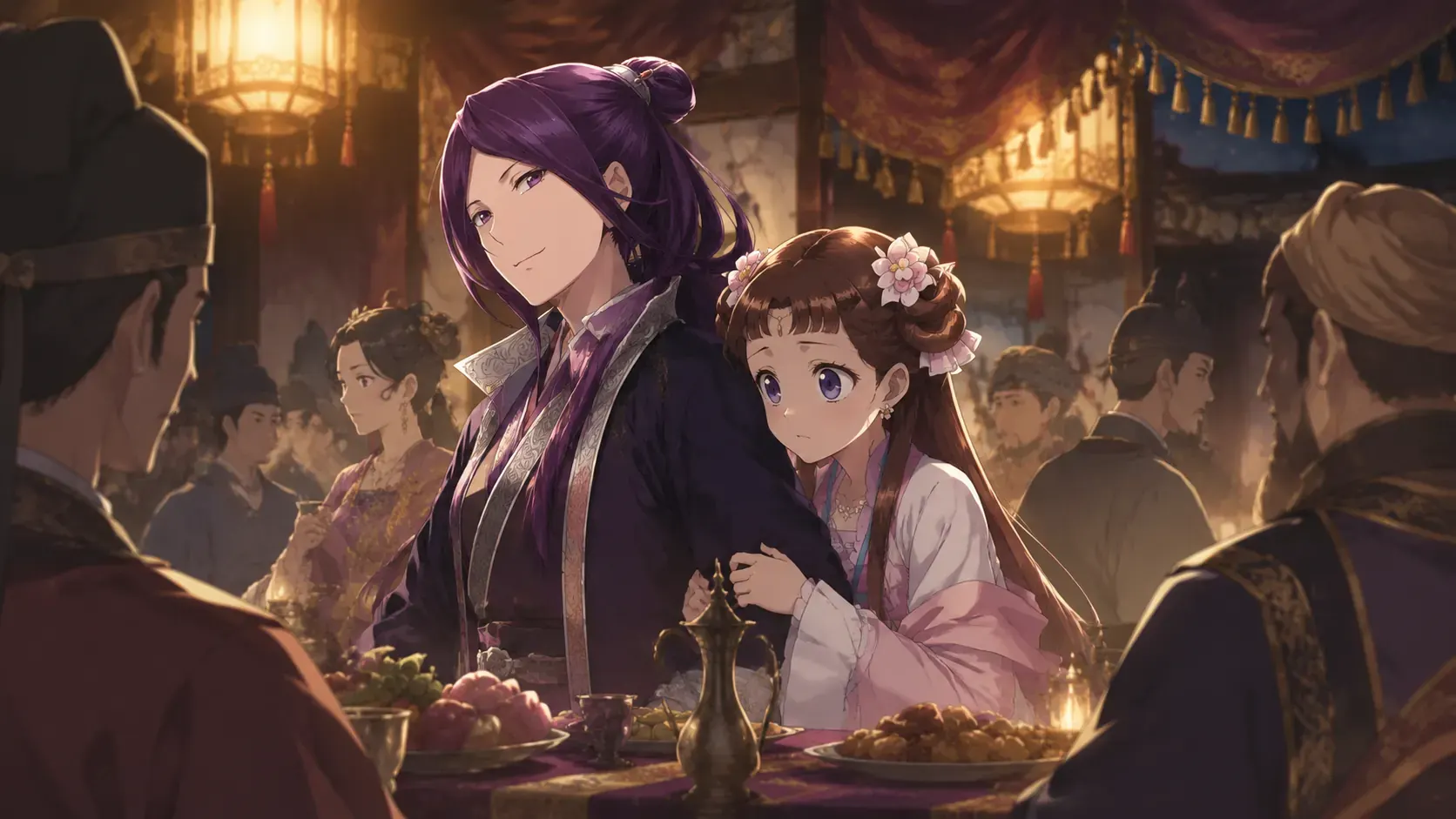
Ah-Duo is the person Lishu relaxes around most clearly in Volumes 5 and 6. When Maomao suggests inviting Ah-Duo to dinner in the west, Lishu's mood lifts immediately. At the western banquet, Lishu hides behind Ah-Duo, and their coordinated styling makes them look like a paired unit. On the return trip, Lishu rests against Ah-Duo and seems to use sickness as an excuse to keep receiving her attention.
Those details are not random softness. They show that Ah-Duo is Lishu's emotional anchor. Around most adults, Lishu is either embarrassed, frightened, or judged. Around Ah-Duo, she can be shy without being mocked and dependent without being discarded.
But the relationship is not equal. Ah-Duo has experience, social nerve, access to the emperor, attendants of her own, and a reputation built across years in the palace. Lishu has rank, but not authority. She has noble blood, but not security. Their bond is affectionate, yet it is also uneven: Ah-Duo can choose routes for Lishu that Lishu cannot easily choose for herself.
Why Lishu Clings to Ah-Duo
Lishu clings to Ah-Duo because Ah-Duo represents the kind of adult protection Lishu's own household failed to give her. Lishu was sent into the old emperor's rear palace while still young, then later placed in the current emperor's rear palace for reasons that were never truly about her personal happiness. Her family sees her as a route to advantage. Her servants often see her as weak. The court sees her as a consort, a body, a status, and a problem.
Ah-Duo is different because she seems to remember Lishu before Lishu became only a political object. She knew Lishu's mother. She knew the emperor from the old days. She remembers a younger Lishu being near the adults at tea, before the rear palace turned her into a frightened decorative piece. That older memory lets Ah-Duo see Lishu as a person rather than just a failed consort.
Lishu's Father Creates the Need for Ah-Duo
The clearest contrast is Lishu's father. In Volume 5, Lishu worries about whether he is truly her father because she cannot understand how a real father could use his daughter so coldly. Maomao's response is not sentimental, and the story is careful not to turn blood into proof of love. Lishu's father can be biologically connected to her and still fail her emotionally.
That is why the related article on what Lishu's father was planning matters so much. His ambition creates the vacuum Ah-Duo fills. If Lishu had a protective father, Ah-Duo might only be an admired older woman. Because Lishu's father uses her, Ah-Duo becomes the adult Lishu reaches for when she is frightened.
Ah-Duo Makes Weakness Feel Less Shameful
Lishu is not written as secretly powerful in the same way Maomao or Gyokuyou are. She is timid, easily shaken, and often too gentle for the rear palace. Around other characters, those traits become liabilities. Around Ah-Duo, they are allowed to exist without immediate humiliation.
That is why the western dinner scene is so telling. When Ah-Duo joins Lishu and Maomao, the conversation becomes simple and ordinary: travel, memories, food, small talk. For Lishu, that ordinary mood is rare. She is not being evaluated as a bride, mocked as a useless consort, or cornered as a political daughter. She is just sitting near someone she loves and trusts.
This also explains why Lishu can be almost childlike around Ah-Duo without the scene feeling ridiculous. The story is showing regression under safety. Lishu has had to occupy adult roles before she was ready; with Ah-Duo, she briefly gets to be protected.
What Ah-Duo Wants for Lishu
Ah-Duo appears to want a safer future for Lishu, but safer is complicated in The Apothecary Diaries. Ah-Duo does not live outside the court. She knows its logic too well. So when she protects Lishu, she does it through the same tools the palace recognizes: rank, travel, attendants, marriage arrangements, and imperial permission.
That is why her kindness can feel both generous and controlling. Ah-Duo is not trying to hurt Lishu. She is trying to move her away from worse outcomes. But the method still positions Lishu as someone whose life is arranged by older, stronger people.
The Western Trip Is a Rescue Attempt With Political Teeth
Volume 5 makes this visible through the westward journey. Ah-Duo brings Lishu along while the court is weighing the imperial younger brother's consort situation. One possible reading is that Ah-Duo is trying to create an exit for Lishu from the rear palace. Compared with staying as an exposed upper consort or being handed to an older provincial man, a new match could look like mercy.
But mercy is not the same as consent. The article on whether Lishu was forced to go west covers that tension in detail: Lishu is not dragged away as a prisoner, yet she also does not stand on equal footing with the adults making the plan. Ah-Duo's protection works because she has power Lishu lacks.
In other words, Ah-Duo is trying to protect Lishu from the rear palace by using court politics against court politics. It is one of the most realistic parts of her character. She is compassionate, but not naive enough to think compassion alone changes the rules.
Ah-Duo Also Protects Her Own Old History
Ah-Duo's care for Lishu is not isolated from her own past. She was once the emperor's favored consort. She knows what it means for a woman's body, rank, childbearing history, and public role to become political material. She also has her own painful silence around Jinshi, which the site's analysis of why Jinshi and Ah-Duo never talk directly explores from another angle.
That history makes Ah-Duo especially suited to understand Lishu. Both women are connected to the emperor's household in ways that are intimate but not fully free. Both carry old decisions made by other people. Both know that a palace can call something protection while still taking away choice.
So Ah-Duo's behavior toward Lishu is not only charity. It is also recognition. She sees a younger woman caught in a machine she herself knows intimately, and she tries to make the machine less cruel.
How Volume 5 Changes Their Relationship
Volume 5 turns Ah-Duo and Lishu from background-connected characters into a visible pair. Before this arc, readers know Lishu has been protected before and that Ah-Duo's history with the emperor matters. The western trip puts those threads into the same carriage, tent, dinner room, and banquet hall.
The first important change is physical closeness. Lishu holding Ah-Duo's hand after the attack tells the reader where she instinctively looks for safety. Later, in the west, she hides behind Ah-Duo at public functions. That is not just shyness; it is a map of trust.
The second change is political exposure. Lishu is not simply traveling with a beloved older woman. She is being displayed, considered, and protected in a setting where marriage politics are active. That means Ah-Duo's role is never only emotional. Every time Ah-Duo stands beside Lishu, she is also managing how other people see her.
The Banquet Shows Ah-Duo as Lishu's Shield
The western banquet is the clearest visual version of their relationship. Ah-Duo's masculine styling lets her move through the room with confidence, drawing attention in a way that protects Lishu from having to carry the room herself. Lishu, dressed in a matching or coordinated way, can stand near that confidence without needing to imitate it perfectly.
Maomao notices that Ah-Duo is a better companion for Lishu than Jinshi would be in that moment. That judgment matters because it strips the scene of easy romance. Lishu does not need a beautiful prince to rescue her at the banquet. She needs someone she already trusts, someone whose presence lets her breathe.
That makes Ah-Duo's protection unusually practical. She does not give Lishu a speech about courage. She stands where Lishu can hide. In a court story, that can be more useful than encouragement.
The Trip Also Lets Lishu Learn What Jinshi Is Not
The relationship between Ah-Duo and Lishu also changes because Lishu's view of Jinshi matures during the same stretch of story. Lishu once admired Jinshi's beautiful public face, but by Volume 6 she understands that his smile was not a private promise to her. She recognizes that he has a different emotional direction.
Ah-Duo is important here because she does not push Lishu into a childish fantasy. She teases, prods, and asks questions, but she also seems to know that Lishu cannot be forced into becoming the correct political answer for someone else's life. In that sense, Ah-Duo helps Lishu move from naive admiration toward self-awareness.
For the larger political reason the west matters to Jinshi, see why Jinshi had to go west. Lishu's side of that same arc shows the emotional cost borne by a girl who could have been treated as a convenient match.
Why Volume 6 Adds Distance
Volume 6 is where the relationship stops being only comforting. On the return journey, Ah-Duo and Lishu still look close. Lishu rests with Ah-Duo, and the boat scenes make her dependence almost tender. But once they reach the capital, the old system reasserts itself. Lishu cannot simply follow Ah-Duo wherever she wants.
That separation matters. Lishu wants to remain near Ah-Duo, but she also knows that doing so would create trouble for Ah-Duo and her attendants. She returns to the rear palace even though the position frightens her. That choice is not full independence, but it is a small sign that Lishu is beginning to understand the burden her dependence can place on other people.
Ah-Duo Asks the Right Question, But Cannot Remove the Answer
In Volume 6, Ah-Duo asks whether Lishu is all right returning to the rear palace. The question sounds simple, but it exposes the whole problem. Lishu can say she is all right, but saying it does not make the rear palace safe. She is old enough that the emperor's attention can no longer be postponed forever. Her servants are unreliable. Her family politics remain ugly. Her position invites rumors and attacks.
Ah-Duo understands all of this, which is why the question carries weight. But even Ah-Duo cannot make Lishu's answer magically true. The court does not give Lishu a clean third option where she can live safely, choose freely, and remain near the person who comforts her.
The False-Letter Incident Shows the Limit of Ah-Duo's Protection
When Lishu is accused through the copied romantic text, Ah-Duo is involved in the response. Maomao goes to her for information, and Ah-Duo helps frame the evidence: the missing palace woman, the suspicious manuscript, and the letters found outside Lishu's room. That proves Ah-Duo still cares and still acts.
But the incident also proves that Ah-Duo is not an all-powerful guardian. Lishu can be framed through her kindness to a lower palace woman. Her former attendants can betray her. The emperor can confine her for protection and discipline. Ah-Duo can investigate, but she cannot stand in the tower doorway and simply declare the matter over.
This is the most important Volume 6 correction to the relationship. Ah-Duo is Lishu's protector, not her escape route from the entire court. She can soften danger, redirect plans, and gather information. She cannot erase the rules that made Lishu vulnerable in the first place.
The Tower Makes Lishu's Loneliness Visible
Lishu's tower confinement shows what happens when Ah-Duo's presence is removed. Lishu is not just physically shut away; she is emotionally stranded. She has one loyal attendant, frightening noises from above, a father who still cannot comfort her properly, and a growing sense that the people she trusted have either left or failed to come quickly enough.
That loneliness is not a contradiction of the Ah-Duo bond. It is evidence of how much Lishu depended on it. When Ah-Duo is near, Lishu can borrow courage. When Ah-Duo is absent, Lishu has to face the palace as herself, and that self has been left underdeveloped by years of being managed.
Common Misreadings
Misreading 1: Ah-Duo is secretly Lishu's mother
The Volume 5 and 6 material does not support that. Lishu's connection to Ah-Duo comes through Lishu's mother being an old friend of Ah-Duo and the emperor, plus Ah-Duo's later protection. The bond is maternal in feeling, not biological in fact.
Misreading 2: Ah-Duo is only using Lishu for politics
This is too cold. Ah-Duo's choices have political shape, but the emotional evidence is real. Lishu trusts her, brightens around her, and seeks physical closeness from her. Ah-Duo also shows concern beyond what would be necessary if Lishu were merely a pawn.
Misreading 3: Ah-Duo's protection is pure freedom
This is too generous. Ah-Duo protects Lishu by arranging safer options, not by handing her full autonomy. The story's tension comes from that mix: Ah-Duo is kind, but her kindness still uses the tools of a court that treats Lishu as someone to place.
Misreading 4: Lishu's attachment is childish and unimportant
Lishu's attachment can look childish because she was forced into adult roles before she was ready. That does not make it trivial. Her dependence on Ah-Duo is one of the clearest signs of what the rear palace has denied her: ordinary emotional safety.
Why This Relationship Matters
Ah-Duo and Lishu's relationship matters because it shows the difference between protection and liberation. Ah-Duo can protect Lishu better than almost anyone else in the story, but even she cannot give Lishu a life untouched by rank, marriage politics, and court gossip. That makes their relationship emotionally warm and structurally tragic at the same time.
It also deepens Ah-Duo. She is not only a woman tied to Jinshi's hidden identity or the emperor's past. Through Lishu, readers see what Ah-Duo does with her power after losing her old place in the rear palace. She becomes a person who can still intervene, still shelter, and still act with style, even when the court has narrowed the roles available to her.
For Lishu, Ah-Duo is a bridge between being managed and becoming more aware of herself. Lishu does not suddenly become fearless in Volume 6. She is still timid. She is still hurt by betrayal. But she begins to understand that her position affects others, that Jinshi's smile was not hers alone, and that clinging to Ah-Duo cannot be her only future.
That is why the relationship is so effective. It is tender without being simple. Ah-Duo gives Lishu shelter, but the story refuses to pretend shelter is the same as freedom. Lishu loves Ah-Duo because Ah-Duo feels safe. The tragedy is that even safety has to ask permission in the palace.
FAQ
Are Ah-Duo and Lishu related?
Not as mother and daughter. Their bond comes from Ah-Duo's old connection to Lishu's mother and the emperor, plus Ah-Duo's later role as Lishu's protector. It is a quasi-maternal relationship, not a confirmed biological one.
Why does Lishu trust Ah-Duo so much?
Ah-Duo is one of the few adults who treats Lishu as a frightened person rather than only as a political object. Lishu's father uses her, her attendants often fail her, and the rear palace judges her. Ah-Duo gives her emotional safety.
Was Ah-Duo trying to marry Lishu to Jinshi?
Volume 5 ties the western trip to the possibility of choosing a consort for the imperial younger brother, so Lishu is part of that political frame. But Ah-Duo's motive appears protective rather than purely manipulative: she is looking for a safer path than the rear palace or a bad family-arranged marriage.
Does Ah-Duo replace Lishu's mother?
No. She functions as a maternal protector, but the story keeps the difference visible. Ah-Duo cannot give Lishu a normal family life, and she cannot fully shield her from the rear palace. That gap is part of the relationship's sadness.
What does Volume 6 change about Ah-Duo and Lishu?
Volume 6 shows the limits of Ah-Duo's protection. Lishu returns to the rear palace, becomes the target of a false-letter scandal, and is confined in a tower despite Ah-Duo's concern. Their bond remains real, but it cannot overrule the whole court.
What should I read next?
Read was Lishu forced to go west? for the trip itself, then what Lishu's father was planning for the family pressure that makes Ah-Duo's protection so important.