Spoiler Warning
This article discusses light novel spoilers for Volume 13, Chapter 7, including Basen's return from the Western Capital, the duck Shufu, Mamei's questions about his feelings, the Ma family's duties, and the connection to Lishu's life after the rear palace.
Scene Locator
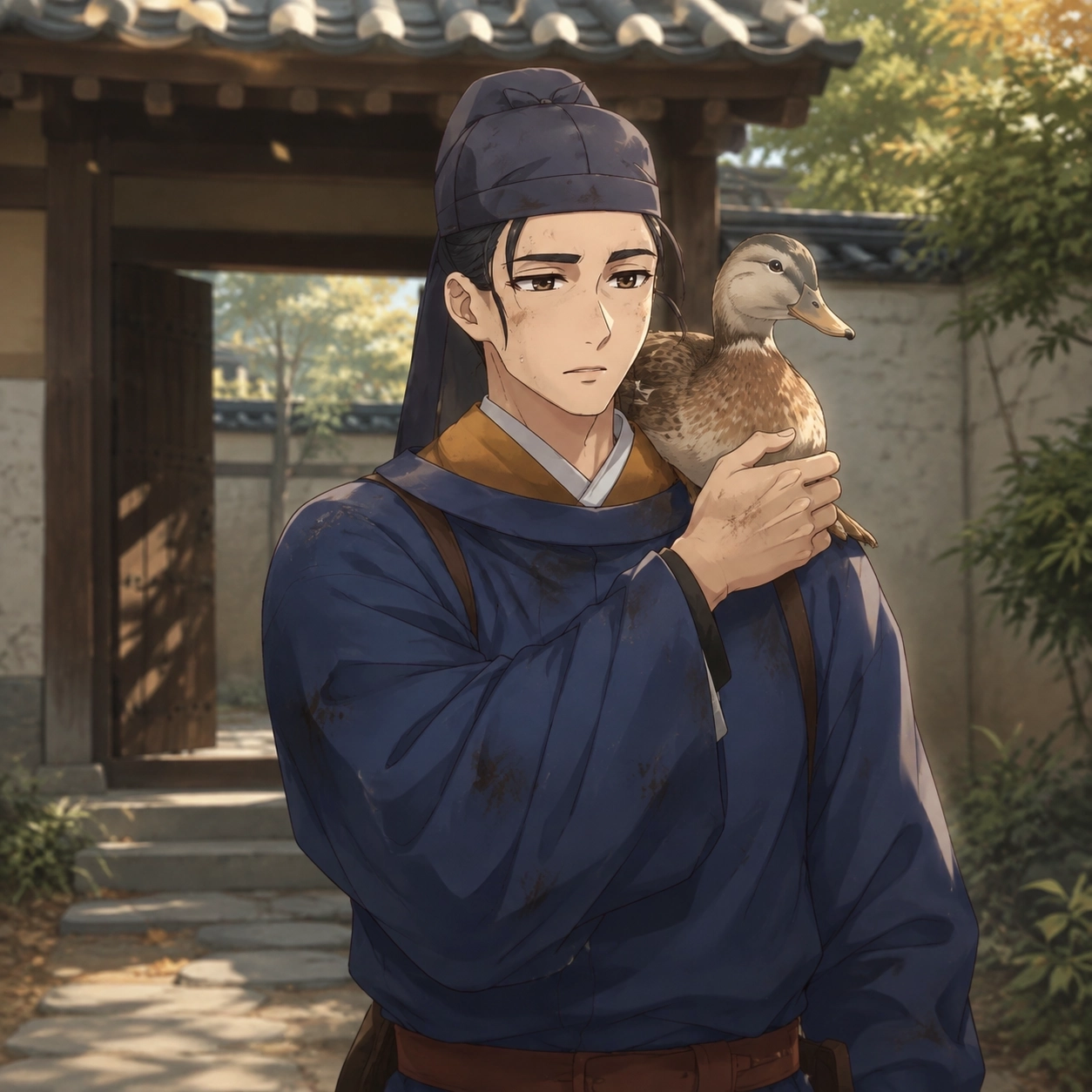
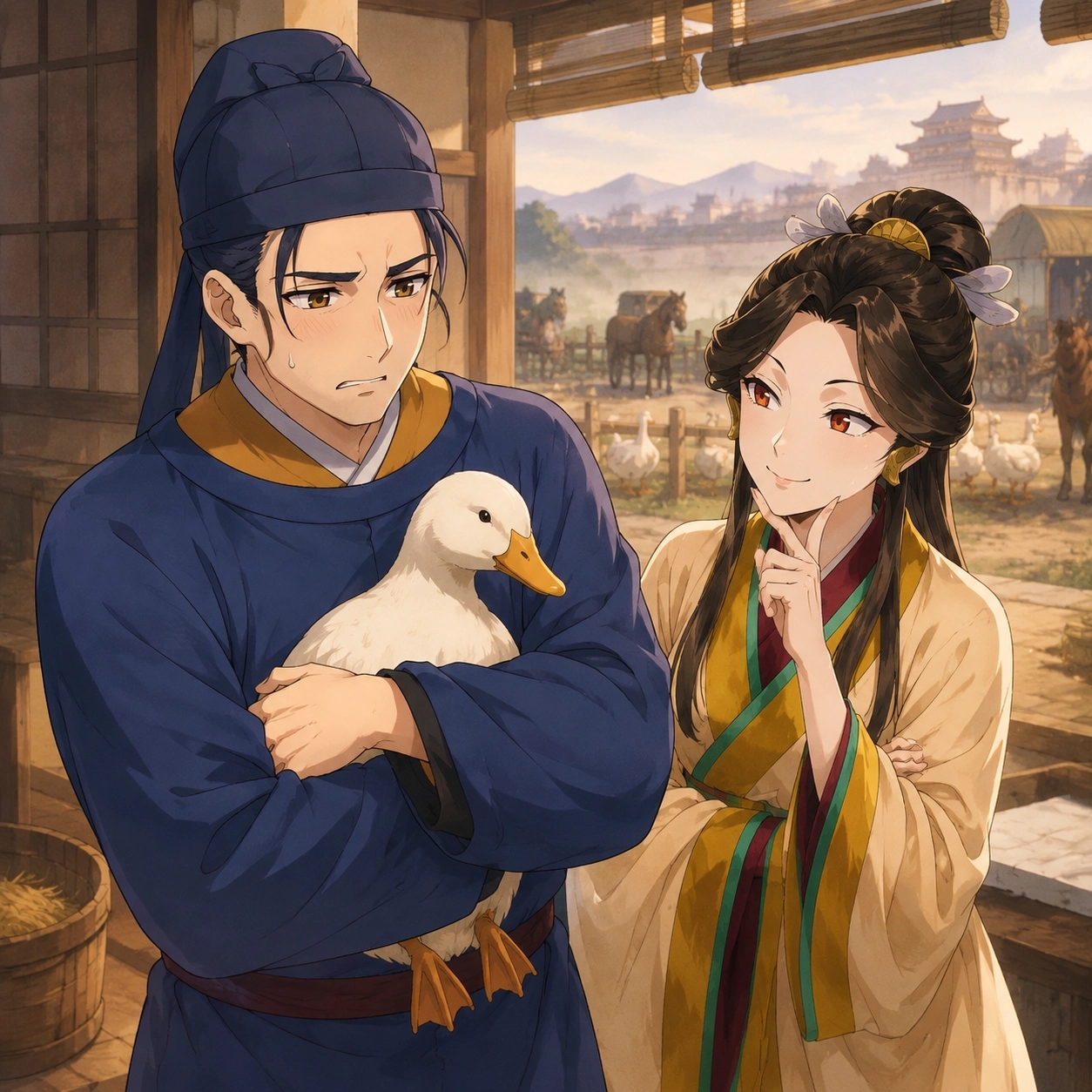
The scene appears in Volume 13, Chapter 7, when Basen returns to the Ma household after spending roughly a year away in the Western Capital. His sister Mamei is expecting a tired guard, not a young man carrying a domestic duck on his shoulder and covered in animal mess.
Basen identifies the duck as Shufu and insists that it is his family member. When Mamei asks where it came from, the conversation moves from comedy to implication. The duck came from the place Basen used to visit before leaving for the Western Capital, and Mamei connects that place with Lishu, who has been forced into religious life and is living in an environment concerned with medicine, food, farming, and livestock.
Mamei does not treat her conclusion as a proven confession. She reads Basen's embarrassment, his defensiveness, and his unusual attachment to Shufu. She then proposes returning the duck while visiting the person who cared for him, provided Basen first informs his superior, Jinshi.
Volume-level entry only. The source is community-hosted; availability and rights status may vary.
The Short Answer
The Direct Facts
Basen carries the duck because he took it back from the Western Capital and has become attached to it. He names the duck Shufu, calls it a member of his household, and refuses to accept the suggestion that it should simply be eaten.
That is the literal answer. The deeper answer comes from the way Mamei questions him. She remembers that Basen often came home smelling of livestock before his Western Capital assignment. When he explains that Shufu came from a place he used to visit, his story suddenly points toward a person rather than a random animal.
Mamei's Inference
Mamei suspects that Shufu is an excuse for Basen to return to someone who looked after him. Her questions move through the possibilities: is the person a farmer, a nun, or someone else connected to the duck? Basen's answers become increasingly revealing, especially when he says that the woman did not enter religious life willingly.
The passage leads Mamei toward Lishu, the former high-ranking consort who has been forced into religious life. The novel gives Mamei enough clues to make the connection, but it does not give Basen a polished declaration of love. The emotional conclusion is an inference built from his behavior.
Why the Duck Matters
A Living Memory of the West
Shufu is not a letter or a souvenir that Basen can put away in a drawer. The duck needs food, space, and care. It follows him into the present. That makes it a living memory of the Western Capital rather than a decorative reminder of his assignment.
Basen has returned to the Ma household, but part of him is still tied to the place he left. Mamei understands that the duck keeps the connection active. If Basen takes Shufu back, he also has a natural reason to revisit the person and the community associated with the animal.
Not a Confirmed Confession
It would be too strong to say that Basen carries the duck only because he is in love with Lishu. The chapter does not provide a direct confession, and Basen himself is too inexperienced in romance to explain the situation clearly. What the text does show is attachment, embarrassment, protectiveness, and a desire to preserve something that came from the West.
That distinction is important for reading Basen accurately. The duck is evidence of an emotional change, not a legal certificate of a relationship. Mamei is the one who translates the clues into a possible visit. Basen's behavior makes that possibility believable, but the novel leaves the feeling in an early, awkward stage.
Why Shufu Becomes Family
Basen's word choice is unusually serious. When his family suggests eating the duck, he objects that Shufu is his family member. The comedy comes from the mismatch between his solemn defense and the duck droppings covering his clothes, but the feeling underneath is real.
Basen has spent much of his life afraid that his strength will hurt other people. As a child, he accidentally broke Mamei's arm, and he learned to associate contact with danger. Shufu gives him a relationship he can protect without worrying that his own physical power will cause injury. Caring for the duck is therefore not just sentimental. It gives Basen a safe form of tenderness.
What the Duck Reveals About Basen
The duck scene is one of the clearest small-scale signs that Basen is growing up. Before the Western Capital, he is often treated as powerful but immature: physically formidable, socially blunt, and not especially capable of controlling his strength or reading romantic situations.
When he returns, Mamei notices that his face has become leaner and his body more trained. She also notices something more important: he can hold Shufu without hurting it. Basen says that he will not remain a child forever, and the scene quietly supports him. His growth is not only a matter of combat ability.
Strength Becomes Restraint
Basen's strongest trait has always been physical force. In this chapter, the meaningful change is control. He protects the duck, listens when Mamei tells him to ask Jinshi first, and tries to think through what returning Shufu would involve.
This connects to the earlier Basen and Lishu rescue analysis. In the tower crisis, Basen's physical instinct helps him act when delay would endanger Lishu. In Volume 13, the same physical strength is placed beside a different task: learning how to carry something fragile without treating it as a problem to solve by force.
Read why Basen acted on his own to save Lishu alongside this scene. The rescue shows his courage under pressure; Shufu shows the quieter discipline he is beginning to develop afterward.
Basen Is Still Naive About Romance
Mamei does most of the emotional decoding in the conversation. Basen does not understand that his answers are revealing the identity of the woman he wants to see. He becomes flustered only after Mamei has already assembled the clues.
That naivety does not make the feeling false. It makes it immature and unprocessed. Basen knows that he wants to protect Shufu and defend the person connected to it. He does not yet know how to name the emotional reason behind those actions.
How Mamei Turns the Joke into a Plan
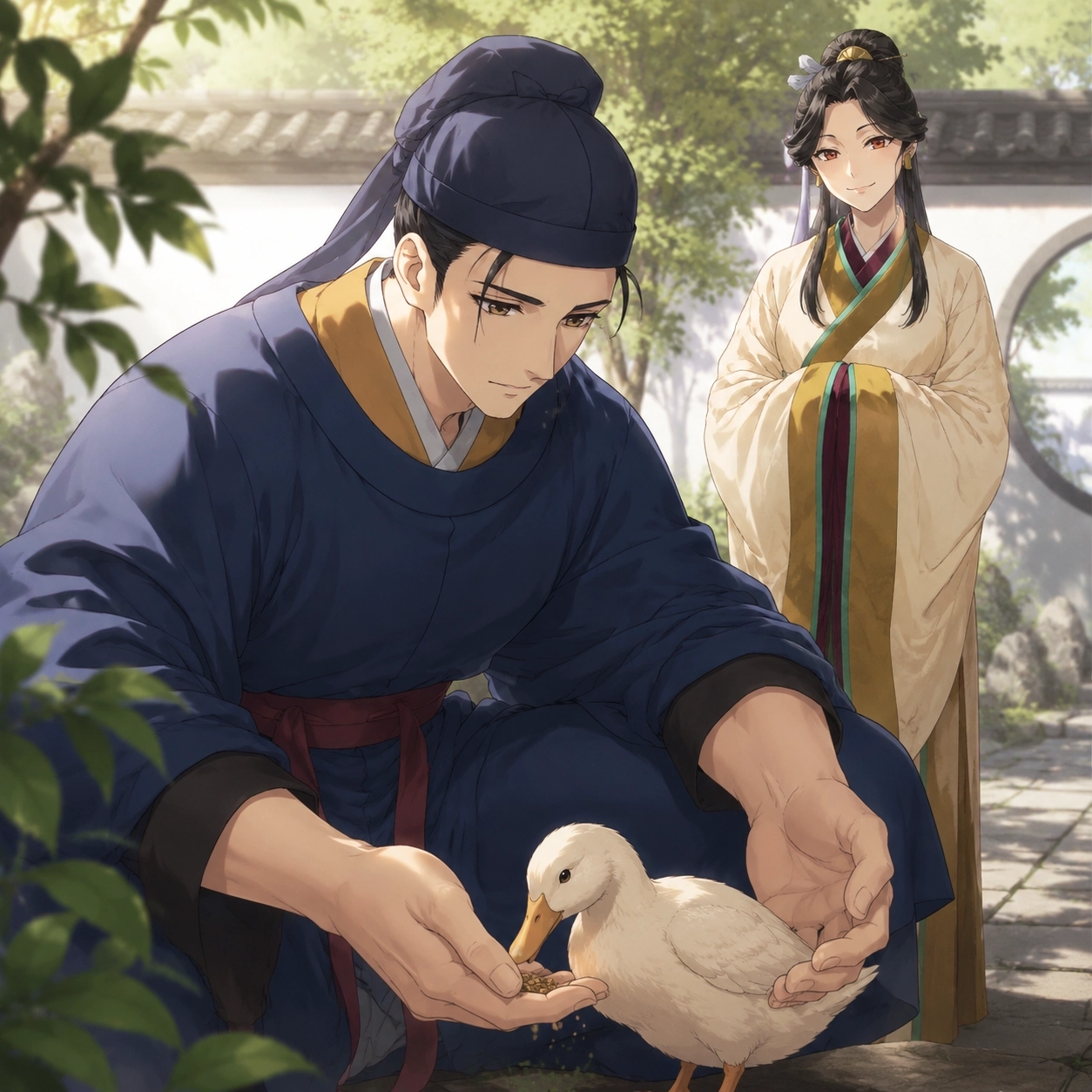
Mamei initially treats Basen's duck as a household nuisance. Taomei has already ordered him to leave it outside, and Mamei agrees that Basen cannot bring livestock into the residence. But once she realizes what Shufu represents, she stops treating the problem as merely domestic.
She Protects Basen from His Own Impulse
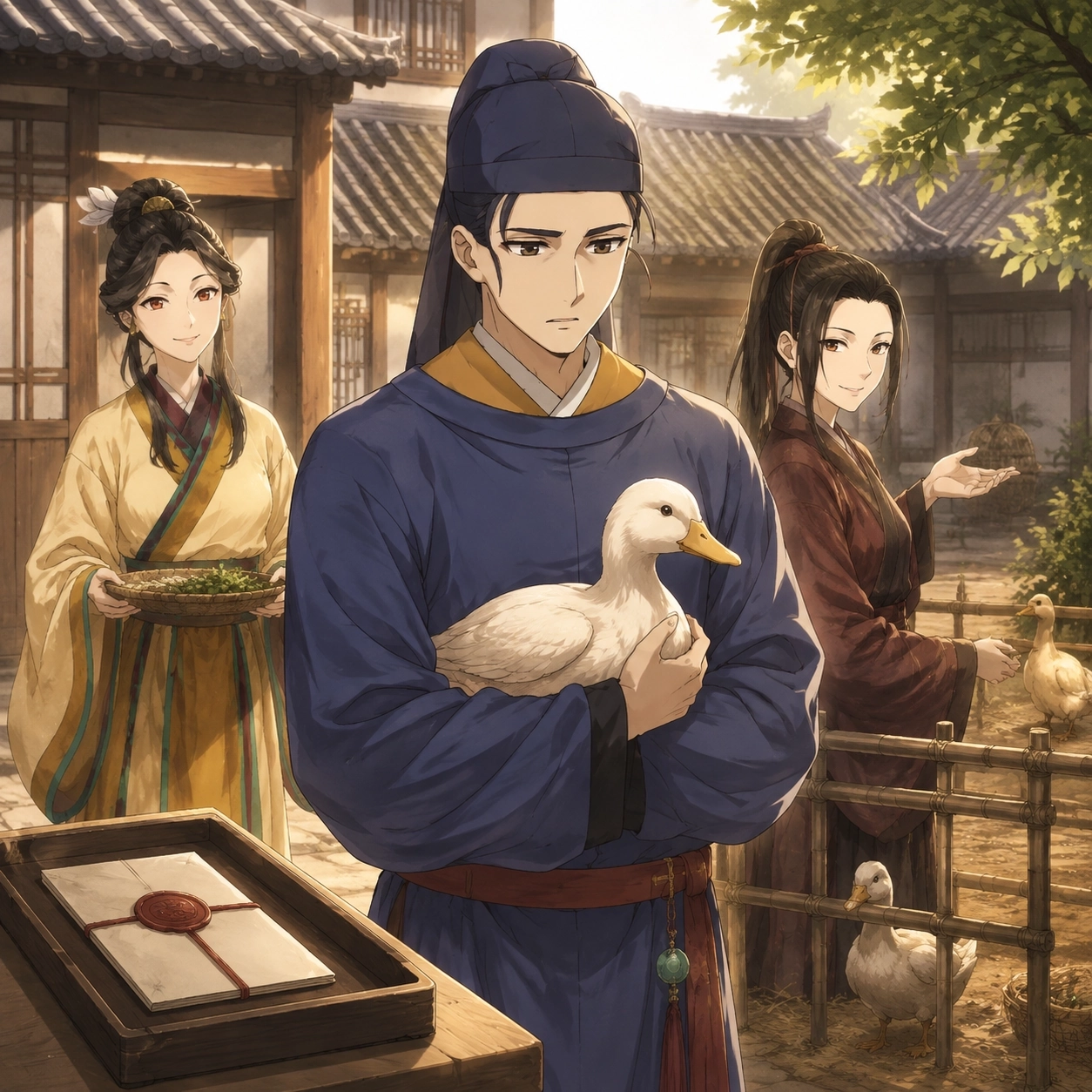
Mamei tells Basen to return Shufu to its original place, but she also tells him to notify the person there first. More importantly, she reminds him that he must inform Jinshi before going. Basen's Western Capital assignment is over, so a private return visit could create political trouble if he simply disappears into an old connection.
This is classic Ma family thinking: preserve the feeling, but put a structure around it. Mamei does not tell Basen to forget Lishu, and she does not blindly encourage him to rush there. She creates a route that protects his superior, the household, and the woman he wants to visit.
She Uses Children, Livestock, and Social Custom
Mamei plans to bring the children to see the other livestock and then happen to meet a noble young woman. The plan is deliberately transparent to the reader and deliberately deniable inside court society. It creates a legitimate reason for the visit while allowing Mamei to approach the declining Ma-character family connected to Lishu.
This is why the chapter should be read beside why the Ma clan women hold real power. Mamei's strength is not only that she can scold Basen. She can convert a foolish-looking situation into a controlled social opening.
Why Lishu Is Near the Center of the Scene
Lishu is not physically present in the chapter, but her circumstances explain why Mamei's questions matter. The former consort has been sent into religious life after palace trouble, and the institution around her is connected to medicine, diet, agriculture, and animal husbandry. That makes a domestic duck plausible as part of the world Basen has been visiting.
More importantly, Lishu is someone who has been protected and managed by powerful people without being given much freedom. Basen's interest is emotionally different from a court order. He is not trying to use her status. He seems to want to check on the person who cared for him, even though doing so may be improper or complicated.
The Connection Is About Care Before Romance
The safest reading is that Basen's feeling begins with care. He remembers a place, an animal, and a woman associated with being looked after. Mamei then recognizes that the memory has become important enough for him to carry home.
That is more convincing than treating Shufu as a simple romantic token. Basen does not carry a flower or a love letter. He carries a living responsibility that exposes whether he is willing to keep caring after the official mission is over.
Why the Scene Is So Funny
The comedy protects the tenderness. Basen is covered in duck droppings, argues that Shufu is family, and takes every question literally. Mamei and Taomei respond with practical household objections. The scene would become too sentimental if the novel removed the mess.
Instead, the humor lets the reader watch Basen change without turning him into a different person. He is still awkward and still difficult. He simply has one fragile creature, and perhaps one fragile attachment, that he refuses to abandon.
Common Misreadings
Misreading 1: Basen carries the duck as a joke
The scene is funny, but Basen is completely serious about Shufu. He calls the duck family and refuses to treat it as food.
Misreading 2: Shufu proves that Basen and Lishu are already a couple
The passage does not confirm an established relationship. Mamei infers that Basen wants to see the person connected to the duck, and Basen's embarrassment supports the possibility of romantic feeling.
Misreading 3: Basen took the duck directly from Lishu
The text connects Shufu to the place Basen used to visit and to the livestock environment around Lishu's religious residence. It does not give a fully explicit handover scene, so the exact chain of possession should remain a careful inference.
Misreading 4: Mamei only wants to tease her younger brother
Mamei does tease Basen, but she also checks the political risk. She tells him to inform Jinshi and plans a socially defensible visit. Her matchmaking instinct is inseparable from her duty as a Ma family woman.
FAQ
Why does Basen carry a duck in The Apothecary Diaries?
He brings the domestic duck Shufu back from the Western Capital because he has become attached to it and regards it as family. Mamei also realizes that the duck gives him a reason to revisit a person who cared for him.
Is the duck named Shufu?
Yes. Basen identifies the duck as Shufu, a female domestic duck that lays an egg roughly every two days.
Does Basen carry the duck because of Lishu?
The chapter strongly points toward Lishu's orbit, but it presents the connection through Mamei's inference rather than a direct confession. The safest answer is that Shufu is both a real attachment and an emotional bridge back to someone Basen wants to see.
Does Basen love Lishu?
The scene suggests that Basen has developed feelings or at least a deep personal concern, but it does not confirm a formal romance. His protectiveness and embarrassment show an early, awkward emotional awakening.
Why must Basen tell Jinshi before visiting?
Basen is no longer simply carrying out an assignment in the Western Capital. Mamei knows that returning to an old connection involving a former consort could cause trouble, so she tells him to notify his superior, Jinshi, before going.
What does the duck reveal about Basen's character?
It reveals that Basen is learning restraint and tenderness. He is still blunt, but he can now care for something fragile without treating his physical strength as the only answer.
What should I read next?
Read why Basen acted on his own to save Lishu, the Ma clan women's household power, and Gaoshun's relationship with the Emperor for the connected duty, family, and court-politics threads.
Continue the character discussion