Spoiler Warning
This article discusses light novel spoilers for The Apothecary Diaries, including the Ma clan's internal structure, Taomei's practical authority, Mamei's position in the family, Chue's role as a daughter-in-law, Baryou's unusual career path, Basen's guard duty, Gaoshun's imperial service, and Jinshi's household connections. Anime-only readers should stop here.
Quick Answer
The Ma Clan Is Not Just a Guard Family
Ma clan women hold real power because the clan is built around dangerous imperial service. The men can be sent to guard the ruler, protect Jinshi, or die in a crisis. That means the family cannot depend on male continuity alone. Someone has to preserve the household, raise the next generation, arrange marriages, manage servants, keep records, and move information through places men cannot easily enter.
In the novels, that work belongs to women. Taomei is the clearest authority figure, Mamei is the daughter likely to inherit her place, and Chue shows how a Ma daughter-in-law can turn social access into intelligence work. The result is a family where public danger is often male, but operational command is deeply female.
This is why the Ma clan feels different from a simple martial house. Gaoshun and Basen may be the visible guards, but the system behind them is maintained by women who know how to make loyalty survive paperwork, marriage, childbirth, injury, gossip, and court politics.
Scene Locator
The novel gives the strongest Ma clan context in later volumes, especially when it explains that the current head of the family is not the whole story. Much of the actual management falls to Taomei, Basen's mother and Gaoshun's wife. The text also notes that Mamei, trained directly under Taomei, is expected to take over that position in the future.
Another important clue comes from Chue. When she jokes that she cannot go against the Ma clan's power holders, she names her mother-in-law Taomei and her sister-in-law Mamei. The joke works because Chue is not helpless. She is clever, slippery, and unusually capable. If someone like Chue still treats those two women as the household's command layer, the novels are telling us where authority really sits.
The third clue is information. Male Ma relatives like Basen and Baryou cannot easily check every matter in women's palace spaces. Mamei can. Chue can. In a story where secrets decide lives, that kind of access is not side material. It is power.
Volume-level entry only. The source is community-hosted; availability and rights status may vary.
Taomei Runs the House
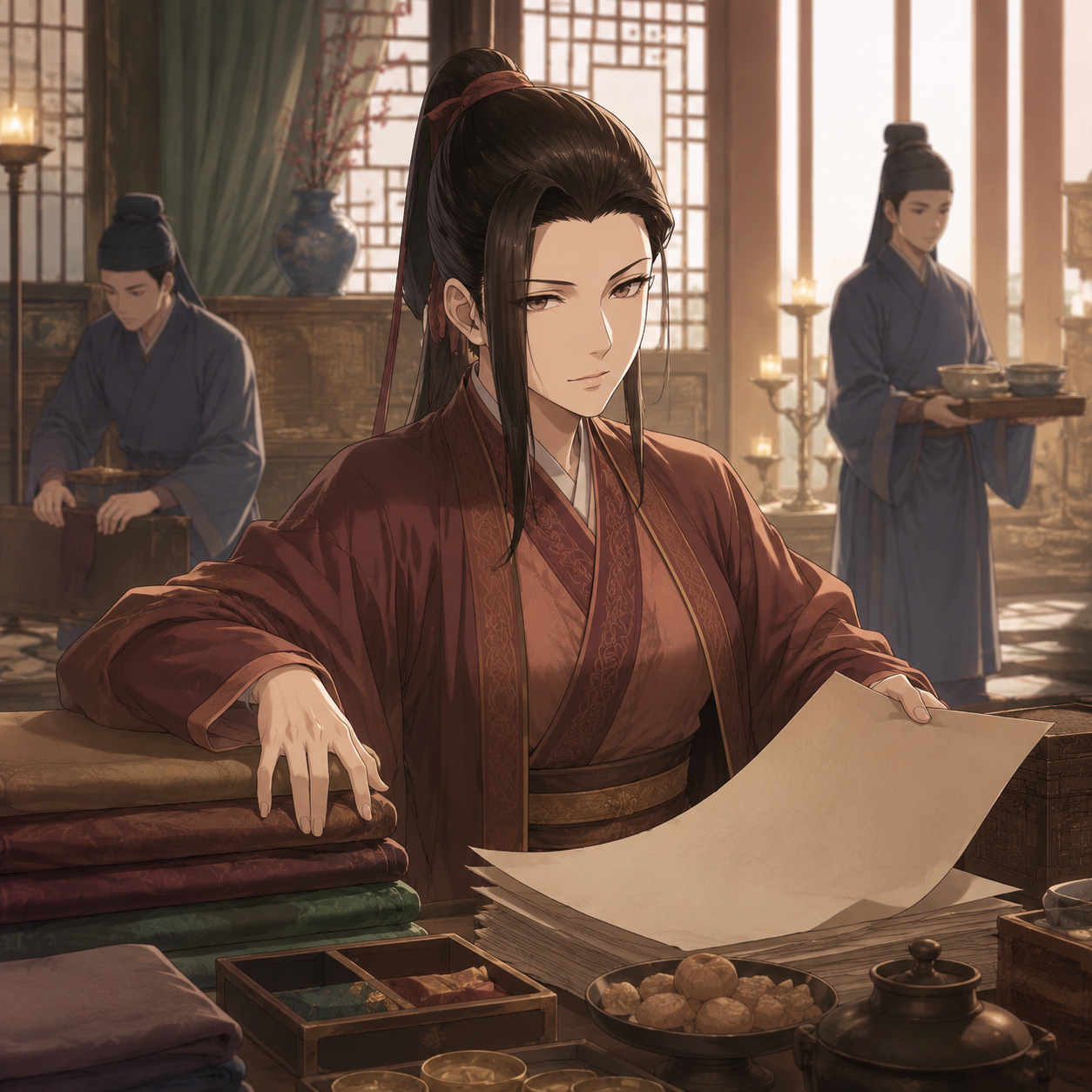
Taomei is the center of Ma clan domestic authority. The novels do not treat her as a soft background wife. She is older than Gaoshun, deeply involved in Ma family affairs, and formidable enough that Jinshi, Basen, and even Gaoshun adjust around her. The comedy of everyone fearing her only works because the story has already made her competence obvious.
Her position also comes from the clan's messy inheritance history. The Ma family's nominal line and practical control do not line up neatly. Taomei was already connected to the household before her marriage to Gaoshun, and she becomes the person who keeps the family operating after the male succession structure changes. In plain terms, she is not powerful because she married Gaoshun. She is powerful because she knows how the house runs.
That is the key to reading her. Taomei's authority is operational. She handles discipline, food, servants, family communication, and the invisible domestic logistics that make imperial service possible. When the men are beside the Emperor or Jinshi, Taomei keeps the family from becoming scattered pieces of loyalty.
For the broader Ma clan structure behind her role, read what the Ma clan is in The Apothecary Diaries. That article explains why the family serves close to the imperial line without becoming a normal office-holding faction.
Mamei Inherits the Role
Mamei is the bridge between Taomei's generation and the next one. She is Gaoshun and Taomei's daughter, Basen and Baryou's sister, and one of the sharpest signs that Ma clan power is expected to pass through women. The novels describe her as resembling Taomei in face and temperament, and they also frame her as the person likely to inherit Taomei's place in the household.
That matters because Mamei is not just a stern sister used for comic violence. She can control Basen, interpret Baryou's difficult communication, and manage situations where Jinshi needs practical help more than courtly flattery. Her family power is personal, but it is also institutional. Everyone knows she has standing.
Mamei also has an information role that her brothers cannot fully replace. Later novel material shows Jinshi receiving or relying on information she can help gather because certain rear-palace matters are difficult for male relatives to confirm. In The Apothecary Diaries, that is a major kind of authority. A person who can enter the right rooms and ask the right questions may matter more than a person with a title.
This is why Mamei is so useful for understanding the clan. She proves that Taomei's authority is not a one-time exception. The Ma family is reproducing that pattern on purpose.
Chue Shows the Information Side
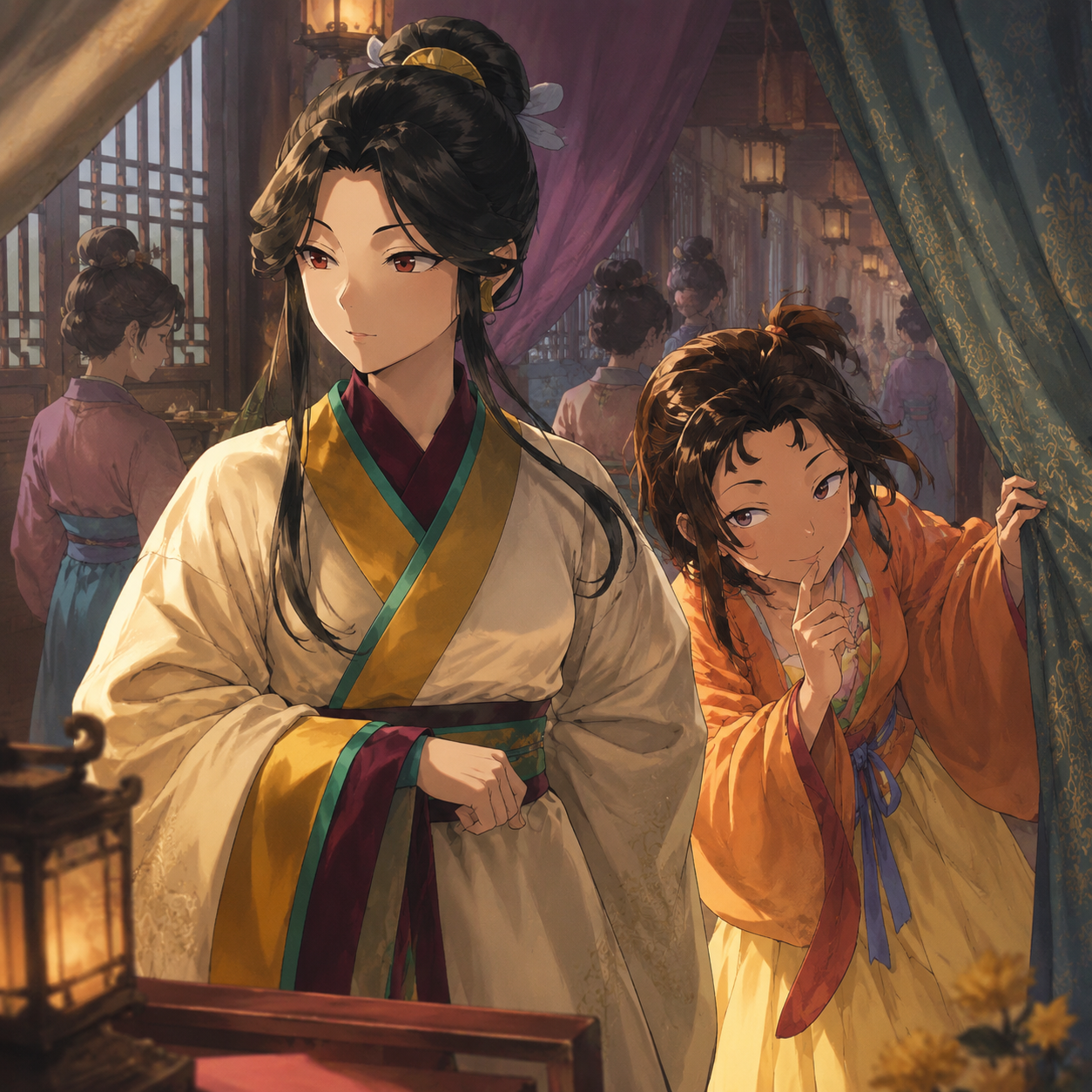
Chue is easy to underestimate because she often sounds playful. That is a mistake. As Baryou's wife, she enters the Ma family as a daughter-in-law, but she also brings her own intelligence-gathering ability and her own unnerving talent for appearing exactly where she is useful.
Her relationship to Taomei and Mamei is especially revealing. When Chue says she cannot disobey them, the line is funny because she is the last person readers would expect to be easily controlled. Yet she still names them as the figures she has to answer to. The household hierarchy is not vague. Chue knows where the pressure comes from.
Chue also shows that Ma clan power is not only military protection. She moves through conversations, errands, women-only spaces, family obligations, and rumors. In a palace story, those routes are often more useful than a sword. Basen can guard a doorway. Chue can learn why someone wanted that doorway guarded in the first place.
Her role pairs well with Mamei's. Mamei represents recognized household command; Chue represents flexible field intelligence inside the family network. Together, they show why the Ma clan's women are not merely keeping the home warm while men do the real work. They are doing a different kind of real work.
How Male and Female Duties Split
The Ma clan works because its duties are split without being separate. Gaoshun and Basen embody the visible guard line. Gaoshun stands near the Emperor and Jinshi with adult restraint, while Basen carries the next generation's physical guard duty. For that side of the family, see Gaoshun and the Emperor's relationship and why Gaoshun does not go west with Jinshi.
But the female side explains why that visible guard line can keep functioning. Taomei maintains household stability. Mamei disciplines, organizes, and inherits. Chue gathers and carries information. These jobs are not softer than guard duty. They are the conditions that make guard duty sustainable.
Baryou also helps clarify this split. He is brilliant but physically frail and socially difficult, so the family cannot simply force every son into a standard masculine career. The Ma clan adapts around actual usefulness. That is one reason the women matter so much: they are the ones who can see the household as a living system rather than a row of interchangeable guards.
Why This Power Has No Office
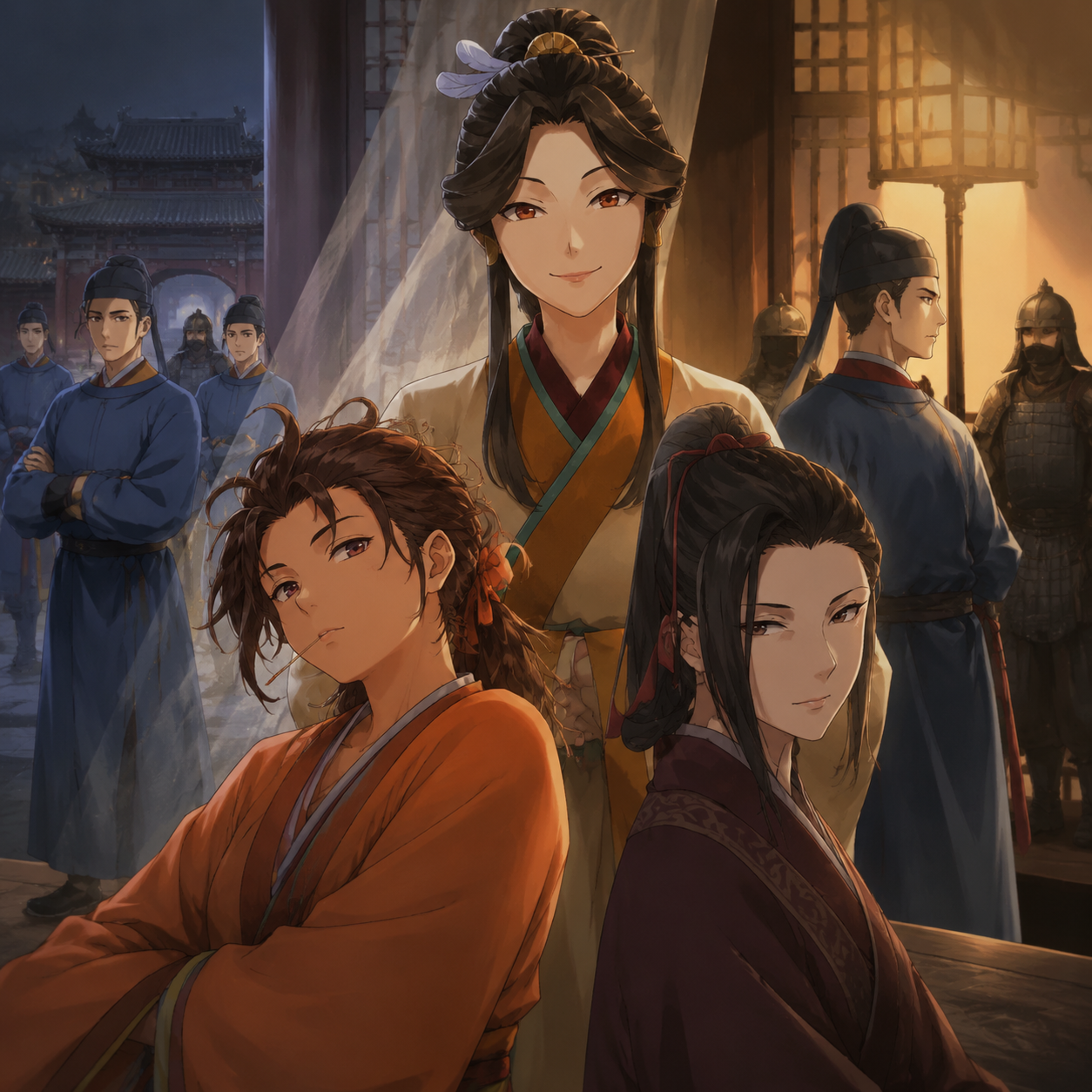
The Ma clan's female power is strong precisely because it is not formalized as a public office. The clan is already too close to the imperial family through guard duty, nursing ties, childhood proximity, and private household service. Giving that closeness a normal bureaucratic shape would make it politically dangerous.
That is why Ma clan authority often looks domestic from the outside. A meal, a message, a scolding, a child's care, or a woman's visit to the rear palace can all look private. Inside the story, those private actions stabilize imperial politics. The lack of a title makes the power easier to miss, but it also keeps the clan from looking like a rival faction.
This is very consistent with the palace logic around Jinshi. His identity and position are too sensitive for loud factional support. The Ma family can protect him because it works quietly. The women are especially important because they can operate in spaces where official male authority would be clumsy or suspicious.
If you are tracing Jinshi's political risk more broadly, pair this with Jinshi's real name guide and why the Emperor takes Jinshi and Maomao to the Shrine of Choosing.
Common Misreadings
Misreading 1: Taomei is only scary for comedy
The comedy is real, but it rests on authority. Taomei frightens people because she is competent, informed, and structurally important to the Ma household.
Misreading 2: Mamei is just Basen's bossy sister
Mamei is bossy, but that is not the whole point. She is being positioned as Taomei's successor and can handle information routes her brothers cannot.
Misreading 3: Chue is too playful to be powerful
Chue's playfulness is part of her method. She survives by being underestimated, while still recognizing Taomei and Mamei as higher household authorities.
Misreading 4: Ma clan power belongs only to men with guard duty
The men guard the imperial body. The women keep the family, the information flow, and the private household order intact. The clan needs both forms of power.
FAQ
Why do Ma clan women hold real power?
Because the clan's men serve dangerous imperial guard roles, the women have to preserve household continuity. Taomei, Mamei, and Chue show that Ma power is domestic, informational, and political at the same time.
Who is Taomei in the Ma clan?
Taomei is Gaoshun's wife and Basen's mother. In the novels, she handles much of the Ma family's practical management and is one of the clearest examples of female authority in the clan.
Who is Mamei?
Mamei is Gaoshun and Taomei's daughter. She is sharp, forceful, and likely to inherit Taomei's household role, while also helping with matters that require female palace access.
Why does Chue matter?
Chue matters because she shows the information side of Ma clan power. As Baryou's wife, she belongs to the family, but her real value comes from movement, observation, and intelligence work.
What should I read next?
Read what the Ma clan is, then continue with Gaoshun and the Emperor's relationship and why Basen acted on his own to save Lishu.