Spoiler Warning
This article discusses light novel spoilers for The Apothecary Diaries, including the current Emperor's household, Gaoshun's return to emperor-side duty, Basen guarding Jinshi in the Western Capital arc, Ah-Duo's hidden connection to Jinshi, and succession pressure around Jinshi's public role. Anime-only readers should stop here.
Scene Locator
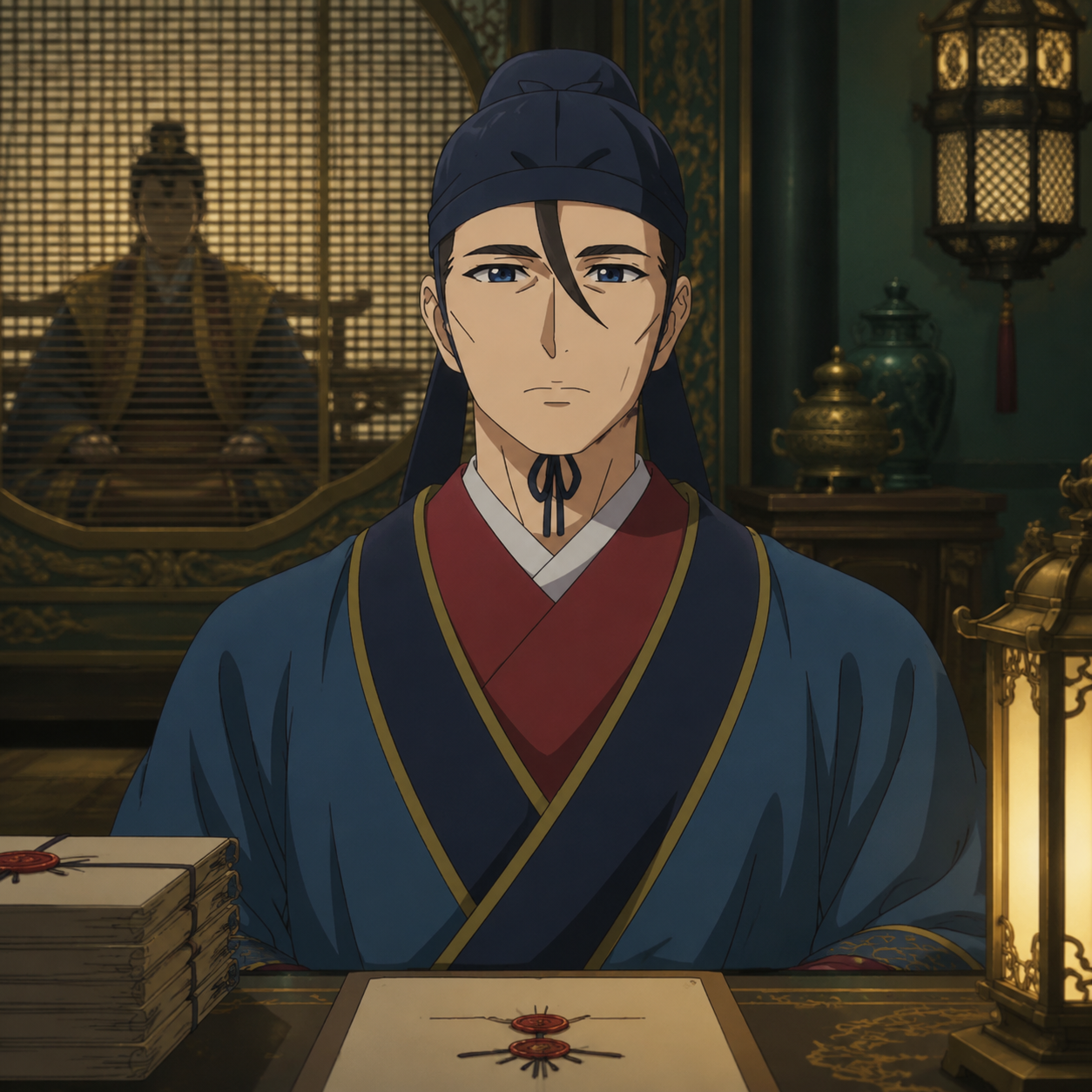
The clearest on-page clue comes around the Western Capital material. When Jinshi leaves the capital, Gaoshun does not simply disappear from the story. The novels clarify that he has returned to the Emperor's side, while Basen, Gaoshun's youngest son, takes the guard role beside Jinshi in the west.
That small shift says a lot about Gaoshun's relationship with the Emperor. Gaoshun is not only Jinshi's familiar attendant. He belongs to the larger machinery of imperial protection. When the Emperor stays in the capital and Jinshi moves west, the Ma family duty splits: the father remains with the ruler, and the son guards the imperial younger brother.
If you want the direct companion piece for that duty split, read why Gaoshun did not go with Jinshi to the Western Capital. This article looks at the other side of the same arrangement: why the Emperor is the person Gaoshun returns to, and why that return is not a demotion.
Volume-level entry only. The source is community-hosted; availability and rights status may vary.
The Short Answer
Gaoshun Is the Emperor's Trusted Retainer
Gaoshun's relationship with the Emperor is best understood as trusted service. He is close enough to handle sensitive imperial household matters, experienced enough to read a situation before it becomes public, and disciplined enough to keep private knowledge private. That makes him more than a disposable attendant.
The Emperor does not need Gaoshun because Gaoshun flatters him. He needs Gaoshun because Gaoshun can stand near power without trying to convert every secret into influence. In a court full of people watching rank, favors, children, consorts, and succession hints, that kind of restraint is rare political infrastructure.
This is why Gaoshun's quietness matters. He often looks plain beside more dramatic characters, but the story uses that plainness as a sign of competence. He is the sort of man who makes imperial logistics work while other characters become the visible center of the scene.
It Is Not Ordinary Friendship
Calling Gaoshun and the Emperor "friends" is too simple. The relationship has trust, familiarity, and long service, but it also has rank, duty, and the danger of the palace around it. Gaoshun cannot treat the Emperor like an equal without consequence. The Emperor cannot treat Gaoshun like a casual companion without weakening the distance that keeps court order readable.
That does not make the bond cold. It makes it court-shaped. Gaoshun can be personally reliable while still acting through hierarchy. The Emperor can depend on him while still being the ruler. The tenderness, if there is any, is not expressed through open sentiment. It is expressed through access, silence, and repeated trust.
Their Bond Runs Through Ma Clan Duty
The Ma clan context is the cleanest explanation for why Gaoshun matters. Gaoshun and Basen are tied to a family pattern of protecting the imperial household. That makes Gaoshun's service to the Emperor different from a servant who happens to be useful. His duty is inherited, trained, and politically legible.
When Basen is assigned to guard Jinshi, the story is not replacing Gaoshun with a random younger guard. It is showing the same family duty distributed across two imperial figures. Gaoshun remains beside the Emperor. Basen carries protection west with Jinshi. The relationship between Gaoshun and the Emperor therefore sits inside a wider Ma family obligation.
Why the Emperor Needs Gaoshun
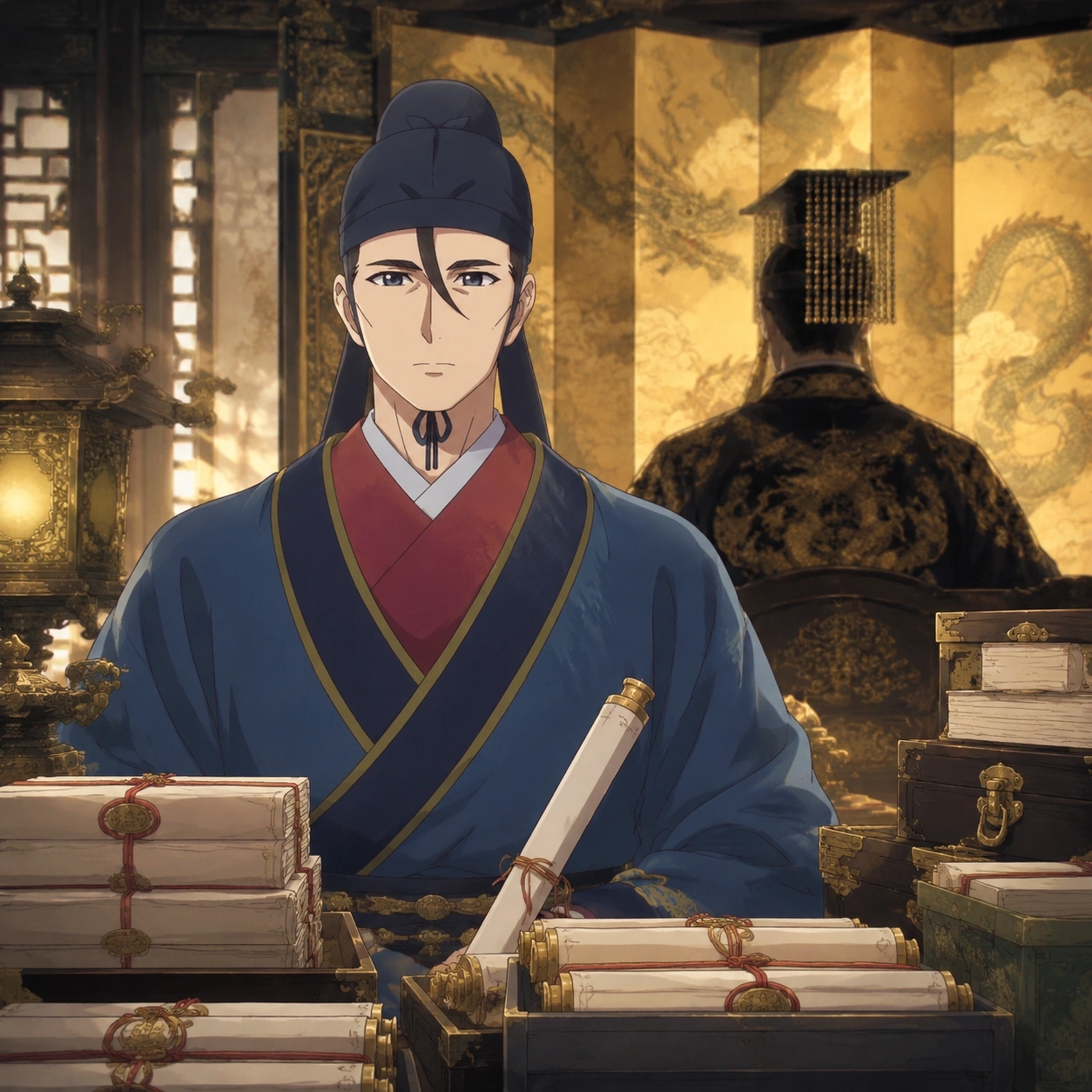
The Emperor's problem is not only ruling openly. He also has to survive the private consequences of earlier palace arrangements. The current court contains old secrets around Ah-Duo, Anshi's generation, Jinshi's official position, favored consorts, imperial children, and factions watching for weakness. A ruler in that environment needs people who can understand danger before it has a public name.
Gaoshun is useful because he can handle that middle space. He is not the Emperor's public minister making loud policy arguments. He is not a decorative servant who only fills a room. He is a trusted operator close enough to the household to manage delicate movement, messages, protection, and awkward truths without making them worse.
That is the kind of relationship The Apothecary Diaries often values most. The loudest person is rarely the safest person. The person who can notice, hold back, and act precisely may have more practical power than someone with a grander title.
Trust Means Access
In palace fiction, access is never neutral. Who can stand near the ruler, hear private conversation, receive instructions, or observe family pressure matters as much as official rank. Gaoshun's access to the Emperor signals trust because a careless attendant in that position would be dangerous.
That trust is not romanticized. The Emperor does not need Gaoshun to be emotionally theatrical. He needs him to be present, useful, and quiet. Gaoshun's value is that he can carry the Emperor's practical burden without demanding attention for carrying it.
Discretion Protects the Household
The imperial household survives on managed appearances. Jinshi's public identity, Ah-Duo's silence, Gyokuyou's rising position, and the Emperor's recognized children all depend on which truths are allowed to become official. Gaoshun's relationship with the Emperor matters because he is one of the people who can live near those truths without forcing them into the open.
That discretion is not the same as ignorance. A person can be trusted precisely because he understands enough to avoid asking the wrong question in the wrong place. Gaoshun's competence comes from that controlled awareness.
The Jinshi Connection Changes How We Read Gaoshun
Readers often meet Gaoshun through Jinshi, so it is easy to think of him primarily as Jinshi's attendant. That reading is not wrong, but it is incomplete. Gaoshun's service around Jinshi only makes full sense when you remember that Jinshi is part of the imperial household's deepest problem.
Jinshi's identity is not a normal court secret. Publicly, he carries the position of the Emperor's younger brother. Privately, the story ties him to Ah-Duo and the current Emperor in a way that makes succession, parentage, and official history dangerous. For the full identity frame, read Jinshi's real name and hidden rank and Jinshi discovering Ah-Duo's secret.
Gaoshun's relationship with the Emperor sits right beside that secret. He is the kind of retainer who can serve Jinshi closely and then return to the Emperor without the story treating the shift as betrayal. That movement only makes sense if Gaoshun's first duty is not one person's emotional comfort, but the stability of the imperial household as a whole.
Why Returning to the Emperor Is Not Abandoning Jinshi
Gaoshun returning to the Emperor can feel strange because he has been so strongly associated with Jinshi. But the Western Capital arc shows a practical split, not a broken bond. Jinshi goes west on imperial business. Basen guards him. Gaoshun remains where the Emperor needs him.
This is also why Basen matters. Basen is less tactful than his father, but he is part of the same guard-family logic. The novels use him to show that Jinshi is still protected even when Gaoshun is not physically beside him. For another Basen-centered example of guard instinct under pressure, see why Basen acts on his own to save Lishu.
Jinshi's Future Makes the Emperor's Dependence Sharper
The more Jinshi's position presses against succession politics, the more valuable Gaoshun becomes to the Emperor. The ruler needs people who can keep the old arrangements from becoming public disasters, especially while Gyokuyou's household, Anshi's old legitimacy, and Jinshi's refusal of the throne all create pressure in different directions.
That is why this article also belongs beside why Jinshi does not want to become Gyokuyou's enemy and the Anshi and Gyokuyou faction guide. Gaoshun's quiet service is part of the same political ecosystem.
What Gaoshun Knows, and Why Silence Is the Point
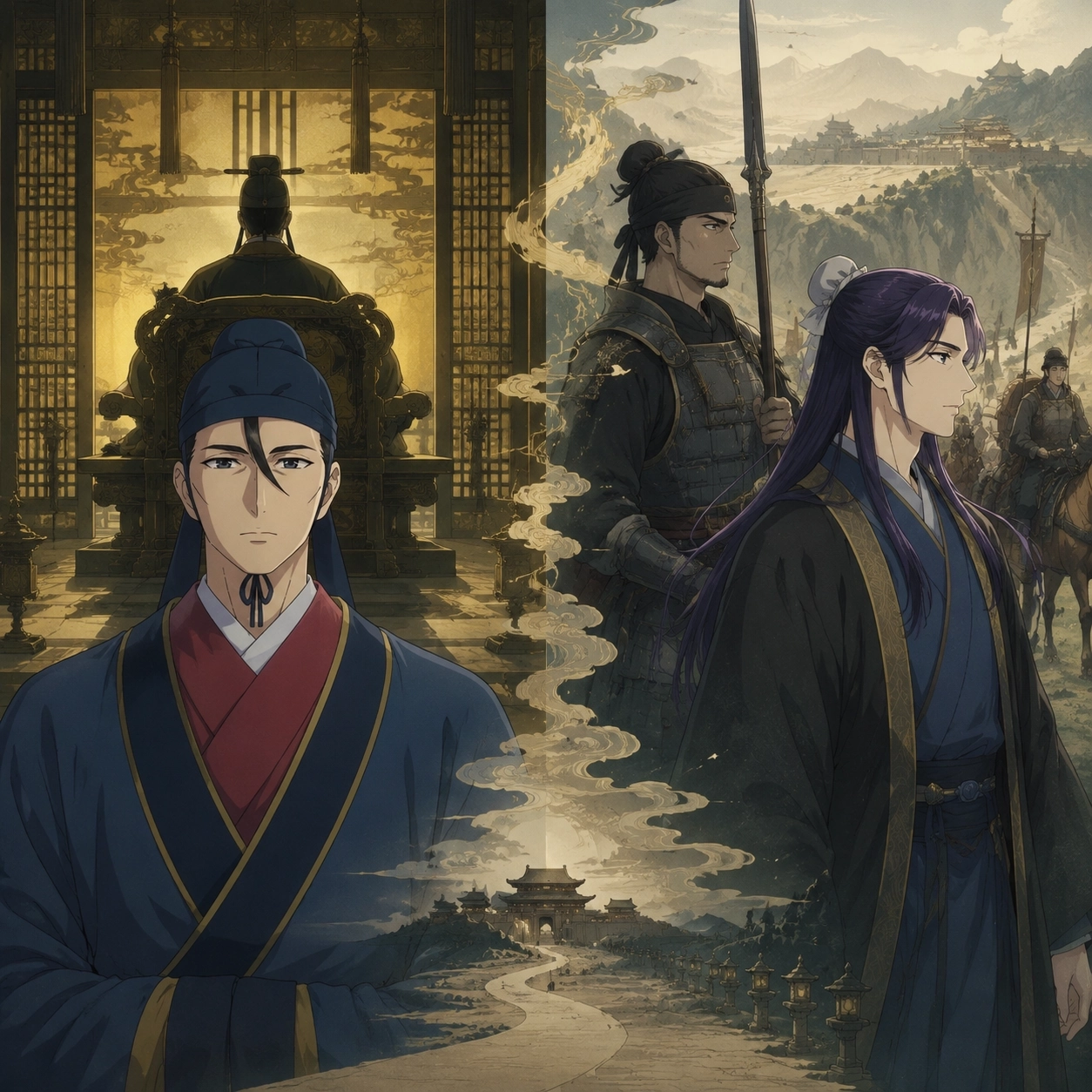
The novels do not need Gaoshun to explain every secret aloud for readers to understand his function. He operates as someone who knows enough to move correctly. That is more important than being the person who delivers exposition. In The Apothecary Diaries, the safest people often know when not to speak.
Gaoshun's silence is not emptiness. It is professional discipline. He can be close to Jinshi, close to the Emperor, and aware of dangerous household realities without turning that awareness into a public claim. This is exactly why the Emperor can use him. A man who reacts too loudly would be less useful, even if he were loyal.
That also explains Gaoshun's humorless image. He is not there to charm the reader in every scene. He is there to show what competence looks like when it has been trained into routine. He notices, adjusts, carries orders, sends the right person, and disappears from the dramatic spotlight when the task requires it.
The Relationship Is Built on Managed Truth
The Emperor's household depends on managed truth. Some facts can be known privately, some can be hinted at, and some cannot become official without harming living people. Gaoshun's relationship with the Emperor is built inside that structure. He is valuable because he can help manage what is known, who moves where, and which pressure points stay quiet.
This is not the same as saying Gaoshun controls the Emperor. He does not. The relationship remains hierarchical. But within that hierarchy, Gaoshun has trusted proximity, and trusted proximity is one of the story's most practical forms of power.
Gaoshun's Loyalty Is Calm, Not Passive
Because Gaoshun rarely makes a scene, it is easy to mistake him for passive. The better reading is that his loyalty is calm. He does not need to dominate a room to protect it. He does not need to explain every choice to prove he has thought about it.
His actions around the Western Capital assignment prove the point. He worries about Jinshi, considers the guard arrangement, uses practical reasoning around Maomao's presence, and still returns to the Emperor. That combination is the essence of his role: feeling can exist, but duty decides where he stands.
Common Misreadings
Misreading 1: Gaoshun is only Jinshi's attendant
Gaoshun is strongly tied to Jinshi on the page, but the Western Capital duty split shows that his role belongs to the imperial household more broadly. His return to the Emperor is a reminder of that larger obligation.
Misreading 2: Gaoshun and the Emperor are casual best friends
The text supports trust and familiarity, but "best friends" flattens the palace hierarchy. Their bond is shaped by rank, long service, secrecy, and duty. It is warmer than a simple job description, but stricter than ordinary friendship.
Misreading 3: The Emperor sends Gaoshun away from Jinshi because Jinshi matters less
The opposite is clearer. Jinshi matters enough that Basen is assigned to guard him, while Gaoshun remains with the Emperor. The Ma family covers both sides of the imperial problem.
Misreading 4: Gaoshun's quietness means he has no influence
Gaoshun's influence is procedural and private. He moves through access, timing, discretion, and household trust rather than speeches. In this story, that kind of influence is often more durable than visible drama.
FAQ
What is Gaoshun's relationship with the Emperor?
Gaoshun is a trusted imperial retainer connected to Ma clan guard duty. His relationship with the Emperor is built on service, access, discretion, and the ability to handle sensitive household matters quietly.
Is Gaoshun the Emperor's friend?
Not in a casual modern sense. The relationship includes trust and familiarity, but it is shaped by palace hierarchy. A safer label is trusted senior retainer rather than personal friend.
Why does Gaoshun return to the Emperor instead of following Jinshi?
Because his priority shifts back to emperor-side duty while Basen guards Jinshi in the west. The assignment shows a Ma family duty split, not Gaoshun abandoning Jinshi.
Does Gaoshun know Jinshi's secret?
The novels frame Gaoshun as someone close enough to the imperial household to move carefully around its dangerous truths. The important point is not public confession, but his ability to serve without exposing what should remain hidden.
How is Basen connected to Gaoshun and the Emperor?
Basen is Gaoshun's youngest son and part of the same Ma family guard logic. When Gaoshun remains with the Emperor, Basen carries that protective duty beside Jinshi in the Western Capital arc.
What should I read next?
Start with the Gaoshun and Basen Western Capital duty split, then read Jinshi's identity guide and why Jinshi avoids becoming Gyokuyou's enemy.