Spoiler Warning
This article discusses later light novel spoilers for The Apothecary Diaries, including Gyokuyou's rise toward empress status, the political weight of her children, Jinshi's hidden identity, Ah-Duo's secret, Anshi-related pressure, western faction politics, and succession implications beyond the anime. Anime-only readers should stop here.
Scene Locator
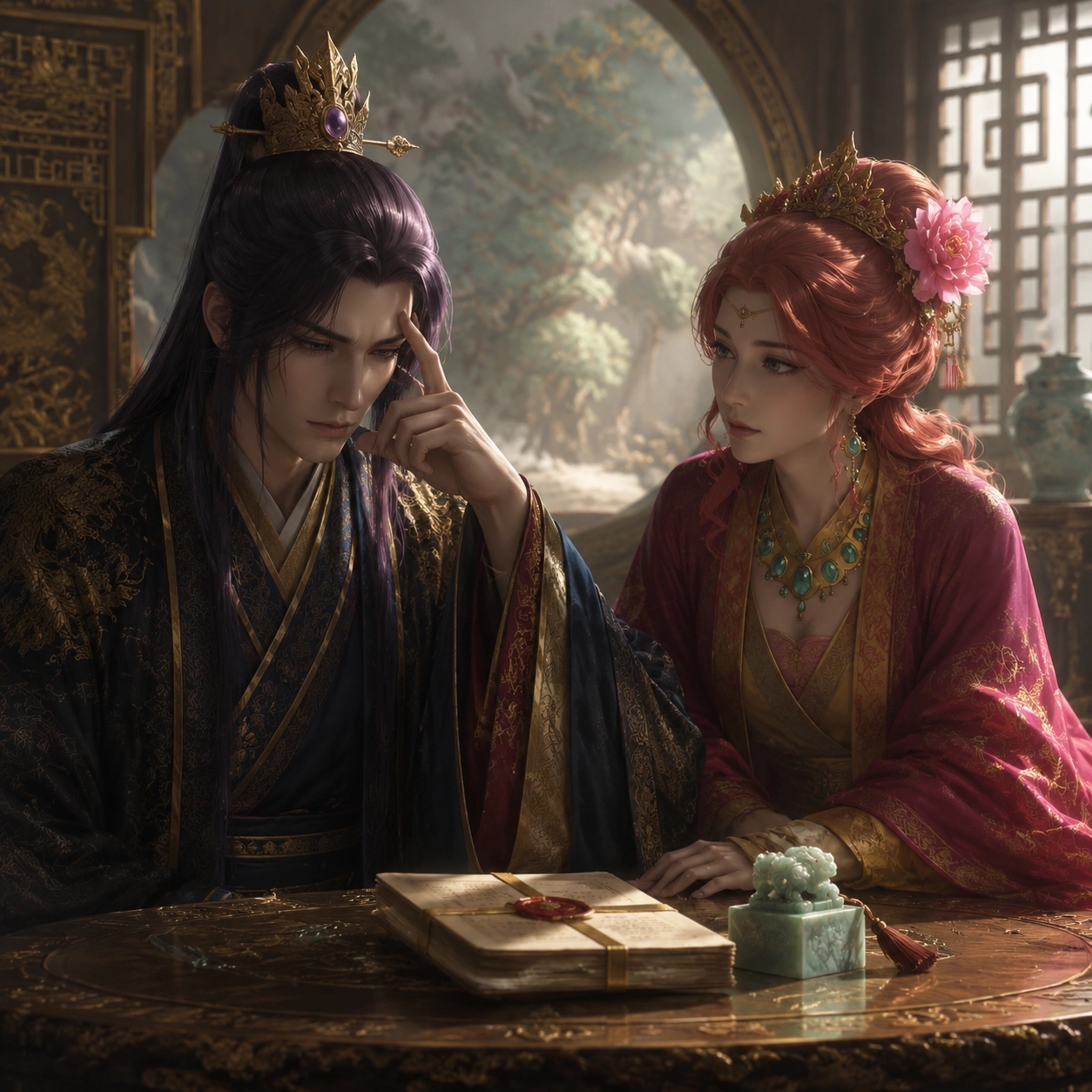
The Jinshi-and-Gyokuyou question starts quietly in the rear palace. Gyokuyou is the favored consort of the Jade Pavilion, a patron who recognizes Maomao's practical value, and a mother whose child's safety already carries political meaning. Jinshi moves through the same court as a beautiful official with far more pressure behind his name than his public role admits.
The key is that Jinshi is not looking for a throne. His later pressure comes from the opposite direction: he is close enough to imperial power that other people can imagine a crown for him, while his own behavior keeps trying to avoid being defined by that possibility. That makes Gyokuyou's household important to him, because her children give the current reign a visible future that does not need Jinshi at the center.
In the earlier arcs, nothing requires readers to see Gyokuyou and Jinshi as enemies. They are part of the same palace order, and both benefit when the emperor's household looks stable. The problem appears later, when Gyokuyou's rise, her children, her western background, and Jinshi's hidden position begin to occupy the same succession map. Jinshi's refusal to become emperor only matters politically if the court has another future it can accept.
For the other side of this question, read whether Gyokuyou becomes Jinshi's political enemy. This article turns the angle around: why would a man who does not want to be emperor have especially strong reasons to avoid becoming the enemy of Gyokuyou's household?
Volume-level entry only. The source is community-hosted; availability and rights status may vary.
The Short Answer
Jinshi Does Not Want the Throne
Jinshi does not want to be emperor, and that is not a side detail. It is one of the clearest reasons he cannot afford to become Gyokuyou's enemy. If he openly opposes the empress household, the court can treat that opposition as an unstated claim, even if Jinshi himself is trying to escape exactly that role.
His personal refusal also makes Gyokuyou's position more important to him. Gyokuyou's children give the current reign a visible future, which means Jinshi has less room to be pushed forward as an alternative. In that sense, a stable Gyokuyou household is not merely something Jinshi politely tolerates. It is one of the political conditions that lets him keep refusing the imperial role.
That is why the conflict would be so dangerous. Jinshi can say he does not want to be emperor, but if he becomes the visible opponent of the empress and her children, other people can make his denial look irrelevant. The court may care less about what Jinshi wants than about what his bloodline, rank, and symbolic value can do.
Jinshi Does Not Want a Structural Enemy
Jinshi's safest path is to avoid making Gyokuyou's household treat him as a threat. Gyokuyou is not merely a consort with personal preferences. By the later political frame, she represents the current emperor's recognized future: children, household legitimacy, western ties, and a court center that can absorb succession pressure Jinshi does not want to carry.
If Jinshi becomes Gyokuyou's enemy, the conflict would not stay private. It would announce that the imperial household has two incompatible futures. One future belongs to Gyokuyou's children and the emperor's public order. The other future would be whatever factions can project onto Jinshi's hidden identity, official authority, and symbolic closeness to the throne.
He Does Not Want to Become a Succession Symbol
The crucial point is that Jinshi does not need to want the throne to become dangerous. In The Apothecary Diaries, succession pressure does not depend only on personal ambition. A man who does not want to be emperor can still be used by people who want a counterweight to Gyokuyou's children, a tool against the west, or a way to reopen old palace secrets.
That is why Jinshi has every reason to keep Gyokuyou from becoming his opponent. Open hostility would make him easier to use. It would let other factions say his very existence proves that Gyokuyou's future is not secure. For someone already trapped by rank, beauty, secrecy, and duty, becoming a rival banner is the last thing he needs.
Why This Question Matters
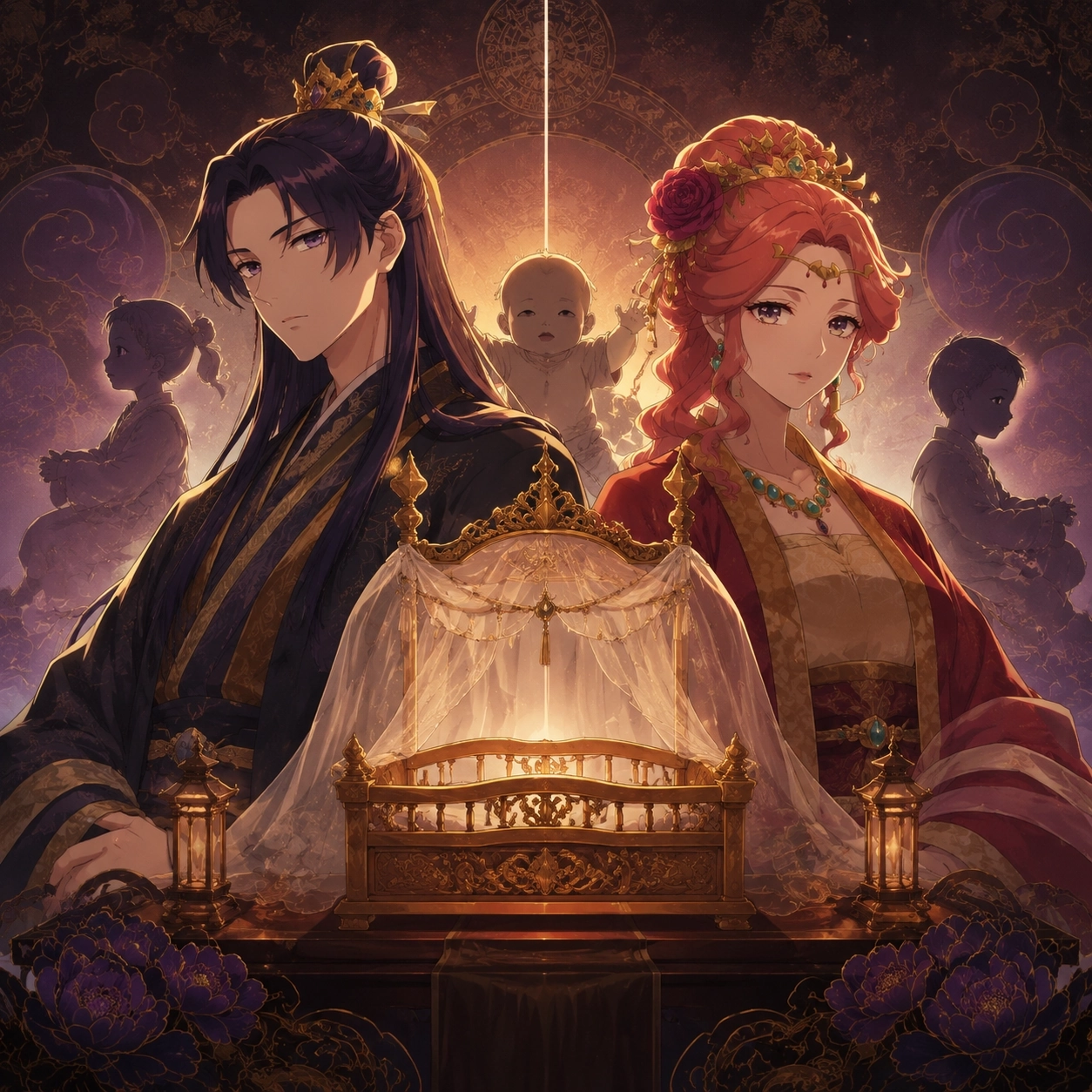
The question matters because it shows how The Apothecary Diaries separates personal refusal from political consequence. Jinshi may not want to be emperor. Gyokuyou may not hate Jinshi. None of that prevents other people from treating Jinshi and Gyokuyou's children as competing answers to the same succession anxiety.
That is the trap. Jinshi's refusal is emotionally clear, but politics can ignore it. A silence becomes a rumor. A protective act becomes an alliance. A title becomes a claim. Once Gyokuyou's household has children to protect, any ambiguity around Jinshi can be read as a threat even if he meant nothing by it.
This is why the topic belongs beside Gyokuyou's road to empress and the Anshi and Gyokuyou faction guide. Gyokuyou's rise is not villainous, and Jinshi's danger is not simple ambition. Their tension comes from a court that can turn a man who refuses the throne into evidence for a succession fight anyway.
Enemy Is the Wrong First Word for Jinshi's Strategy
"Enemy" sounds too personal. Jinshi's real concern is whether his existence forces Gyokuyou's side to defend itself against him. If that happens, he loses room to maneuver. Every attempt to protect himself can be read as advancing a rival future, and every denial of ambition can be dismissed as courtly modesty.
So Jinshi's strategy is not sentimental peacekeeping. It is damage control for a life he is trying not to let the throne swallow. He needs Gyokuyou's legitimacy to remain stable because a stable recognized household gives him fewer chances to be used as the alternative emperor no one asked him whether he wanted to become.
Gyokuyou's Household Is the Current Reign's Public Future
Gyokuyou's power is forward-facing. She is attached to the current emperor, to living imperial children, to the Jade Pavilion's proven survival, and to western networks that become more important as the story widens beyond the rear palace. That makes her household more than a personal circle around a favored woman. It makes her household the official future Jinshi does not want to replace.
For Jinshi, that matters because opposing Gyokuyou would mean opposing a structure the court needs to keep believable. The emperor's household cannot look divided every time old secrets press against the present. If Jinshi is seen as destabilizing Gyokuyou's side, the court may have to choose between preserving him and preserving the official future around her children.
That is a terrible choice for Jinshi because it pulls him toward the role he is trying to avoid. He already carries a life shaped by other people's arrangements. The last thing he wants is for the court to treat him as a living objection to Gyokuyou's legitimacy or as the better imperial answer waiting in reserve.
Gyokuyou's Children Change Every Calculation
Children make the issue concrete. A rivalry between two adults can be negotiated, delayed, or hidden. A succession uncertainty around imperial children cannot stay harmless. Once children are involved, the stakes become inheritance, marriage planning, faction security, and the court's public confidence in the next generation.
Jinshi knows how quickly a person can become a problem because of birth. Gyokuyou's children therefore make his restraint more important, not less. They are not only possible rivals to him; they are also the clearest reason the court should not need him as emperor. If he pushes against Gyokuyou, he risks looking like a man whose existence questions their security. Even if he never says that, factions can say it for him.
Her Western Background Raises the Cost of Conflict
Gyokuyou's western background gives her side resources and suspicion at the same time. It can strengthen her household, but it can also give opponents a way to frame hostility as concern about western influence. If Jinshi appears to stand against her, anti-western factions can borrow his image whether he wants them to or not.
That would place him in a political role he has not chosen: the polished court center set against the empress's western-backed future. Jinshi's better option is to deny others that shape. He cannot control every rumor, but he can avoid giving rival factions an easy picture.
Jinshi's Hidden Identity Makes Hostility Dangerous
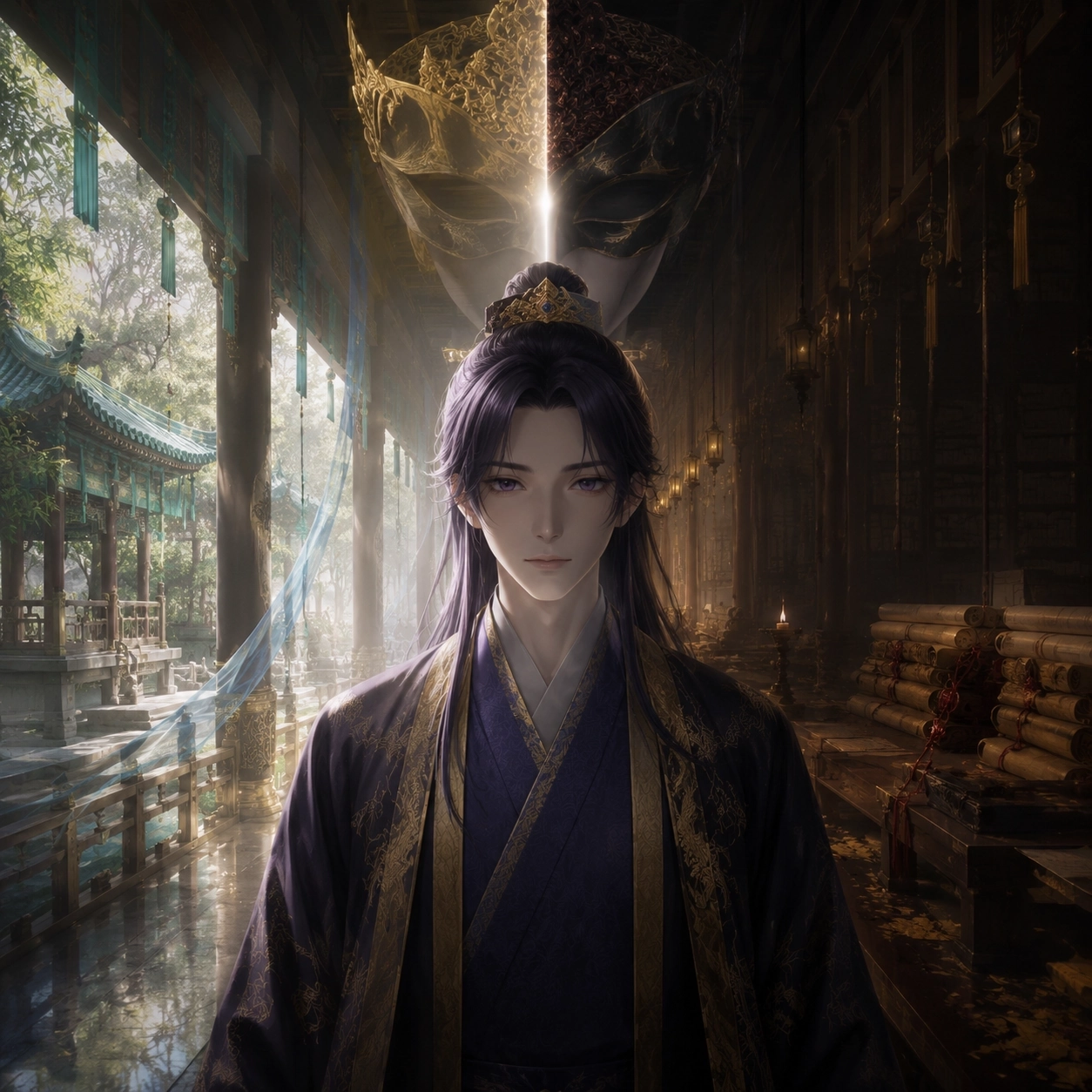
Jinshi's hidden identity is the center of the danger. Publicly, he has a role that lets the court use his beauty, authority, and proximity to power. Privately, the truth attached to Ah-Duo and the old palace arrangements gives his existence a much heavier political charge. Those two layers cannot safely become public at the wrong moment.
This is why Jinshi's real name and hidden rank matter for any Gyokuyou analysis. He is not a normal official who can simply feud with a powerful household and move on. If he becomes Gyokuyou's enemy, people will read the feud through bloodline, succession, Anshi's old pressure, Ah-Duo's silence, and the emperor's household stability.
Jinshi also knows that secrets are not passive. Even when they remain hidden, they shape decisions. A person who suspects enough does not need a public confession to act. That means Jinshi's hostility toward Gyokuyou could become useful to people who only partially understand the truth.
The Crown He Refuses Can Still Be Put on Him
This is the cruel part of Jinshi's position. He can refuse the idea of becoming emperor, but he cannot stop other people from imagining him in that role. His birth, beauty, rank, and official usefulness make him available as a symbol even when his own desire points away from the throne.
That is why conflict with Gyokuyou is so risky. If the empress household and Jinshi appear opposed, the court does not have to ask what Jinshi wants first. It can ask what his existence can be used for. Jinshi avoids Gyokuyou as an enemy because he understands that being useful to succession politics is almost as dangerous as claiming succession politics himself.
Ah-Duo's Secret Is a Warning, Not Just Backstory
The Ah-Duo thread shows how one hidden arrangement can shape an entire life. Jinshi's connection to Ah-Duo is not only emotional; it is political evidence that must be contained. The article on Jinshi discovering Ah-Duo's secret explains why that knowledge cannot be treated like an ordinary family reveal.
Because Jinshi's identity is already dangerous, he benefits from fewer public conflicts, fewer faction banners, and fewer reasons for people to compare him against Gyokuyou's children. Avoiding Gyokuyou as an enemy helps keep the secret from becoming a tool in someone else's hands.
Anshi's Side Makes Neutrality Harder
Anshi's place in the court gives the problem another layer. Old legitimacy, old palace wounds, and the memory of earlier imperial arrangements can all press against Gyokuyou's newer future. If Jinshi appears hostile to Gyokuyou, people connected to the older order can read him as their opportunity even if he does not invite them to.
That is why Jinshi's neutrality is difficult. He cannot simply say he is not competing and expect everyone to accept it. In a court built on implication, the image of neutrality has to be maintained through choices, silences, appointments, distance, and restraint.
The Maomao Factor: Why Neutrality Is Useful but Fragile
Maomao connects Jinshi and Gyokuyou in a practical way. Gyokuyou's household recognizes Maomao's poison knowledge and evidence-first mind early. Jinshi also depends on Maomao's perception, especially when court appearances hide physical causes or political motives. That shared reliance can soften conflict, but it can also make every side more careful.
Jinshi does not want Maomao trapped between his position and Gyokuyou's. That matters even more because Jinshi is trying not to become the center of imperial succession. If the court begins treating him as Gyokuyou's enemy, Maomao's usefulness becomes factional property in other people's eyes. A deduction she makes for one side can look like betrayal to another side. A medical truth can become political ammunition.
This is why Gyokuyou wanting Maomao in her faction matters beside Jinshi taking Maomao west. Both threads show that Maomao's value is not decorative. She changes what powerful people can know, prove, and survive.
Maomao Makes Simple Faction Labels Less Useful
Maomao rarely accepts the court's preferred labels. She notices materials, symptoms, incentives, and inconsistencies. That makes her valuable to both Gyokuyou and Jinshi, but it also means she resists becoming a clean faction symbol. Jinshi benefits from preserving that ambiguity.
If Jinshi and Gyokuyou become open enemies, Maomao loses some of that freedom. People would ask which household her truth serves. Jinshi's best outcome is a court where Maomao can still move through evidence rather than faction loyalty.
What Jinshi Gains by Avoiding Conflict
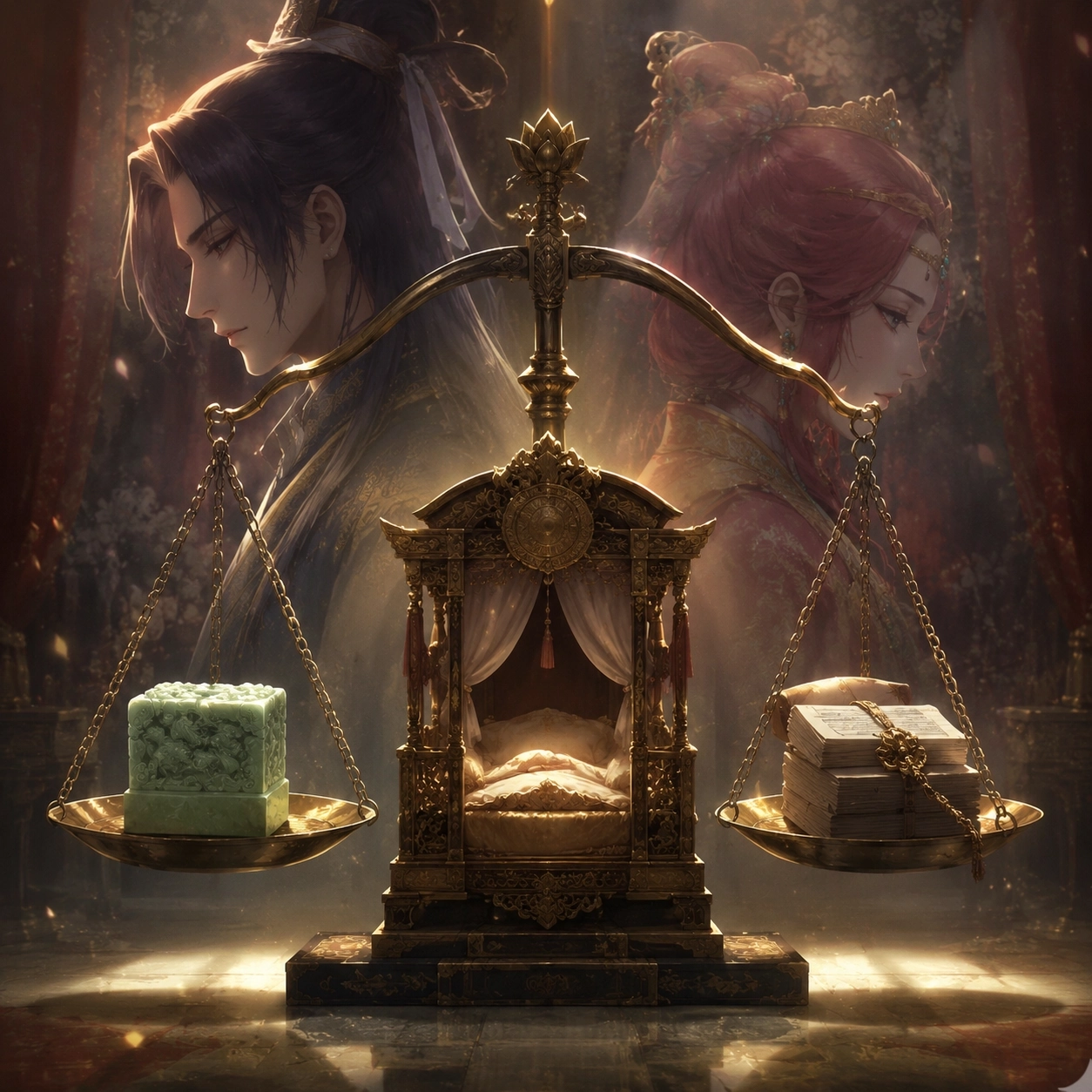
Jinshi gains the right to keep refusing first. As long as Gyokuyou's household does not need to treat him as an enemy, he has more room to manage his role, control information, and keep other factions from using him too cleanly. Time is not a small thing in The Apothecary Diaries. Many crises become survivable only because someone delays the moment when a truth must be named.
He also gains legitimacy by proximity. Supporting the stability of Gyokuyou's side, or at least not undermining it, makes Jinshi look less like an alternative future and more like a protector of the existing order. That is useful because his danger lies in being read as a possible replacement, rival, or hidden claimant despite not wanting to become emperor.
Finally, he gains a safer environment for Maomao and for the people tied to his secret. If Gyokuyou's household remains stable, Jinshi does not have to force every relationship into a survival test. He can remain useful without becoming a banner, and he can keep his refusal from being turned into a public challenge.
Why This Is Not Cowardice
Avoiding conflict with Gyokuyou is not cowardice. It is political discipline from someone who understands that refusing power is not enough if the court still finds him useful. Jinshi's life is full of places where direct action would feel emotionally satisfying and strategically disastrous. This is one of them. A dramatic break with Gyokuyou would give rivals a story. Restraint denies them that story.
That restraint also fits the novel's broader treatment of power. The smartest characters often understand that victory is not always winning a visible confrontation. Sometimes victory is preventing a confrontation from becoming the shape everyone else uses.
Common Misreadings
Misreading 1: Jinshi avoids Gyokuyou because he is afraid of her personally
No. The point is not personal fear. Jinshi has reason to avoid the political structure around opposing Gyokuyou: her children, her empress position, her western ties, and the court's need for a stable recognized future.
Misreading 2: Jinshi is harmless because he does not want to be emperor
Personal refusal is not enough to make him harmless. Other people can use Jinshi as a rival symbol even if he does not seek the imperial role. That is exactly why becoming Gyokuyou's enemy would be dangerous.
Misreading 3: Gyokuyou must be a villain for Jinshi to avoid conflict
No. Gyokuyou can be intelligent, warm, and responsible while still representing interests that could oppose Jinshi if succession pressure hardens. The story's tension is structural before it is moral.
Misreading 4: This is mainly about romance jealousy
It is not. Maomao matters because of evidence, trust, and mobility between power centers, not because this is a simple jealousy triangle. The bigger issue is succession and legitimacy.
FAQ
Why does Jinshi not want to become Gyokuyou's enemy?
Because Jinshi does not want to be emperor, and open hostility would make him easier to use as a rival succession symbol against Gyokuyou's children and the emperor's public household. He is safer when Gyokuyou's legitimacy remains stable and he is not framed as an alternative future.
Does Jinshi want to become emperor?
No. The later political tension is not that Jinshi is chasing the throne. It is that his hidden identity and imperial proximity make him useful to people who might want to push him into a role he does not want.
Does Jinshi hate Gyokuyou?
No. The stronger reading is that Jinshi does not hate Gyokuyou. Their possible tension comes from court position, hidden identity, children, and faction pressure rather than personal hatred.
Is Gyokuyou dangerous to Jinshi?
Gyokuyou herself is not written as a simple threat, but her empress household can become politically dangerous to Jinshi if his hidden identity or factional use threatens her children's security.
How does Maomao affect Jinshi and Gyokuyou's relationship?
Maomao is useful to both sides because she notices poison, evidence, and practical motives. If Jinshi and Gyokuyou became open enemies, Maomao's neutral usefulness could be forced into a factional shape.
What should I read next?
Read whether Gyokuyou becomes Jinshi's enemy, Gyokuyou's road to empress, Jinshi's real name guide, and Anshi and Gyokuyou's faction analysis for the connected court-politics threads.