Spoiler Warning
This article discusses light novel spoilers for The Apothecary Diaries beyond the anime, including Gyokuyou's rise from favored consort to empress, the political weight of her children, her western family background, later faction pressure around Anshi and Gyokuyou, and succession implications around Jinshi. Anime-only readers should stop here.
Scene Locator
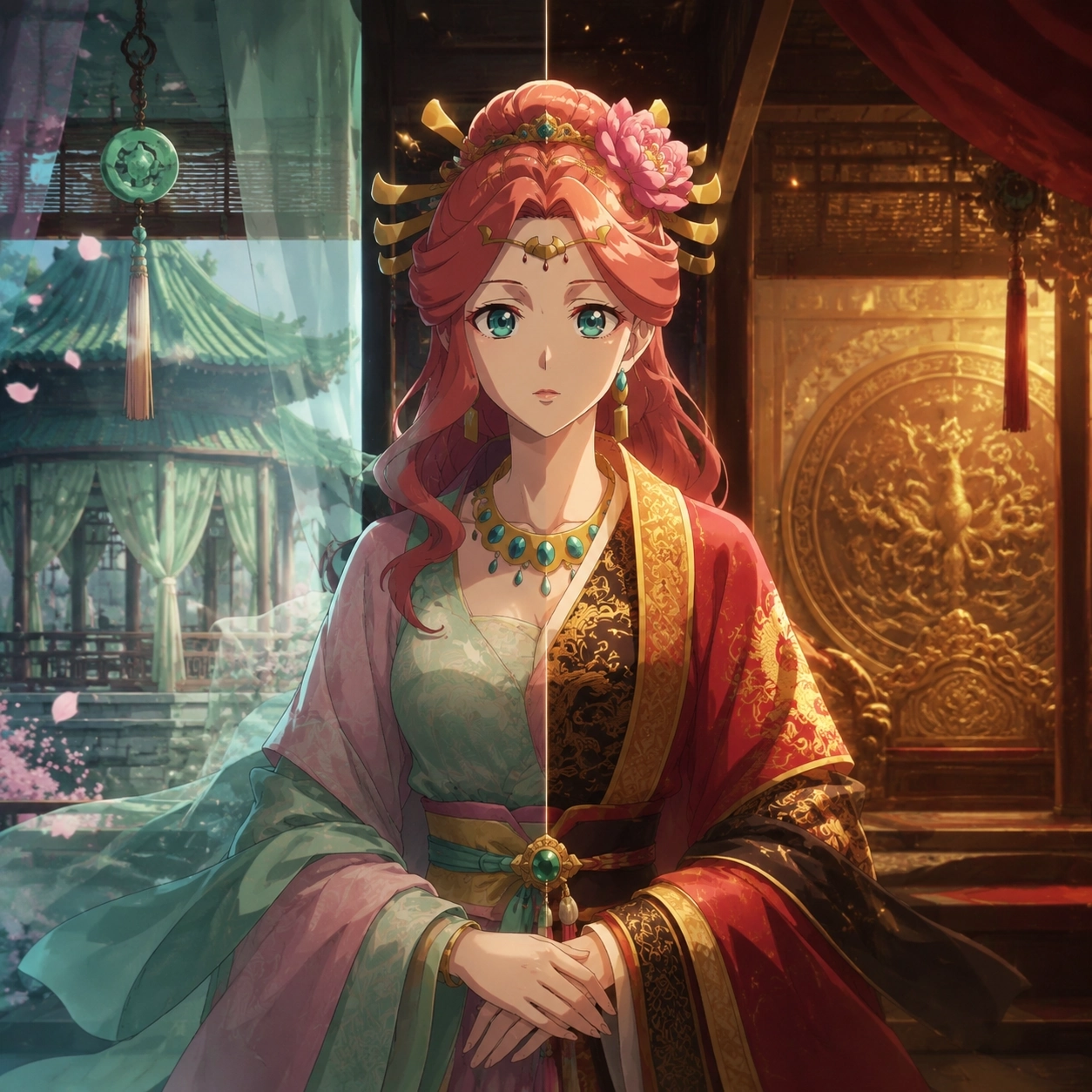
Gyokuyou's road begins in the early rear palace, where she is introduced as the emperor's favored consort, the mistress of the Jade Pavilion, and the mother of Princess Lingli. At that stage she already has visible advantages: beauty, rank, the emperor's attention, a capable household, and a child whose survival matters to the entire court.
The later light novels reframe that beginning. Gyokuyou is not merely the lucky consort who receives favor. She becomes a political center because she survives the dangers attached to favor, keeps useful people close, produces imperial children, and carries a western background that both strengthens and complicates her legitimacy.
For the larger faction map around this rise, read Anshi and Empress Gyokuyou's factions. For the Maomao side of Gyokuyou's household strategy, pair this with why Gyokuyou wants Maomao in her faction.
Volume-level entry only. The source is community-hosted; availability and rights status may vary.
The Short Answer
Gyokuyou Becomes Empress Because Favor Turns Into Structure
Gyokuyou's rise starts with imperial favor, but it does not end there. In the rear palace, favor can give a woman access, protection, and attention. It cannot by itself guarantee survival. To become empress, Gyokuyou has to convert personal favor into a stable household, a protected child line, and a political position other people must accept even if they resent it.
That is the key difference between being loved by the emperor and becoming the empress. A favored consort can be envied, poisoned, isolated, or replaced. An empress becomes part of the official future. Gyokuyou's road is the process of moving from the first category into the second.
The novels make that path believable because Gyokuyou is not passive. She notices talent, protects her pavilion, values Maomao's strange usefulness, and understands that palace survival depends on more than being charming. Her elegance is real, but it is not her only weapon.
Her Road Is Built on Survival, Children, and Political Timing
The simplest answer is that Gyokuyou becomes empress because she is the favored consort whose household survives, whose children matter, and whose political position becomes useful to the current emperor's reign. But the deeper answer is more interesting: the court needs a future that looks stable after old secrets, old abuses, and hidden succession tensions.
Gyokuyou offers that future. She is tied to the current emperor rather than the previous emperor's damaged era. She has children who can anchor the next generation. Her western family gives her reach outside the rear palace. Her household has already proved it can endure danger. That combination makes her rise more than a romance result. It makes her a political answer.
Gyokuyou's Early Position: Favored Consort, Mother, and Patron
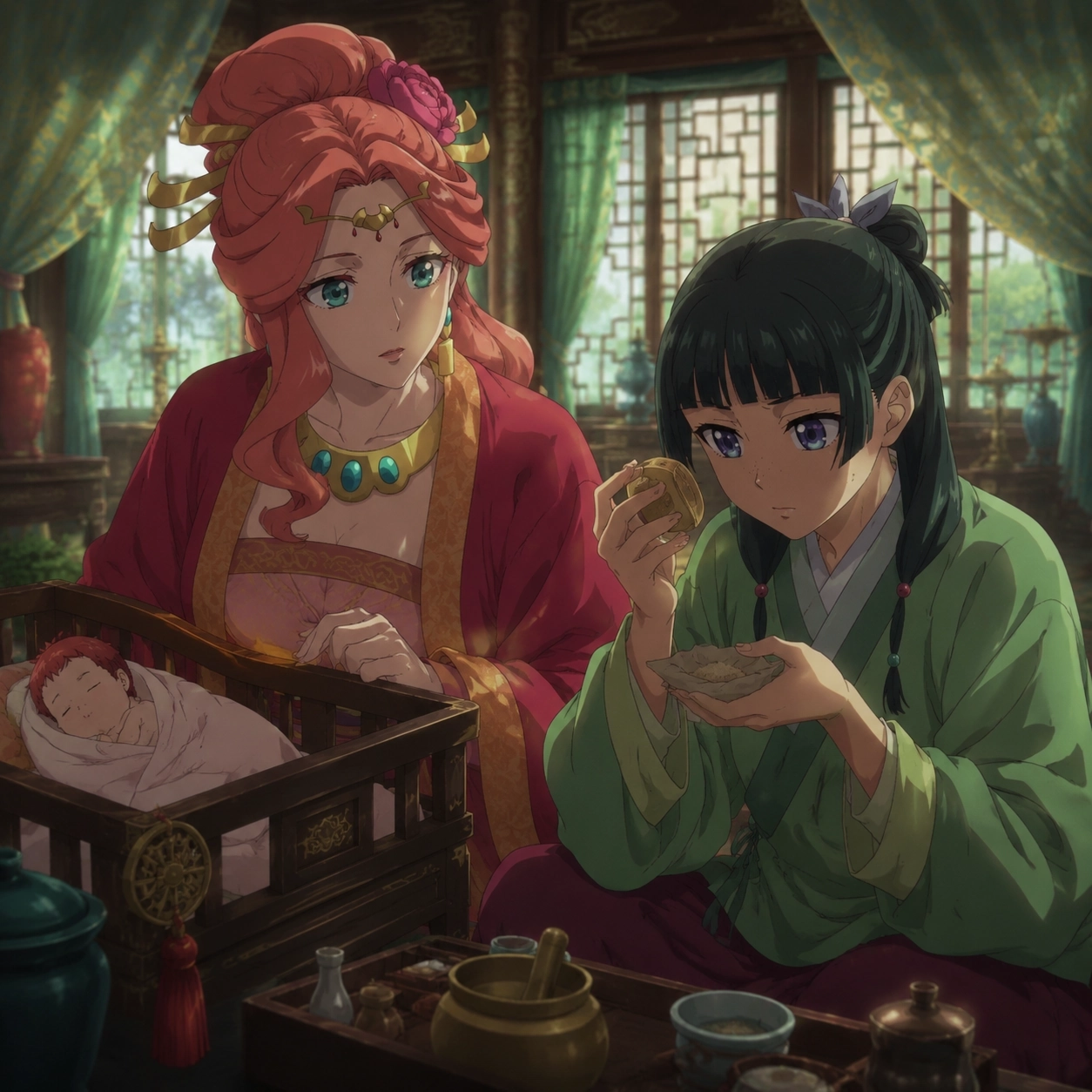
In the early story, Gyokuyou already stands above most rear palace women because she has the emperor's favor and a child. But The Apothecary Diaries is careful about what that means. Favor creates attention, and attention creates risk. The more valuable a consort becomes, the more other households measure her food, cosmetics, attendants, pregnancies, and weaknesses.
That is why the baby powder crisis matters so much. It is not just an introductory medical mystery for Maomao. It shows what kind of danger surrounds Gyokuyou's household. A small, ordinary-looking object can become a threat to a child, and the people around the child may not understand the physical cause until damage is already done.
Gyokuyou's response to Maomao also matters. She does not discard Maomao once the immediate danger passes. She recognizes that Maomao's evidence-first mind is valuable precisely because it does not fit courtly performance. A woman who can protect a child by noticing a material cause is worth more than another attendant trained only to smile correctly.
Why the Jade Pavilion Is the First Stage of the Empress Arc
The Jade Pavilion is where Gyokuyou's future starts becoming visible. It is not only a pretty residence for a favored consort. It is a managed household with attendants, information flow, medical risk, status competition, and a child whose survival can change court calculations. Gyokuyou has to lead that household before she can become a larger political figure.
This is also where Maomao's role intersects with Gyokuyou's rise. Maomao gives the Jade Pavilion a practical intelligence that other households may lack. She can expose causes that etiquette hides. That strengthens Gyokuyou because a consort whose household understands danger is harder to quietly destroy.
Gyokuyou Is Not Written as a Naive Favorite
A weaker story might make Gyokuyou a beautiful favorite who rises because the emperor adores her. The novels give her a quieter strength. She is socially graceful, but not foolish. She accepts help without surrendering authority. She can be warm without becoming politically blind.
That balance is why her road to empress feels earned. Gyokuyou is not the loudest strategist in the room, and she is not a detective like Maomao. Her skill is patronage, household judgment, and survival inside a system that turns women's bodies and children into political stakes.
The Turning Point: From Favored Woman to Imperial Future
The real turning point in Gyokuyou's road is not a single romantic moment. It is the point where her household stops being one high-ranking residence among many and becomes the center of the emperor's recognized future. Once Gyokuyou's children and rank make her side the court's forward-looking option, every old rivalry becomes more serious.
That shift changes how readers should understand her. As a consort, Gyokuyou needs to survive the rear palace. As empress, she has to represent continuity, legitimacy, and the next generation. Her private safety and the empire's public order begin to overlap.
This is why Gyokuyou's road connects to the question of whether Gyokuyou can become Jinshi's political enemy. Her rise does not make her cruel. It makes her responsible for a future that Jinshi's hidden identity, official role, and the factions around him can complicate.
Empress Is a Political Office, Not Only a Romantic Title
The title "empress" carries emotional meaning because Gyokuyou is favored, but its political meaning is heavier. An empress represents the emperor's household before the court. Her children become public stakes. Her natal house gains attention. Her attendants become more important. Her enemies gain better reasons to act carefully rather than openly.
That is why Gyokuyou's road is so tied to legitimacy. The court can tolerate a favored consort while still treating her as temporary. It has to deal with an empress differently. Her existence shapes marriages, faction alignments, succession anxiety, and the way old palace secrets are managed.
Gyokuyou's Western Background: Strength and Suspicion
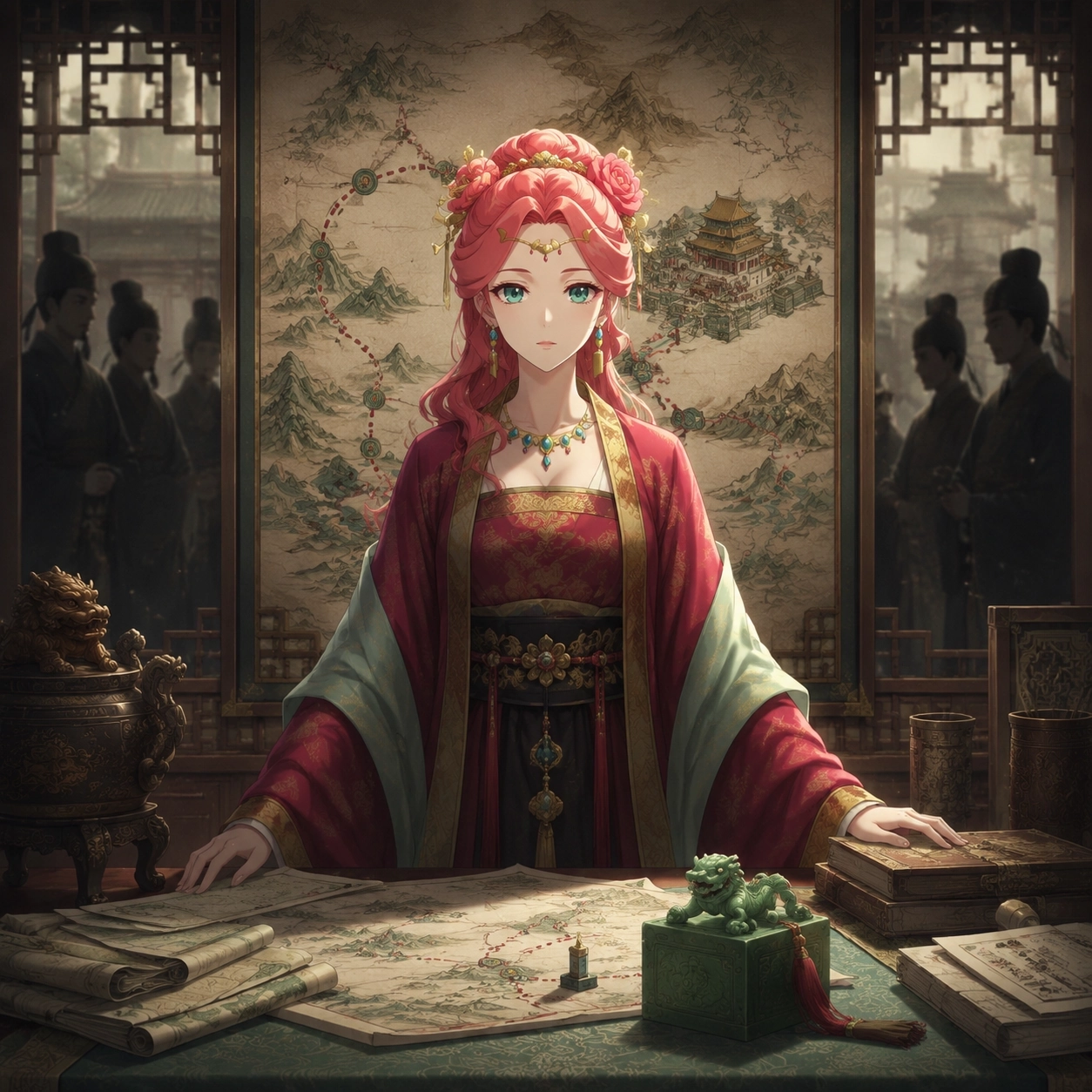
Gyokuyou's western background is one of the most important parts of her empress path. It gives her faction resources, reach, and a world beyond the rear palace. It also gives her opponents an easy language for suspicion. Court prejudice can dress itself up as concern for purity, tradition, or national stability.
That double edge makes Gyokuyou's rise more complicated than simple central-court acceptance. Her western identity helps explain why her household can become powerful enough to matter outside the palace. It also explains why some people may never see her as fully safe, no matter how high her rank becomes.
The western material in the later novels broadens the story from inner-palace intrigue to regional politics. Food security, local networks, travel, military and administrative pressure, marriage planning, and western aristocratic pride all make Gyokuyou's background part of the national map. Once she becomes empress, the west is no longer just where she came from. It becomes part of what the court must negotiate.
Why Her Western House Matters
A consort's natal house can become a shadow government if the court lets it. Gyokuyou's western ties therefore matter because they can support her and alarm others at the same time. Her family can provide practical backing, but that backing also makes central nobles wonder how much influence is moving westward.
This tension is central to the broader Anshi versus Gyokuyou faction question. Anshi's side is attached to older legitimacy and palace memory. Gyokuyou's side points toward a newer imperial household with western reach. The conflict is not just between two women. It is between two ways the court imagines its future.
Prejudice Makes Her Rise Harder, Not Weaker
The prejudice against Gyokuyou's background does not make her less important. It proves why her rise matters. If everyone accepted her easily, her elevation would be only a court appointment. Because some people resist what she represents, becoming empress turns into a test of whether the current emperor's household can define the future despite older elite discomfort.
That is why Gyokuyou's road has narrative weight. She is not only rising in rank. She is forcing the court to make room for a future that includes her children, her western blood, and the practical networks attached to her name.
Children, Succession, and the Weight of Being Mother to the Future
Gyokuyou's children are the center of her road to empress. In ordinary family language, a child is personal. In the rear palace, an imperial child is also political. The child's health, sex, rank, timing, and maternal household can reshape the court's expectations. That means motherhood becomes a route to power and a route to danger at the same time.
Princess Lingli's survival shows this early. The child is not only beloved by Gyokuyou; she is watched by everyone who understands how palace status works. Later, as Gyokuyou's position strengthens and the question of future heirs becomes more serious, the same logic expands. Her children make her household part of the empire's continuity.
This is why Gyokuyou's empress arc cannot be separated from succession. The court does not choose an empress in a vacuum. It chooses a household, a mother, a set of children, a natal family, and a story about where the next era will come from.
Jinshi's Hidden Position Makes Gyokuyou's Future More Fragile
Jinshi complicates Gyokuyou's road because he stands near the imperial bloodline in ways the public story and hidden truth do not fully align. Even if Jinshi does not want to become a rival, his existence can be used by others. A person does not need personal ambition to become a succession problem.
For Gyokuyou, that matters because an empress protects the certainty around her children. If old secrets, dowager politics, or factions around Jinshi make the future less clear, Gyokuyou's household has a reason to respond. This does not require Gyokuyou to hate Jinshi. It only requires her to understand what uncertainty can do to an imperial child's security.
Readers following that side should read Jinshi's real name and hidden rank and the Ah-Duo secret analysis before treating Gyokuyou's rise as a simple domestic success story.
Motherhood Gives Gyokuyou Power and Limits
Motherhood strengthens Gyokuyou because it ties her directly to the emperor's recognized future. It also limits her because every decision can be judged through her children's safety. An ordinary favorite might take social risks. An empress with children has to think about the household that will inherit the consequences.
That is why Gyokuyou's road is not just upward. It becomes narrower as it rises. More rank gives her more protection, but it also gives her fewer harmless choices. Every alliance, silence, favor, and refusal begins to cast a longer political shadow.
Gyokuyou’s elevation also leaves another mother’s future open. Why Lihua has not lost yet follows her later son’s recognized claim, the officials who support him, and Jinshi’s assessment of Lihua. Contains specific novel spoilers through Volume 15.
Gyokuyou's Political Style: Soft Power With Sharp Judgment
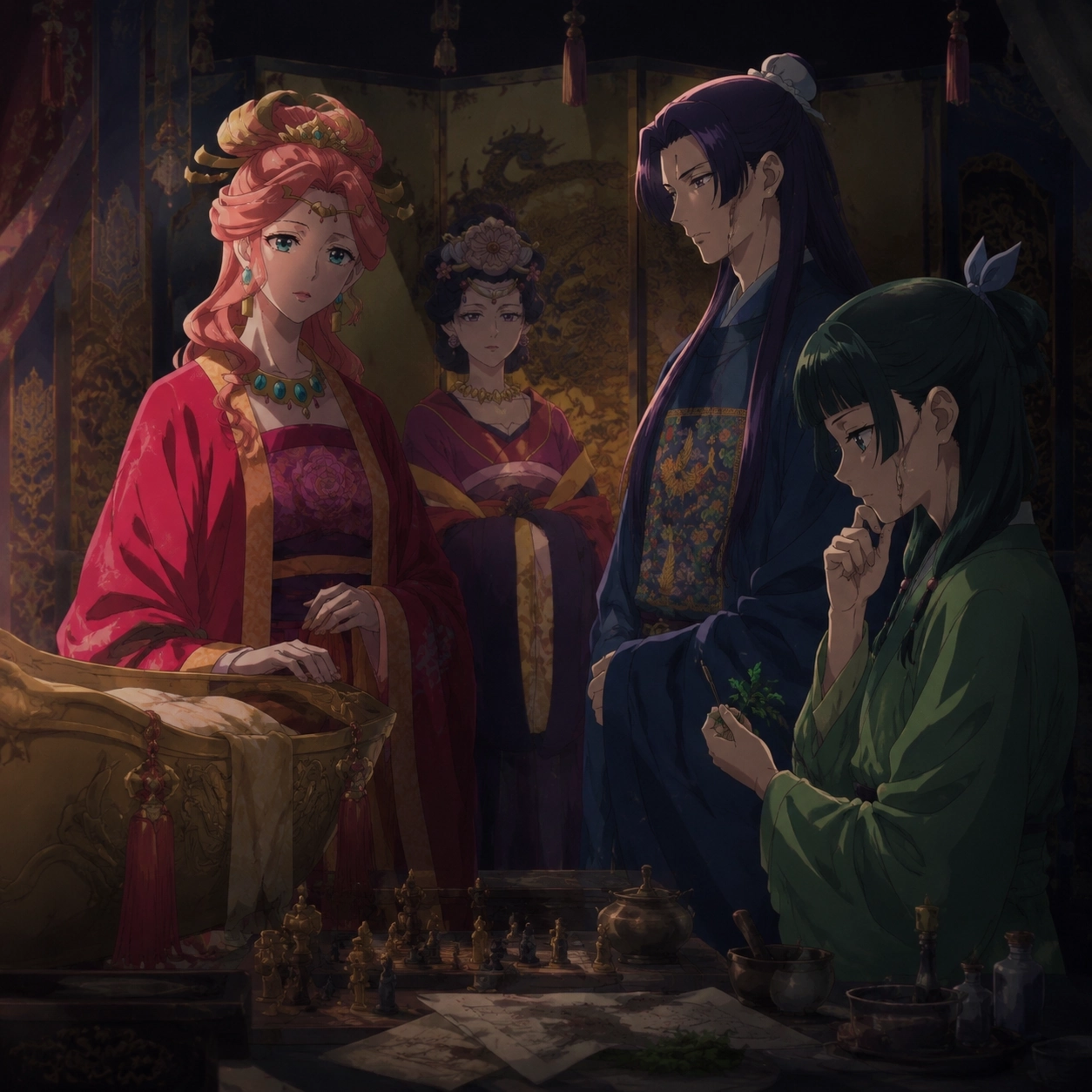
Gyokuyou's power is easy to underestimate because she is not usually the loudest political operator in the room. Her strength is softer: she reads people, keeps a capable household, recognizes usefulness, and lets other people reveal themselves. That style suits the rear palace, where direct aggression often creates more danger than advantage.
Her handling of Maomao is the best example. Gyokuyou does not need Maomao to become a polished court ornament. She understands that Maomao is valuable because she is strange, blunt, and evidence-driven. A patron who can protect that kind of usefulness without crushing it is more intelligent than a patron who only rewards obedience.
That political style also helps explain her empress path. Gyokuyou rises because she can gather value around herself without making every move look like open conquest. In a palace where envy can kill, that restraint is not weakness. It is survival technique.
Gyokuyou Knows How to Use People Without Flattening Them
Using people sounds cold, but The Apothecary Diaries often treats patronage as a mutual survival system. Gyokuyou benefits from Maomao's skills, but Maomao also benefits from Gyokuyou's protection and status cover. The arrangement works because Gyokuyou does not mistake usefulness for ownership.
That makes Gyokuyou different from more brittle court figures. She can allow talented people to remain themselves if their usefulness serves the household. This is one reason her faction can feel more adaptable than older power blocs that rely mainly on rank, resentment, or inherited prestige.
Restraint Is Part of Her Authority
Gyokuyou's restraint matters because an empress who reacts loudly to every insult would create openings for her enemies. Her road requires patience. She has to endure prejudice, watch faction movement, protect her children, and keep useful allies close without looking desperate.
That kind of restraint can be mistaken for passivity, but it is closer to controlled authority. Gyokuyou does not have to dominate every scene to change the shape of the court. Sometimes the most important political act is making her household too stable, too useful, and too future-facing to dismiss.
Faction Pressure After Gyokuyou Becomes Empress
Once Gyokuyou becomes empress, the story around her changes. She is no longer only a person with rivals. She becomes the name under which other people organize ambition. Her relatives, western allies, attendants, and people who claim to protect her children's future can all act in ways that may be more aggressive than Gyokuyou herself.
This distinction is important for reading later politics. "Gyokuyou's faction" is not the same thing as Gyokuyou's personal heart. A faction can use a woman's title as a banner while making choices she would not make in private. The novels are sharp about that difference: power creates followers, and followers create problems.
Anshi's side intensifies the pressure because it carries older legitimacy, old secrets, and a different relationship to the imperial family's past. Gyokuyou's side carries the current emperor's recognized future. When those two centers rub against each other, Gyokuyou's rise stops being a finished success and becomes an ongoing contest over what kind of court will come next.
Why the Road Does Not End at the Title
Becoming empress is not the end of Gyokuyou's road. It is the moment her road becomes more public and more dangerous. Before the title, rivals can attack her as a favored consort. After the title, opponents have to contend with the empress, her children, and the future her household represents.
That is why the road to empress should be read as a transformation rather than a promotion. Gyokuyou moves from being one woman surviving court danger to being a political future other people must either support, negotiate with, or resist.
What Gyokuyou Represents by the Later Novels
By the later novels, Gyokuyou represents the current reign's forward motion: children, western reach, practical household management, and a future not entirely controlled by the previous generation's secrets. That does not make her untouchable. It makes her central.
The most interesting reading is therefore not "Gyokuyou wins because she is favored." It is "Gyokuyou becomes unavoidable because favor, children, competence, western backing, and political timing all converge around her." That convergence is her road to empress.
Common Misreadings
Misreading 1: Gyokuyou becomes empress only because the emperor loves her
The emperor's favor matters, but it is not the whole explanation. Gyokuyou's household competence, child survival, western backing, and political timing all turn personal favor into institutional power.
Misreading 2: Gyokuyou is politically harmless because she is kind
Kindness and political intelligence are not opposites. Gyokuyou can be a warm patron and still understand how to protect her household, children, and factional future.
Misreading 3: Her western background is only decorative worldbuilding
No. Her western background gives her resources and reach, but it also exposes her to prejudice. That double edge is one reason her elevation creates broader court friction.
Misreading 4: Becoming empress solves her problems
It solves some problems and creates larger ones. The title gives Gyokuyou authority, but it also makes her children, family, allies, and enemies part of a national succession story.
FAQ
How does Gyokuyou become empress in The Apothecary Diaries?
Gyokuyou's rise comes from a combination of imperial favor, surviving rear palace danger, protecting her children, managing a capable household, and becoming the strongest symbol of the current emperor's future. Later light novel politics make that rise much more than a romance reward.
Is Gyokuyou's road to empress based only on having children?
No. Her children are central because succession matters, but the story also emphasizes household management, political judgment, western backing, and her ability to recognize useful people such as Maomao.
Why does Gyokuyou's western background matter?
It gives her faction practical reach beyond the rear palace and connects her to regional power. At the same time, it gives rivals a way to frame prejudice as concern about court stability or western influence.
Does Gyokuyou become an antagonist after becoming empress?
Not in a simple villain sense. Her position can place her household at odds with Jinshi, Anshi's faction, or other succession pressures, but that is political conflict rather than proof that Gyokuyou is malicious.
Why is Maomao important to Gyokuyou's rise?
Maomao strengthens Gyokuyou's household by detecting poison, reading medical evidence, protecting children, and resisting ordinary court flattery. She gives Gyokuyou a kind of practical truth that factions usually lack.
What should I read next?
Read why Gyokuyou wants Maomao in her faction, Anshi and Gyokuyou's faction analysis, and whether Gyokuyou becomes Jinshi's political enemy for the connected court-politics threads.