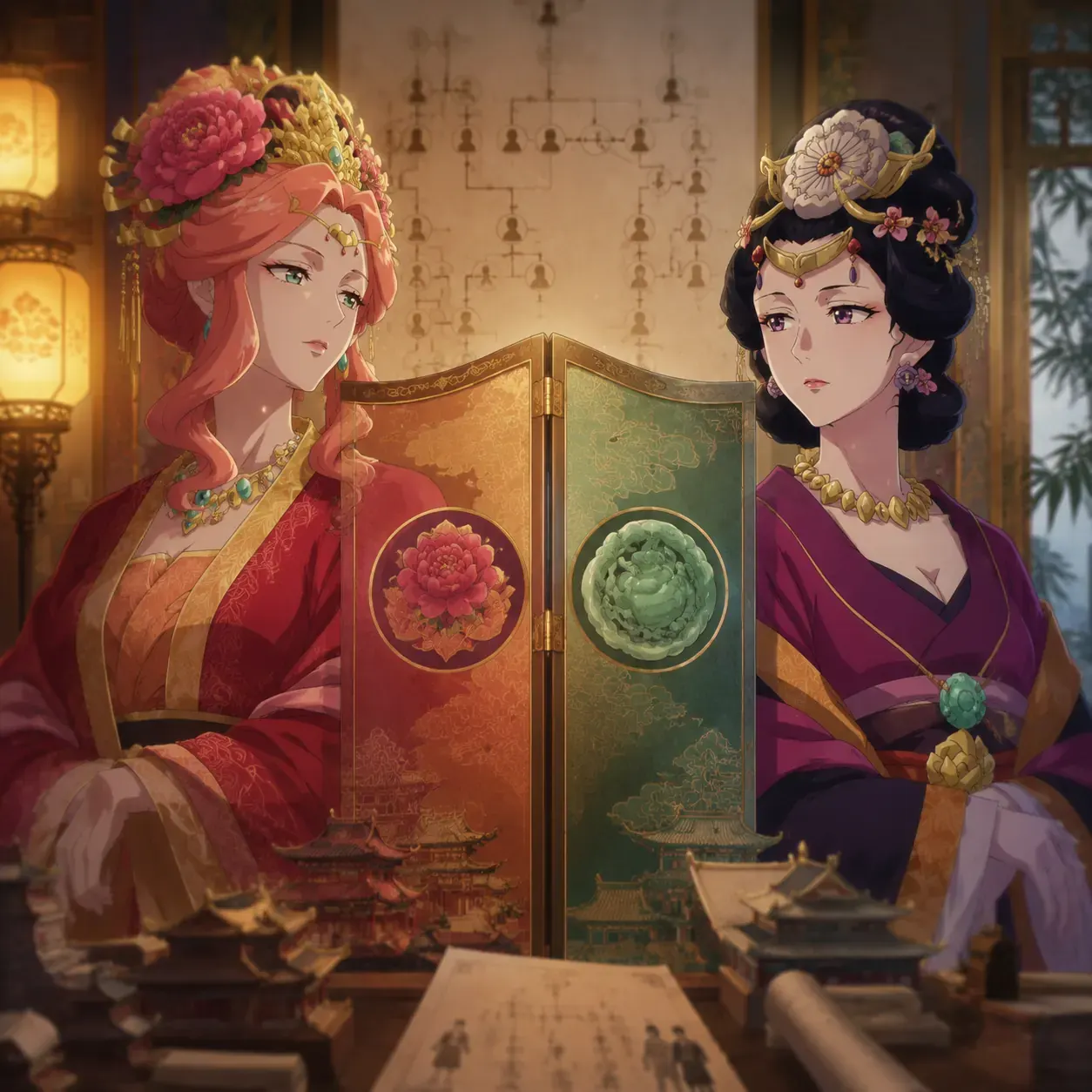
Spoiler Warning
This article discusses later light novel spoilers for The Apothecary Diaries, including Anshi's Empress Dowager position, the wider baby-swap context around Jinshi, Gyokuyou's rise from favored consort to empress, western-family politics, and later faction friction between the Empress Dowager's house and the Empress's house. Anime-only readers should stop here.
Scene Locator
The faction question becomes clearest after the story moves beyond the early rear palace mysteries. Early arcs introduce Gyokuyou as the emperor's favorite consort and Maomao's first major patron inside the Jade Pavilion. Later arcs expand the map: Gyokuyou's elevation gives her household national weight, while her western background makes court prejudice and regional politics harder to ignore.
Anshi's side is built from a different layer of the story. She is the Empress Dowager, the current emperor's mother, and a survivor of the previous emperor's court. Her importance is not only rank. It also comes from old palace memory, the hidden imperial birth timeline, the official story around Jinshi, and the way later material reframes Anshi as a participant in secrets that the wider court cannot safely know.
Later light novel material then adds a sharper political frame: the Empress Dowager's natal house and the Empress's natal house can become opposing centers of influence. The conflict is not best read as Anshi personally attacking Gyokuyou, or Gyokuyou personally attacking Anshi. It is more useful to read it as a clash between houses that want different futures from the same imperial family.
Volume-level entry only. The source is community-hosted; availability and rights status may vary.
The Short Answer
Anshi's Side: Old Legitimacy, Dowager Authority, and Hidden History
Anshi's faction is the older and more secretive power bloc. Its center is the Empress Dowager's authority: she is tied to the previous emperor, the current emperor, the hidden truth around Jinshi, and a natal family that gained status by sending a young Anshi into the palace. That makes her side feel old, heavy, and morally complicated.
But Anshi's faction is not cleanly obedient to Anshi herself. One of the most important later-story details is that her relationship with her birth family is strained. Her natal house can use her title, her bloodline, and her palace access, but that does not mean they understand her, respect her wounds, or act according to her conscience. That gap is the key to reading her faction.
So Anshi's side is powerful because it has legitimacy and memory. It is weak because that legitimacy is entangled with shame, old exploitation, family resentment, and the dangerous fact that Jinshi's official identity is built on a lie the court must keep stable.
Gyokuyou's Side: Present Favor, Western Backing, and the Future Line
Gyokuyou's faction is the newer and more forward-facing power bloc. In the early story, she is the emperor's favored consort, the mother of Princess Lingli, and the woman whose household gives Maomao her first real foothold in the rear palace. As the novels advance, her elevation changes her from a favored woman into a political center.
Gyokuyou's strength comes from three things: the emperor's affection, her children, and her western natal background. Her house is tied to the west, to regional power, and to a family network that has practical resources beyond the palace walls. That makes her faction different from a purely inner-palace clique. It has provincial weight.
Her weakness is also built into that strength. Gyokuyou's western blood and western family ties make her vulnerable to court prejudice. Some people can accept her beauty and favor while still treating her background as a reason to doubt her fitness as empress. Her faction therefore represents the future, but it is a future the older court does not entirely want to accept.
Why the Factions Clash
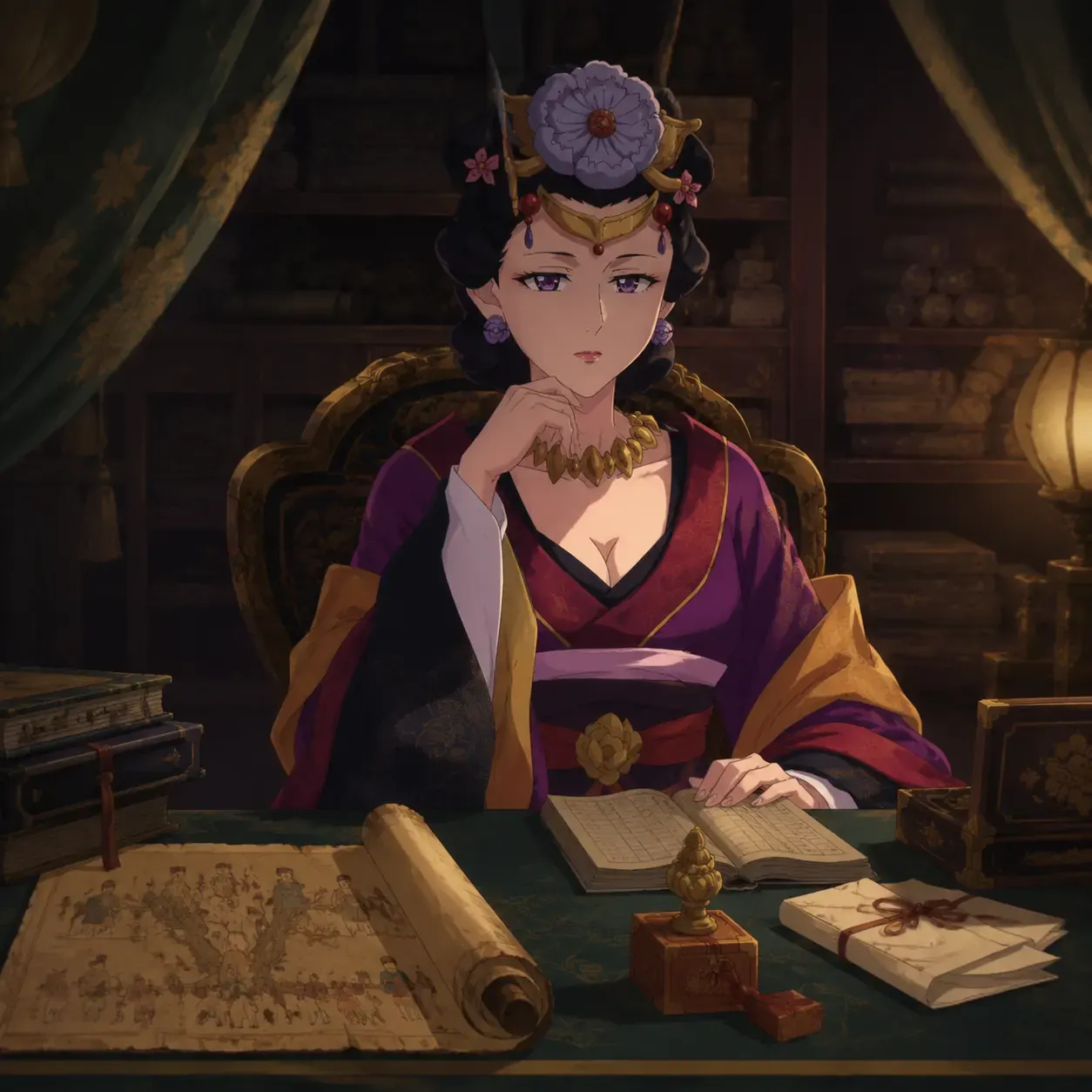
The clash between Anshi's faction and Gyokuyou's faction is really a clash over succession, legitimacy, and whose family gets to define the court's next era. Anshi's side is attached to the old imperial story: the previous emperor, the current emperor's birth line, the Empress Dowager's rank, and the official position Jinshi was made to occupy. Gyokuyou's side is attached to the current emperor's domestic future: his empress, her children, and the western family that becomes much harder to dismiss once she rises.
That is why the conflict feels larger than personal dislike. In a palace like this, a woman's rank is never only personal. A consort's pregnancy can promote her relatives. A child's survival can reorder the court. A title can move money, marriage prospects, military attention, and administrative appointments. The women stand at the center, but the houses around them are the ones that turn title into faction.
Later-story faction friction also shows how proxy conflict works in The Apothecary Diaries. The people causing trouble are not always the highest-ranking women themselves. Younger relatives, attendants, local allies, ambitious household heads, and people trying to prove loyalty can act before the central figure openly commands anything. That is why the court becomes so exhausting: rank creates weather, and smaller people start storms inside it.
Old Power Does Not Like Being Replaced
Anshi's natal house has a reason to feel overshadowed. It gained status through the old palace route, not through a clean bestowed-name prestige system. Gyokuyou's side, by contrast, benefits from a more visible form of recognition around the "jade" name and from the political reality that Gyokuyou is the current empress. Even if Anshi herself is compassionate or weary of family politics, her relatives can still see Gyokuyou's house as a rival that arrived later and rose higher.
That resentment matters because it explains why the conflict can survive even when the women themselves are not shown as childish enemies. Factions do not need personal hatred to clash. They need incompatible incentives. Anshi's relatives want old prestige restored or preserved. Gyokuyou's relatives want new prestige normalized. The palace gives both sides reasons to think they are being cheated.
The Succession Question Makes Every Household Nervous
The succession layer makes the split more dangerous. Jinshi's public identity, his hidden parentage, and Gyokuyou's children all sit near the question of who the court imagines as the empire's future. For readers tracing that hidden identity side, start with Jinshi's real name and hidden rank, then read the Ah-Duo and Jinshi secret analysis.
From a factional point of view, Jinshi is a dangerous symbol. Some people can want him pulled closer to succession because of what he officially is. Others may fear what his hidden truth would do if revealed. Gyokuyou's side has a different kind of legitimacy: the current emperor's recognized household and children. The clash is therefore not "Anshi versus Gyokuyou" as personalities. It is official old story versus living future.
Anshi's Faction in Detail
Anshi's faction has four layers: her personal authority as Empress Dowager, her birth family's ambitions, the old palace women and memories attached to the previous emperor's reign, and the hidden imperial facts around Jinshi. Each layer makes her powerful, but each layer also makes her trapped.
The Empress Dowager Has Moral Weight
Anshi is not only a title. Later material frames her as a woman known for compassion after surviving a cruel earlier court. Her reputation includes acts that soften the palace system: concern for women discarded by the previous emperor, sympathy for women born from secondary households, and support for reforms that reduce bodily exploitation inside the palace order.
That moral weight matters because it keeps Anshi from becoming a flat "old faction villain." She can be difficult, secretive, and politically dangerous while also being genuinely sympathetic to people whose circumstances resemble her own. The story's sharper point is that compassion does not automatically make a faction harmless. A compassionate dowager can still become the banner under which ambitious relatives move.
Her Natal House Is Useful, Resentful, and Not Fully Under Her Control
Anshi's birth family is one of the most important pieces of the faction puzzle. It is connected to trade and palace supply routes, and its older rise depended on knowing how to send a girl into the palace at the right moment. That history makes the house politically experienced, but not necessarily noble in the clean way it wants to appear.
The later novels also make the relationship between Anshi and her natal house uncomfortable. Her family can claim closeness to the Empress Dowager, yet the actual emotional relationship is damaged. That means Anshi's title can be useful to them even when Anshi herself would not choose their methods. This is the part readers should watch carefully: the "Anshi faction" is not always Anshi's will.
That distinction helps explain why a household can push dangerous ideas while Anshi remains a more layered figure. Her relatives may want status, revenge, restored prestige, or a path to influence the succession. Anshi may want to protect specific people, reduce harm, or keep an old truth from destroying the court. Those goals can overlap for a moment and then split.
Anshi's Secret Power Is What She Knows
Unlike Gyokuyou, whose faction has visible present power, Anshi has a more invisible form of leverage: memory. She knows the old court, the previous emperor's damage, the hidden birth timeline, and the pressure around Jinshi's official identity. That makes her dangerous in a different way from an ambitious consort.
Knowledge in The Apothecary Diaries is often more valuable than rank. Maomao survives by knowing poisons. Lakan moves by reading people. Jinshi survives by controlling roles. Anshi survives by carrying history that cannot be announced. Her faction is therefore archival power: old records, old wounds, old family movements, and secrets that can ruin lives if handled crudely.
This is why the article on Anshi's hidden pressure is the right companion piece. The faction issue only makes sense if Anshi is not reduced to "the emperor's mother." She is a woman whose private trauma became public architecture.
Gyokuyou's Faction in Detail
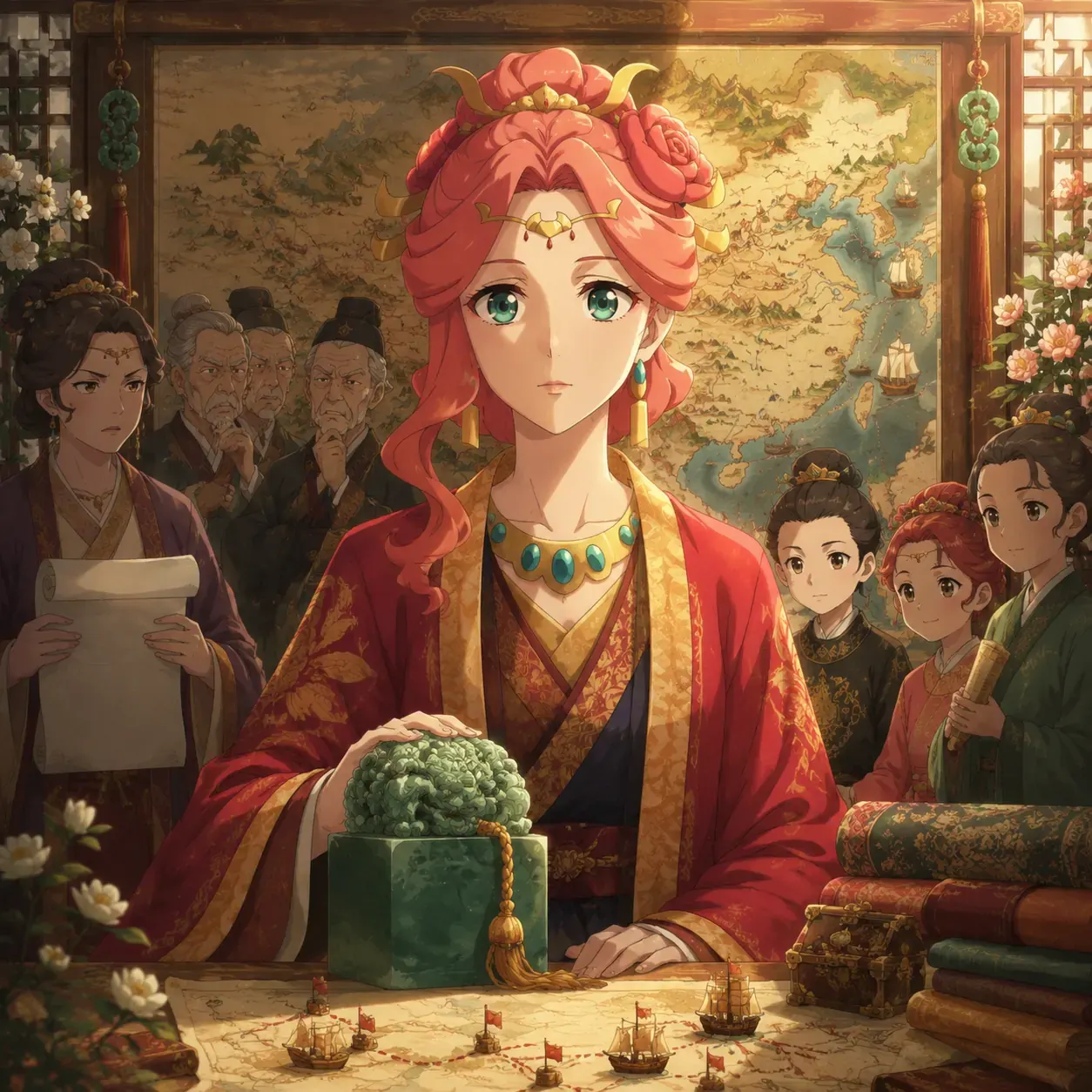
Gyokuyou's faction looks more modern because it points toward the court's next generation. She begins as Consort Gyokuyou, the emperor's favorite and the mistress of the Jade Pavilion. Later, as Empress Gyokuyou, her household becomes more than a favored residence. It becomes a political answer to the question of what the current emperor's reign will look like after the old generation's secrets.
Gyokuyou Has Palace Favor and Practical Household Strength
Gyokuyou's first advantage is the emperor's favor. In the rear palace, favor is not merely romance or attraction. It affects visits, security, medical priority, attendants, and how other consorts calculate risk. The early poisoning and baby-health mysteries show how much a child's survival and a consort's household management matter to the entire court.
Her second advantage is household competence. The Jade Pavilion is not portrayed as a place where Gyokuyou survives only because the emperor likes her. She has capable attendants, enough judgment to value Maomao, and the social intelligence to use information without making every move loud. That is why Maomao's early service under Gyokuyou matters beyond the child-poisoning case. It shows a court woman who can recognize usefulness without feeling threatened by it.
For the early rear palace context, the broader setting guide explains why consort rank, residence, servants, and children all become part of palace power.
The Western Family Gives Her Reach Beyond the Rear Palace
Gyokuyou's other advantage is her western family. Later material repeatedly makes the west more than a faraway setting. It is tied to regional houses, food security, local authority, and the political weight that becomes visible during the Western Capital arcs. That means Gyokuyou's faction has a base outside the palace's daily gossip.
This is where her faction differs sharply from Anshi's. Anshi's side is rooted in old palace memory and a natal house that wants more recognition. Gyokuyou's side has a western identity that brings both resources and prejudice. Her relatives can be useful in a crisis; they can also make older central-court families feel displaced.
The western material also explains why Gyokuyou's rise is not only a personal promotion. Once she becomes empress, her western background becomes a national question. If the court accepts her, it accepts a more western-linked imperial future. If the court resists her, it reveals how fragile that future still is.
Her Weakness Is Prejudice Against Her Bloodline and Region
Gyokuyou's weakness is that some court figures treat her western blood as a flaw. This does not erase her rank, but it gives opponents an easy language for doubt. They can ask whether she is "suitable" without openly admitting they resent her family's rise. They can frame regional prejudice as concern for court purity.
That is why Gyokuyou's faction is strong but never frictionless. The emperor's favor does not silence every noble. Her children do not make every rival surrender. The western family's practical value does not remove suspicion. In The Apothecary Diaries, official titles matter, but they do not erase the private grudges people carry into corridors, letters, and marriage plans.
Why Jinshi Makes the Split Dangerous
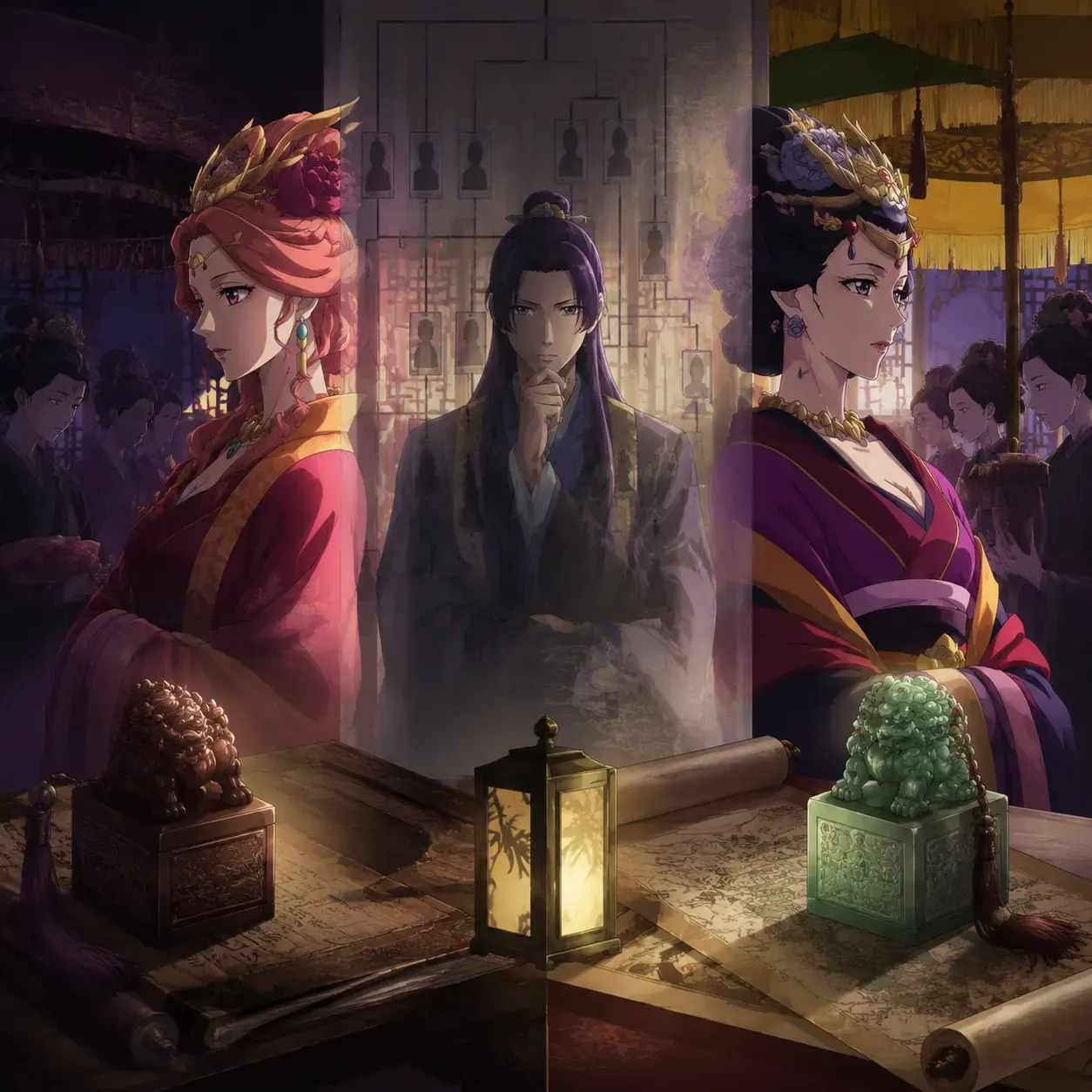
Jinshi is the pressure point because both factional worlds can read him differently. Officially, he belongs to the old imperial story connected to Anshi. Biologically and emotionally, his truth points toward Ah-Duo and the current emperor. Politically, his presence affects how people imagine succession, even when he is trying to control or avoid that role.
If Anshi's natal house wants to use him, it can do so through the official story. If Gyokuyou's side wants stability around the current emperor's recognized household, Jinshi's unresolved position remains a complication. If the hidden truth becomes public, both sides are threatened, because the court would have to admit that one of its cleanest family stories was constructed for survival.
This is why the faction issue should be read beside why Jinshi and Ah-Duo never have a direct conversation. Silence protects people, but it also creates political fog. In that fog, factions can project their own ambitions onto Jinshi before he has room to define himself.
The West Makes Gyokuyou's Side Harder to Ignore
The Western Capital arcs also change the balance. Once food security, regional governance, and western aristocratic networks enter the story, Gyokuyou's side is no longer just "the empress's family." It becomes part of the empire's practical map. The west can send warnings, create marriage pressure, expose local failures, and provide people whose skills matter in a crisis.
That context is why the articles on why Jinshi had to go west and Light Novel 5 connect to this faction topic. The west is where court politics stops being only palace rank and starts becoming land, crops, roads, and local houses with their own pride.
The Empress Dowager's Side Still Controls Old Legitimacy
At the same time, Anshi's side cannot simply be dismissed as obsolete. Old legitimacy is still legitimacy. The Empress Dowager's name carries emotional weight with the emperor, political weight with older court figures, and symbolic weight with anyone who wants the previous generation's story to remain useful.
That makes the conflict uneven in an interesting way. Gyokuyou's faction has the future. Anshi's faction has the past. The court needs both to remain stable, but the houses around them keep trying to turn past and future into weapons.
Common Misreadings
Misreading 1: Anshi and Gyokuyou are direct personal enemies
The better reading is more subtle. Their households and supporters can clash even when the women themselves are not written as simple enemies. The political weather around them is hostile because their positions create competing futures.
Misreading 2: Anshi controls everything her faction does
No. Anshi's natal house can use her prestige while still acting from its own resentment and ambition. Later material makes her family relationship strained enough that "Anshi's faction" should not always be treated as "Anshi's personal command."
Misreading 3: Gyokuyou is safe because she becomes empress
Elevation gives Gyokuyou more power, but it also gives opponents more reason to attack her background. Her western blood, her natal house, and her children's importance make her faction stronger and more exposed at the same time.
Misreading 4: The faction conflict is only about women fighting over rank
The conflict is about houses, succession, regional legitimacy, hidden parentage, and the court's future. The women are central because the palace turns women's bodies, births, and titles into political infrastructure.
FAQ
What is Anshi's faction in The Apothecary Diaries?
Anshi's faction is the Empress Dowager side: her dowager authority, old palace history, strained natal house, sympathetic reform reputation, and the hidden imperial story around Jinshi. It is powerful, but not fully under her personal control.
What is Empress Gyokuyou's faction?
Gyokuyou's faction is the current-empress side: the emperor's favor, her children, the Jade Pavilion's household competence, and her western natal family's wider regional resources. It represents the court's future, but it is vulnerable to prejudice against her western background.
Why do their factions clash?
They clash because Anshi's side is attached to old legitimacy while Gyokuyou's side represents the current emperor's recognized future. Their houses compete over prestige, succession expectations, regional influence, and whose family becomes central to the next era.
Is Anshi against Gyokuyou personally?
The novels support a more careful answer: factional friction exists around them, but it should not be flattened into personal hatred. Anshi is often more compassionate and conflicted than her faction's ambitions might suggest.
Why is Jinshi important to this faction split?
Jinshi's official identity ties him to Anshi's public family story, while his hidden truth points elsewhere. That makes him a symbol factions can fight over, especially when Gyokuyou's children and western-backed empress position change the succession landscape.
What should I read next?
Read Anshi's hidden pressure for the dowager side, Jinshi's identity guide for the succession risk, and why Jinshi had to go west for the regional politics that make Gyokuyou's western side matter.