Spoiler Warning
Major light novel spoilers through Volume 16. This analysis discusses Jinshi's parentage, Ah-Duo's warning in Volume 13, Maomao's willingness to pursue intimacy, succession and pregnancy concerns, and the final scene of Volume 16. It is intended for readers comfortable with developments far beyond the early anime story.
Will They Break Up? The Short Answer
Through Volume 16, Maomao and Jinshi have not reached a confirmed final breakup. The scenes examined here lean toward continued commitment, even as the conditions for a secure future remain unresolved. Maomao does not take the escape Ah-Duo offers her, Jinshi recognizes that love cannot excuse the risks he brings into her life, and Maomao later approaches him for comfort of her own accord.
That supports cautious optimism, not a guaranteed marriage or a claim about the series' ultimate ending. The Volume 16 text ends by pointing toward Volume 17. This article's evidence stops at that boundary; it does not establish what later books or a final conclusion will do.
There is also a difference between asking whether they develop feelings and asking whether those feelings can survive the court. For the broader relationship history, see whether Maomao and Jinshi will end up together. Here, the focus is narrower: what could separate them, and what their later choices actually suggest.
Scene Locator
- Volume 13, Chapter 14, Ah-Duo's Truth: Ah-Duo confirms Jinshi is her biological son, warns Maomao about the freedom she could lose, and offers to help her leave. Maomao responds by planning to seek concessions.
- Volume 13, Chapter 15, Jinshi's Hesitation, Maomao's Resolve: Maomao makes her willingness clear during a private visit. Her precautions make Jinshi confront the consequences of his status; he stops and sends her home with food.
- Volume 13, Chapter 16, Maomao's Late Supper: Back at her dormitory, Maomao reflects on her nervousness and relief. Her private reaction adds nuance to the previous scene.
- Volume 16, final chapter: After a troubling medical case, Maomao seeks comfort from Jinshi and asks about the possibility of his becoming a commoner.
Chapter titles above are descriptive English renderings of the reviewed text; wording may differ by edition. The final chapter of Volume 16 is separate from Chapter 24. These are reading pointers and original analysis, not reproduced novel passages. You can also find this article in the Maomao and Volume 16 Scene Locator.
Volume-level entry only. The source is community-hosted; availability and rights status may vary.
Temporary volume-level source for Volume 16 only. This is not an official or permanent source; availability and rights status may vary.
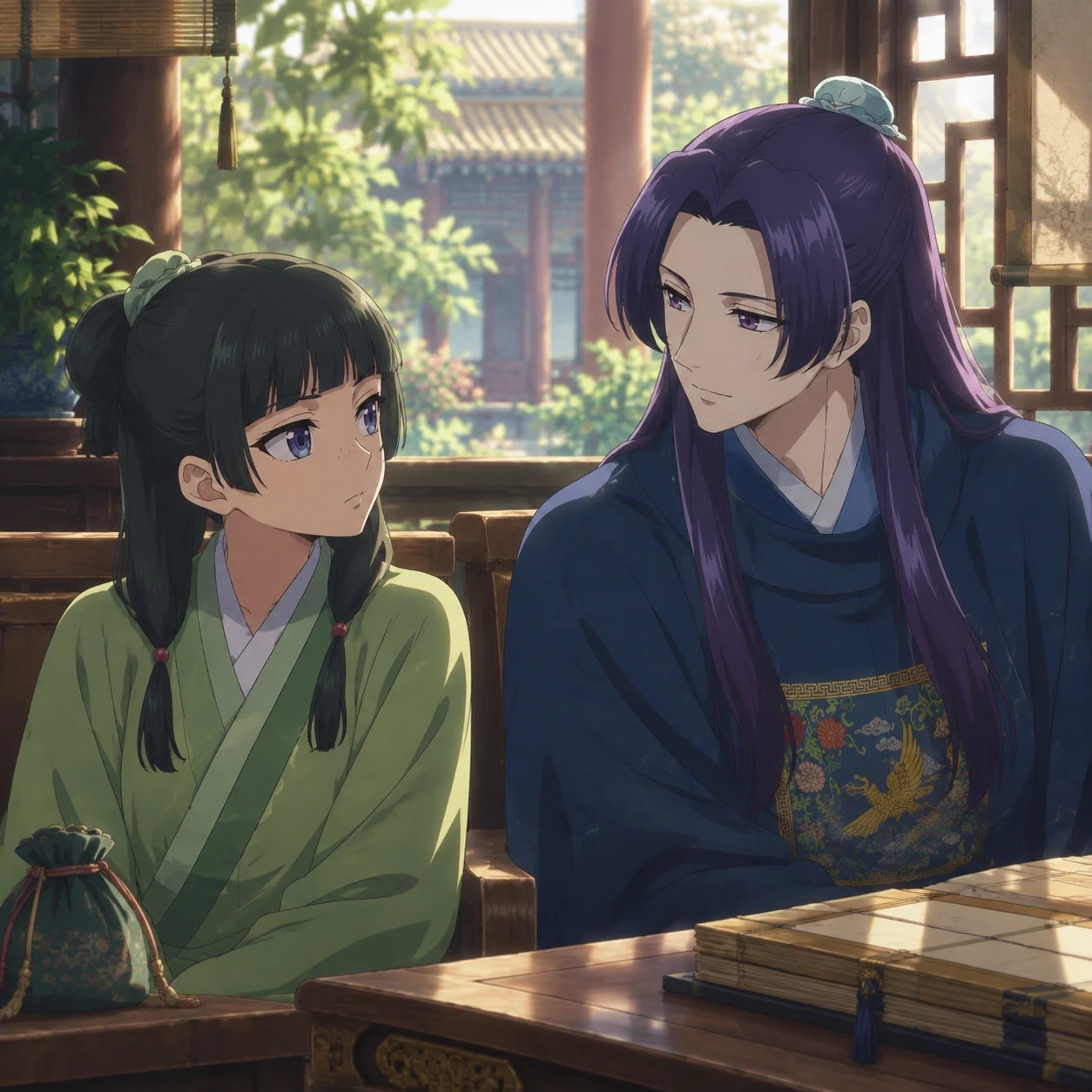
Maomao Is Offered a Way Out
Ah-Duo's warning in Volume 13 is serious because it comes from experience. Her own wish to travel abroad ended when imperial authority determined her future. She understands how a relationship with a royal man can become a decision about where a woman may go, what she may do, and how much of her life remains hers.
She tells Maomao that accepting Jinshi will restrict her freedom and prevent her from leaving the country. She also offers practical help with escape while that option is still available. The point is not simply that court life is unpleasant. Maomao is being asked to understand the cost before she becomes further entangled.
Her answer is a choice, with conditions
Maomao does not dismiss the warning as an older woman's needless anxiety. She says she understands and intends to obtain as many concessions as she can, so she will not regret her position later. The conversation even makes room for her interest in a greenhouse and orchard. Her response brings a frightening future back to concrete questions about how she might live.
This is one of the clearest reasons to resist reading every obstacle as breakup foreshadowing. An exit is placed before her, and her response is to negotiate. The narration presents her resolve as strengthened by the conversation. She is neither unaware of the danger nor willing to let the danger make the entire decision for her.
It still would be too much to treat this as unconditional consent to any future Jinshi might offer. Her willingness depends on preserving something of herself. Ah-Duo's fear that Maomao will follow her path explains why that distinction matters: a similar position does not have to produce an identical life.
Why Jinshi Sends Her Home in Volume 13
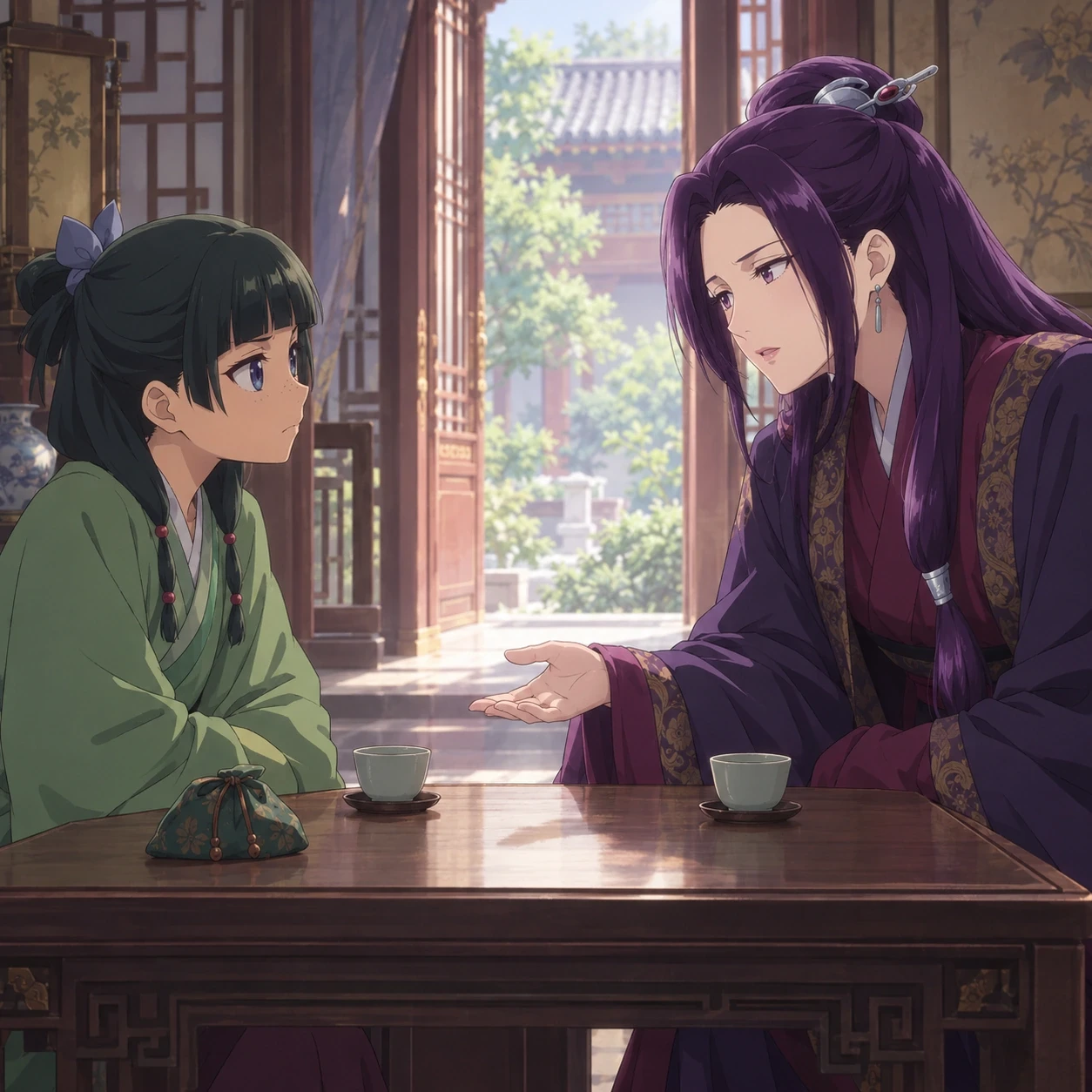
The next chapter could look like rejection if reduced to its final action: Maomao visits, and Jinshi eventually tells her to go home. The conversation leading to that decision gives it a very different meaning.
Maomao knows the visit can become intimate. When Jinshi checks that she understands, she confirms her intention. She also explains the precautions she has prepared because a pregnancy could create political danger. Her willingness toward him and her fear of the consequences exist at the same time.
Desire does not settle the succession problem
To Maomao, he can be Jinshi. To the court, he is the Emperor's younger brother and a possible center of succession politics. A child with Lakan's daughter could be interpreted as evidence of a new faction, regardless of what the parents want. Maomao's concern about becoming an enemy of Gyokuyou is therefore a concern about consequences, not a declaration that she feels nothing.
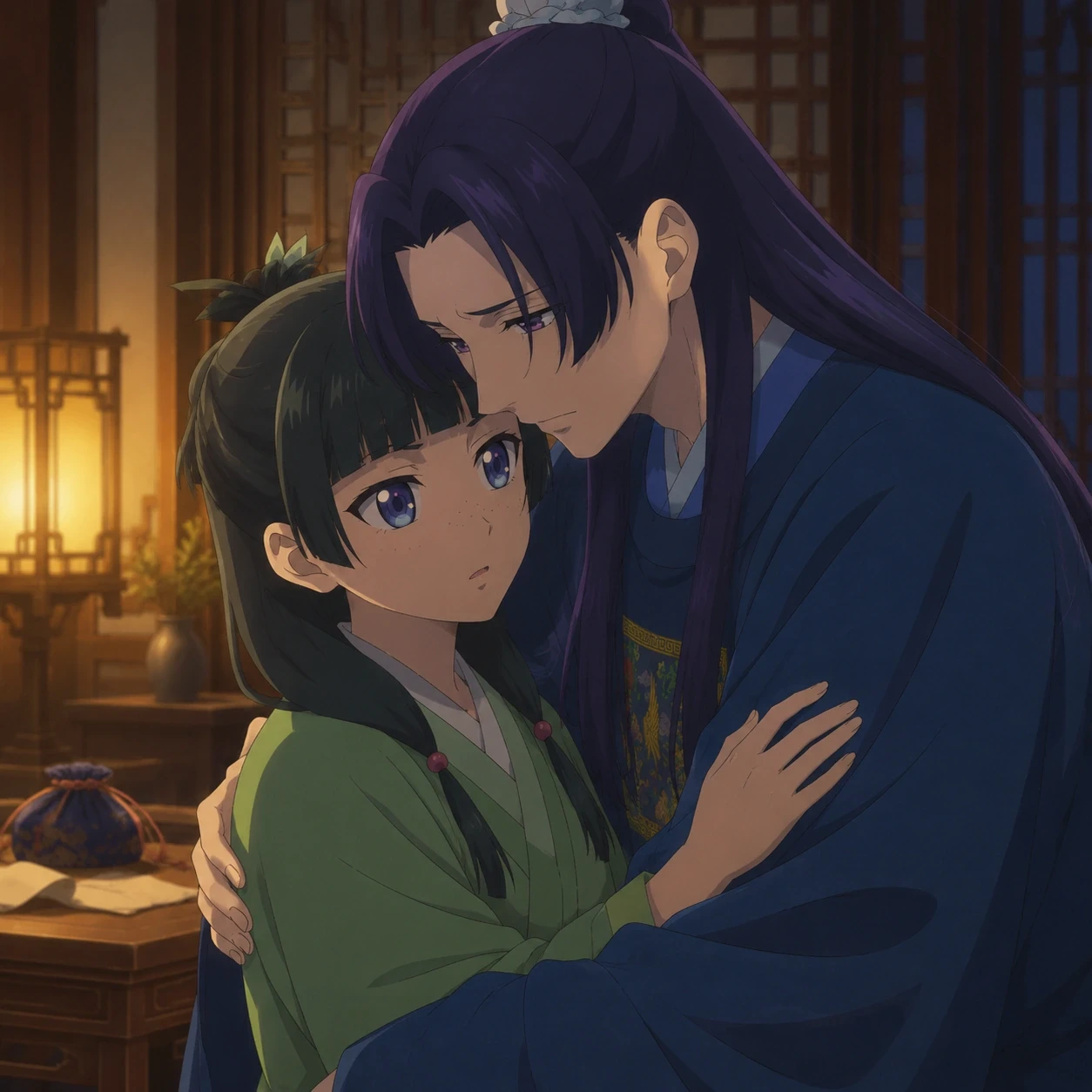
Jinshi realizes that he has been enjoying their progress without fully facing the burden she is carrying. He apologizes, holds her, and ends the encounter. He wants her to eat, drink, and recover, rather than proceed on terms that leave her body absorbing the danger of his unresolved position.
The text does not describe a pregnancy or establish that Maomao takes the preparations she brings. The distinction is essential to Maomao's thinking about pregnancy and succession. Her preparations reveal how seriously she treats the risk; they are not evidence of an event that has already happened.
A pause can be part of choosing each other
Jinshi's thoughts remain directed toward keeping Maomao in his life and changing the position that makes their relationship dangerous. He recognizes that his earlier brand has not made his intentions sufficiently clear to the wider court. A private sign of commitment cannot by itself settle a public question of succession.
Maomao, meanwhile, is both frustrated and relieved afterward. Chapter 16 makes room for her nervousness despite her knowledge and resolve. Neither reaction resembles a clean emotional withdrawal. The scene is about two people discovering that agreement to intimacy still leaves difficult questions about how to care for each other. For a closer reading, see why Jinshi stops the night visit.
What Could Still Separate Them?
A court that assigns them roles
The most substantial danger comes from the gap between personal intention and institutional power. Jinshi can refuse an ambition in his own mind while other people continue to treat him as a candidate for authority. Maomao can reject factional rivalry while her family connection makes observers read her choices politically.
This is why the story cannot solve everything with a confession. The relationship needs room to exist in public without turning either person into a tool for someone else's plans. The wider question of who could replace the Emperor helps explain why Jinshi's wishes alone cannot remove that pressure.
Care that becomes self-erasure
Both can make sacrifice sound practical. Maomao prepares to bear physical and social risks; Jinshi tries to solve his position through drastic personal action. Those impulses may come from commitment, but they do not automatically create a sustainable relationship. If each decides alone what suffering the other should accept, affection can coexist with serious harm.
The more hopeful pattern is their growing ability to interrupt those assumptions. Jinshi stops when he understands what Maomao has normalized. Maomao asks for concessions instead of promising to accept every limit. Their future depends on those acts of correction becoming ordinary, rather than requiring a crisis each time.
Different responsibilities and incomplete disclosure
Maomao's medical judgment and Jinshi's official responsibilities will not always lead to the same action. Their differences are part of how Maomao and Jinshi relate to one another, and Volume 16 makes the tension especially visible. Being close does not give them identical obligations or make every secret easy to share.
These are credible sources of future strain. They are not proof that the author has fixed a breakup as the outcome. The useful distinction is between identifying a conflict the text has established and inventing the resolution of that conflict.
What the Volume 16 Ending Changes
The final chapter of Volume 16 offers a quiet but significant answer to the idea that Maomao's independence must eventually make her leave Jinshi. Distressed after a medical case, she arrives without an appetite. Suiren adjusts the food, and Jinshi notices that something is wrong.
Maomao does not tell him the underlying facts. She believes that disclosure would push him toward punishment because his position differs from hers. She also recognizes that his title must leave him carrying burdens he cannot readily discuss. Her silence therefore reflects a difficult judgment about consequences, rather than a simple refusal to trust him.
She asks for comfort herself
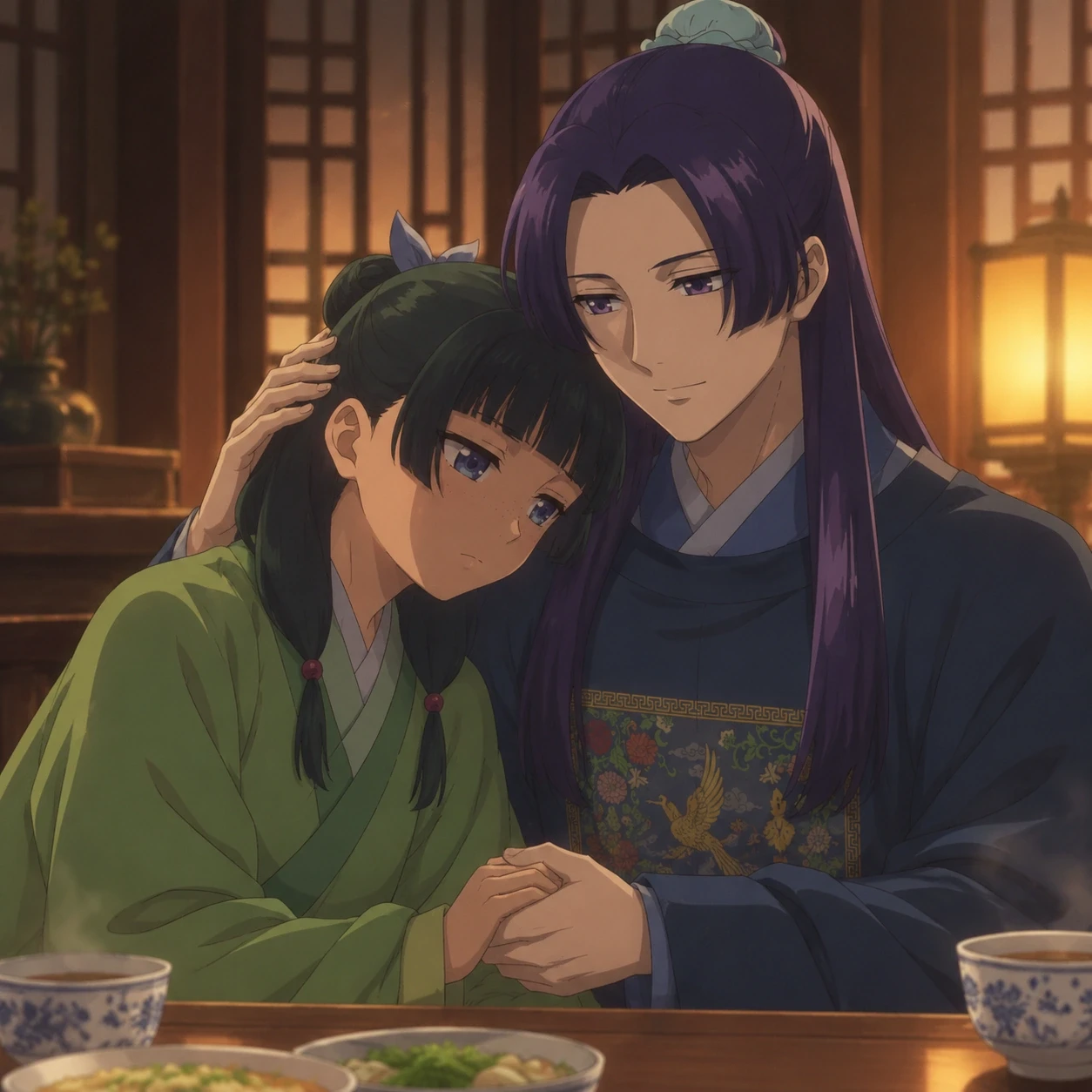
Maomao gets up, approaches Jinshi, takes his hand in hers, and rests her head on his shoulder. He allows her to remain there and responds with tenderness. The narration explicitly separates his concern from sexual desire. Afterward, she has regained a little of her appetite.
This is not a grand solution, but it changes the emotional balance. She is not only the person who treats his injuries or manages a difficult royal patient. She can need care, choose him as the person from whom to seek it, and receive it without immediately explaining or fixing everything.
That does not make her decision to withhold information beyond criticism. It shows that a boundary and an affectionate approach can occur in the same scene. Reading the silence alone as proof that she is pulling away would leave out the action she takes immediately afterward.
What a Shared Future Would Require
Maomao then raises the possibility of Jinshi becoming a commoner. His response leaves room to consider it if he could adapt, and both recognize the attraction of living without the responsibilities that burden them. The exchange returns to the problem behind the romance: how can they have an ordinary relationship while his position makes ordinary choices politically consequential?
The scene is a conversation, not a completed renunciation of royal status. It does not announce an elopement, a wedding, or a settled plan. Its significance is that Maomao imagines a different way for him to live while she is seeking closeness with him. She questions the conditions around the relationship rather than announcing a wish to end it.
A convincing shared future would therefore need more than mutual attraction. Maomao would need meaningful room for her work and choices; Jinshi would need to address the public consequences of his status; both would need ways to discuss risk without making unilateral sacrifices. The novels have given them reasons to attempt those changes, but these chapters do not prove that all of them will succeed.
My reading through Volume 16 is that continued partnership is better supported than a permanent breakup. The strongest evidence is not a promise that nothing bad can happen. It is that, when the story gives them opportunities to retreat, they keep looking for ways to remain close on terms they can live with.
FAQ
Do Maomao and Jinshi break up in the light novel?
The developments examined through Volume 16 do not establish a final breakup. Volume 13 shows deliberate commitment under pressure, and Volume 16 ends with Maomao seeking comfort from Jinshi. This is not a claim about events beyond that reading boundary.
Does Maomao reject Jinshi in Volume 13?
No. During the Chapter 15 visit, she explicitly accepts his feelings and confirms her willingness to pursue intimacy. Jinshi stops after realizing the burden his royal position creates for her.
Is Ah-Duo trying to break them up?
Chapter 14 supports a reading centered on Maomao's freedom and informed choice. Ah-Duo offers an exit because she knows the costs of court life. Maomao understands the warning and chooses to seek concessions instead.
Does Jinshi become a commoner at the end of Volume 16?
The final chapter discusses the possibility; it does not show it happening. Treating the exchange as an accomplished change of status would go beyond the scene.
Is a happy ending for Maomao and Jinshi confirmed?
Not by the material reviewed here. Their growing willingness to choose and care for each other gives grounds for optimism, while the political arrangements needed to protect that relationship remain unresolved.
Character chat