Spoiler Warning
This article discusses full light novel spoilers for The Apothecary Diaries, including the early succession order, the Shrine of Choosing, the Emperor's illness, Jinshi's hidden royal position, the current Crown Prince, Gyokuyou's household, and the Emperor's direct question about Jinshi inheriting. The scenario is hypothetical: the novel does not establish a completed Jinshi coronation.
Scene Locator
The first useful checkpoint is Volume 1, Chapter 17. After the former Crown Prince dies, the Emperor's same-mother brother is described as holding the first succession right. This establishes why Jinshi can be politically dangerous even when he is not the public Crown Prince.
Volume 3, Chapter 12 adds the Shrine of Choosing. The shrine is a source of ancient legitimacy and a test of inherited traits, but it is not an automatic coronation machine. The related Shrine of Choosing analysis explains why passing it can strengthen a claim without replacing court politics.
The direct emergency discussion arrives much later. Volume 14's final chapter identifies Jinshi as the only healthy adult royal besides the Emperor and notes that a sudden death would leave the very young Crown Prince on the throne. Volume 15, Chapters 14-16 and 20 then show the Emperor asking Jinshi whether he would inherit, while Jinshi points to the existing Crown Prince and the child of Lihua Consort. These chapters are the foundation for the answer below.
Volume-level entries only. These sources are community-hosted; availability and rights status may vary.
The Short Answer
If the Emperor suddenly died, the current Crown Prince would be the formal heir even though he is still a child. The court would not need to invent a new line of succession before naming him. The immediate practical problem would be governance: a child could inherit the title, but could not personally control the state.
Jinshi would be the adult royal most likely to be pushed into the gap. He has the bloodline, age, political visibility, and experience to act at once. That does not mean he would automatically become Emperor. It means every faction that fears a child ruler, a regency, or Gyokuyou's relatives gaining too much influence would have a reason to rally around him.
So the cleanest answer is: the Crown Prince would formally succeed, while Jinshi could immediately replace the Emperor as the court's practical adult candidate. The difference between those two answers is the crisis.
The Formal Heir Would Still Be the Young Crown Prince
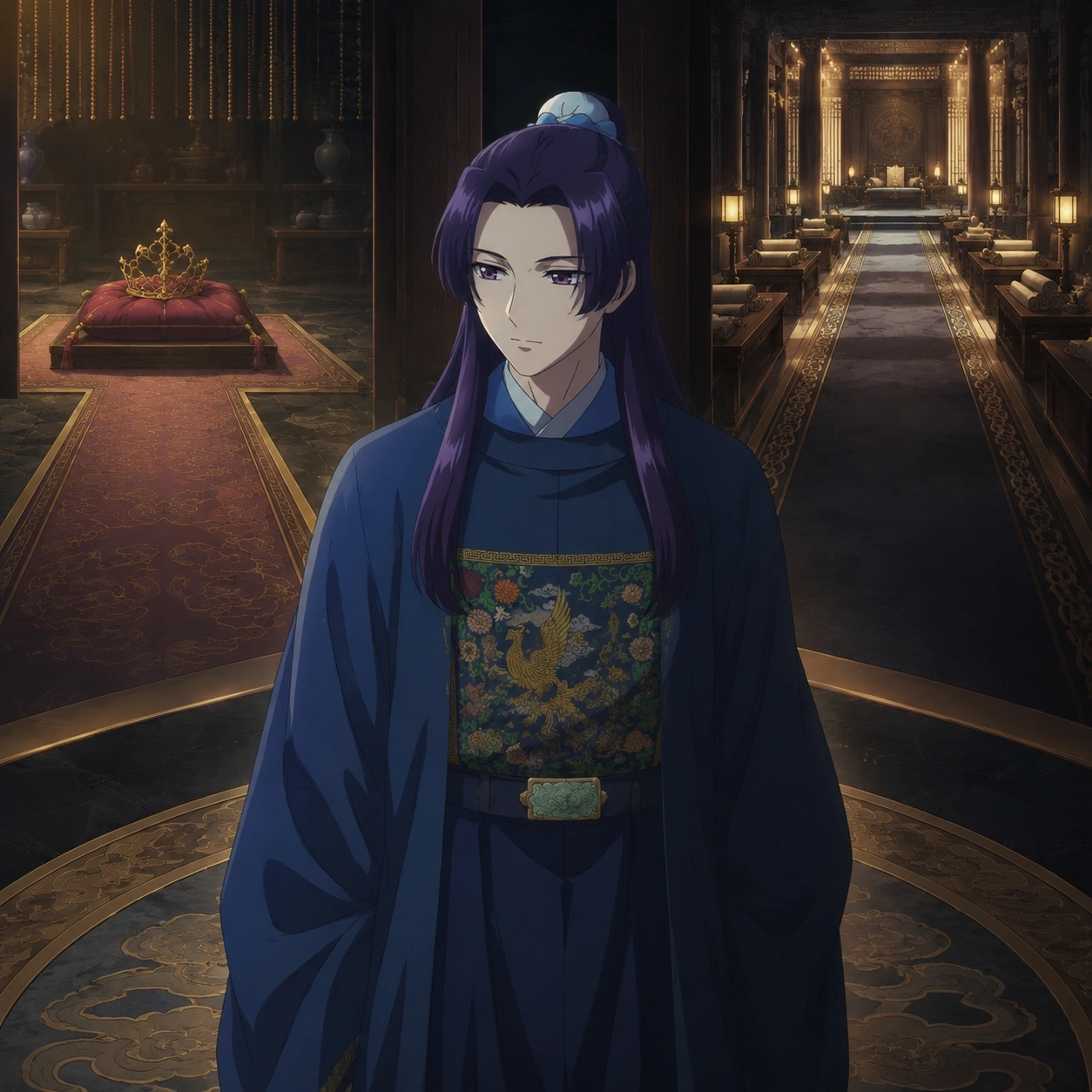
The novel does not treat the current Crown Prince as a placeholder who disappears the moment Jinshi becomes politically useful. The child has already been named to the Eastern Palace. That public decision matters because it gives the court an established future rather than an empty throne.
When the Emperor's health becomes dangerous, the discussion repeatedly returns to the same problem: if he dies, the Crown Prince may ascend while still too young to govern. The likely response is a regency, not an automatic cancellation of the boy's status. Gyokuyou's father, Yuyuan, is named as the obvious adult power behind that arrangement, which is precisely what makes rival factions nervous.
Inheritance and Control Are Different Questions
A child emperor can possess the legal and ritual position while adults make decisions in his name. In a stable court, that may be manageable. In this court, it would immediately raise questions about whose interests the regent serves, how much influence Gyokuyou's family would gain, and whether other factions would accept a western-connected maternal line.
That is why the sudden-death scenario cannot be answered by naming only the Crown Prince. He is the formal answer, but not the answer to who can govern tomorrow morning.
Why Jinshi Is the Immediate Adult Option
Jinshi is not merely a spare prince waiting for an opportunity. He is the one adult royal whose existence makes the child succession politically unstable. The novel describes him as the only healthy and capable adult royal besides the Emperor. That single comparison explains why people can imagine him as an emergency replacement even when he keeps refusing the role.
His advantage is practical as much as genealogical. Jinshi knows court procedure, understands the dangers of factional pressure, and already performs serious official work. He is old enough to act without a regent and visible enough that ministers cannot pretend he does not exist.
Why the Court Could Push Him Forward
One faction could present Jinshi as the safer alternative to a child controlled by maternal relatives. Another could use him as a way to block Gyokuyou's family from becoming the center of government. A third could support him simply because a sudden imperial death creates fear, and fear prefers an adult figure who already has a royal face.
None of those motives require Jinshi to seek power. In fact, his lack of ambition makes the situation more dangerous. A reluctant candidate can still be used by people who want the crown for their own faction.
Why the Court Would Split Immediately
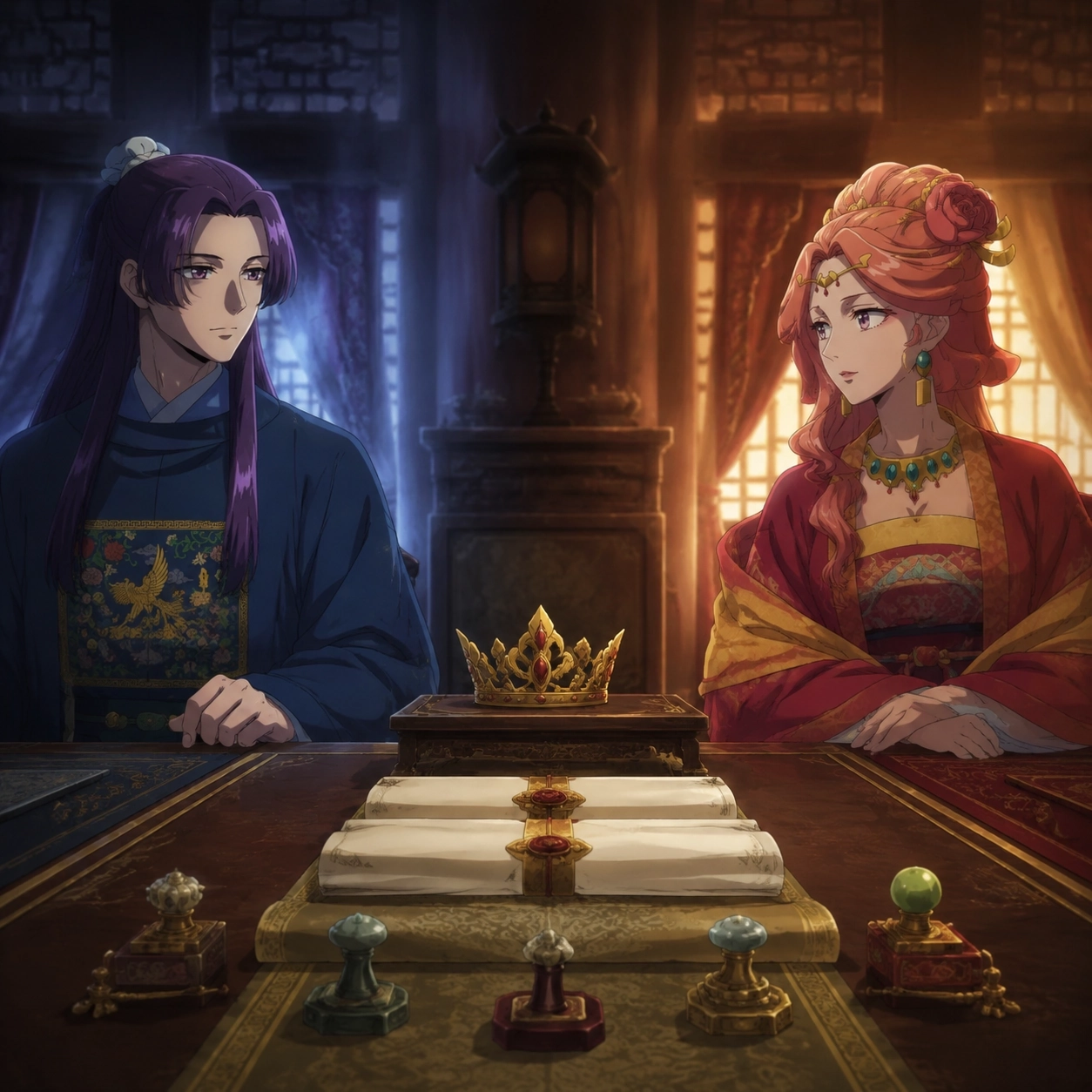
The succession crisis is not simply Jinshi versus Gyokuyou. It is a struggle over whether the empire should accept a child ruler, appoint a regent, elevate an adult royal, or use one candidate as leverage against another.
Gyokuyou's Household Would Be at the Center
Gyokuyou's son is the named Crown Prince, and Gyokuyou's father is the obvious regency power. That does not make Gyokuyou a conspirator. It makes her household the unavoidable political center of a child succession. The more frightened the court becomes of outside influence, the more aggressively factions would interpret every move made around her family.
This is why Jinshi does not want to become Gyokuyou's enemy. He understands that personal goodwill cannot stop a succession structure from turning two royal households into rivals.
Lihua's Son Would Also Matter
Jinshi himself points out that Lihua Consort's son remains another possible imperial line. That detail prevents the crisis from becoming a simple Jinshi-versus-Gyokuyou story. If the first child were removed from the line through illness or factional pressure, another young prince could become the focus of a new coalition.
The result would be a court with several legitimate names and no painless solution. Jinshi's adult age makes him attractive, but it also makes his accession look like a direct displacement of the children already placed inside the succession order.
What It Means for Gyokuyou
Gyokuyou would not need to hate Jinshi for his accession to threaten her household. If Jinshi became Emperor, her son could remain a protected prince, a future heir, or a carefully managed secondary branch. Every version would still require a new political settlement.
The novel presents Gyokuyou as politically intelligent enough to understand that danger. Her response would therefore be more complicated than simple anger. She would need to protect her child, preserve her family's position, and decide whether Jinshi's rule could coexist with the future the Emperor originally built around her.
That is why the question connects naturally to Gyokuyou's road to becoming empress. Her rise depends on more than affection. It depends on how her household survives every succession calculation around it.
Why Jinshi Would Resist Even If He Could Rule
The Emperor does not ask Jinshi about inheriting as a joke. In the illness discussion, he argues that Jinshi could govern well and that the Crown Prince is too young to rule directly. Jinshi's answer is not that he lacks ability. He says the existing Crown Prince still exists and that his taking over would create unnecessary turmoil.
That refusal matches the larger pattern explored in the earlier Jinshi inheritance hypothetical: Jinshi's problem is not whether he could wear the crown. It is what the crown would do to everyone whose future would have to move aside for him.
He Knows the Crown Would Reach Maomao
Jinshi also understands that a throne would not stay attached to him alone. It would reach Maomao, whose closeness to him would become a political fact rather than a private relationship. Her evidence-first independence is exactly what the court could try to control.
The Jinshi and Maomao relationship is therefore part of the succession question, but not because Maomao is a guaranteed future empress. The canon-grounded point is narrower: Jinshi knows that ruling would make the person he wants to protect more exposed.
His Self-Sacrifice Is Part of the Political Evidence
Jinshi's left-abdomen brand is not proof that he secretly planned to take the throne. It is evidence that he understood the personal cost of succession and tried to reject the role through his own body. The related brand analysis explains why that refusal is political as well as emotional.
What Would Not Happen Automatically
The Shrine Would Not Crown Jinshi by Itself
The Shrine of Choosing can provide an old symbol of legitimacy, but it does not replace an imperial decree, court acceptance, or the practical management of a realm. Passing the shrine cannot erase the Crown Prince, the regency question, or the factions attached to each household.
Jinshi Would Not Become Emperor Just Because He Is an Adult
Adult age makes Jinshi the most usable emergency candidate. It does not make him the sole legal heir. His position becomes powerful because the court has several competing principles: the named child, the adult royal, maternal influence, and political stability.
The Crown Prince Would Not Vanish from the Story
Even under a Jinshi accession, the child would remain central to the legitimacy problem. Jinshi would have to protect him without allowing the boy to become a permanent factional weapon. That is a much harder task than simply taking the throne.
FAQ
Who would formally inherit if the Emperor suddenly died?
The current Crown Prince would be the formal heir, even though he is still too young to govern independently.
Could Jinshi immediately replace the Emperor?
Jinshi is the adult royal most likely to be pushed toward immediate rule, but he would not automatically inherit. His accession would require a political decision that could displace or redefine the existing child succession.
Would Gyokuyou's father become Emperor?
No. The novel presents him as the likely regent behind a child Crown Prince, not as the imperial successor himself.
Why does the Emperor ask Jinshi whether he wants the throne?
Because Jinshi is capable of ruling immediately, while the current Crown Prince is very young. The Emperor is testing a practical solution to a succession crisis, even though his public arrangements already favor his own son.
Does Jinshi want to become Emperor?
No. The relevant scenes show him resisting the throne because he does not want to create factional conflict or push the existing Crown Prince aside.
What should I read next?
Continue with the Shrine of Choosing analysis, the Emperor and Jinshi relationship analysis, and why Jinshi refuses to become Gyokuyou's enemy.
Continue the character discussion