Spoiler Warning
This article discusses later light novel spoilers for The Apothecary Diaries, including Gyokuyou's rise to empress, her western family background, Jinshi's hidden identity, Ah-Duo's secret, Anshi's faction pressure, and the imperial succession implications around Gyokuyou's children. Anime-only readers should stop here.
Scene Locator
The question begins in the rear palace, where Gyokuyou is introduced as the emperor's favored consort, the mistress of the Jade Pavilion, and Maomao's first major patron. In those early arcs, her function is not antagonistic. She is observant, politically careful, and practical enough to value Maomao's usefulness instead of treating her as a threat.
The question becomes sharper later, after the story expands from poisoning cases and consort rivalries into imperial household politics. Gyokuyou's elevation gives her household a different weight. She is no longer only a favored woman with a child to protect. She becomes a central figure in the court's future, and her western background makes her natal house part of national politics.
Jinshi's side complicates the same map. His public identity, his hidden birth truth, and the court's need to keep that truth contained all make him more than a beautiful official who moves through the rear palace. If readers need that identity foundation first, start with Jinshi's real name and hidden rank and the Ah-Duo secret analysis.
Volume-level entry only. The source is community-hosted; availability and rights status may vary.
The Short Answer
No, Gyokuyou Is Not Jinshi's Personal Enemy
Gyokuyou is not framed as someone who hates Jinshi or wants to destroy him for personal reasons. The novels usually write her as controlled, intelligent, and aware of the costs of palace power. She is not a cartoon rival waiting for a chance to attack the handsome prince. That would be too flat for The Apothecary Diaries.
Her relationship to Jinshi is better understood through rank and risk. Jinshi is useful, dangerous, and difficult to place. Gyokuyou has every reason to respect his competence, but she also has every reason to understand that a man near the imperial bloodline can become a problem even when he does not want to be one.
Yes, Her Position Could Make Her a Political Obstacle
The answer changes if "enemy" means political rival rather than personal villain. As empress, Gyokuyou must protect the emperor's recognized household and her children's future. If Jinshi's official position, hidden identity, or the factions using his name threaten that future, Gyokuyou can become an obstacle to him without becoming cruel or malicious.
That distinction is the heart of the article: Gyokuyou herself is not the same thing as every person in Gyokuyou's faction. Her household, her natal family, western allies, attendants, and opportunists who claim to serve her interests can all act in ways that pressure Jinshi. The court does not need personal hatred to create enemies. It only needs incompatible incentives.
Why This Question Matters
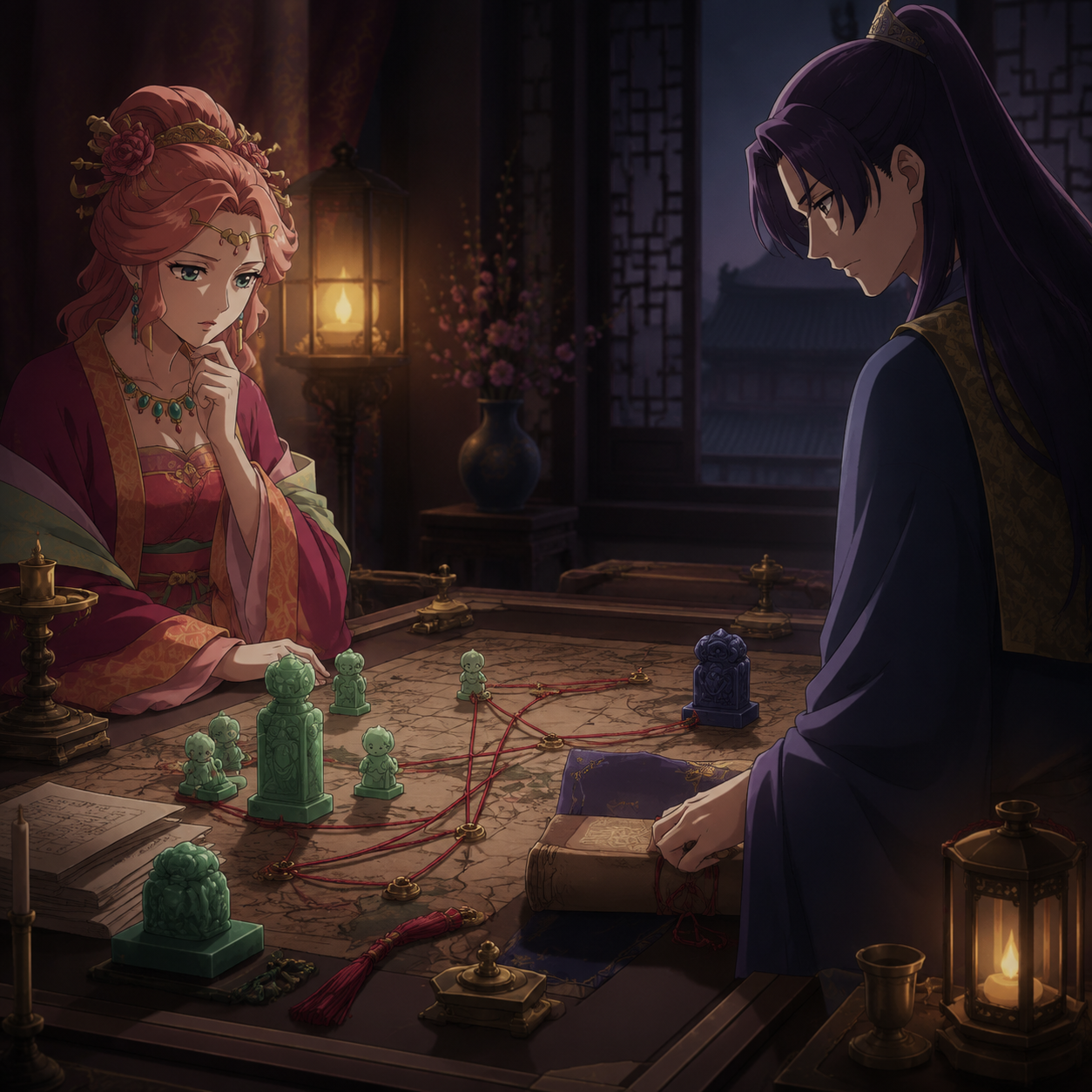
The Gyokuyou-and-Jinshi question matters because The Apothecary Diaries treats the imperial family as a political machine, not as a simple household. A birth can change appointments. A rumor can decide a marriage. A title can protect one person while making another person expendable. In that kind of court, "will she become his enemy?" really means "will her survival require opposing him?"
Gyokuyou's power points forward. She is tied to the emperor's present reign, the next generation, and the west. Jinshi's pressure points backward and sideways at the same time: toward the previous generation's hidden arrangements, toward Anshi and Ah-Duo, and toward a succession role he tries to manage rather than openly embrace.
That is why this article connects naturally to the broader faction guide on Anshi and Empress Gyokuyou's factions. Gyokuyou's possible conflict with Jinshi is not isolated. It sits inside a larger split between old legitimacy, new imperial heirs, western influence, and secrets that cannot survive public inspection.
Enemy Is the Wrong First Word
"Enemy" sounds personal. The story is subtler than that. Gyokuyou can disagree with Jinshi's path, benefit from limits placed on him, or tolerate pressure against his succession value without becoming a hateful antagonist. Court politics often turns decent people into obstacles because their duties point in different directions.
This is also why Maomao's perspective is useful. Maomao rarely trusts official labels. She asks what a person needs, what a family gains, what risk a silence hides, and who benefits if everyone accepts the obvious answer. By that logic, the useful question is not whether Gyokuyou secretly dislikes Jinshi. The useful question is who gains if Gyokuyou and Jinshi are made to look incompatible.
Gyokuyou's Position: Patron, Empress, and Western-Backed Future
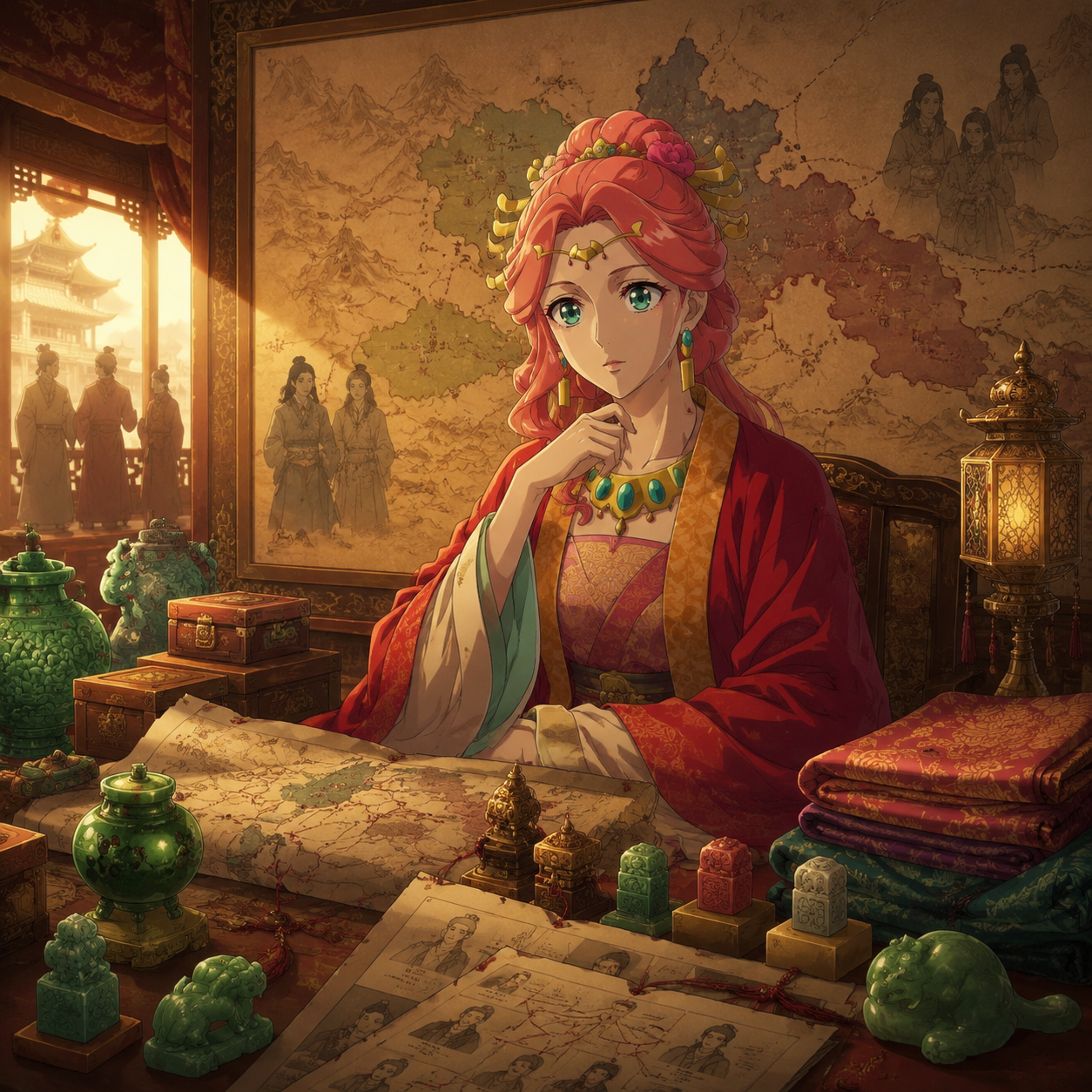
Gyokuyou begins the story as a rare kind of palace patron. She has high rank, but she is not careless with it. Her household is organized enough to survive rear palace danger, and she has the judgment to keep Maomao close once Maomao proves useful. That early competence matters because it tells readers she is not built as a petty consort archetype.
As her rank rises, the meaning of that competence changes. An intelligent consort protects a pavilion. An intelligent empress protects a political future. Gyokuyou has to think about her children, the emperor's household, the stability of her attendants, and the reputation of the western family connected to her name.
For the early palace rules behind that shift, the setting guide explains why consort rank, residence, servants, and childbirth all matter in the rear palace: The Apothecary Diaries setting explained.
Her Western Background Is Strength and Liability
Gyokuyou's western background gives her side reach beyond the rear palace. The west is not just a distant place in the later novels. It is tied to food security, regional power, family networks, and political suspicion. Once Gyokuyou's position becomes national, her western connections become national too.
That is good for her because it gives her resources. It is dangerous because it gives enemies a language for prejudice. Opponents do not have to say "we resent her rise." They can say they are worried about western influence, court purity, or whether her house is becoming too important. The result is the same: Gyokuyou's power becomes something other people try to manage.
Her Children Change the Stakes
Gyokuyou's children are the reason the question becomes more than personal compatibility. Once children enter the imperial line, every adult near them becomes a political actor whether they asked for that role or not. The empress is expected to defend their position, and her household is expected to gather around that future.
That does not make Gyokuyou ruthless. It makes her responsible. If Jinshi is treated as a rival succession option, or if other factions use him to weaken the certainty around Gyokuyou's children, she would have a political reason to push back. The conflict would come from duty before malice.
Jinshi as the Dangerous Variable
Jinshi is dangerous because his value changes depending on which truth the court is using. Officially, he occupies a position that makes him useful to the imperial order. Privately, his hidden birth truth connects him to Ah-Duo and to a different emotional reality. Politically, those two layers can never be allowed to move freely at the same time.
This is why Jinshi keeps generating pressure even when he is not trying to claim anything. People can use his public role. People can fear his hidden truth. People can try to marry around him, sideline him, elevate him, protect him, or remove him from calculations. He becomes a symbol before he gets to be a person.
The west makes that worse. Articles on why Jinshi had to go west and why Jinshi took Maomao west show how his duties move beyond palace corridors. Once western politics, marriage pressure, and regional stability are involved, Gyokuyou's side and Jinshi's side are no longer easy to separate.
Jinshi Does Not Need to Want the Throne to Threaten Someone
A common mistake is assuming Jinshi only matters if he personally wants supreme power. In The Apothecary Diaries, that is not how succession pressure works. A person can be dangerous because others want to use him. A hidden prince can create instability even if his own desire is to escape the role.
That is the structural reason Gyokuyou might oppose him. She would not need to believe Jinshi is evil. She would only need to see that uncertainty around him puts her children, her household, or the emperor's public order at risk.
Ah-Duo and Anshi Make the Problem Harder to Speak About
Jinshi's hidden identity cannot be discussed cleanly because too many living people are attached to it. Ah-Duo's silence, Anshi's position, the current emperor's household, and the old baby-swap implications all make open truth politically explosive. That is why Jinshi and Ah-Duo's silence carries so much weight.
Gyokuyou does not need full public exposure of that secret to feel its pressure. In a court built on implication, half-known truths can be more dangerous than official announcements. People move before evidence becomes public because waiting can mean losing the shape of the future.
What Could Trigger Conflict Between Gyokuyou and Jinshi?
The clearest trigger would be a succession crisis. If Jinshi is pulled closer to the throne, or if a faction tries to use him as a counterweight to Gyokuyou's children, Gyokuyou's household would have to respond. In that scenario, she would not be attacking Jinshi as a person. She would be defending the line attached to her own children.
A second trigger would be western faction pressure. If Gyokuyou's natal house or western allies decide Jinshi's position blocks their long-term security, they may act more aggressively than Gyokuyou herself would. That is why the difference between Gyokuyou and "Gyokuyou's faction" matters. A faction can create enemies on behalf of a woman whose personal judgment is more restrained.
A third trigger would be Anshi-related pressure. If the Empress Dowager's side uses Jinshi's official story, old legitimacy, or palace secrets against Gyokuyou's future, then Gyokuyou's household may treat Jinshi as part of that rival structure. Readers following that side should pair this article with Anshi's hidden pressure.
What Would Not Be Enough?
Ordinary dislike would not be enough. Gyokuyou is too politically intelligent for a shallow rivalry, and Jinshi is too useful to be treated as a disposable enemy without cause. The story has not built them as two people destined to hate each other. It has built them as two centers of power that can be forced into conflict by succession math.
That makes the tension more believable. The most frightening palace conflicts are not always caused by villains. Sometimes they happen because every responsible person protects the future assigned to them, and those futures cannot all fit inside the same official story.
Common Misreadings
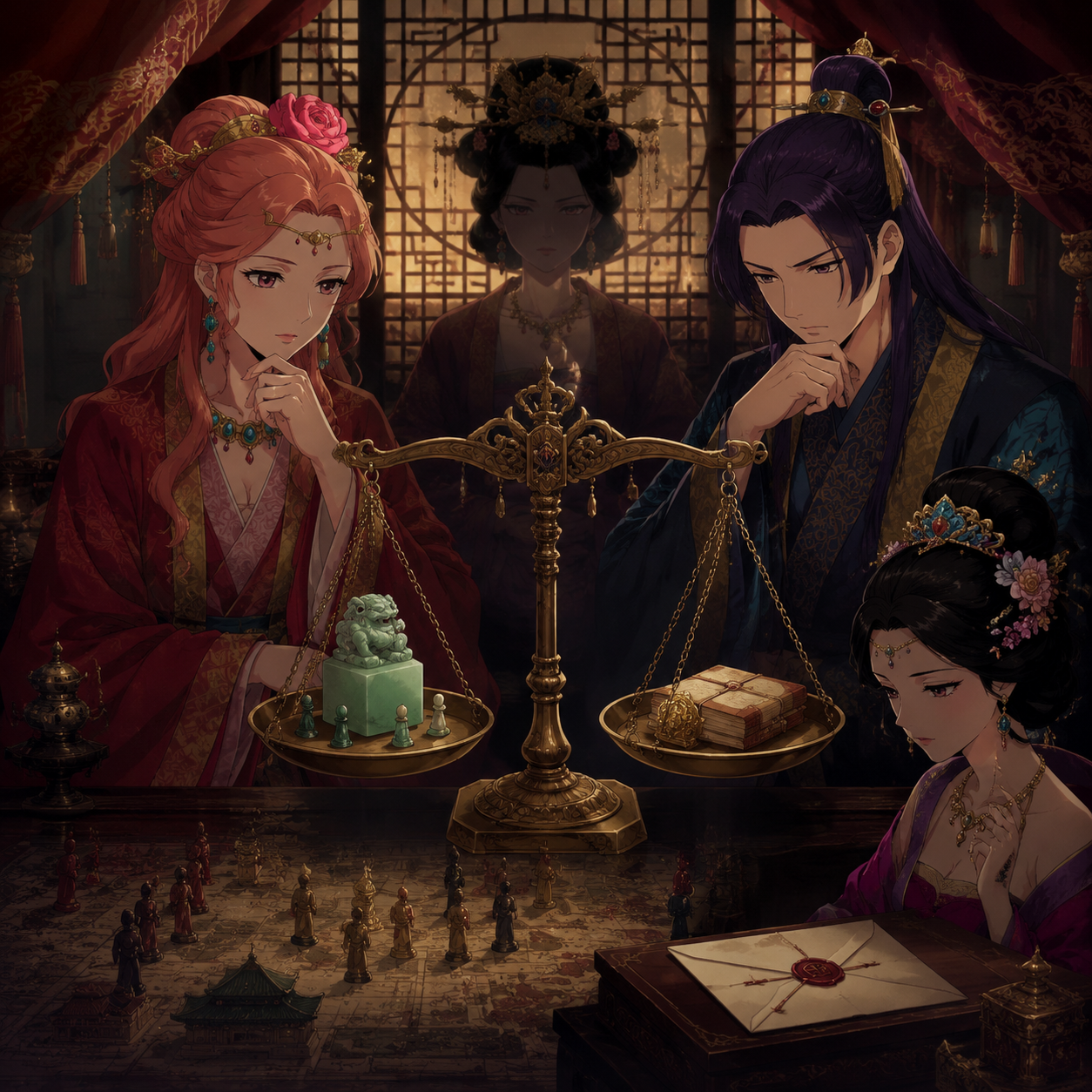
Misreading 1: Gyokuyou must be secretly evil if she opposes Jinshi
No. A politically cautious empress can oppose Jinshi's position without being evil. The novels often separate personal morality from structural pressure, especially when rank, children, and household survival are involved.
Misreading 2: Jinshi is safe because he does not want to compete
Jinshi's personal desire is only one piece of the problem. Other people can still turn him into a succession tool, a marriage piece, a symbol of old legitimacy, or a threat to Gyokuyou's children.
Misreading 3: Gyokuyou and her faction are the same thing
They are not. Gyokuyou may act with restraint while relatives, attendants, western allies, or opportunists use her name more aggressively. The same distinction applies to many factions in The Apothecary Diaries.
Misreading 4: The answer is only about romance or jealousy
This is not a jealousy plot. It is a succession and legitimacy problem. Gyokuyou's position, Jinshi's identity, Anshi's old palace secrets, and western politics are what make the question worth asking.
FAQ
Does Empress Gyokuyou hate Jinshi?
No. The stronger reading is that Gyokuyou does not hate Jinshi personally. Any future conflict between them would come from court position, succession pressure, and household interests rather than simple hatred.
Could Gyokuyou become Jinshi's political enemy?
Yes, if Jinshi's official role or the factions around him threaten her children's succession security. In that case, Gyokuyou could oppose his position while still respecting him as a person.
Why does Jinshi threaten Gyokuyou's side?
Jinshi is close to the imperial bloodline, carries a hidden birth truth, and can be used by factions even when he does not seek power. That makes him a dangerous variable for any empress protecting her own children.
Is Gyokuyou's western family part of the problem?
Yes, in a political sense. Her western family gives her faction resources and reach, but it also exposes her to prejudice and makes central-court rivals more suspicious of her household's future influence.
What should I read next?
Read Anshi and Gyokuyou's faction analysis for the larger court split, Jinshi's real name guide for identity context, and why Jinshi had to go west for the western politics behind the pressure.