Spoiler Warning
Major light novel spoilers through Volume 15. This article discusses Lihua's first child's death, her later son, Gyokuyou becoming empress, the succession order, rival court factions, and the Emperor's private discussion before his operation. The main evidence comes from Volumes 1, 7, 13, and 15.
Why Has Lihua Not Lost Yet?
Lihua's later son remains a genuine candidate for the throne, and the novels continue to recognize her political standing after Gyokuyou becomes empress. Volume 7 places her boy second in the succession order described there. Volume 13 identifies officials who want to promote him. In Volume 15, Jinshi explicitly brings up Lihua's son during a discussion of who could inherit and praises her suitability to be the nation's mother.
Those are three different kinds of support: an acknowledged claim, a court constituency, and a serious assessment from someone inside the imperial family. Together, they make it difficult to dismiss Lihua as a consort whose story ended with her first loss. Her son's accession remains uncertain, but her importance survives well beyond the opening rear-palace crisis.
Scene Locator: Lihua's Recovery and Her Son's Claim
These chapters trace the argument from Lihua's early circumstances to the later succession discussion. The summaries describe the relevant moments in original words.
- Volume 1, Chapter 2: Lihua's sick infant and her position as the mother of a male heir establish what she stands to lose.
- Volume 1, Chapter 12 and Chapter 13: Maomao intervenes in Lihua's treatment; recovery eventually allows Lihua to ask about her future.
- Volume 7, Chapter 4: Maomao visits a healthy Lihua and her later son, whose place in the succession is stated.
- Volume 7, Chapter 9: the narration explains Gyokuyou's advantage in becoming empress and the risks surrounding rival heirs.
- Volume 13, Chapter 5: officials favor Lihua, and Maamei reports a faction seeking to make her son Crown Prince.
- Volume 15, Chapter 15: Jinshi names Lihua's son as another succession option before the Emperor's operation.
Volume-level entry only. The source is community-hosted; availability and rights status may vary.
Lihua's First Loss Does Not Define Her Whole Story
At the beginning of The Apothecary Diaries, Lihua possesses something the court values enormously: a son. The Emperor has no empress at that point, and the boy gives her exceptional standing in the rear palace. His illness therefore threatens both the child she loves and the future others have attached to him.
His death is followed by her own severe decline. In Volume 1, Chapters 12–13, Maomao discovers that an attendant is still applying the prohibited poisonous face powder. Removing that exposure is part of a much longer period of care. Lihua's recovery takes time, and the grief behind her condition does not disappear with the immediate medical danger.
Near the end of that recovery, she asks whether she can have another child and regain the Emperor's attention. She also measures herself against Gyokuyou. Maomao's response challenges the idea that the two women must be judged as a single contest with one winner. That exchange gives the title of this article a useful tension: the palace ranks women competitively, but Lihua's life has value beyond that ranking.
Even the Emperor's decision to send Maomao matters without requiring a romantic explanation. His order makes her treatment possible. The passage leaves room for personal concern and political obligation; it does not require us to choose one motive and treat it as certain.
Does Lihua Have Another Son? Volume 7 Confirms It
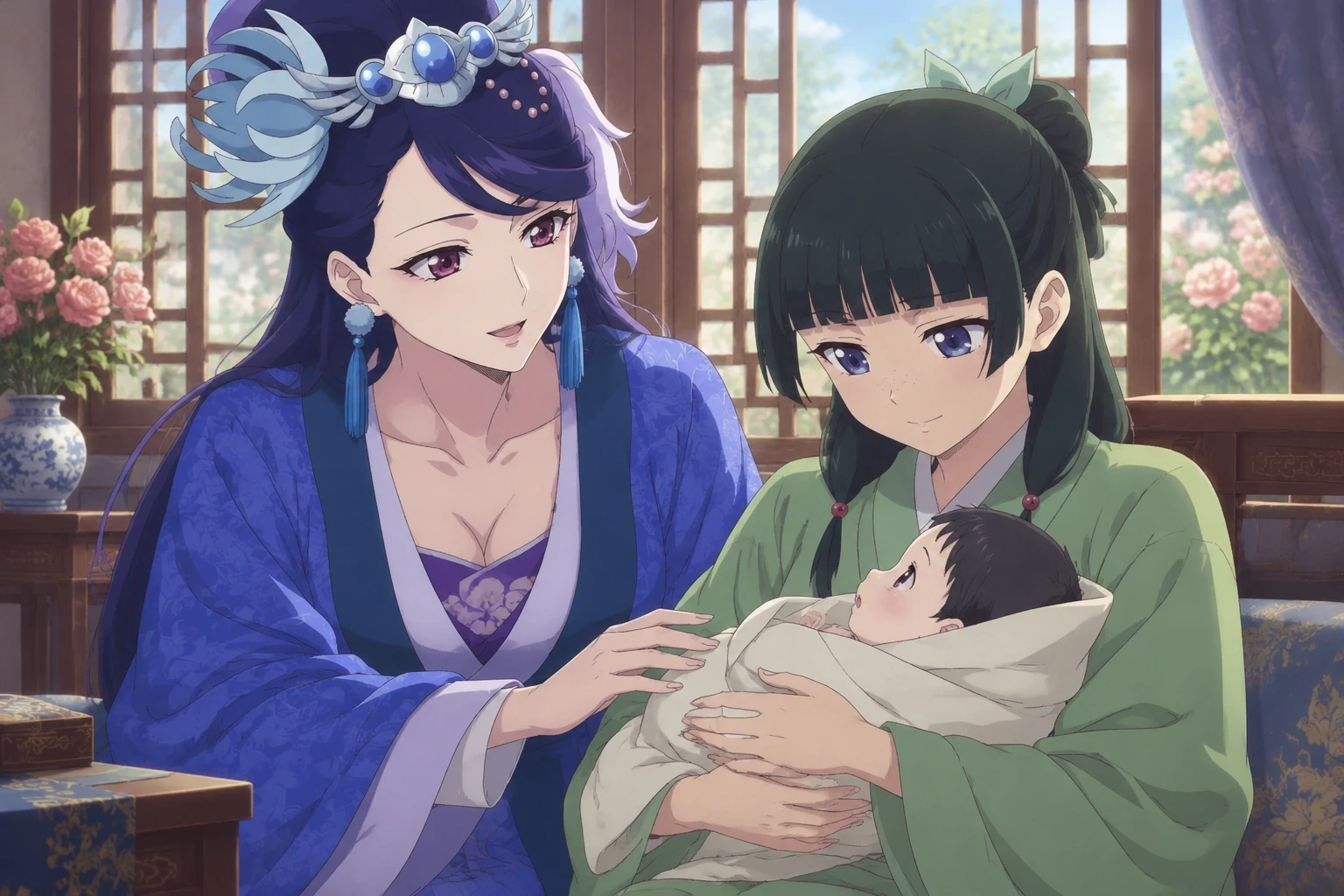
Yes. The healthy boy Maomao meets in Volume 7 is Lihua's later child, distinct from the infant who died at the beginning. By Chapter 4, he has already lived beyond the age his older brother reached. Lihua herself looks well, and the visit takes place in the reception room rather than beside a sickbed.
The details at the Crystal Pavilion make the change tangible. Lihua no longer wears the white face powder. New attendants offer practical help. She hands the baby to Maomao, who understands the gesture as an invitation to see how far mother and child have come. The woman Maomao once struggled to keep alive now has a healthy child in her arms.
The scene holds happiness and grief together. Maomao briefly thinks of the older boy who could have been there, too. The new baby does not erase his brother. For Lihua, however, there is once again a future to protect, and the narration immediately connects that future to the imperial succession.
Why Did Gyokuyou Become Empress Before Lihua?
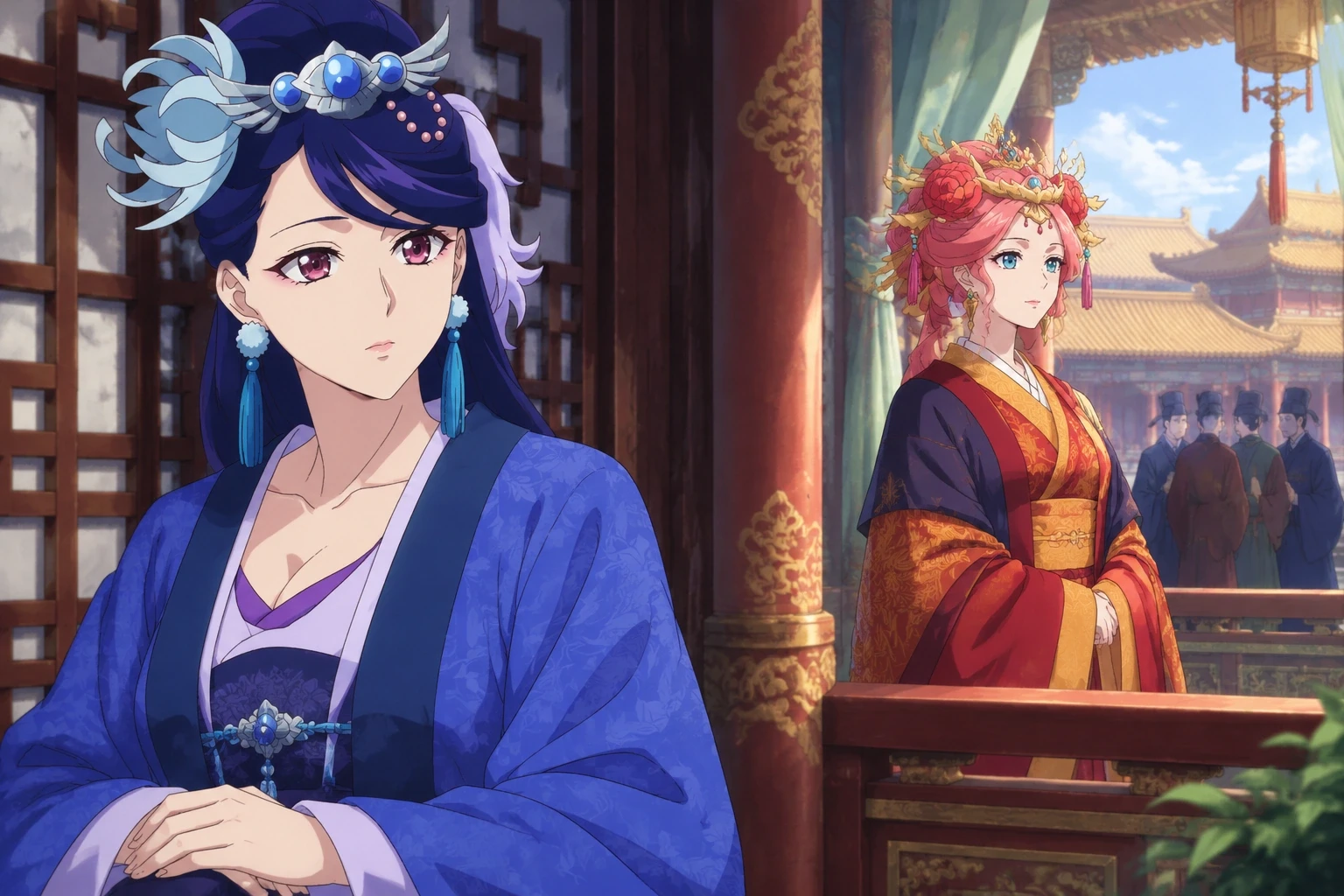
Volume 7, Chapter 9 makes timing central. Gyokuyou's elevation took place before Lihua delivered her later son. Having two consorts of comparable rank produce boys at the same time could have made the choice far more contentious. By the chapter's public presentation, Gyokuyou is already empress; the event displays a position she has obtained.
The same passage directly rejects the idea that Lihua lacked the pedigree or personal qualifications for the role. It explains why her earlier motherhood did not lead to elevation: her first infant's survival was uncertain, and the Emperor had reasons to avoid repeating close marriages within the imperial family. Ties with Gyokuyou's family also carried value for the country's external relations.
This is a decision shaped by timing, dynastic concerns, and alliances. It cannot be reduced to a verdict that Lihua is unsuitable. Our account of Gyokuyou's road to becoming empress follows the other side of that process, while the political foundation of the Emperor and Gyokuyou's relationship examines the value of the alliance.
Gyokuyou's title is nevertheless a real advantage. Her son belongs to the household of the reigning empress and occupies the leading position. Acknowledging the reasons behind Lihua's setback should not make that setback disappear.
Where Does Lihua's Son Stand in the Succession?
The public order described in Volume 7, Chapters 4 and 9 is clear:
- Gyokuyou's son: the Crown Prince and first in line.
- Lihua's later son: the second claimant in the order stated there.
- Jinshi: placed after those two boys in that account.
This is the essential reason Lihua's prospects remain open. Her child already has a recognized place. His claim does not depend on fans inventing a secret arrangement or assuming that Gyokuyou has been removed.
The date of that description matters. Later arguments about who could actually govern do not automatically rewrite the earlier formal order. The novels distinguish a child's place in the succession from the political problem of putting him on the throne while he is still too young to rule. That gap becomes particularly important in Volume 15.
Lihua's Imperial Ancestry Still Attracts Support
By Volume 13, Chapter 5, the preference for Lihua has a visible political constituency. She comes from a collateral branch of the imperial family, and a number of senior officials favor her over Gyokuyou. Maamei also reports a faction seeking to make Lihua's son Crown Prince. His possible promotion is being discussed within the court itself.
Some of that support grows from hostility to Gyokuyou's western appearance, which her son shares. The novel presents a court in which ancestry and visible difference can be used against a legitimate empress and heir. Such prejudice explains part of the pressure they face; it supplies no fair measure of their ability or worth.
Lihua's ancestry therefore works differently for different people. To certain officials, it makes her a reassuringly familiar choice. To an Emperor wary of repeated close-kin marriages, the same imperial connections can raise concerns. A family background can carry political weight without functioning as an automatic qualification for every decision.
Is Lihua Herself Plotting Against Gyokuyou?
The distinction between Lihua and people acting in her name is crucial. Volume 13 describes her as someone who accepts the Emperor's decisions. The assessment there is that she would not seek to overturn the situation unless Gyokuyou or her relatives behaved seriously out of line. That leaves room for circumstances to change, but it does not establish an existing plan by Lihua to seize power.
Volume 7 already anticipates the danger of supporters going further than the person they claim to serve. Maomao does not think Lihua would act cruelly. She nevertheless worries that someone could threaten the Crown Prince for Lihua's benefit without her knowledge. The concern is about the independent behavior of ambitious or devoted followers.
Political support consequently brings a burden as well as an opportunity. Lihua can become the focus of other people's plans while wanting to protect her child and respect the current arrangement. Reading every rival faction as evidence of her personal malice would flatten one of the novel's more careful distinctions.
Volume 15: Jinshi Still Names Lihua's Son as an Option
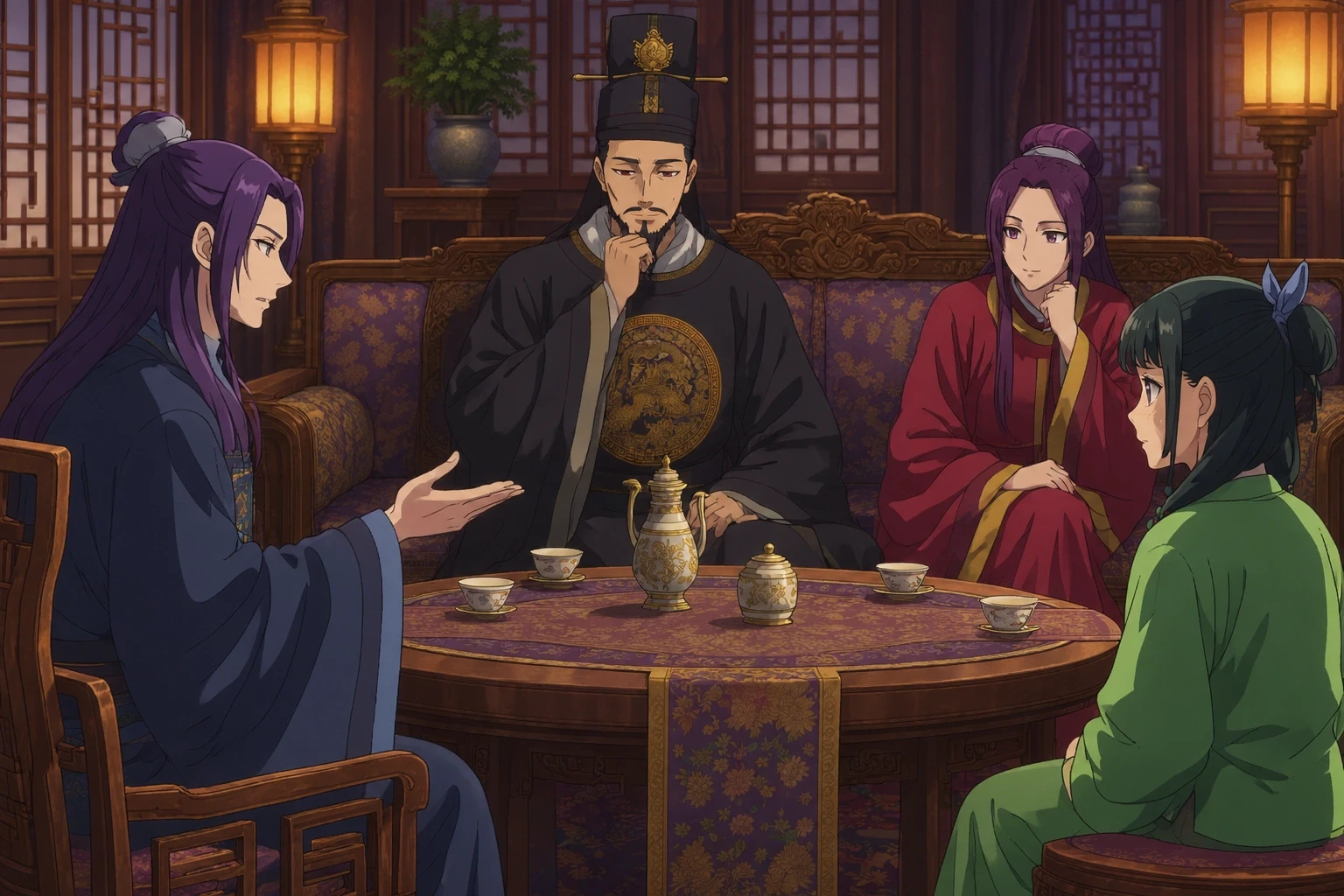
The strongest later evidence comes in Volume 15, Chapter 15. Facing an operation, the Emperor asks Jinshi whether he would inherit the throne. Jinshi responds by pointing to the Crown Prince. The Emperor then raises practical fears: the boy is not yet five, his maternal relatives could gain control, and childhood survival cannot be taken for granted.
Jinshi answers that Lihua's son also remains. He then makes a striking assessment of Lihua herself: in terms of qualifications, he considers her exceptionally suited to be the nation's mother. Maomao agrees. From her perspective, Lihua could look more broadly at the country's interests than Gyokuyou, whose family ties might pull policy toward the west.
These judgments belong to Jinshi and Maomao. They show the esteem Lihua commands; they do not prove that Gyokuyou would necessarily govern badly or that every court observer would agree. The political relevance is more specific: in a serious conversation about the country's future, Lihua and her son remain credible enough to be named.
The proposal also has a limitation. Lihua's boy is young, too. Naming him does not by itself solve the need for an adult to govern or settle the competing interests around a regency. This is why the broader question of whether the Emperor will pass the throne to Gyokuyou's son involves more than comparing the two mothers.
Lihua is absent from this private conversation. The Emperor does not appoint her son, and Jinshi's wish to avoid the throne does not appoint him either. The scene establishes a live alternative under pressure. The urgency comes from what the Emperor's operation means for the dynasty.
What Would It Mean for Lihua to Win?
If winning means becoming the reigning empress, Gyokuyou has already gained the position Lihua once might have occupied. If it means her son eventually becoming emperor, the chapters examined here leave a possibility, not a promised ending. A recognized claim, influential supporters, and praise from Jinshi cannot tell us what the final choice will be.
There is also the more personal measure introduced in Volume 1. Lihua survives, recovers her ability to act, and later raises a healthy child. Volume 7 allows Maomao to witness that change without pretending the first loss never happened. Long before any decision about a crown, that is a meaningful continuation of her life.
Her story therefore remains open on two levels. The court still sees a possible dynastic future through her son, while the woman behind that possibility has already built a future after grief. The unresolved question is how much of either future she will be allowed to choose for herself.
FAQ: Lihua, Her Sons, and the Throne
Does Lihua's first son survive?
No. Her first infant dies in the opening part of the story. The healthy son seen with her in Volume 7 is a later child.
Can Lihua's second son become emperor?
He has a recognized claim, and Volume 7 places him after Gyokuyou's son in the succession order described there. Volume 15 still treats him as an alternative. These passages do not confirm his eventual accession.
Does Lihua become empress instead of Gyokuyou?
The evidence discussed here does not show that. Gyokuyou is empress, while Lihua remains a consort whose qualifications and son's claim retain political importance.
Does Lihua order a plot against the Crown Prince?
The cited chapters do not establish such an order. Maomao worries about people acting without Lihua's knowledge, and Volume 13 distinguishes her own acceptance of the Emperor's decisions from factions seeking to promote her son.
Is the Emperor's reassurance in the cover image a novel quotation?
No. The speech bubble is an imagined line expressing this article's interpretation. In the key Volume 15 scene, Jinshi raises Lihua's son as an option; the Emperor is not making that promise to Lihua.