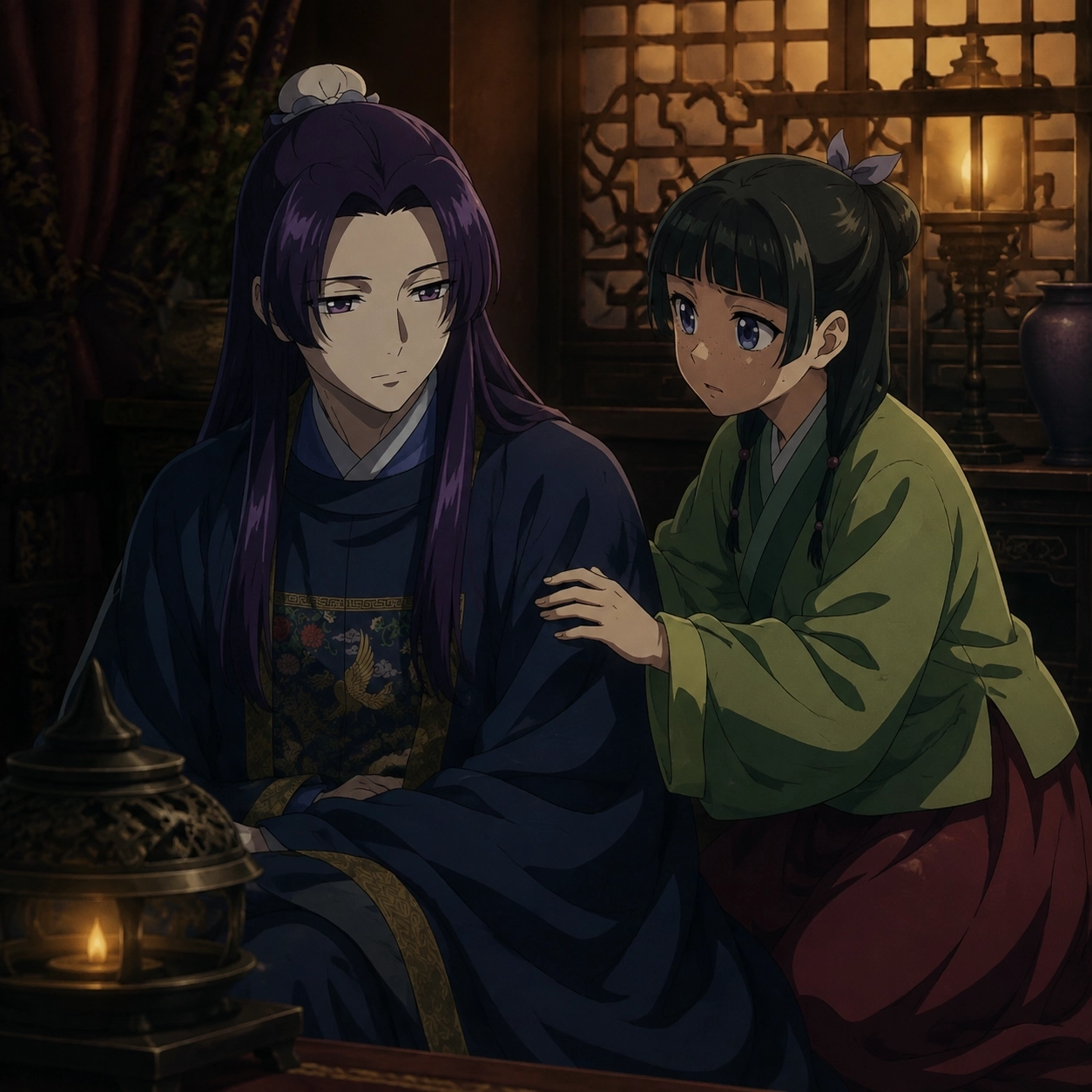
Spoiler Warning
This article discusses major light novel spoilers, including the Volume 8 secret meeting with the Emperor and Gyokuyou, Jinshi's self-inflicted brand on his left abdomen, Maomao's treatment of the wound, their later Volume 9 confrontation, the hidden father-son reading around Jinshi and the Emperor, and later relationship developments through Volumes 13 and 15. Anime-only readers should stop here.
Scene Locator
The triggering event occurs in Volume 8, Chapter 20. Jinshi asks to be removed from the imperial family and the succession route. The Emperor refuses, strikes him, and prevents Gyokuyou from calling for help. Jinshi then uses a heated implement to leave a flower-like brand on his own left abdomen, turning his rejection of the throne into a wound that cannot be dismissed as rhetoric.
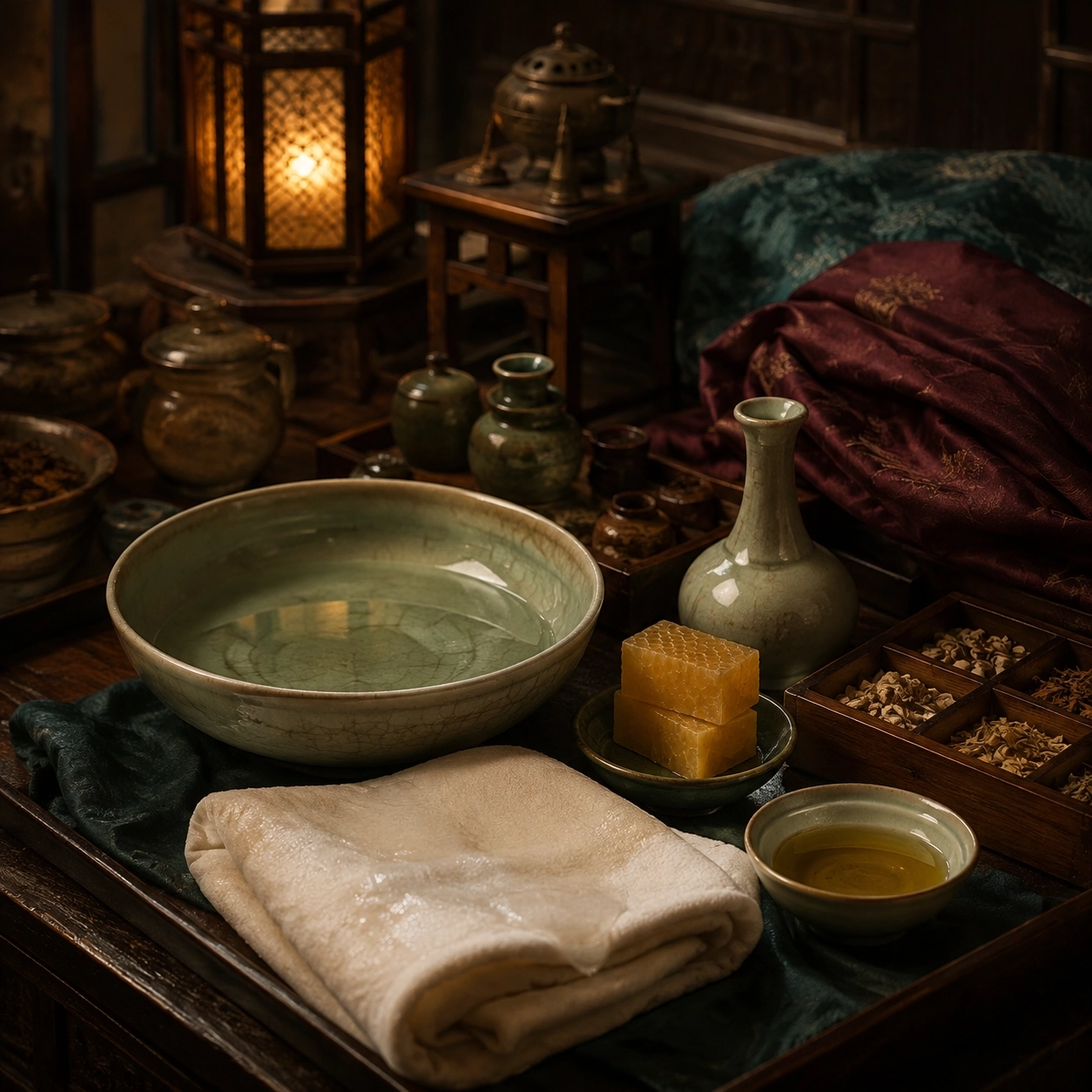
Maomao responds immediately. She checks Jinshi's injuries, steadies Gyokuyou, cools the burn with a wet cloth, looks for oil, beeswax, and medicinal ingredients, and recognizes that an outside physician cannot be summoned without exposing both the mark and the secret meeting. When Jinshi suggests that he could damage his face next, she physically stops him.
The clearest explanation of Maomao's longer-term change appears in Volume 9, Chapter 20. She confronts Jinshi about the brand, connects his self-sacrifice to Luomen's behavior, tells him that he is a person who can be hurt and collapse, and demands that he never do it again. Later volumes show the consequences of that shift. For the event itself, first read why Jinshi marks his left abdomen, the secret four-person meeting analysis, and the scene-order guide to the Emperor's blow and Gyokuyou's interrupted call.
Volume-level entry only. The source is community-hosted; availability and rights status may vary.
The Short Answer
Jinshi's self-harm changes Maomao by making emotional distance impossible. Before this point, she can often respond to him as a troublesome superior, a political noble, or an excessively beautiful man whose personal interest is safer to ignore. The brand breaks that defensive arrangement. She has to touch the wound, hide the evidence, understand the reason behind it, and accept that Jinshi may seriously injure himself when he believes sacrifice is the only way to protect other people.
Her change has four parts. First, she becomes more openly protective. Second, she grows angrier at Jinshi's habit of using his own body as a bargaining tool. Third, she starts challenging his decisions instead of merely diagnosing their consequences. Fourth, she becomes more emotionally honest about the fact that she cares whether he survives intact.
This is not a complete personality reversal. Maomao remains practical, skeptical, and resistant to courtly romance. The change is that her practicality now includes Jinshi's emotional survival, not only his physical treatment or political usefulness.
Her First Change Is Action, Not Romance
Maomao's first reaction to the brand is clinical because that is how she handles fear. She checks damage, cools the burn, calculates infection risk, searches for ingredients, and controls who can enter the room. The scene does not give her time for a conventional confession. It gives her a medical emergency inside an imperial secret.
That practical response is already emotionally meaningful. Maomao is usually good at separating herself from other people's disasters. Here she cannot step away. Jinshi's body has become the evidence of a succession conflict, and she is the only person in the room capable of treating it without exposing everyone involved.
Her decision to stop him when he hints at harming his face is even more revealing. She does not wait for permission, rank, or a formal order. She uses both hands to prevent another injury. In that moment, Maomao behaves less like a subordinate solving a palace problem and more like the person willing to stand between Jinshi and his worst impulse.
Why the medical response matters
Maomao does not romanticize wounds. Her experience with poison, illness, surgery, and the pleasure district makes bodily damage concrete to her. Jinshi may intend the brand as a political declaration, but Maomao must deal with pain, tissue damage, scarring, fever, and secrecy. His symbol becomes her patient.
Maomao Stops Treating Self-Sacrifice as Jinshi's Private Choice
The strongest change is not tenderness but anger. Maomao understands why Jinshi wants to protect Gyokuyou's son and escape the throne. She does not accept the method. By injuring himself, Jinshi decides alone that his body is an expendable tool and leaves everyone around him to carry the consequences.
This matters because Maomao normally respects harsh choices when they are rational. The brand is rational in a narrow political sense: it creates a lasting sign that Jinshi rejects imperial eligibility and aligns himself beneath Gyokuyou's line. Yet it is also reckless. It wounds the Emperor, shocks Gyokuyou, traps Maomao in secrecy, and proves that Jinshi may escalate whenever words fail.
Maomao therefore refuses the noble reading Jinshi might prefer. She does not praise the mark as beautiful loyalty. She treats it as evidence that his self-denial has become dangerous. That distinction shapes every later conversation about his duty, his royal blood, and his future with her.
The Luomen Parallel Changes How Maomao Reads Jinshi
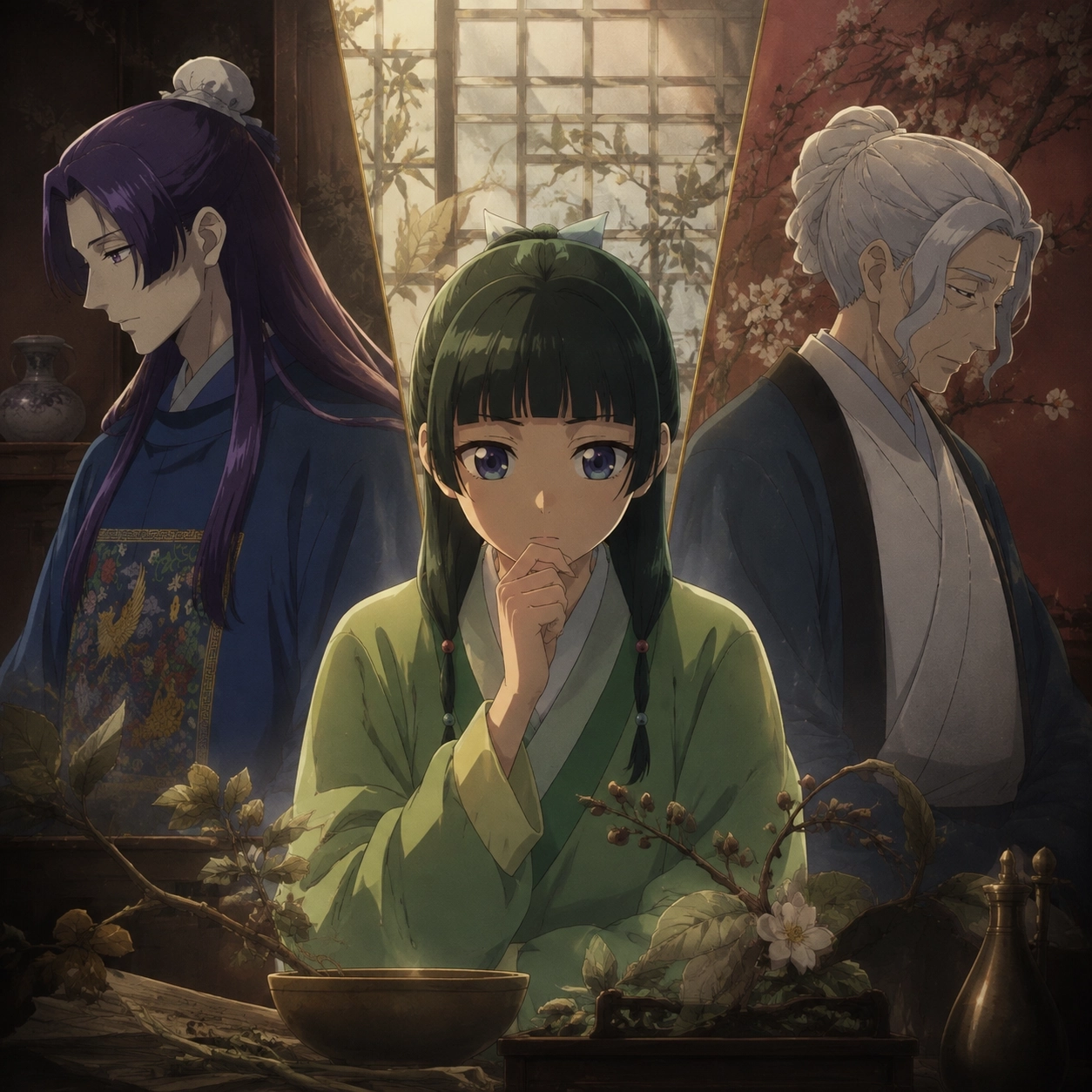
In the later Volume 9 conversation, Maomao links Jinshi with Luomen. The comparison is crucial because Luomen is one of the people she understands most deeply. He is brilliant and compassionate, but he also accepts punishment, hardship, and responsibility with a willingness to erase himself.
Once Maomao sees that pattern in Jinshi, his behavior stops looking like a single dramatic act. The brand becomes part of a repeated tendency: when trapped between duty and another person's safety, Jinshi chooses to reduce himself. He gives up rank, sleep, comfort, desire, reputation, and finally flesh as though his own well-being were the easiest cost to pay.
Maomao knows where that logic can lead because she has watched Luomen live with its consequences. Her affection for Luomen does not make her approve of his self-erasure. The same becomes true of Jinshi. Caring for him increasingly means refusing to cooperate with the idea that his suffering is automatically the cleanest solution.
Jinshi becomes human rather than untouchable
Maomao often protects herself by turning powerful people into categories: patient, master, consort, official, royal. The Luomen comparison strips away Jinshi's category. He is not a celestial beauty or an abstract successor. He is a man with a dangerous habit, a body that can fail, and limits he refuses to acknowledge.
Maomao Begins Setting Limits Instead of Only Cleaning Up
Volume 9 shows Maomao doing something she once avoided: she tells Jinshi what he must not do. She insists that he is capable of injury and collapse, rejects the fantasy that he can save everyone, and tells him not to repeat the branding. This is more than medical advice. It is a relationship boundary.
Before the brand, Maomao can pretend that Jinshi's choices belong to a world above her rank. After treating the wound, that excuse no longer works. He has made her a witness and caretaker. She answers by claiming the right to object.
That right is important because Jinshi's status creates a constant imbalance. Maomao cannot command him politically, but she can refuse to validate self-destruction. Her bluntness becomes a form of equality: she addresses the person beneath the title and expects him to take responsibility for remaining alive and functional.
This also explains why later Maomao can poke at the scar, call out his self-injuring tendency, and demand reflection. The behavior may look comic on the surface, but its foundation is serious. She remembers what he is capable of doing when cornered.
She Learns That Jinshi's Self-Harm Wounds More Than Jinshi
Maomao later considers that the person most deeply harmed by the brand may be the Emperor. As she pieces together the hidden parentage surrounding Jinshi, the scene gains another meaning. The Emperor is not only a ruler whose preferred adult successor has refused him. He may also be a father watching his son injure himself to escape the future being placed on him.
This realization broadens Maomao's empathy. In the immediate scene she has to think about Jinshi's burn and Gyokuyou's shock. Later she can see the family damage inside the political confrontation. Jinshi's act communicates loyalty to Gyokuyou's child, but it also punishes the Emperor for refusing to release him.
That does not make the Emperor innocent. His insistence, secrecy, and succession strategy help create the crisis. But Maomao's analysis becomes less binary. She sees that Jinshi's self-sacrifice can protect one person while hurting several others, including the people he believes he is sparing.
For more background on that contradiction, read whether the Emperor treats Jinshi as a brother or a son and why Jinshi refuses to become Gyokuyou's enemy.
The Brand Pushes Maomao Toward Emotional Honesty
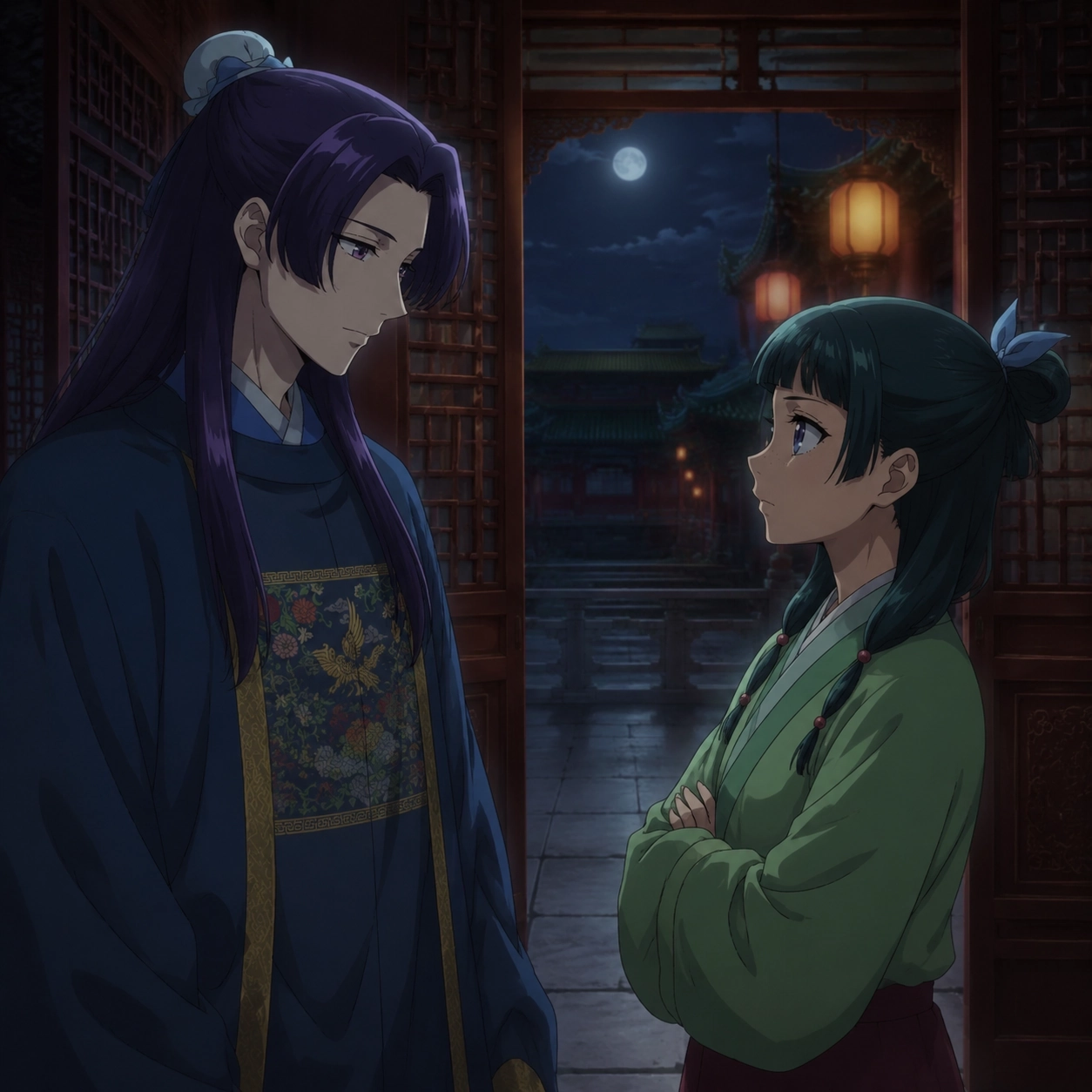
The later confrontation ends with an unusual mixture of discipline and affection. Jinshi asks Maomao to strike him as encouragement. She initially resists, then gives him the requested slap and follows it with a kiss on the cheek. The sequence is awkward, unsentimental, and entirely suited to them.
The important point is not that violence becomes romance. It is that Maomao finally answers Jinshi in a language he cannot mistake. The slap rejects his self-punishing logic; the kiss confirms that her rejection is not indifference. She cares about him enough to oppose him and enough to offer comfort without pretending his behavior was acceptable.
This is a major step for Maomao because she usually hides emotion inside useful action. Medicine, observation, sarcasm, and errands let her care without naming care. After the brand, usefulness is no longer sufficient. Jinshi needs to understand that his destruction affects her, and Maomao begins to let him see that truth.
The change strengthens the reading in the Jinshi and Maomao relationship guide: their intimacy grows when Maomao stops responding only to Jinshi's masks and Jinshi stops treating sacrifice as proof of sincerity.
How the Change Appears in Later Relationship Scenes
By the later night-visit material, Maomao is willing to face Jinshi's feelings directly. She prepares for intimacy, understands the biological consequences, and openly states that she does not want to become Gyokuyou's enemy. This is not the behavior of someone still pretending Jinshi's desire has nothing to do with her.
At the same time, she has not abandoned judgment. She sees that loving Jinshi means calculating succession, pregnancy, factional danger, and the cost to Gyokuyou's child. Jinshi stops the encounter because he recognizes how much political burden Maomao has already accepted. The scene analyzed in why Jinshi refuses to sleep with Maomao shows how far both characters have moved from the Volume 8 brand without escaping its central problem.
Maomao's growth is therefore not a move from coldness to blind romance. It is a move from avoidance to informed participation. She is willing to choose Jinshi, argue with him, restrain him, and consider a future with him, but she will not let either of them pretend that imperial blood has no consequences.
Protection becomes mutual rather than one-sided
Jinshi often imagines protection as something he performs by removing himself. Maomao increasingly insists on another model. Protection must include telling the truth, sharing risk, accepting limits, and allowing the other person to object. Her response to the brand begins that correction.
What Jinshi's Self-Harm Does Not Change
The novel never turns Maomao into a conventional romantic heroine after this event. She remains uncomfortable with grand declarations, alert to power differences, and capable of treating Jinshi with merciless practicality. She does not excuse his behavior because she understands it.
The brand also does not solve Jinshi's succession problem. His royal identity remains politically useful to other people, Gyokuyou's son remains vulnerable while young, and the Emperor does not simply release Jinshi from the family structure. A scar can communicate refusal, but it cannot erase bloodline politics.
Most importantly, the story does not present self-harm as the correct path to intimacy. The lasting relationship change comes from Maomao's resistance to the act: treatment instead of admiration, anger instead of praise, boundaries instead of passive sympathy, and honest affection instead of rewarding sacrifice.
That is why the best answer to the article's question is precise. Jinshi's self-harm does not create Maomao's feelings. It forces her to acknowledge them and gives those feelings a new duty: she will no longer watch silently while Jinshi turns himself into the price of everyone else's safety.
FAQ
Did Jinshi's brand make Maomao fall in love with him?
No. Maomao's attachment develops across many earlier events. The brand forces her to recognize Jinshi's vulnerability and become more direct about feelings she has usually hidden behind practical behavior.
Why is Maomao angry about Jinshi's self-harm?
She understands his political goal but rejects his method. Jinshi treats his own body as expendable, shocks the other witnesses, burdens Maomao with secret treatment, and proves that he may escalate his self-sacrifice when trapped.
How does Luomen help Maomao understand Jinshi?
Maomao recognizes in both men a tendency to accept too much responsibility and erase their own needs. Because she knows the cost of Luomen's self-sacrifice, she becomes less willing to tolerate the same pattern in Jinshi.
What boundary does Maomao set after the branding?
She tells Jinshi that he is a person who can be hurt and collapse, rejects the idea that he can save everyone through sacrifice, and demands that he never brand himself again.
Why does Maomao later think about the Emperor's pain?
As she understands the hidden father-son relationship more clearly, she realizes that Jinshi's act was not only a political refusal. It may also have been a son wounding himself in front of a father who would not release him.
Does Maomao become more romantic after the brand?
She becomes more emotionally honest, but not less practical. Later she is more willing to accept Jinshi's feelings while still calculating pregnancy, succession, Gyokuyou's position, and her own boundaries.
What should I read next?
Continue with the meaning of Jinshi's left-abdomen brand, the secret four-person meeting, the complete scene-order analysis, and the later night-visit analysis.