Spoiler Warning
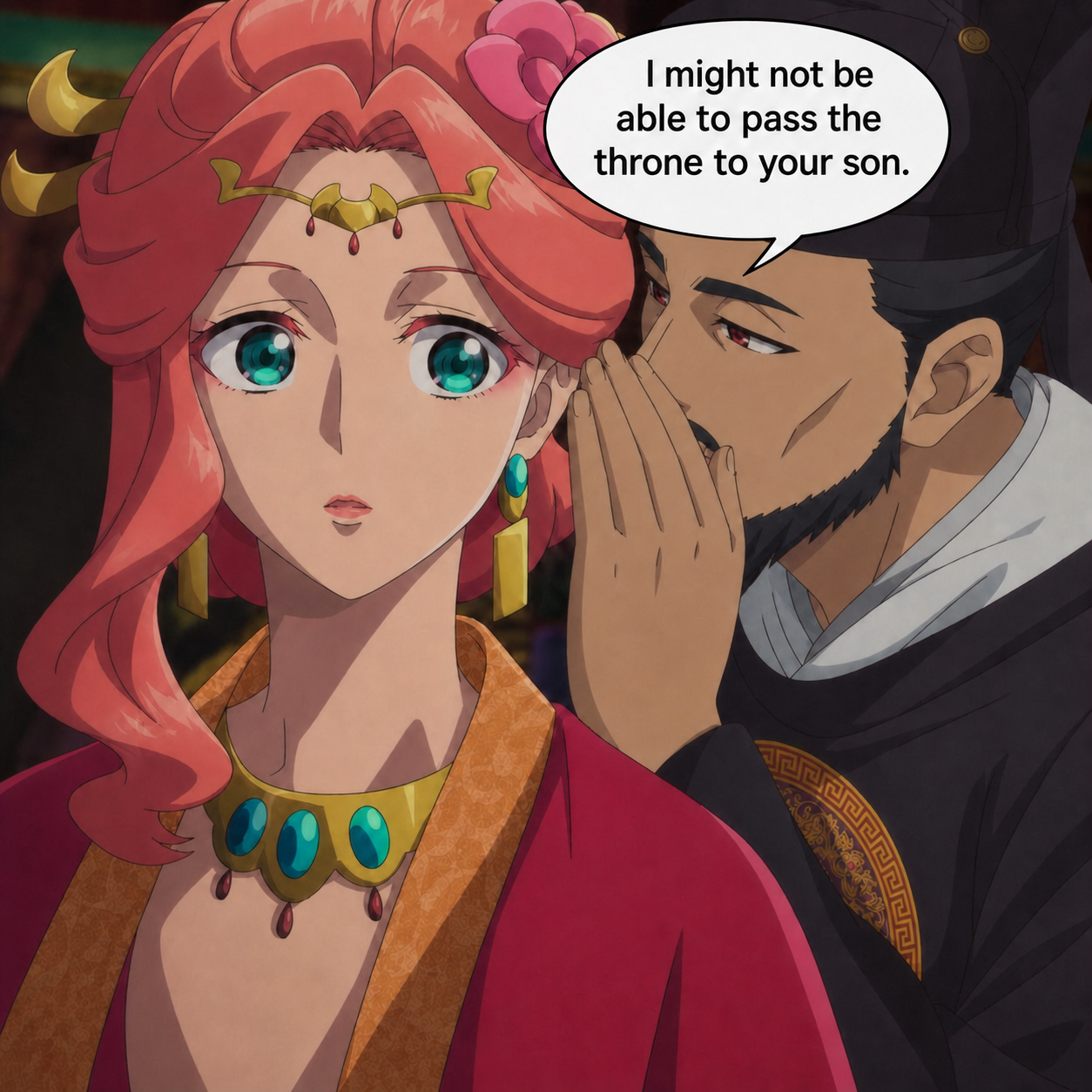
This article discusses full light novel spoilers through Volume 15, including Gyokuyou's children, the Crown Prince's young age, Jinshi's royal identity, the Emperor's illness, and the private succession discussion before the operation. Anime-only readers should stop here.
Scene Locator
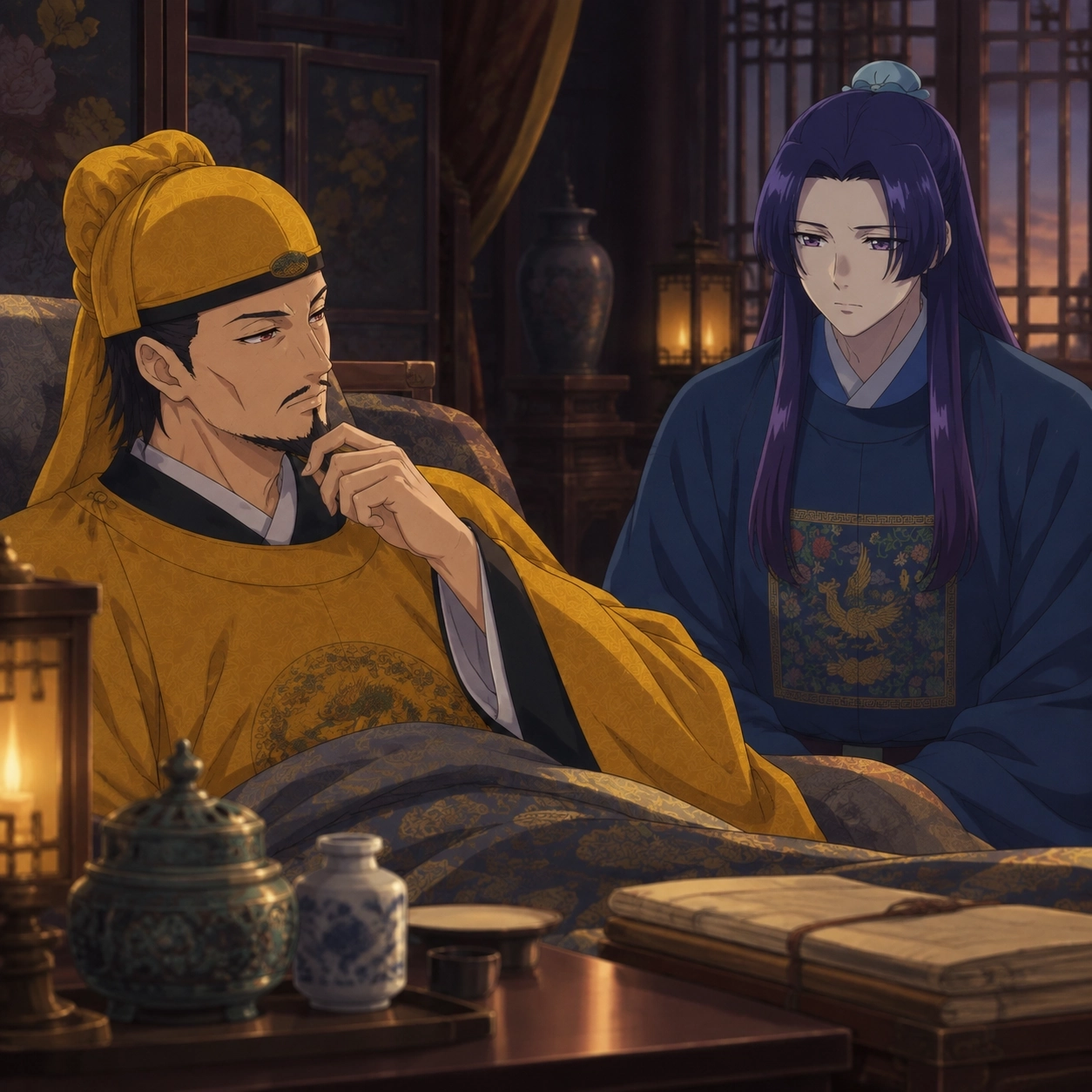
The direct evidence for this question is in Volume 15, Chapters 15-16. During the Emperor's illness and before the operation, he asks Jinshi whether he will inherit. Jinshi points to Gyokuyou's young son, the possible regency behind him, and Lihua's son. The exchange separates a child's formal claim from an adult's ability to govern.
Volume 15, Chapter 16 supplies the political consequence. Ah-Duo judges that the Emperor could formally designate Jinshi and publicly acknowledge their parentage, but that such a decision would strike Gyokuyou and her family like a thunderbolt. The novel therefore presents a real alternative without confirming that the Crown Prince is removed.
Earlier palace succession history explains why the court treats surviving sons as public claims, but it is background rather than the direct source of the Emperor's question. For the wider political context, see the political foundation of the Emperor and Gyokuyou's relationship.
Volume-level entries only. These sources are community-hosted; availability and rights status may vary.
The Short Answer
Yes, the novel leaves room for the Emperor not to pass the throne to Gyokuyou's son, but it does not show him formally disinheriting the child. The reason is practical and political: the Crown Prince is still under five, his maternal family could become the regency power, and many officials already resist an heir who carries Gyokuyou's western appearance.
That uncertainty makes Jinshi the obvious alternative. He is the Emperor's healthy adult brother, already capable of governing, and a figure rival factions could use to prevent a child court from becoming a Yu family court. But the Emperor's question is not proof that Jinshi will inherit. It is proof that the succession is not as settled as the Eastern Palace title makes it look.
Gyokuyou's Son Is Already the Named Heir
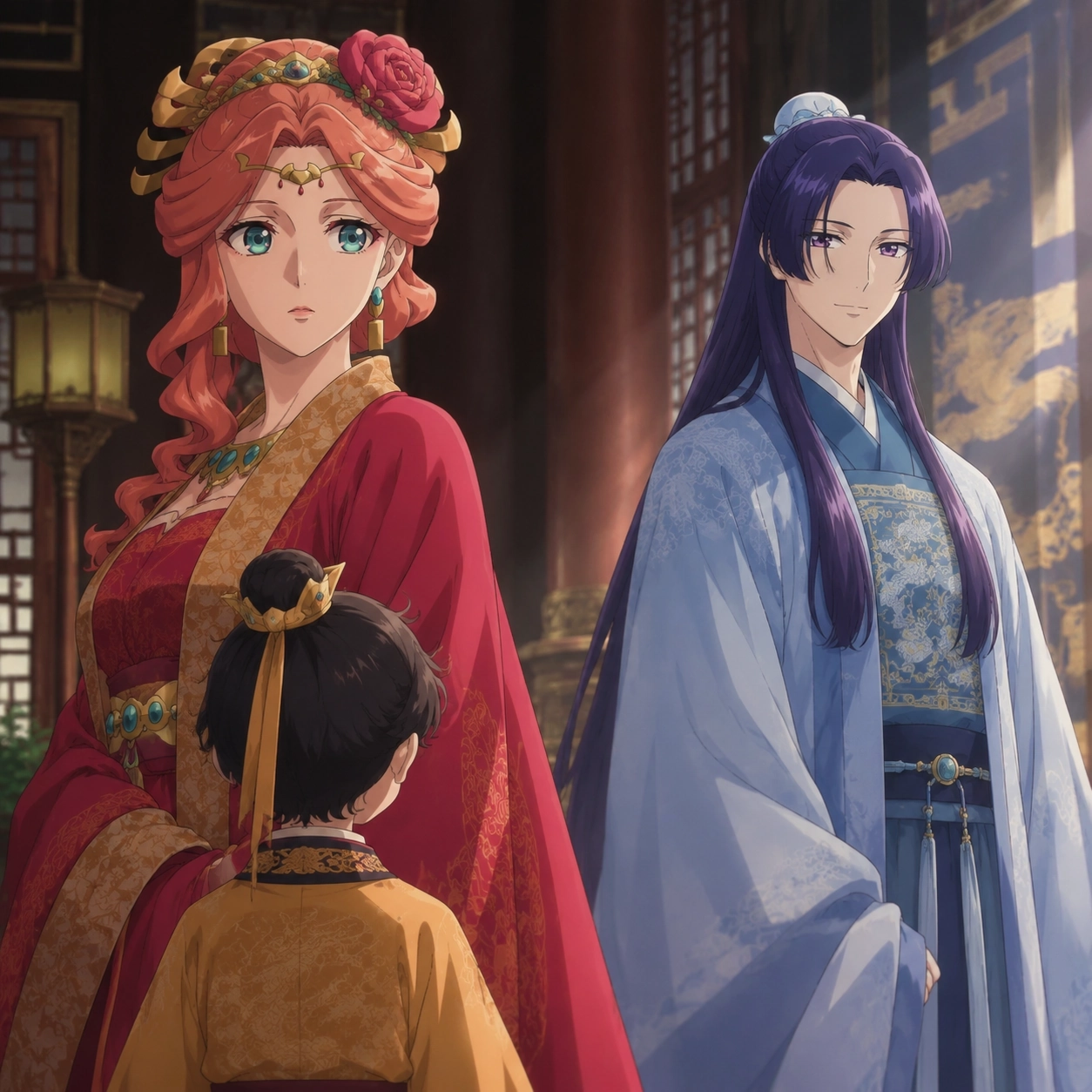
The Emperor has not left the succession empty. Gyokuyou's son is the current Crown Prince, and that public position gives the court a clear ritual answer. If the Emperor dies, the child does not simply vanish because an older royal exists. The title, the household, and the officials attached to the Eastern Palace all matter.
His youth is the weakness in that arrangement. A boy who has not reached five cannot personally manage the realm, so a regency becomes unavoidable. Jinshi identifies Gyokuyou's father, Yuyuan, as the likely power behind that regency. That is not a personal accusation against Gyokuyou. It is the natural political consequence of her son's maternal line.
A Child Can Inherit Without Governing
This distinction drives the whole question. The Crown Prince can be the lawful future while another adult makes decisions in his name. The Emperor is not merely asking who has the best blood claim; he is asking who can carry the state through the years before the child can rule.
Why the Emperor Still Has Doubts
The Emperor's illness turns a distant succession issue into an immediate one. He wants written plans for the possibility that the operation fails. His doctors will not promise success, and a dead Emperor would leave a child on the throne while every faction calculates what that means.
The novel gives the Emperor several reasons to worry. Gyokuyou's son is young. Yuyuan is old. Some officials dislike the boy's western inheritance through his mother. Others could prefer Lihua's son, whose mother is seen as a more conventional choice for a national ruler. The result is not a single rival but a court full of competing solutions.
That is why the Emperor asks Jinshi directly. His question is not simply, “Do you want power?” It is an attempt to find out whether a capable adult royal would accept responsibility if the named heir could not yet rule.
The younger prince’s claim deserves a closer look. Our analysis of Lihua and her son’s remaining chance at the throne connects the public succession order in Volume 7 with court factions in Volume 13 and Jinshi’s argument before the operation in Volume 15.
Why Jinshi Becomes the Alternative
Jinshi is the strongest adult alternative because the novel presents him as the Emperor's healthy adult brother and as someone who already understands administration, court danger, and military responsibility. He would not need a regent to speak or act for him.
There is also a factional reason. If Gyokuyou's son becomes Emperor immediately, Yuyuan would be positioned to guide the state. The Emperor's opponents could fear that the western-connected Yu family would become too powerful. Jinshi can therefore be imagined as a counterweight even if he has no desire to replace his nephew.
An Alternative Candidate Is Not an Automatic Successor
Jinshi's very existence makes the court unstable, but it does not erase the Crown Prince's status. Elevating him would require a new political decision and would create a legitimacy problem of its own. A court that bypasses a living Crown Prince to install his uncle must explain why the child is no longer the safe future.
This is the pressure explored in the immediate-successor analysis: formal succession and immediate control are two different questions. Jinshi is the practical adult answer, not an automatic legal answer.
What This Means for Gyokuyou
For Gyokuyou, the danger is not merely that the Emperor might dislike her son. The danger is that a decision made in the name of stability could move her household away from the center of the imperial future.
Ah-Duo understands this when she considers what would happen if the Emperor officially named Jinshi. The change could be justified by his age, ability, and the need to prevent factional disorder, yet it would still hit Gyokuyou and her relatives as a political shock. Ah-Duo also recognizes that the Emperor loves Gyokuyou's position and her character, which makes the possible decision more complicated, not less.
Gyokuyou is therefore not simply a consort waiting for the Emperor to choose her child. She is the mother of the named heir, the empress at the center of a major faction, and a political actor who understands that survival may require power. Her position is examined more fully in the political foundation of her relationship with the Emperor.
This Is Not a Simple Rejection of Gyokuyou's Son
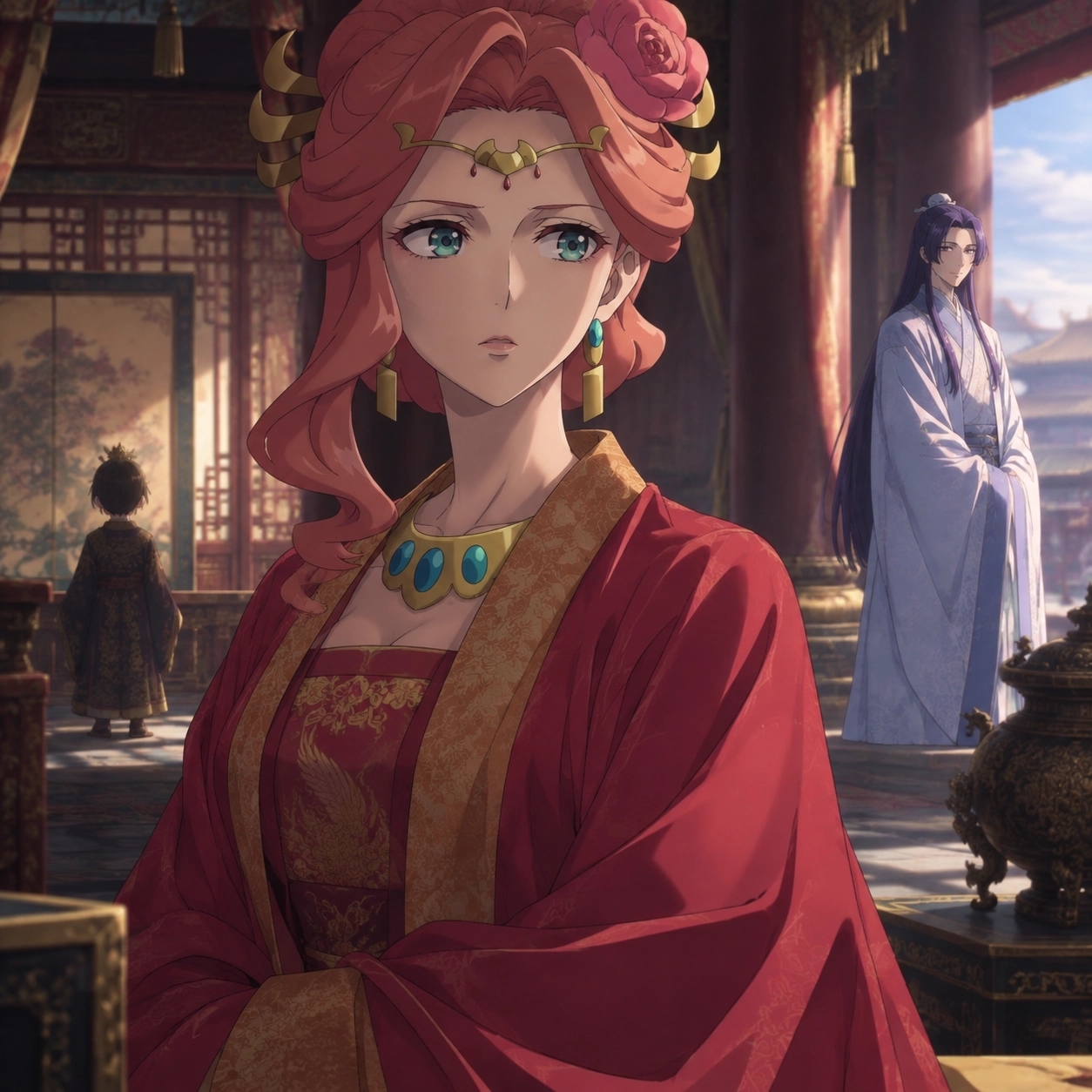
The Emperor's conversation does not establish that he has lost affection for Gyokuyou or that he secretly decided her son is unfit. In fact, he has already placed the child in the Eastern Palace. His doubt is about what happens if the child must inherit before he can govern, and about whether the court will accept the maternal family behind him.
It also does not establish that Jinshi will become Emperor. Jinshi refuses because the existing Crown Prince still exists, because a regent could govern, and because replacing the child would create turmoil. His refusal is part of the evidence: the succession is politically possible, but it is not an easy or clean solution.
The strongest canon-grounded conclusion is therefore a narrow one: the Emperor may consider bypassing Gyokuyou's son if the child's age and factional resistance make the throne unstable, but the novel has not confirmed that this alternative becomes reality.
The Real Succession Tension
The question is not whether Gyokuyou's son has a claim. He does. The question is whether a young heir can survive the regency, faction, and legitimacy problems that surround that claim.
The Emperor's conversation with Jinshi reveals a ruler trying to solve two incompatible problems at once: preserve the child succession he has publicly established, and ensure that the state will still have an adult capable of ruling if his body fails first. Gyokuyou's son represents continuity. Jinshi represents immediate capacity. The Emperor is forced to consider both.
That is why the novel leaves this possibility open without resolving it. The emotional center is Gyokuyou's family, but the political question belongs to the whole court. Her son may be the rightful future, yet the path to that future is not guaranteed.
For the connected questions, read why Jinshi does not want to become Gyokuyou's enemy, what Jinshi inheriting the throne would change, and the private meeting that brings succession pressure into one room.
FAQ
Is Gyokuyou's son still the formal Crown Prince?
Yes. The novel presents him as the current Crown Prince. The uncertainty concerns what would happen if the Emperor died or could no longer rule while the child was still too young.
Why might the Emperor consider Jinshi?
Jinshi is a healthy adult royal who could govern immediately, while Gyokuyou's son would need a regent. Some officials also resist the child's western maternal inheritance.
Does the Emperor officially remove Gyokuyou's son?
No such completed removal is established in the cited material. The Emperor raises a possible alternative during a private succession discussion.
Would Gyokuyou's father become Emperor?
No. The novel treats Yuyuan as the likely regent or power behind a child ruler, not as the direct successor.
Does Jinshi want the throne?
No. Jinshi rejects the idea because the Crown Prince already exists and because bypassing him would create unnecessary turmoil.
What should I read next?
Continue with the immediate-successor analysis and the Emperor and Gyokuyou political-foundation analysis.