Spoiler Warning
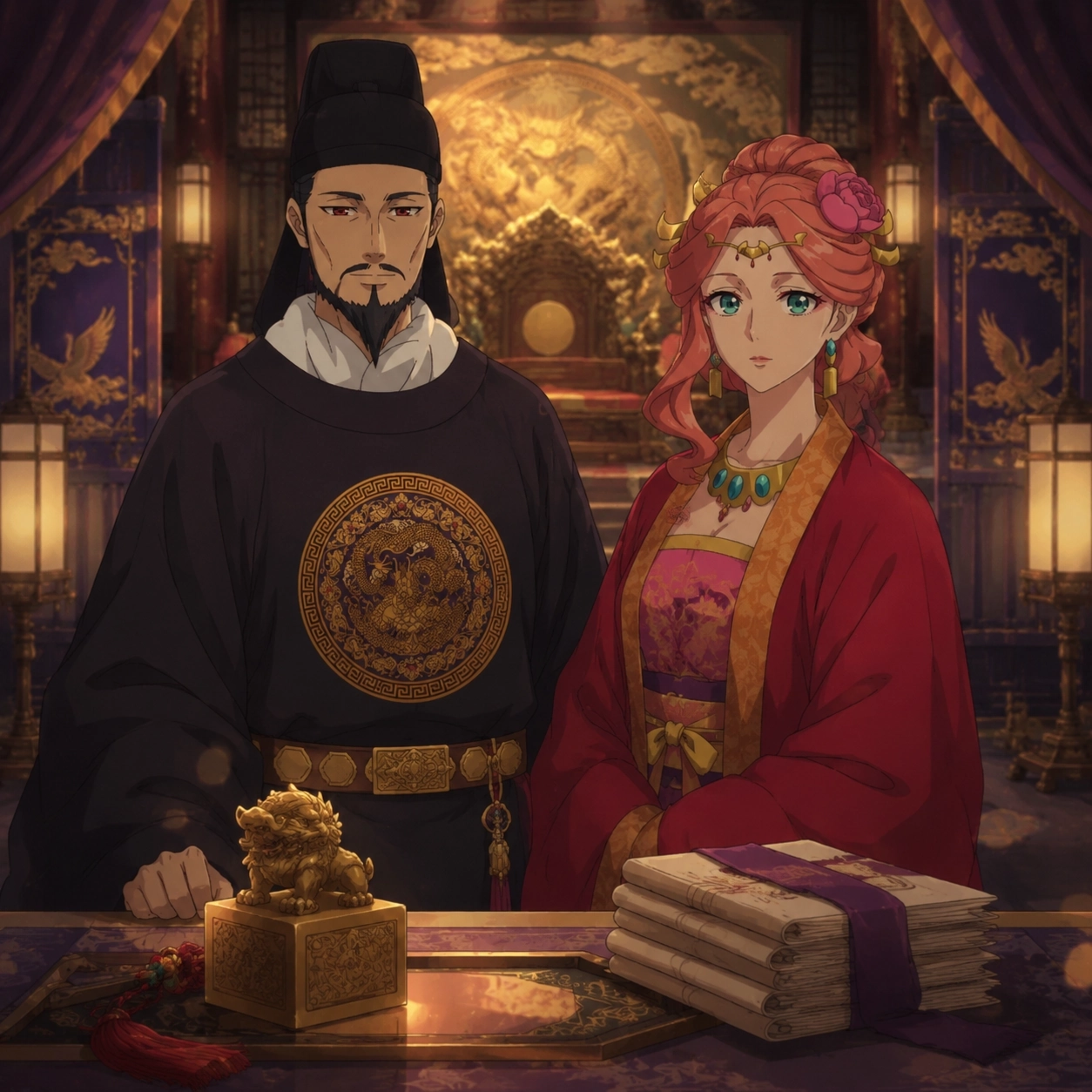
This article discusses light novel spoilers from Volumes 1, 8, 13, 14, and 15, including the rear-palace succession order, Gyokuyou's rise to empress, her western family connections, the later faction balance, and the Emperor's feelings about her. Anime-only readers should stop here.
Scene Locator
This question cannot be answered accurately from Volume 1 alone. Volume 1 establishes the relationship's starting conditions: the Emperor favors Gyokuyou, her child survives a dangerous palace crisis, and the sex of an imperial child changes how the court allocates attention. Volume 8 then makes the political condition explicit: if Gyokuyou loses imperial favor or something happens to the Crown Prince, her position becomes precarious.
Volume 13 shows the later legitimacy problem. Gyokuyou is the sole empress, yet her foreign appearance and her son's succession still attract resistance. Volumes 14 and 15 move from household danger to court structure: the Gyokuyou and Gyokuen side becomes a major faction, the Emperor uses that factional balance in governing, and the marriage can no longer be read as a private romance detached from the state.
The final piece comes in Volume 15, Chapter 12 and Chapters 15-16. Maomao recognizes that the marriage cannot be explained by romance alone, while Gyokuyou plainly has feelings for the Emperor. Ah-Duo's observation is even more precise: the Emperor loves both Gyokuyou's position and her character. That is the novel's most useful formula for the relationship: political foundations and personal affection coexist.
Volume-level entries only. These sources are community-hosted; availability and rights status may vary.
The Short Answer
The Emperor and Gyokuyou's relationship is mainly sustained by a political foundation because the court turns every intimate fact into public consequence. Gyokuyou is the mother of imperial children, the center of a powerful household, the representative of a western-connected line, and eventually the empress. The Emperor's attachment to her therefore protects more than a beloved woman: it supports a particular succession and a particular future for the realm.
That does not make their bond fake. The later novels specifically preserve a personal dimension. Gyokuyou has feelings for him, and the Emperor values her character as well as her rank. The best reading is not “politics instead of love,” but “love that has to survive as politics.”
Politics Gives the Relationship Its Shape
In an ordinary relationship, affection can remain mostly private. In the rear palace, a consort's rank, children, relatives, and access to the ruler are never private for long. A visit can strengthen a household. A pregnancy can alter succession. A child's illness can expose factional priorities. A change in favor can make a previously secure woman vulnerable.
So politics gives this relationship its shape in three ways. It determines how Gyokuyou enters the Emperor's life, what she must protect once she has his attention, and why their bond becomes more consequential as her rank rises. The emotional connection is real, but the institution decides the risks and the available choices.
Political Does Not Mean Emotionless
The Emperor is not shown as choosing Gyokuyou only because she is useful. He is drawn to her intelligence, steadiness, and character. Gyokuyou is not shown remaining beside him only because she wants a title. She worries about him as a person while also thinking about the safety of her children and household.
This is why reducing the relationship to a transaction misses the novel's tension. Their feelings matter precisely because the court can use them. Affection gives the relationship warmth; political position gives it consequences.
Volume 1: Favor Creates Both Protection and Danger
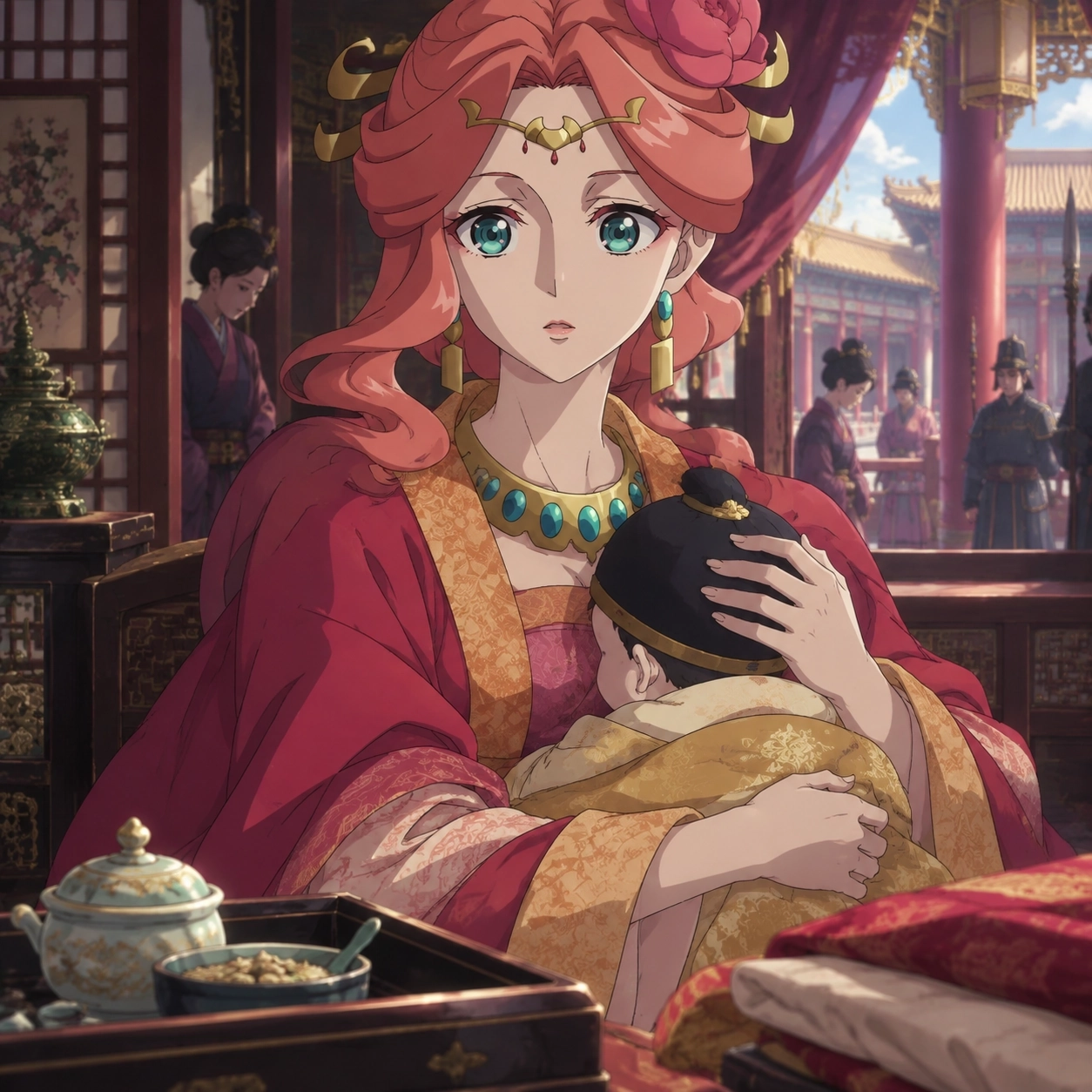
The first volume is essential, but it is only the beginning. It shows the Emperor's favor toward Gyokuyou and the unequal political value assigned to different imperial children. When Maomao observes that the Emperor favors Gyokuyou but the Crown Prince receives greater medical attention because he is male, the relationship is already connected to succession rather than private feeling alone.
Why the Children Come First
Gyokuyou's daughter survives the white-powder poisoning because her household responds to evidence that the palace doctors have missed. The crisis demonstrates that Gyokuyou's motherhood is politically exposed. Her child is not simply a daughter loved by her mother. She is an imperial child whose health affects the balance among the rear-palace households.
The same early material also shows how easily the court can rank one child above another. A male heir receives priority because he carries a direct claim to the throne. That priority does not prove that the Emperor has no affection for Gyokuyou or her daughter. It proves that affection operates inside a hierarchy that can override private preference.
This is the first reason the relationship needs politics to endure: Gyokuyou cannot remain safe through the Emperor's attention alone. She needs a surviving child, a competent household, and enough standing that the attention does not turn into a death sentence.
Why Favor Is Never Private
Imperial favor is a form of protection, but it also advertises value. Other consorts can see who receives visits, resources, and concern. That visibility creates motives for poisoning, blame, and rivalry. The Emperor's preference therefore changes Gyokuyou's risk profile even when he intends to care for her.
Maomao's first major work in the Jade Pavilion makes this concrete. Cosmetics, nursing, medical judgment, attendants, and children become linked. Gyokuyou's relationship with the Emperor survives because she is not merely the recipient of favor; she becomes the head of a household capable of responding to the dangers that favor creates.
Volume 8: A Position That Can Be Lost
Volume 8 supplies the clearest correction to a shallow “the Emperor loves Gyokuyou, so everything is secure” reading. After the family and faction troubles surrounding Gyokuyou, Maomao reflects that the Empress's western-born family may be supporting her because she is rising. If she loses the Emperor's favor, or if something happens to the Eastern Palace, her position may become dangerous.
Power as a Condition of Survival
Maomao's thought is blunt: even someone who does not care about power may need power in order to survive. That line describes Gyokuyou's situation better than a romantic label does. Gyokuyou may not seek conflict for its own sake, but her safety depends on the political value of her place in the imperial family.
The Emperor's relationship with Gyokuyou is therefore sustained by a structure that includes her children, her natal family, and the public meaning of her rank. If one part weakens, the others must carry more weight. His favor matters, but it must be converted into durable legitimacy before it can protect her.
This is also why Gyokuyou's household cannot be treated as a decorative setting for the Emperor's love life. It is a political institution. The Jade Pavilion has attendants, information, medical knowledge, maternal authority, and an imperial child. The relationship is lived there, but the court is always measuring what that household means.
Volume 13: Empress, Heir, and Legitimacy
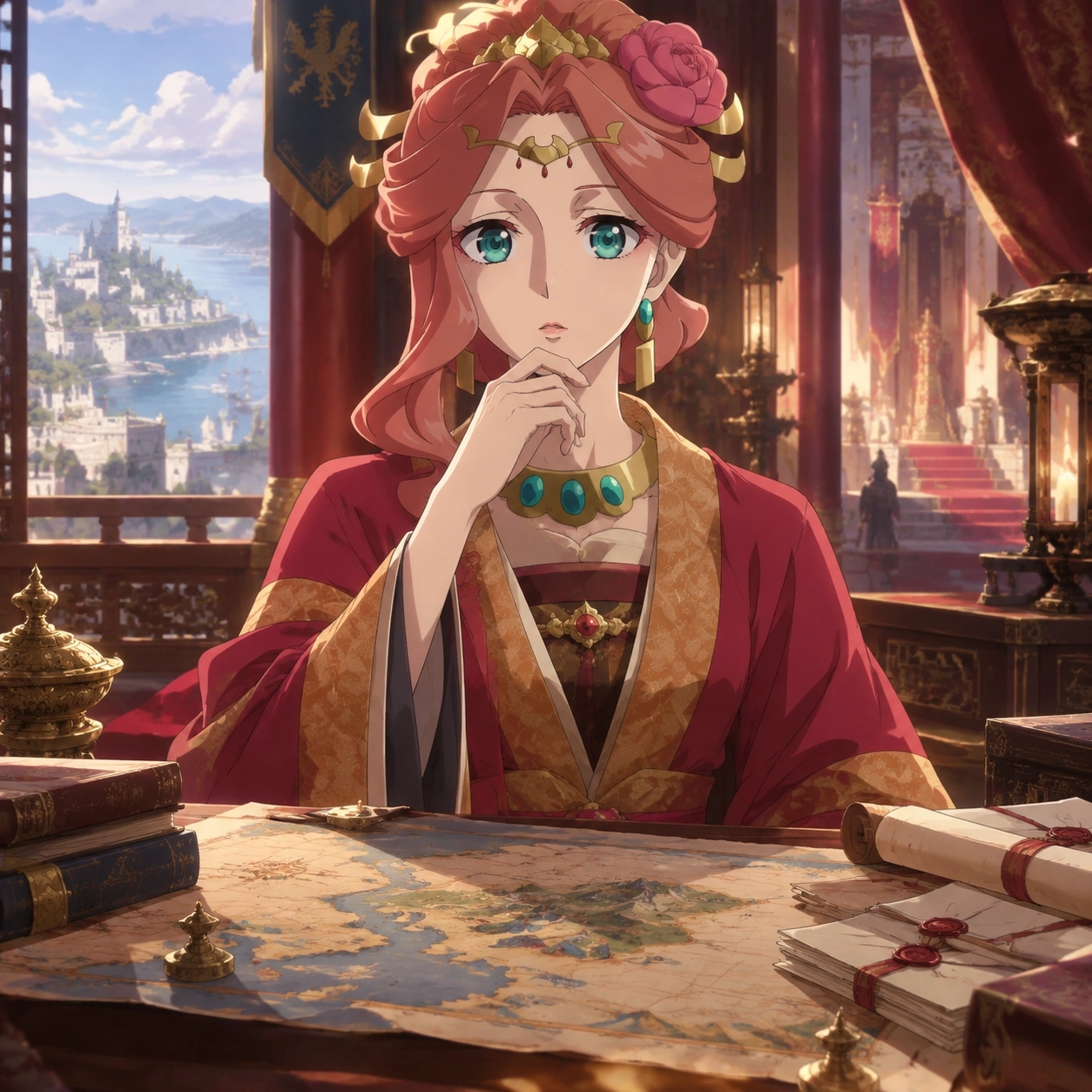
By Volume 13, Gyokuyou is no longer simply a favored consort. She is the sole empress, and that title changes the scale of her relationship with the Emperor. Her marriage now represents a public answer to the question of who belongs at the center of the imperial future.
Yet the title does not erase vulnerability. Her appearance marks her as foreign to some eyes, and her son's succession can still face resistance. That combination matters: Gyokuyou's position is stronger than it was in Volume 1, but the political arguments around her are also larger.
The Western Question
Gyokuyou's western background gives the Emperor's household reach beyond the inner palace. It connects the imperial marriage to regional families, resources, and loyalties. It also gives opponents a language for suspicion. They can frame resistance as concern about foreign influence or the balance of the realm rather than admit that they dislike the future Gyokuyou represents.
The political foundation is visible here because the Emperor's relationship with Gyokuyou cannot be separated from the question of whether the court will accept a western-connected empress and her heir. His personal preference helps her rise, but her rise then creates a constitutional and factional fact that the rest of the court must negotiate.
This later position is the subject of Gyokuyou's road from favored consort to empress. Her ascent is not only a love story. It is the conversion of favor, survival, motherhood, and family power into an official future.
Volumes 14-15: Faction and Statecraft
Volumes 14 and 15 move the relationship into open statecraft. The Gyokuyou and Gyokuen side becomes a major court bloc, and the question is no longer whether Gyokuyou is personally favored. The question is what her household, relatives, and supporters can do because she is the empress and the mother of the current succession line.
The Emperor Uses the Factional Balance
In Volume 15, the Emperor deliberately uses the Gyokuyou and Gyokuen faction to balance rival powers. This does not mean he controls every action taken in Gyokuyou's name, nor does it turn their marriage into a cold bargain. It means the relationship has become part of how the realm is governed.
The Emperor needs a court in which no single old power can dominate. Gyokuyou's side offers one counterweight. The fact that he can use that counterweight tells us that her position is politically substantive. The relationship is sustained partly because it supports a workable distribution of power, and because the Emperor's affection is attached to a woman whose household can carry that weight.
This is also why the later faction conflict should not be read as simple personal hatred between women. The analysis of Anshi and Gyokuyou's factions shows two different forms of legitimacy pressing against each other: older palace history and the current Emperor's future-facing household.
What Gyokuyou and the Emperor Feel
Volume 15 prevents the political reading from becoming cynical. Maomao concludes that the Emperor's marriage cannot be explained by romance alone, but Gyokuyou clearly has feelings for him. Ah-Duo then observes that the Emperor loves Gyokuyou's position and her character.
That wording matters. He does not love only a title, because he values her character. He also does not love her in a way that ignores her title, because her position is part of the life and future they share. The Emperor's feeling is layered: he loves the woman, the empress, and the political future embodied by her household.
Gyokuyou's side is similarly layered. She can care about the Emperor's health and still think about her son's succession. She can remain emotionally close to him and still understand that any uncertainty around his rule will expose her children. Political awareness does not cancel affection; it is how affection survives in their world.
What the Political Foundation Means
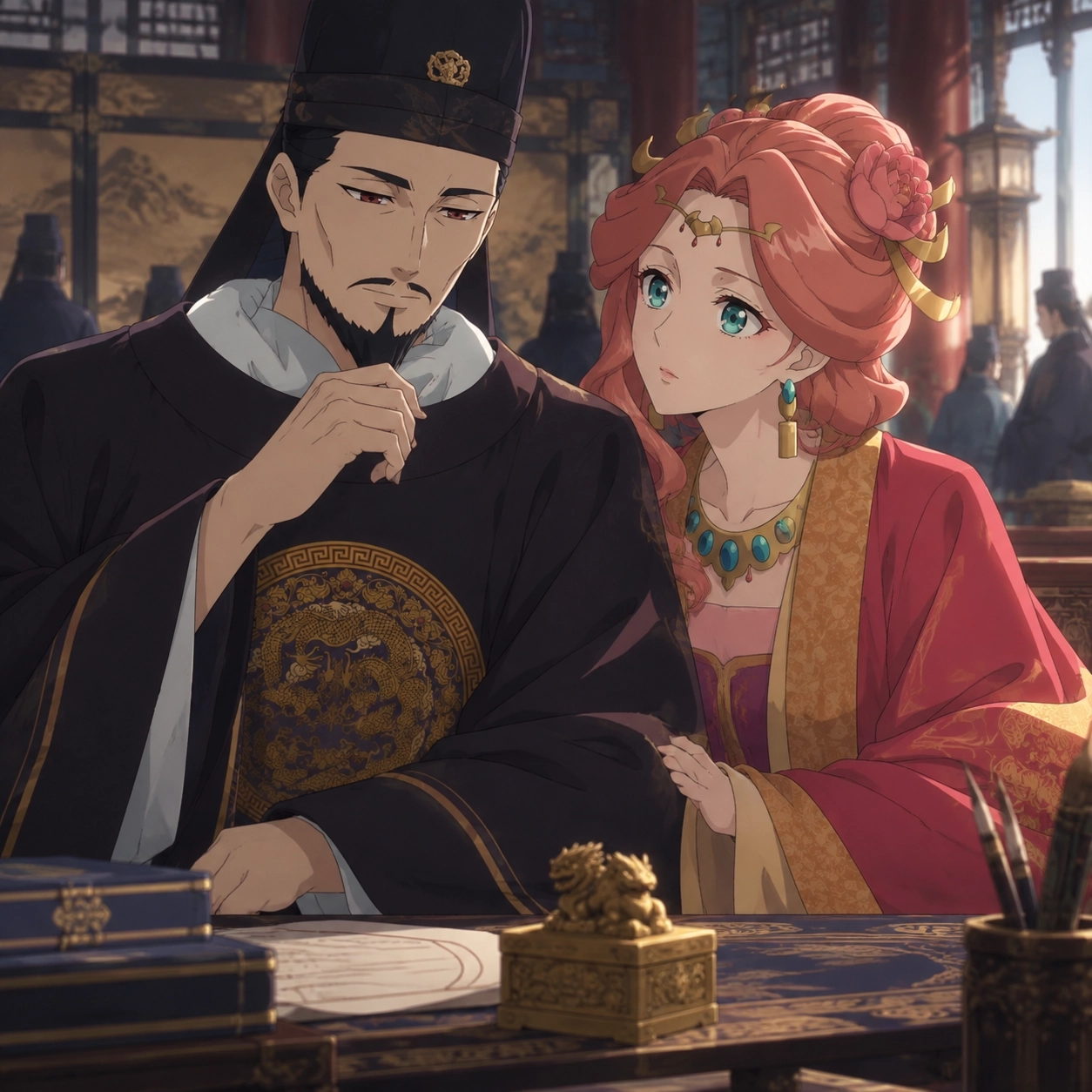
The Emperor and Gyokuyou are not a couple whose relationship exists outside politics and is later interrupted by it. Politics is present from the beginning. It decides why a male child receives priority, why favor creates danger, why Gyokuyou's western family matters, why the empress's son becomes a national concern, and why later factions organize around her name.
But “political foundation” should not be mistaken for “false love.” The novels give the relationship a durable personal core. Gyokuyou feels for the Emperor. The Emperor values her character. Their attachment is simply forced to express itself through rank, children, faction, succession, and the survival of the state.
The most accurate conclusion is therefore: politics is the structure that keeps the Emperor and Gyokuyou's relationship standing, while genuine affection is what gives that structure human meaning. Remove the politics and the court consequences disappear. Remove the affection and the later scenes lose the emotional force the novels clearly intend.
For the connected succession pressure, compare whether Gyokuyou can become Jinshi's political enemy, who could replace the Emperor, and why the Emperor brings Jinshi and Maomao to the Shrine of Choosing. For the personal household angle, read why Gyokuyou wants Maomao in her faction.
FAQ
Is the Emperor and Gyokuyou's relationship only political?
No. Politics supplies the structure and explains why their relationship matters to the court, but the novels also show genuine personal attachment. Gyokuyou has feelings for him, and the Emperor values her character as well as her position.
Why is politics so important to their relationship?
Gyokuyou is the mother of imperial children, the head of a major household, the western-connected empress, and part of the succession order. The Emperor's favor toward her therefore affects the court's future rather than remaining a private preference.
What does Volume 8 add to this reading?
Volume 8 makes Gyokuyou's vulnerability explicit: if she loses the Emperor's favor or the Crown Prince's position is threatened, her own position may become dangerous. It shows that power can be necessary for survival even when a person does not seek power for its own sake.
Why do Volumes 14 and 15 matter?
They show Gyokuyou's household becoming a major faction and the Emperor using that balance in statecraft. They also preserve the emotional side of the marriage instead of reducing it to a political contract.
Does the Emperor love Gyokuyou as a person?
Yes. Ah-Duo's later observation is that he loves Gyokuyou's position and her character. The wording supports both political respect and personal affection.
What should I read next?
Start with Gyokuyou's road to empress, then read the Anshi and Gyokuyou faction analysis and why Jinshi does not want to become Gyokuyou's enemy.