Spoiler Warning
This article discusses light novel spoilers for Volume 6 and Volume 10, including Lishu's removal from the rear palace, her religious seclusion, the Red Plum Hall, Basen's reunion with her, and the duck-breeding work that gives her a new kind of daily life. Anime-only readers should stop here.
Scene Locator
The emotional starting point is the final chapter of Volume 6. After the White Fairy incident and the tower crisis, Lishu is punished and removed from the rear palace. She is sent to live in religious seclusion for a year, and the consort position she had never truly chosen is taken away. This is not presented as a clean reward. Lishu loses status, certainty, and the familiar structure of palace life.
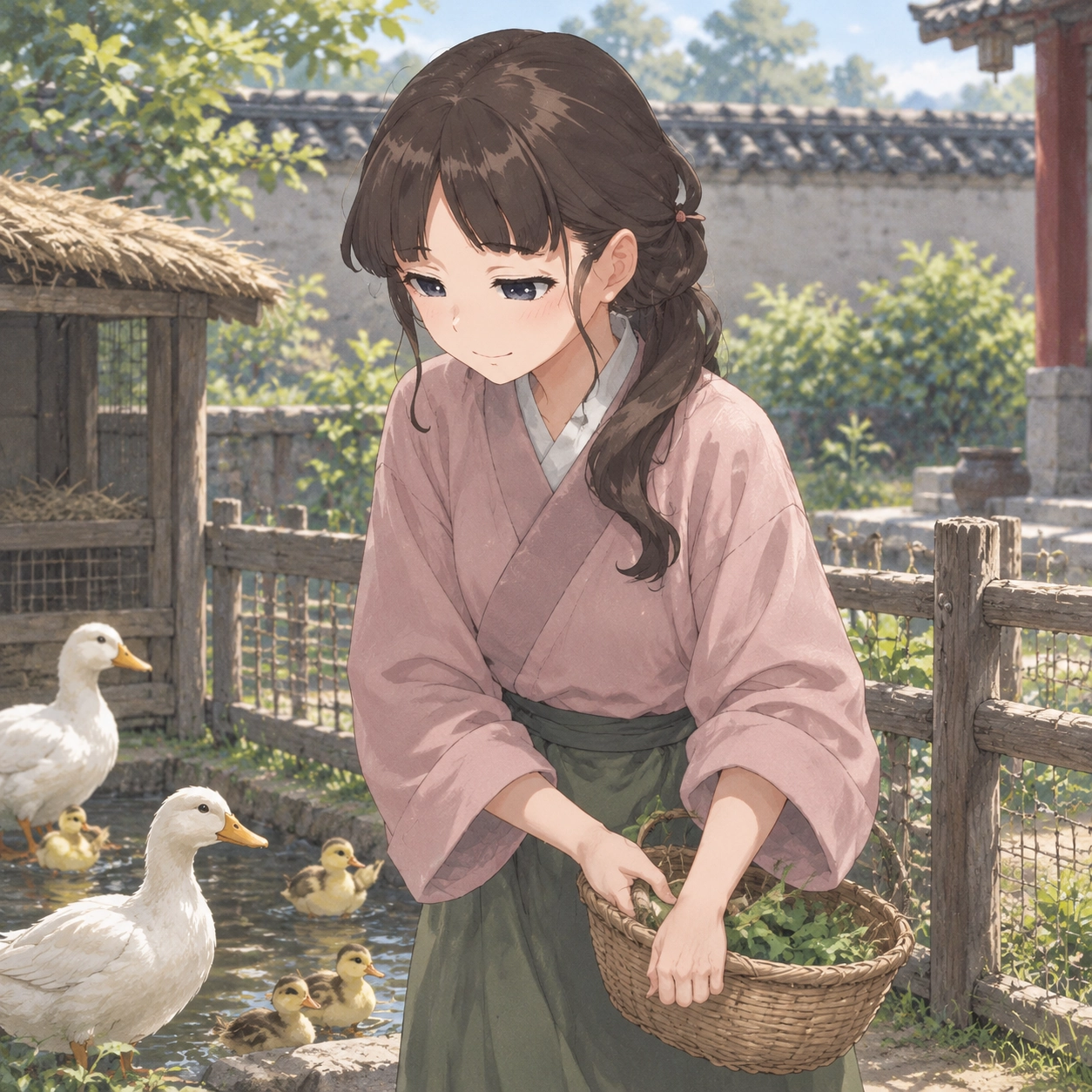
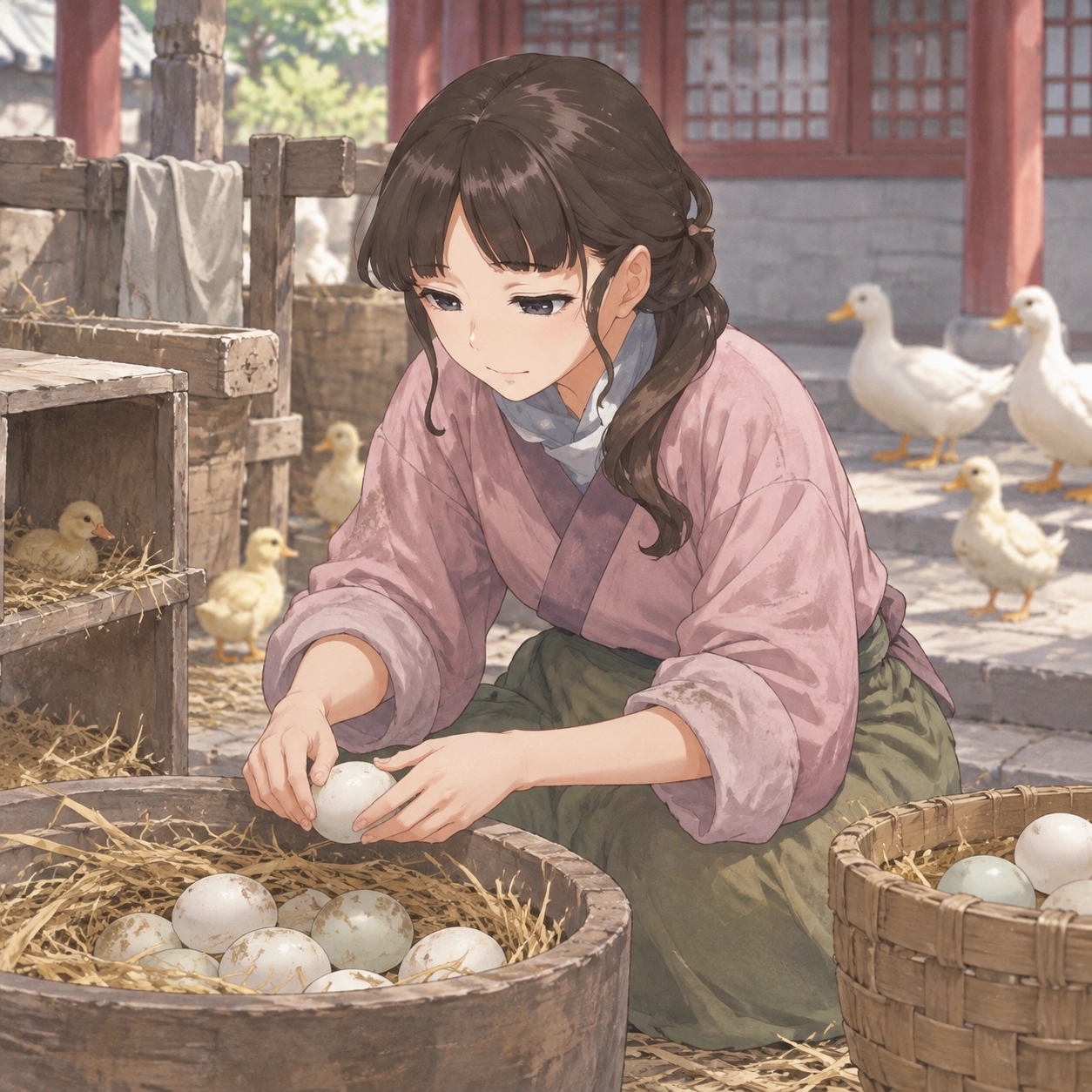
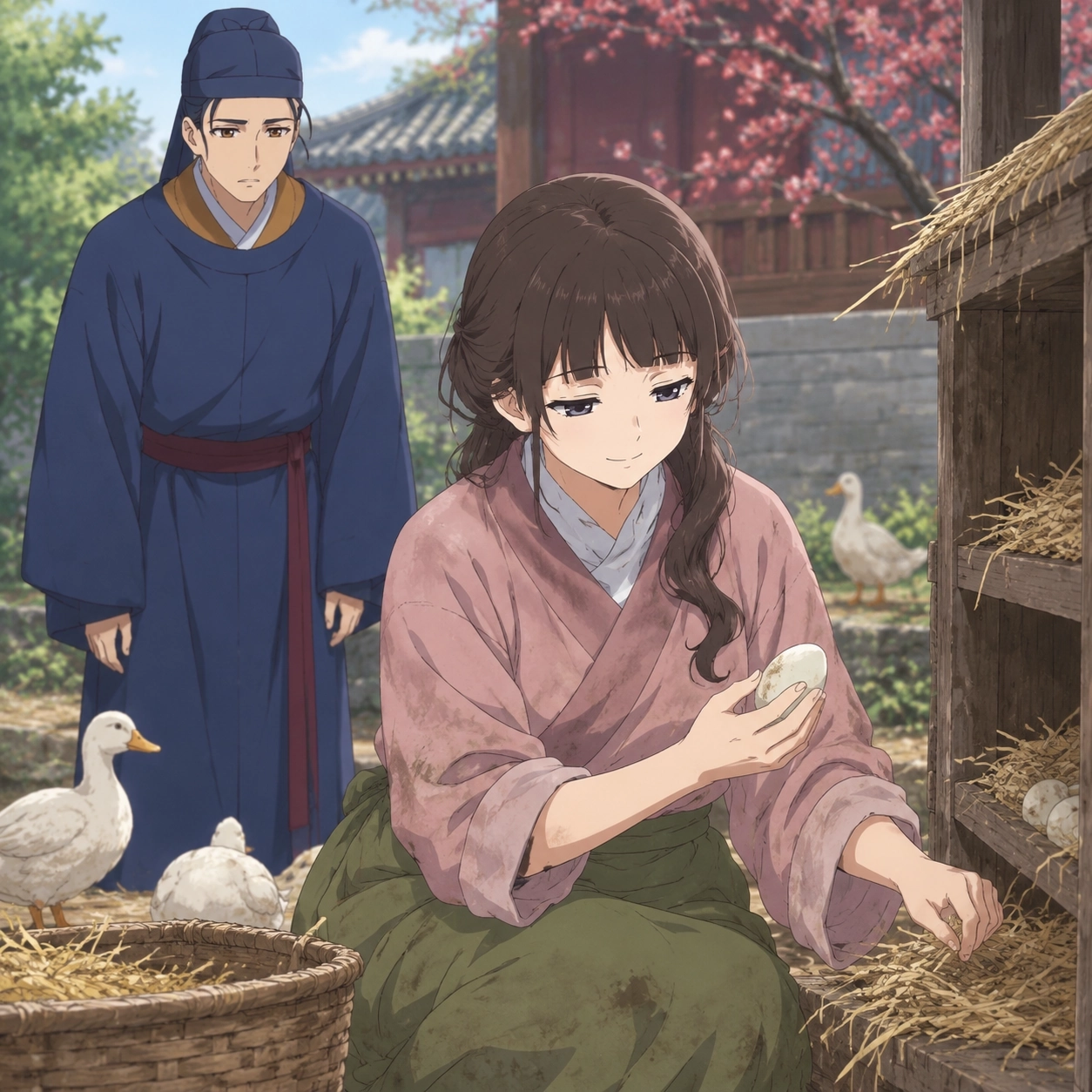
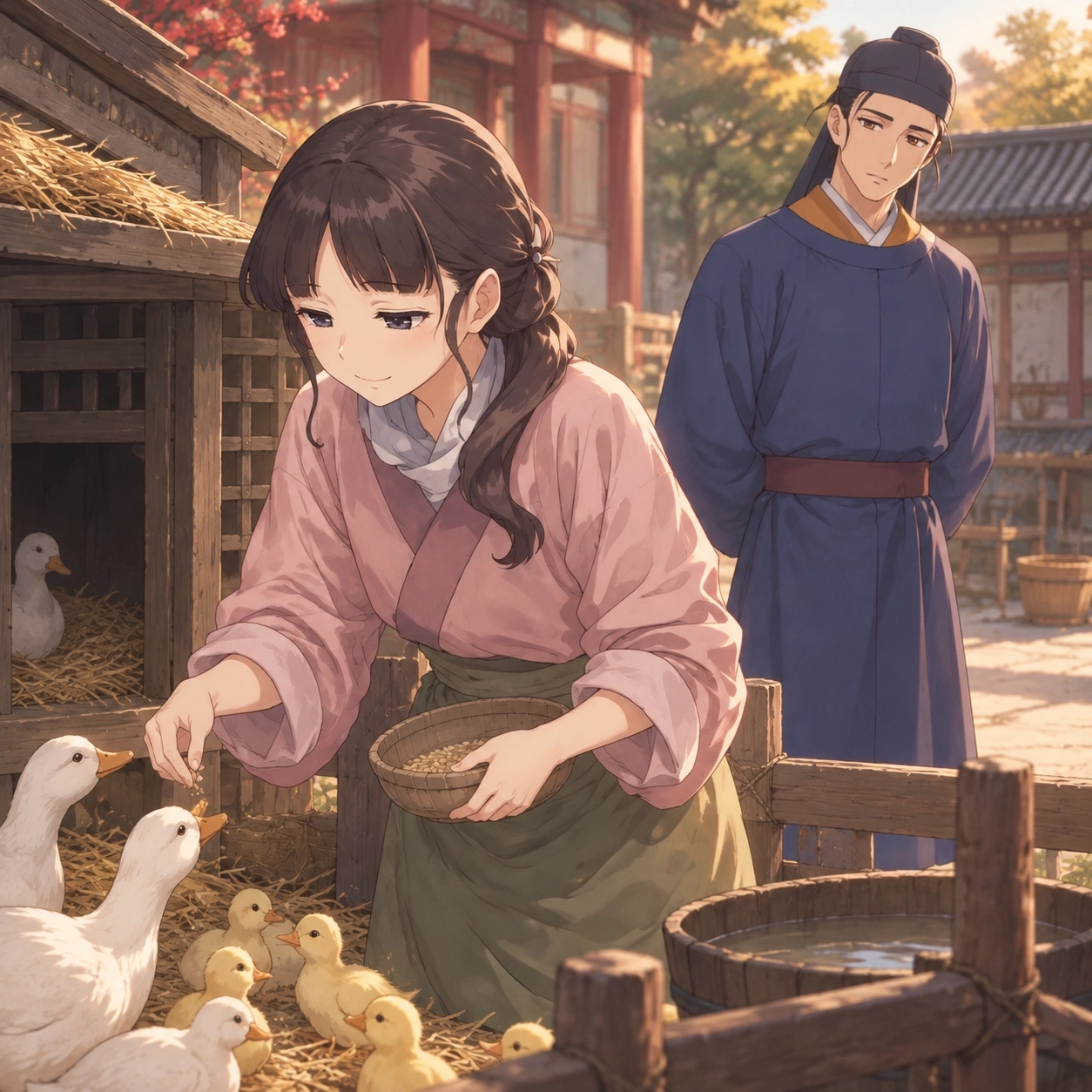
The later payoff appears in Volume 10, Chapter 4, Basen's Youth Record: Part One. Basen goes to the Red Plum Hall because Jinshi has assigned him work connected with raising domestic ducks. There he meets Lishu again. She is wearing plain, undyed clothing, with her hair simply tied back and no palace ornaments. Her face looks healthier, and she is helping care for ducks and hatch their eggs.
The key scene is not that Lishu has become rich or powerful. It is that she explains she had never decided what she liked or chosen her own life before. Now she can begin from the present, and she wants to continue the work for a while. The novel gives her a small sentence of self-direction, then gives that sentence a visible smile.
Volume-level entries only. These sources are community-hosted; availability and rights status may vary.
The Short Answer
Not a Fairytale Ending
Yes, Lishu finally experiences something close to an ordinary girl's happiness, but the wording matters. She does not become completely free, and the novel does not say that every wound has healed. Her new life still exists because powerful people and an institution have placed her somewhere. The difference is that, inside that limited space, she is allowed to try something because she wants to.
In the rear palace, Lishu was repeatedly assigned a role before she had the confidence to understand it. She was a consort, a political daughter, a possible marriage solution, and a person to be protected. At Red Plum Hall, she is still living under circumstances created by others, but her daily actions are no longer about performing court rank. She can get her hands dirty, learn a practical skill, and notice that she enjoys the result.
Why Ordinary Work Matters
The duck work is practical rather than decorative. Jinshi's policy is connected to raising domestic fowl for food security and for the possibility of controlling insects during a disaster. Lishu is not merely given a pleasant hobby to fill an empty day. She is learning a useful task that has a place in the wider community.
That is important for Lishu because palace life taught her to measure herself through rank and other people's judgment. The duck eggs do not care whether she is a high consort. The hatchlings follow her because she has cared for them. The work gives her a direct relationship between effort and result, something court politics almost never allowed her to have.
Lishu's First Choice
A Small Decision With Huge Meaning
Lishu's most important act in the scene is not teaching Basen how to hatch an egg. It is answering his concern about her circumstances. Basen sees the dirty clothes, the small household, and the hard work, and instinctively wants to find her a better assignment. He still thinks in terms of rescuing her from an unsuitable place.
Lishu refuses that rescue. She thanks him, but says he does not need to trouble himself. The work may look humble from the outside, yet she is not asking to be moved away from it. She has found something that lets her participate instead of merely being managed.
Then she explains why: she had never thought about what she liked and had never made a decision about her own life. From now on, she can begin. Her wish to continue the work is modest, but it is the first future in her story that is framed as an experiment she chooses for herself.
The Smile Readers Have Not Seen Before
The visual contrast is deliberate. Lishu's clothes are dirty. Her hair is simply tied. There are no ornaments, elaborate layers, or attendants demonstrating her rank. Yet the narrator notices a faint smile that Basen has never seen from her before.
This is why calling the moment ordinary is not an insult. The ordinary details are the source of the joy: a warm room, ducklings, eggs that need turning, and a task that can be learned through patience. Lishu is not being admired as a political flower. She is living inside a routine that answers her effort with something alive.
Where Basen and the Adults Fit
Basen matters because he is the person who sees the change most sharply. He remembers Lishu as a fragile consort surrounded by danger, and he meets her again as a woman who can explain a skill, care for animals, and speak with slightly more confidence. His reaction is emotional and awkward, but he does not create her happiness. He arrives after she has already begun building it.
The adults around Lishu remain complicated. Ah-Duo's protection helped keep her from worse political outcomes, but protection often meant deciding for Lishu. The Emperor tried to preserve order and safety, yet his decisions also placed her in confinement and then removed her from the role she occupied. Those choices may open the door to a different life, but they do not deserve to be rewritten as a perfect plan for her happiness.
That distinction connects this scene to the earlier analysis of whether Lishu was forced to go west. The story repeatedly shows adults moving her toward safer positions without giving her full control. The Red Plum Hall scene is different because Lishu finally speaks about what she wants after the move has happened.
It also completes the emotional line from Ah-Duo and Lishu's relationship. Ah-Duo gives her protection and emotional shelter, but Lishu's first ordinary pleasure comes from doing something outside the language of rank. The care that surrounds her matters; so does the small space in which she can make one choice without being corrected.
What the Scene Does Not Claim
She Is Not Suddenly Completely Free
Lishu is still living in a place chosen through court decisions, and the wider political system has not become kind. She has lost her consort status and is separated from the life she once knew. The novel does not promise that she will never again be controlled by other people or that her family history has stopped mattering.
Her Happiness Is Not Only Romance
Basen's concern and their reunion give the chapter emotional warmth, and the scene can support a tender reading of their relationship. But Lishu's happiness should not be reduced to being noticed by a man. The most important change happens before Basen can offer anything: Lishu discovers that she likes a form of work and chooses to keep trying it.
“Ordinary Girl” Is an Interpretive Lens
The novel does not announce that Lishu has become an ordinary girl in a legal or social sense. She remains a noblewoman with a painful history and unusual protection. The phrase describes the feeling of the scene: for once, her value is not being measured by imperial rank, marriage potential, or court beauty. She gets to enjoy a small, repeatable part of daily life simply because it feels worth doing.
That is why the moment is so moving. Lishu's victory is not a throne, a grand declaration, or a guaranteed future. It is the right to say, “I want to do this for a while,” and to mean it.
FAQ
When does Lishu first experience this ordinary happiness?
The clearest scene is in Volume 10, Chapter 4, at the Red Plum Hall. Volume 6's final chapter provides the painful transition that makes the later scene meaningful.
What does Lishu do at the Red Plum Hall?
She wears plain clothing, helps care for domestic ducks, turns and warms their eggs, and teaches Basen how the eggs can be hatched. The work is connected to a larger policy of raising useful poultry.
Is Lishu completely free after leaving the rear palace?
No. Her new circumstances are still shaped by the Emperor and the institutions around her. The change is that she gains a small area of personal choice and experiences genuine satisfaction inside it.
Does Basen create Lishu's happiness?
No. Basen is an important witness to her change and remains emotionally connected to her, but Lishu has already begun finding meaning in the work before their reunion.
What should I read next?
Start with Basen's rescue of Lishu, then read what Lishu's father was planning to see why an ordinary routine feels so significant after a life arranged by other people.