Spoiler Warning
This article contains full light novel spoilers through Volume 11, including Baiyu's childhood connection to Rikuson, the Volume 8 hairpin warning, the Volume 10 locust emergency, and the Volume 11 letter sent through Baiyu.
Scene Locator
Baiyu's story is spread across several connected scenes rather than one dedicated character arc. Her first clearly named appearance with Black Feather and Red Feather is in Volume 4, Chapter 2. The political side of her loyalty becomes explicit in Volume 8, Chapter 13, when she warns Gyokuyou about Yuying and the danger around her household.
Her practical crisis role appears in Volume 10's final chapter, where she delivers the urgent locust report and prepares the pigeon route. Her childhood farewell to Rikuson and her later contact with him belong to Volume 11, especially Chapter 20 and the final chapter.
These are volume-level community-hosted entries. Availability and rights status may vary.
The Short Answer
Baiyu Is Not Just One of Gyokuyou's Quiet Maids
Baiyu's importance comes from the way several modest-looking duties accumulate around her. She is a childhood survivor of the western political tragedy, a trusted attendant from Gyokuyou's past, a practical caretaker inside the imperial household, a sharp political warning voice, an emergency courier, and a discreet link to Rikuson.
She does not dominate the plot by making public speeches or taking command of an army. Instead, she moves information and loyalty through spaces where a louder person would create danger. Her actions help Gyokuyou understand threats, respond to the locust crisis, and communicate with someone whose identity cannot safely appear in public.
Her Four Main Functions
The novel gives Baiyu four connected functions. First, she preserves a personal link to the western past that Gyokuyou cannot replace with an ordinary court attendant. Second, she protects Gyokuyou through blunt warnings rather than flattery. Third, she turns urgent information into action by preparing routes and messengers. Fourth, she carries a private message to Rikuson without transforming it into a visible imperial order.
That combination makes Baiyu a political hinge. She is not the author of every decision around Gyokuyou and Rikuson, but she is often the person who makes a decision travel from one side of the story to the other.
Baiyu's Early History With Rikuson
Before Baiyu becomes one of Gyokuyou's attendants, she belongs to the western history that the later novels slowly uncover. Baiyu, Black Feather, and Red Feather are the three sisters who survive the destruction surrounding the Xun family. Ye shelters surviving members of that group in her household, and the sisters grow up close enough to Rikuson that he remembers them as younger sisters.
When Rikuson has to leave the Western Capital as a child, Baiyu pulls at his sleeve and tries to keep the farewell from ending too quickly. The moment is small, but it gives their later contact emotional weight. Baiyu is not approaching a stranger simply because Gyokuyou needs a messenger. She is reconnecting with someone whose childhood was broken by the same western catastrophe.
This history also explains why Baiyu's later request is complicated. She tells Rikuson that she misses him and hopes he can return to the west as a survivor of the Xun family who can help build and protect the region. The novel does not frame that wish as a simple attempt to restore old family prestige. Baiyu has spent the intervening years serving Gyokuyou, and her loyalty has changed the meaning of what “returning home” would require.
For the political consequences around Rikuson's later decisions, see the analysis of Rikuson, Yuying, and Gyokuyou's letter. Baiyu's role there is communication and trust, not a confirmed personal order to kill.
Baiyu in Gyokuyou's Household
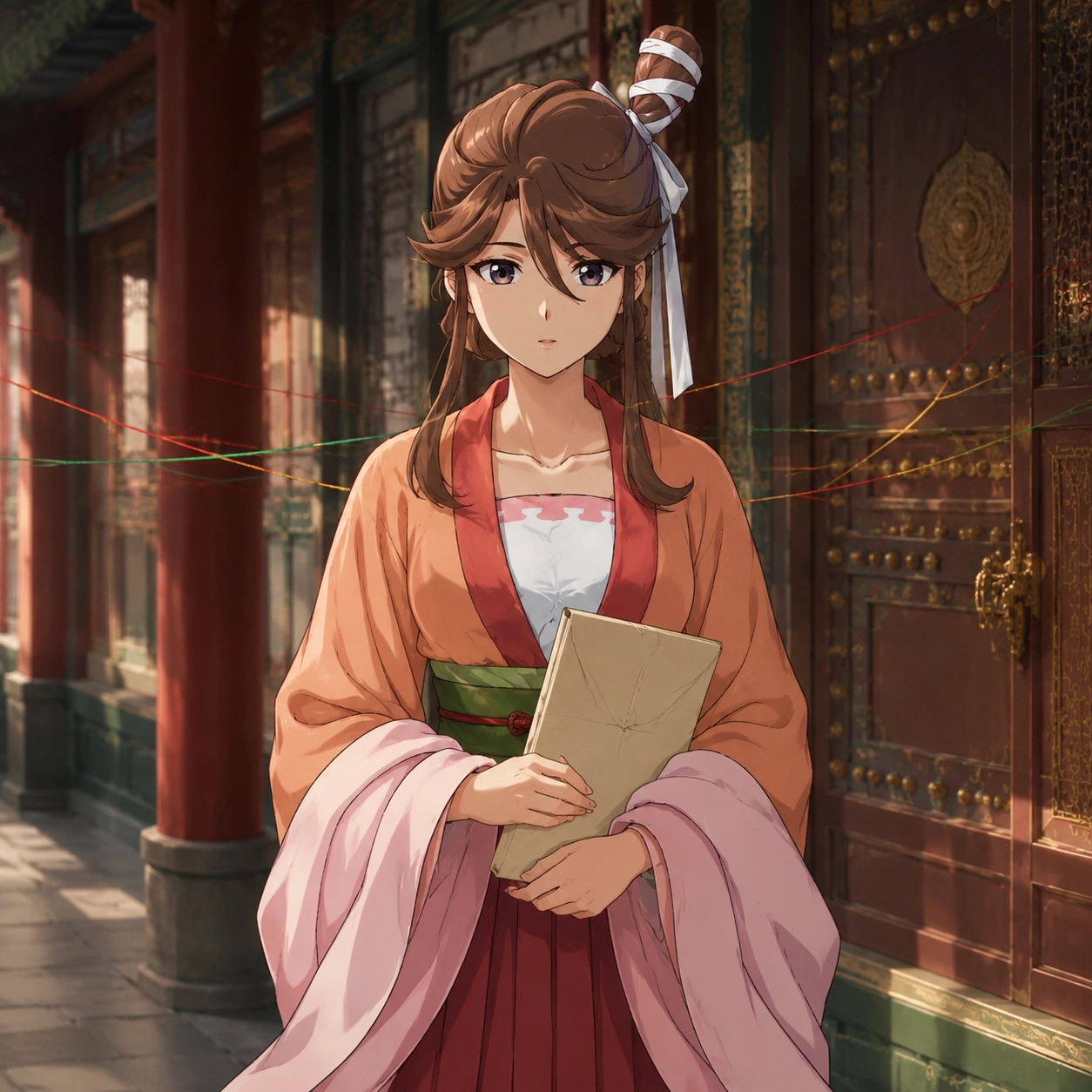
Baiyu comes from Gyokuyou's hometown and already knows her before either woman reaches the later imperial positions. That shared past makes Baiyu different from attendants who entered the household only after Gyokuyou became powerful. She is familiar with the person behind the title, but she also understands how much danger the title attracts.
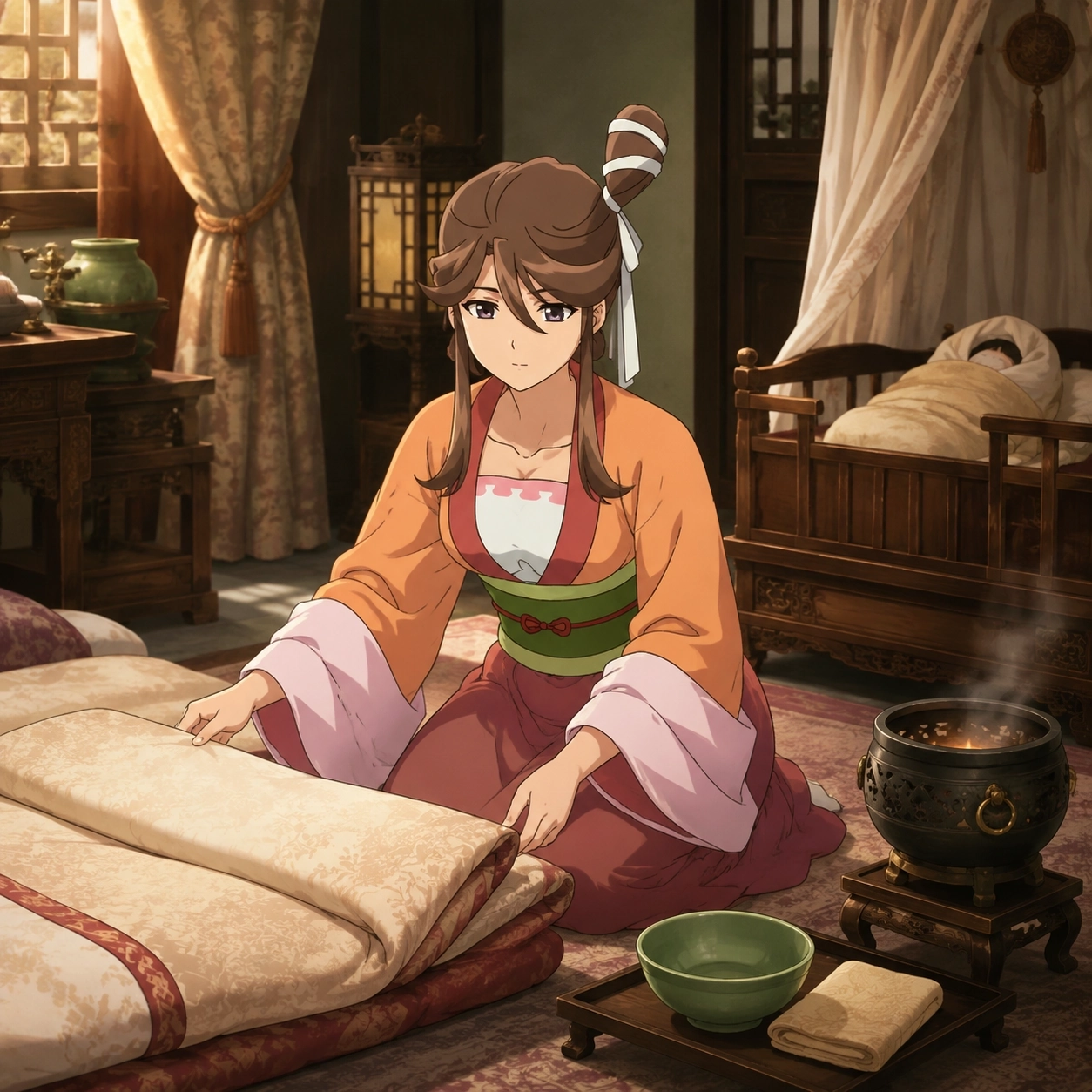
The novel shows her performing ordinary work with unusual trust attached to it. She welcomes Maomao, prepares a bed, adds charcoal to the brazier, carries the imperial child, and brings a bowl when Maomao needs one for the hairpin experiment. These actions are domestic on the surface, yet they place Baiyu at the practical center of the household's daily functioning.
Maomao also notices that the older palace attendants treat Baiyu and her sisters with respect. Their authority does not come only from a formal job title. It comes from being people Gyokuyou knew before the court turned her into the empress. Their loyalty is personal, and that makes it more difficult for outside factions to replace or manipulate them.
Why Her Loyalty Is Different
Baiyu and her sisters are loyal to Gyokuyou herself. They do not automatically treat Gyokuyou's father or brother as their masters. This distinction matters because Gyokuyou's family is not politically unified. A relative can share her blood and still become a danger to the household she is trying to protect.
That is why Baiyu's presence is more than emotional comfort. She is a living reminder that Gyokuyou has a support network built from trust that predates her imperial rank. She is also willing to use that trust to say something uncomfortable when a smoother attendant might remain silent.
The Warning About Yuying
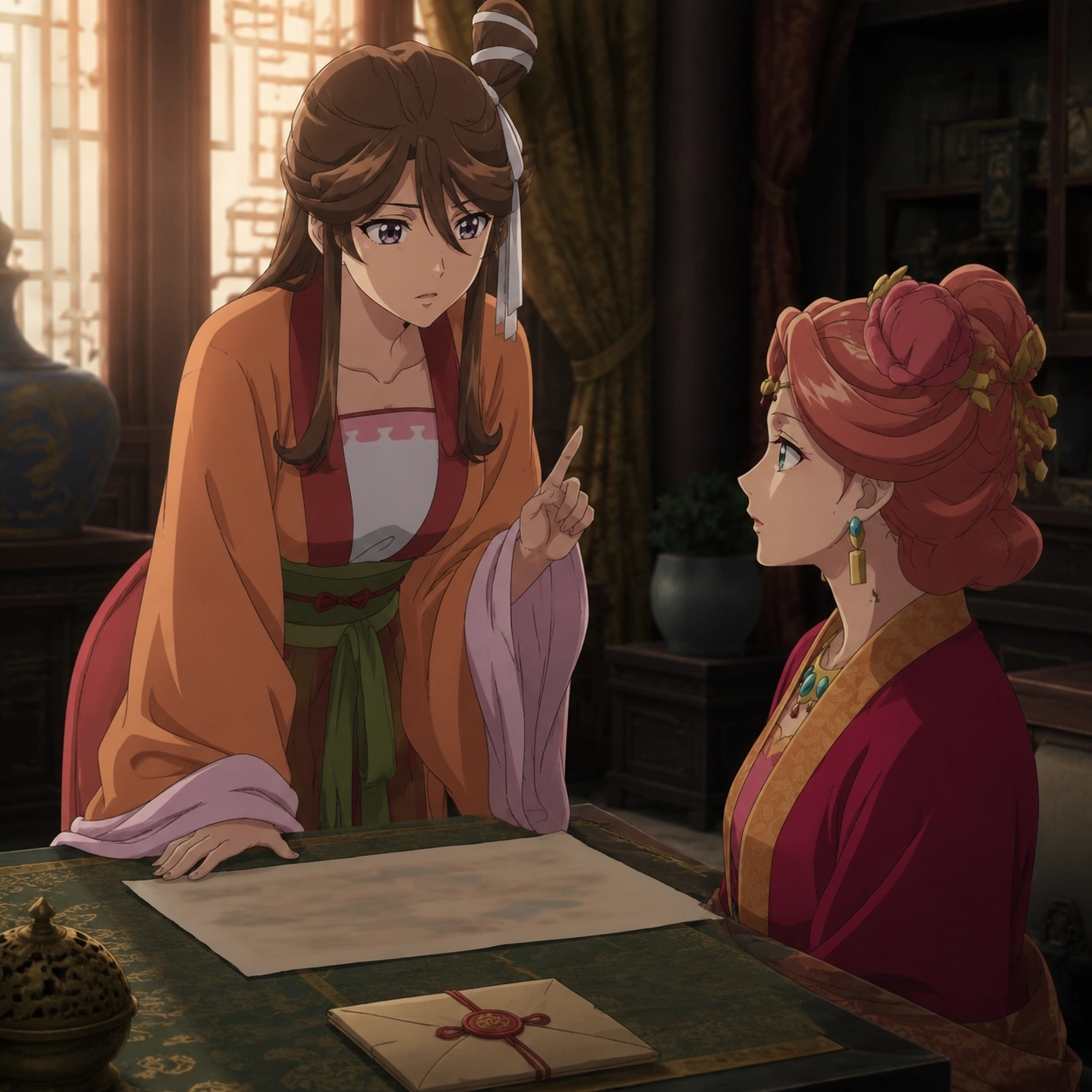
Baiyu's strongest political action in the palace occurs during the hairpin incident. Maomao is investigating how the damaged hairpin was returned, and Baiyu remains present while the household tries to understand whether the gesture was a threat. The conversation gives Baiyu a chance to state what she has been worried about.
She tells Gyokuyou that the empress is surrounded by enemies and should not assume that warmth and trust will protect her. More specifically, Baiyu asks Gyokuyou to be careful about Yuying. She points out that he has taken in a young woman from another group who resembles Gyokuyou, and she explains how that resemblance could create a dangerous succession or palace scenario if Gyokuyou or the imperial child were suddenly removed.
Baiyu is not claiming that this hypothetical outcome has already happened. Her warning is a risk calculation. She is asking Gyokuyou to recognize that Yuying's choices can create threats even when he is acting through family channels rather than openly attacking the empress.
She Forces the Household to Choose Trust Deliberately
Baiyu's warning also changes the position of Maomao. She tells Gyokuyou that the household needs people it can genuinely trust, then looks toward Maomao. The implication is clear: survival requires more than old loyalty. It requires bringing in people whose skills can expose danger before it becomes irreversible.
This is one reason Baiyu matters to Maomao's place in Gyokuyou's faction. Baiyu does not simply praise Maomao. She helps define the problem that makes Maomao necessary. Read why Gyokuyou wants Maomao in her faction alongside this scene, because Baiyu's warning explains the security logic behind that relationship.
What This Reveals About Baiyu
Baiyu is not politically naive, and she is not blindly obedient. She knows that family connections can conceal danger. She also knows that Gyokuyou's kindness can be turned against her if no one is willing to interrupt it with a harder reading of events.
Her severity is therefore protective rather than cruel. Baiyu would rather make Gyokuyou uncomfortable now than let the household discover the truth after a child, a letter, or a political replacement has already done the damage.
The Locust Crisis Message
During the locust disaster in the west, Baiyu becomes the person who turns a frightening report into a communication plan. She brings Gyokuyou a crumpled emergency message describing the disaster in the Western Region. The letter is urgent, and Baiyu has already understood that ordinary palace timing will not be enough.
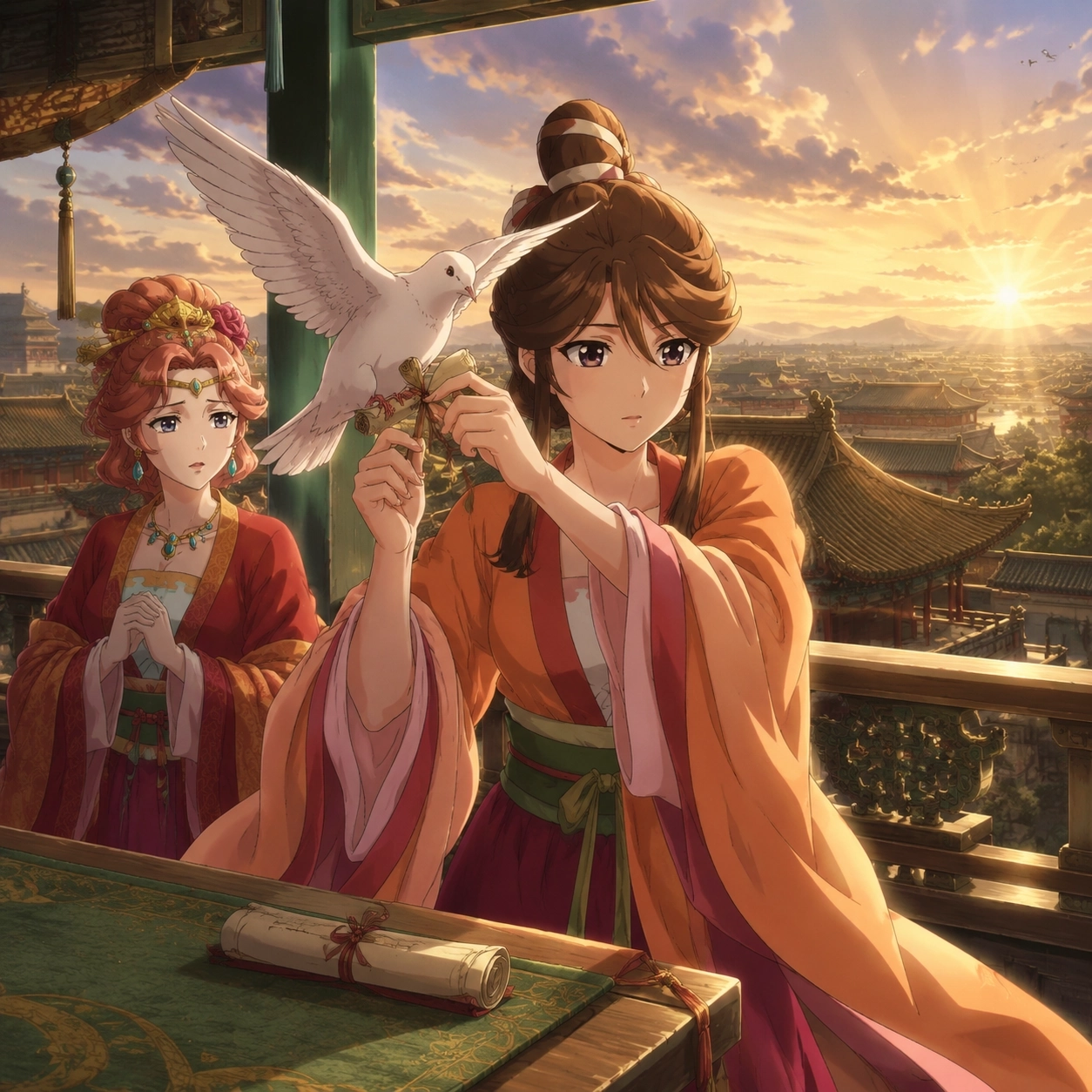
She tells Gyokuyou that both land and sea messengers have been prepared. She also has a pigeon ready for a faster route, while warning that the chaos in the west may still prevent it from arriving. This is a practical decision under uncertainty: the pigeon is not guaranteed, but it is faster than waiting for a safer route that may arrive too late.
When Gyokuyou writes back, Baiyu helps bind the reply to the pigeon's leg and release it. She also stops Gyokuyou from striking her own face to force herself into action. Baiyu's remark about protecting her face is affectionate, but it is also a reminder that the empress has to remain composed and functional while the crisis develops.
Why the Scene Matters
The locust scene shows that Baiyu's usefulness is not limited to palace suspicion. She understands logistics, message speed, messenger risk, and the emotional state of the person receiving the news. She helps Gyokuyou act without pretending the disaster can be solved by confidence alone.
This connects naturally with the novel's wider locust-plague response. The two storylines are different: Baiyu handles emergency communication from the imperial side, while Rikuson's work belongs to the western administrative response. Together they show why the crisis requires both information and local action.
The Bridge Between Gyokuyou and Rikuson
Baiyu's most consequential later action is helping reconnect Gyokuyou and Rikuson. She recognizes Rikuson after many years, even though he has abandoned his old name and now lives under another identity. She reaches out to him and expresses the hope that he might return to the west to protect and develop it.
Later, when Yuyuan's decision places Rikuson near Yuying as a watcher and possible executioner, Gyokuyou understands what is happening. She has Baiyu write and send a short letter by pigeon. The message does not specify a method, a date, or a public command. It gives Rikuson room to act according to his own judgment.
That distinction protects the novel's moral and political complexity. Baiyu is the messenger, not the person who decides whether Rikuson must kill Yuying. She creates the channel through which Gyokuyou can acknowledge the decision while leaving the final choice with Rikuson.
Why Baiyu Is the Right Intermediary
Baiyu can carry this message because she belongs to both sides of the emotional history. She is one of the sisters Rikuson knew as a child, and she is also a proven servant of Gyokuyou. A random courier could deliver words. Baiyu carries the trust that makes the words meaningful.
Her involvement also explains why the exchange remains hidden. A public palace messenger would create a record and invite questions. Baiyu's private connection to Rikuson makes the message faster, quieter, and harder for outsiders to interpret. She is not merely moving paper; she is protecting the conditions under which the decision can remain personal rather than becoming a formal court decree.
Baiyu's Real Contribution to Rikuson's Story
Baiyu does not give Rikuson a revenge plan. The local novel text does not establish that she designed an assassination or ordered him to act. Her contribution is more precise: she keeps contact possible, reminds him that the west still needs him, and carries Gyokuyou's permission into a situation where silence would also have been a decision.
That is why Baiyu's role should not be reduced to “the servant who delivered a letter.” She is the person who makes a buried relationship legible again. Without her, Gyokuyou's knowledge and Rikuson's private struggle would remain separated by distance, identity, and political risk.
What the Novel Does Not Confirm
Baiyu did not receive a confirmed order to assassinate anyone
The text confirms that Baiyu carried communication between Gyokuyou and Rikuson. It does not confirm that she personally planned an assassination, selected a method, or commanded Rikuson to kill Yuying.
Baiyu is not confirmed to be the hairpin culprit
During the hairpin investigation, Baiyu identifies Black Feather as the likely person who returned it. That is an in-scene judgment, not a confirmation that Baiyu herself was involved in the theft or return.
Her contact with Rikuson is not simply a restoration of old power
Rikuson initially wonders whether Baiyu wants to restore the old Xun family's influence. The later context complicates that reading because Baiyu has spent years serving Gyokuyou. Her wish for Rikuson to return is connected to protecting and rebuilding the west, not merely reviving a former title.
Her importance is quiet, not imaginary
Baiyu does not need a dramatic solo chapter to matter. The novel gives her influence through care, warnings, logistics, memory, and discreet communication. Those are small actions only if the reader ignores how much palace politics depends on who can safely carry information.
FAQ
Who is Baiyu in The Apothecary Diaries?
Baiyu is the eldest of the three sisters who serve Gyokuyou. She comes from Gyokuyou's hometown, has a childhood connection to Rikuson, and becomes one of Gyokuyou's most trusted attendants.
What did Baiyu warn Gyokuyou about?
She warned Gyokuyou not to trust Yuying too easily and pointed out the political danger of an adopted young woman who resembled Gyokuyou. Her larger warning was that Gyokuyou's kindness could be exploited.
What did Baiyu do during the locust crisis?
She delivered the urgent report, prepared land and sea messengers, arranged a pigeon route, helped send Gyokuyou's reply, and kept Gyokuyou focused while the crisis was unfolding.
How is Baiyu connected to Rikuson?
Baiyu knew Rikuson when they were children, recognized him after years apart, contacted him, and later carried Gyokuyou's private letter to him through a secret pigeon route.
Did Baiyu order Rikuson to kill Yuying?
No confirmed text says that. Baiyu acted as the communication bridge. Gyokuyou's brief letter gives Rikuson room to decide, while the final responsibility remains with Rikuson.
What should I read next?
Continue with Gyokuyou's road to empress, why Gyokuyou trampled her brother's letter, and Rikuson's decision and Gyokuyou's approval.