Spoiler Warning
This article contains light novel spoilers for The Apothecary Diaries Volumes 10 and 13. It discusses Lahan's older brother's western agricultural work, his locust warnings, the villages that followed his instructions, the approximate harvest survival rate, and the later explanation that he shares the full name Han Junjie with a younger boy.
Scene Locator
The main disaster-relief sequence is in Volume 10. Chapter 3 establishes why Lahan's older brother is sent west: he is expected to teach sweet-potato cultivation and bring planting material. Chapter 7 shows him inspecting the fields and correcting local farming practice. Chapter 16 uses pigeon reports to track the work. Chapters 17 and 19-20 cover the locust warning, the rush to harvest, and the wider relief consequences. Chapter 18 is important disaster context, but its direct household and fire-response actions are carried out by Rikuson, Basen, Maomao, and local villagers, not by Junjie.
Volume 13, Chapter 2 confirms that Lahan's older brother and a younger boy share the full name Han Junjie. Chapter 8 explains the resulting mix-up through the older brother's diary. Chapter 13 supplies the later retrospective, when the younger Junjie praises the older brother for traveling through the western province to warn people. Read these passages as a connected relief arc rather than as a single heroic scene.
Volume-level entry only. The source is community-hosted; availability and rights status may vary.
The Short Answer
He Was Not a One-Man Savior
Lahan's older brother contributed to disaster relief by preparing the western agricultural base before the locusts arrived, identifying the danger early, warning villages, and giving local communities time to act. The novel does not present him as the only person responsible for saving the west. Maomao contributes medical and entomological knowledge, Rikuson contributes economic and administrative measures, and the state supplies broader relief. Junjie's role is the field-facing link between agricultural knowledge, warnings, and local preparation.
That distinction is important. Disaster relief in The Apothecary Diaries is not a single invention followed by instant rescue. It is a chain. Someone must recognize the crop risk, someone must understand how local fields behave, someone must carry the warning, and someone must persuade frightened households to work before the threat is visible. Junjie repeatedly fills those practical gaps.
His Contribution Was a Relief Chain
Junjie's achievement is best understood as prevention plus a warning chain. He does not merely arrive after the swarm and count the damage. He improves food options, studies the conditions that determine yield, and reports what he sees so western communities can turn the warning into harvest and household preparation. By the time the locusts appear, the villages that listened to him have already gained the most valuable resource in a famine: time.
This is why his contribution can be easy to miss. The most important work happens before the dramatic image of a locust cloud. It looks like planting instructions, field inspection, messenger birds, and repeated warnings. Yet those quiet steps are exactly what keep a bad harvest from becoming a complete collapse.
1. He Built the Crop Foundation Before the Disaster
Volume 10 first places Lahan's older brother in the west as an agricultural instructor. He brings sweet potatoes and potato seed material and teaches people how to cultivate them. This is not a decorative side project. The western region is under food pressure, so a crop that can produce useful calories under difficult conditions becomes part of the emergency plan.
The practical value of this work is twofold. First, it diversifies what people can grow instead of leaving them entirely dependent on a vulnerable grain harvest. Second, it creates a crop reserve that can matter after fields have been damaged. Junjie is therefore working on the food system's resilience before anyone can measure the disaster in empty granaries.
Sweet Potatoes as Disaster Preparation
The novel treats the sweet potato as a tool that can change the scale of the crisis. It is not a magical cure, and Junjie does not invent every part of the plan by himself. His contribution is recognizing that cultivation knowledge must move with the planting material. Seeds and tubers without local instruction would not be enough.
His teaching also gives the later relief effort a stronger foundation. When the locusts threaten the wheat, the region is not relying on one crop or one harvest date. The possibility of another food source does not erase hunger, but it changes the number of options available to villages and officials.
Field Observation Before the Crisis
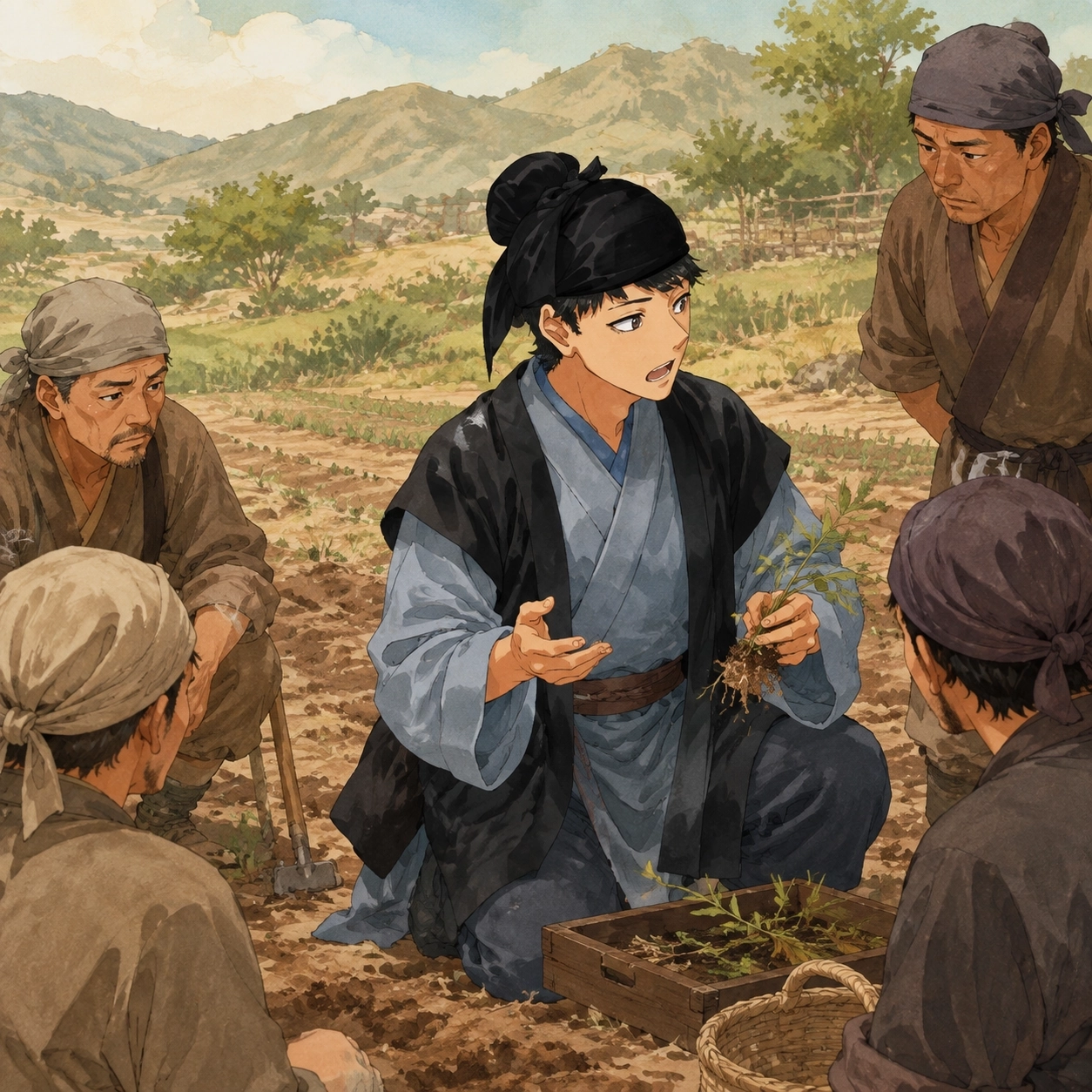
In Volume 10, Chapter 7, Junjie checks soil, drainage, climate, and the condition of the wheat fields. He notices that local farmers are missing a practice that encourages wheat to produce more side shoots: walking or treading the field at the right stage. He demonstrates the method instead of treating the farmers' habits as a moral failure.
This scene shows the most distinctive part of his relief work. Junjie is not only transporting a policy from the capital. He is testing whether the policy fits the land. He looks at the actual field, identifies a yield problem, and offers a correction that local workers can perform immediately. His contribution is therefore technical, local, and measurable.
2. He Turned Information Into an Early-Warning System
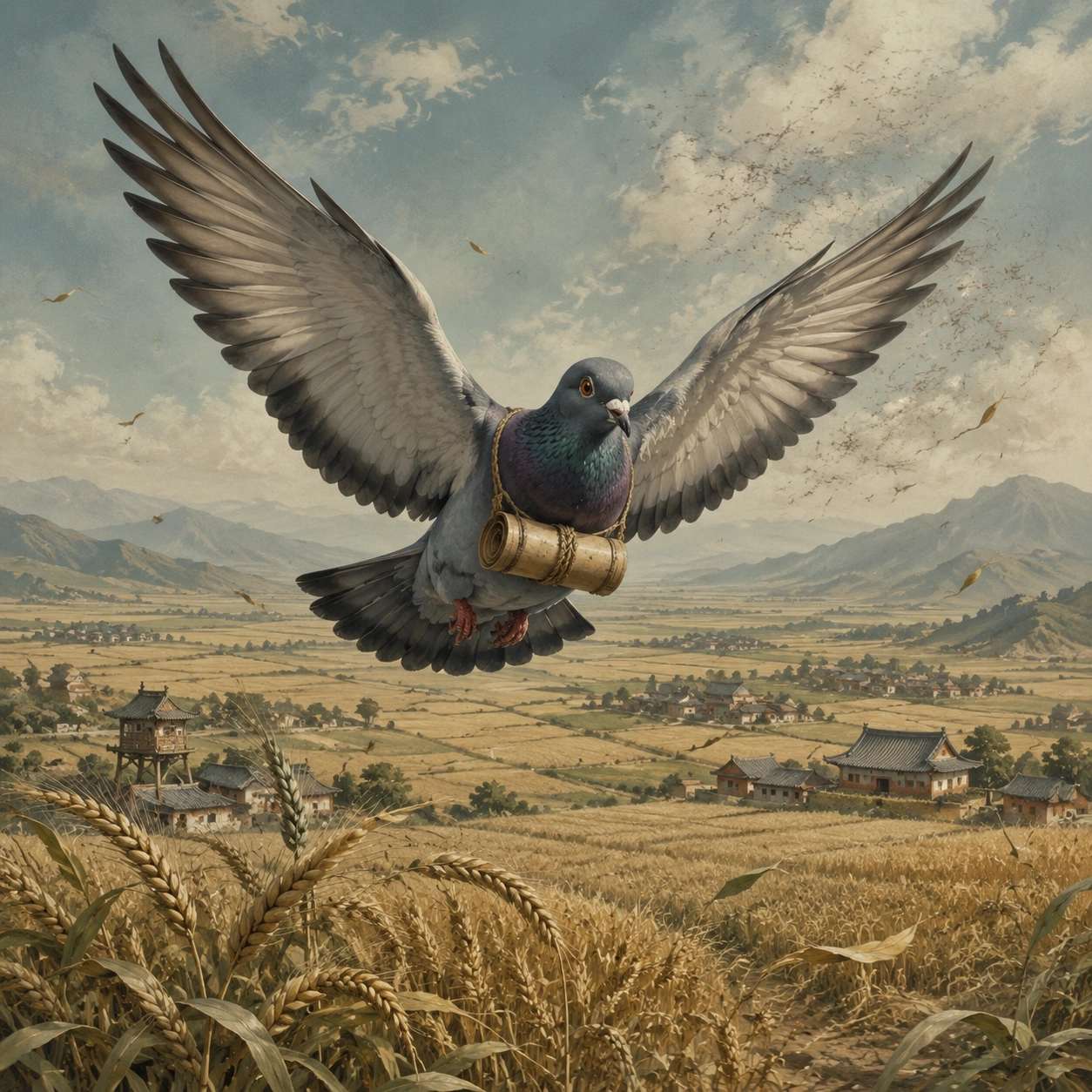
A crop plan only helps if people know when the danger is approaching. Junjie becomes valuable because he does not keep his observations inside one official office. He sends progress through pigeons, and later sends warnings ahead of the locusts. The message travels faster than a formal relief bureaucracy can move.
Pigeon Reports Kept the Response Moving
Volume 10, Chapter 16 uses pigeon communication to show how the western work is being monitored. The reports connect distant fields to the people making decisions elsewhere. That makes Junjie's work legible: officials can learn whether cultivation is progressing, whether the wheat is ready, and whether the threat is moving toward a new area.
In a modern disaster system, this might look ordinary. In the novel's setting, it is a meaningful logistical advantage. A warning that arrives while the crop is still standing can change the response. A warning that arrives after the swarm has passed can only describe loss.
The Warning Bought Villages Time
When Junjie warns people that the locusts are coming, the practical instruction is to harvest early where possible. That choice sacrifices some ideal timing and protects what can still be saved. It is not a perfect solution. It is the kind of imperfect decision that disaster relief depends on.
The later account in Volume 13 makes the scale of this work clearer: Junjie had gone through the western province warning residents, helping them understand that preparation was not an overreaction. His value lies partly in making people act before the evidence becomes overwhelming. A villager who waits to see the entire sky turn black has already lost most of the available time.
3. The Swarm Response Was a Shared Effort
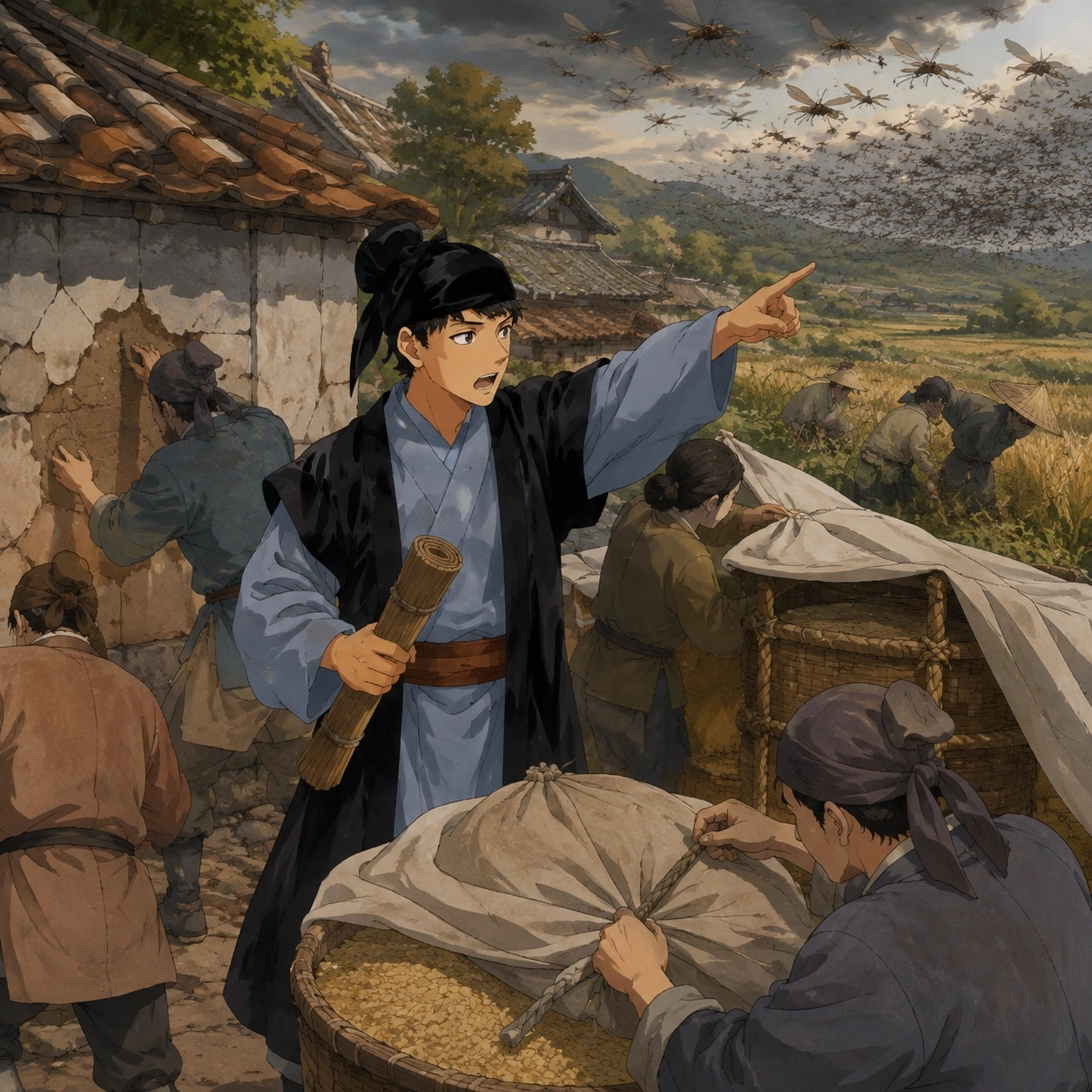
The novel does not place Junjie at the center of every action once the swarm arrives. In Volume 10, Chapter 18, the direct scene shows a shared response: Rikuson reassures residents and helps arrange practical protection, Basen catches flying locusts and helps deal with burning structures, while Maomao and villagers work on harvesting, pest-control measures, and sealing homes. Junjie's confirmed role is the warning and preparation that gave communities a chance to act; the hands-on response belongs to this wider group.
What Chapter 18 Actually Shows
The household details should therefore be credited carefully. Residents and the local response team seal openings and protect food stores. Rikuson's visits and arrangements help keep people moving, while Basen and others deal with the physical danger. These actions matter because they show the gap between Junjie's warning role and the people who execute the response when the swarm is already present.
Junjie should not be credited with calming every household or carrying out these physical tasks. His documented contribution is upstream: agricultural instruction, reports, warnings, and the wider tour through the western province. Chapter 18 is a useful cross-check precisely because it reveals how many other people are needed after the warning has done its work.
Why the Protected Fields Fared Better
The roughly seven-tenths figure describes the overall result in villages that prepared early; it is not a personal success rate or a number the novel attributes to Junjie alone. His warnings helped create the conditions for that result, while farmers and local responders carried out the harvest and protection measures.
The number should not be read as a promise that Junjie saved every field. It shows the difference between preparation and surprise. A partial harvest can still support a relief effort. A harvest cut below half can push families into a much more dangerous cycle of hunger, migration, and unrest.
This is where the title's word "contribution" matters. Junjie does not single-handedly defeat nature. He changes the outcome at the margin, and the margin is where many lives are decided.
What the Novel Does Not Credit to Him
It is tempting to compress the western crisis into one heroic figure, but that would make the article less faithful to the novel. Junjie did not personally provide every bowl of relief porridge, design the central grain-transport policy, create Maomao's insect investigation or pest-control medicine, or establish Rikuson's later double-price purchase plan.
Those actions belong to different parts of the response. Maomao helps interpret the biological threat and the medical danger. Rikuson turns economic incentives into a way to stabilize supply. Basen and local communities handle immediate physical work, while officials carry out wider relief measures. Junjie connects agricultural knowledge and warning to a response that others execute.
The result is a distributed response. The novel's disaster writing becomes stronger when each person is credited with the kind of work they actually perform. Junjie's strength is technical observation and warning, not omnipotence.
Preparation Is Not the Same as Rescue
Junjie's work is closer to preparedness and early-warning coordination than to charity alone. He teaches before the crisis, reports during the buildup, and gives communities time to prepare before the swarm. Relief arrives through a larger system, but his early actions help determine how much of the local food base survives long enough to be relieved.
For a wider explanation of the insect distinction behind the crisis, see the difference between locusts and flying locusts. For the parallel economic response, compare Rikuson's response to the locust plague.
Why the Later Junjie Name Matters
Lahan's older brother is Han Junjie. Volume 13, Chapter 2 explicitly explains that a younger boy has the same full name, which causes the wrong person to be sent back to the capital. Chapter 8 develops the joke through the older brother's diary: he falls back on calling himself Lahan's older brother. In Chapter 13 the younger Junjie greets and praises him. They are two people with the same name, and the older brother is the one whose agricultural work and warning tour this article follows.
The name reveal does not create a new hero after the fact. It lets the reader re-read the earlier scenes with a clearer sense of who was traveling, teaching, reporting, and warning communities. His identity is not important because it makes the disaster about one man. It is important because the work had been carried out by a person whose efforts could otherwise disappear behind Lahan's more familiar name.
Junjie also fits a recurring pattern in The Apothecary Diaries: systems are held together by people who are easy to overlook. A servant carries a message, a village follows a technical instruction, a physician notices a symptom, or an administrator changes an incentive. The story's political scale depends on those smaller acts.
FAQ
What did Lahan's older brother do during the locust disaster?
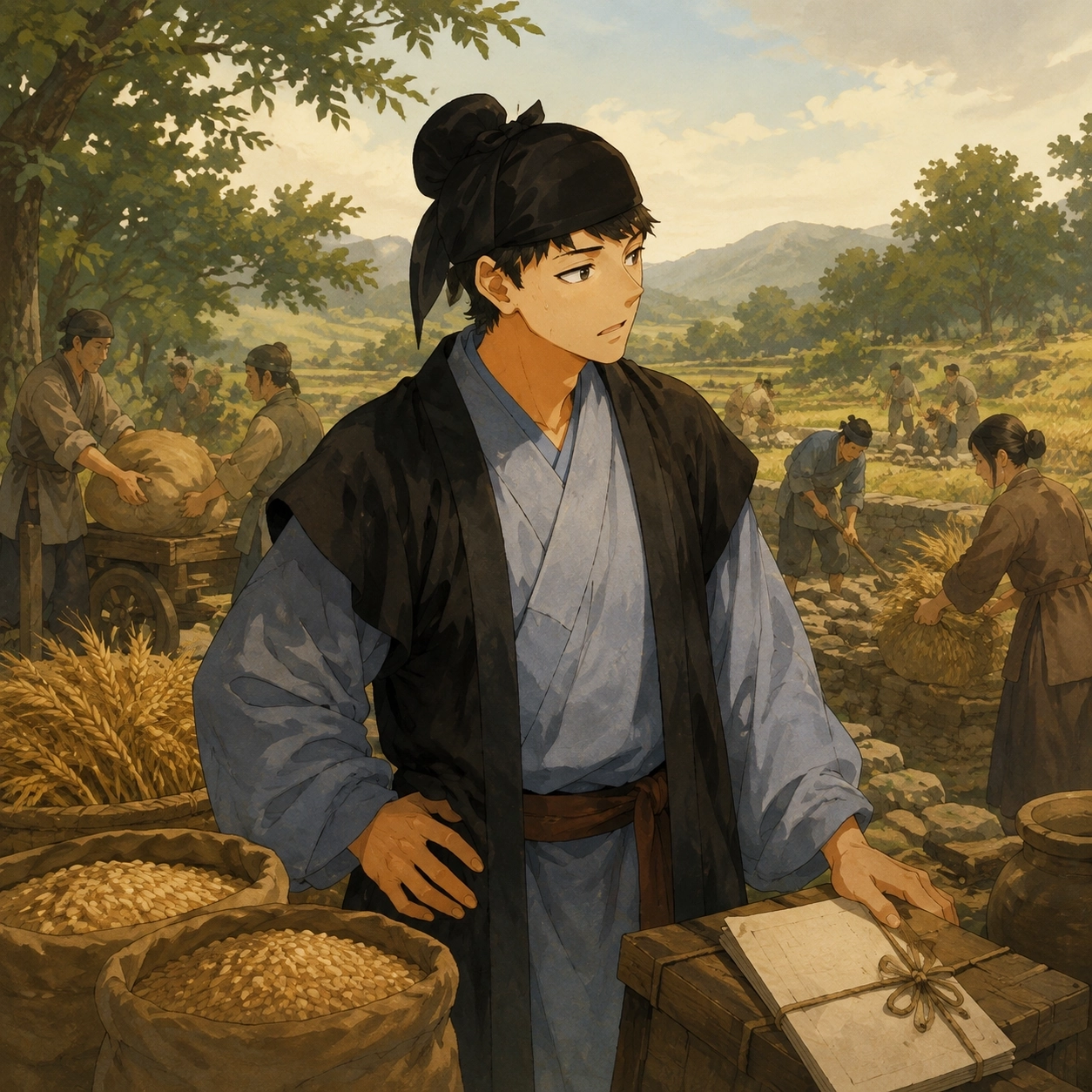
He prepared agricultural options, inspected fields, sent reports, and warned western communities early. The direct hands-on swarm response in Chapter 18 is a shared effort involving Rikuson, Basen, Maomao, villagers, and others.
What is Lahan's older brother's name?
His full name is Han Junjie. Volume 13, Chapter 2 confirms that he shares that name with a younger boy; Chapter 8 revisits the confusion. The Junjie speaking to him in Chapter 13 is the younger namesake.
Did Junjie solve the locust crisis alone?
No. The crisis response is shared. Junjie handles field preparation and warnings, while Maomao, Rikuson, Basen, local communities, and broader state relief measures address other parts of the problem.
Why were some villages better protected than others?
Villages that accepted the warning and harvested early preserved much more of their wheat. The protected communities kept roughly seven-tenths of the previous year's harvest, while other villages could lose more than half.
How does Junjie's work connect to sweet potatoes?
Before the locust emergency, he brought planting material and taught western farmers how to cultivate sweet potatoes and related crops. That gave the region another food option when grain production became vulnerable.
What should I read next?
Start with Maomao's view of Lahan, then compare Junjie's field work with why Jinshi had to go west and the broader locust analysis linked above.