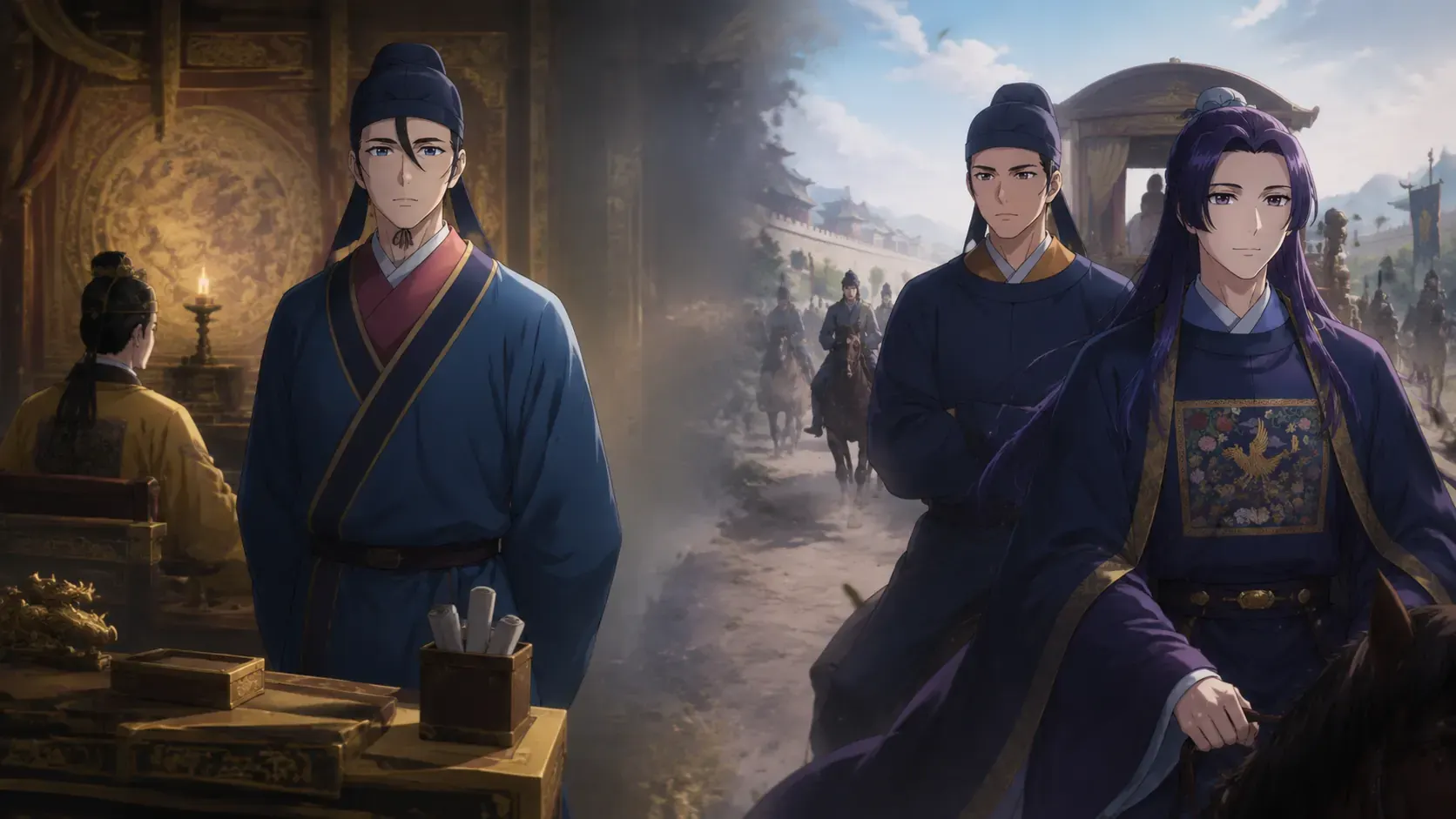
Spoiler Warning
This article discusses light novel spoilers for The Apothecary Diaries Volumes 5 and 6, including Jinshi's Western Capital mission, Gaoshun returning to the emperor's side, Basen guarding Jinshi, the locust crisis, political talks in the west, consort pressure, and the Volume 6 aftermath.
Scene Locator
The key evidence appears in Volume 5, during the chapter that shifts from Maomao's road journey to the emperor speaking with Gaoshun about Jinshi's westward trip. That scene does more than check on Jinshi's progress. It explains the new arrangement after Jinshi's old eunuch-cover role has ended: Gaoshun is again serving the emperor, and Basen is the one guarding Jinshi on the road.
The same stretch also clarifies the stakes of the trip. Jinshi is not simply traveling for scenery. The Western Capital matters because of locust risk, regional politics, foreign contact, and marriage or consort pressure around the imperial younger brother. That broader context is covered in why Jinshi had to go west, but Gaoshun's role adds another layer: someone still has to remain beside the emperor while Jinshi acts away from the capital.
Volume 6 then confirms that this was not a temporary oversight. After the Western Capital banquet and the lion incident, Basen is still beside Jinshi. Jinshi even notices the difference between Basen and Gaoshun in temperament: Basen is loyal and useful, but not as quietly perceptive or tactful as his father. Later in Volume 6, Jinshi and Basen remain in the west to handle urgent official business while others head back.
Volume-level entry only. The source is community-hosted; availability and rights status may vary.
The Short Answer
Gaoshun Returned to the Emperor
Gaoshun does not follow Jinshi to the Western Capital because his highest-priority assignment has shifted back to the emperor. The text makes this fairly direct: once the eunuch identity called Jinshi is no longer in place, Gaoshun is again serving the emperor rather than remaining as the visible attendant of Jinshi's old palace role.
That is the first fact to keep straight. This is not a story where Gaoshun is forgotten, sidelined, or suddenly indifferent to Jinshi. He is simply no longer needed in the same outward position. Jinshi is moving as the imperial younger brother. Gaoshun, who belongs to a family charged with protecting the imperial household, stays where the emperor needs him.
That also explains why the decision feels quiet rather than dramatic. The novels do not stage it as a falling-out. The arrangement is treated as practical court logistics. The emperor remains in the capital; Jinshi moves west on imperial business; Gaoshun stands with the ruler who cannot personally leave.
Basen Was Assigned to Jinshi
Jinshi is not left unprotected. Basen, Gaoshun's youngest son, is assigned to guard him. Volume 5 explicitly frames this as Gaoshun's decision after some concern over whether another son might be better suited. He still sends Basen, even though Basen has immaturity and a recent failure weighing on him.
That choice matters because Basen is not a random substitute. He is part of the same Ma family network that has long protected the imperial line. He grew up near Jinshi, has martial ability, and is trusted enough to stand close to him during a dangerous regional mission. The novels are not saying, "Gaoshun vanished." They are saying, "Gaoshun's family still covers Jinshi, but the father and son are now covering different parts of the imperial household."
Gaoshun also helps make Maomao's presence acceptable. Volume 5 shows that he uses the practical argument of poison prevention to persuade Basen, and Jinshi accepts the arrangement quickly. That small detail shows Gaoshun shaping the western party even when he is not physically traveling with it.
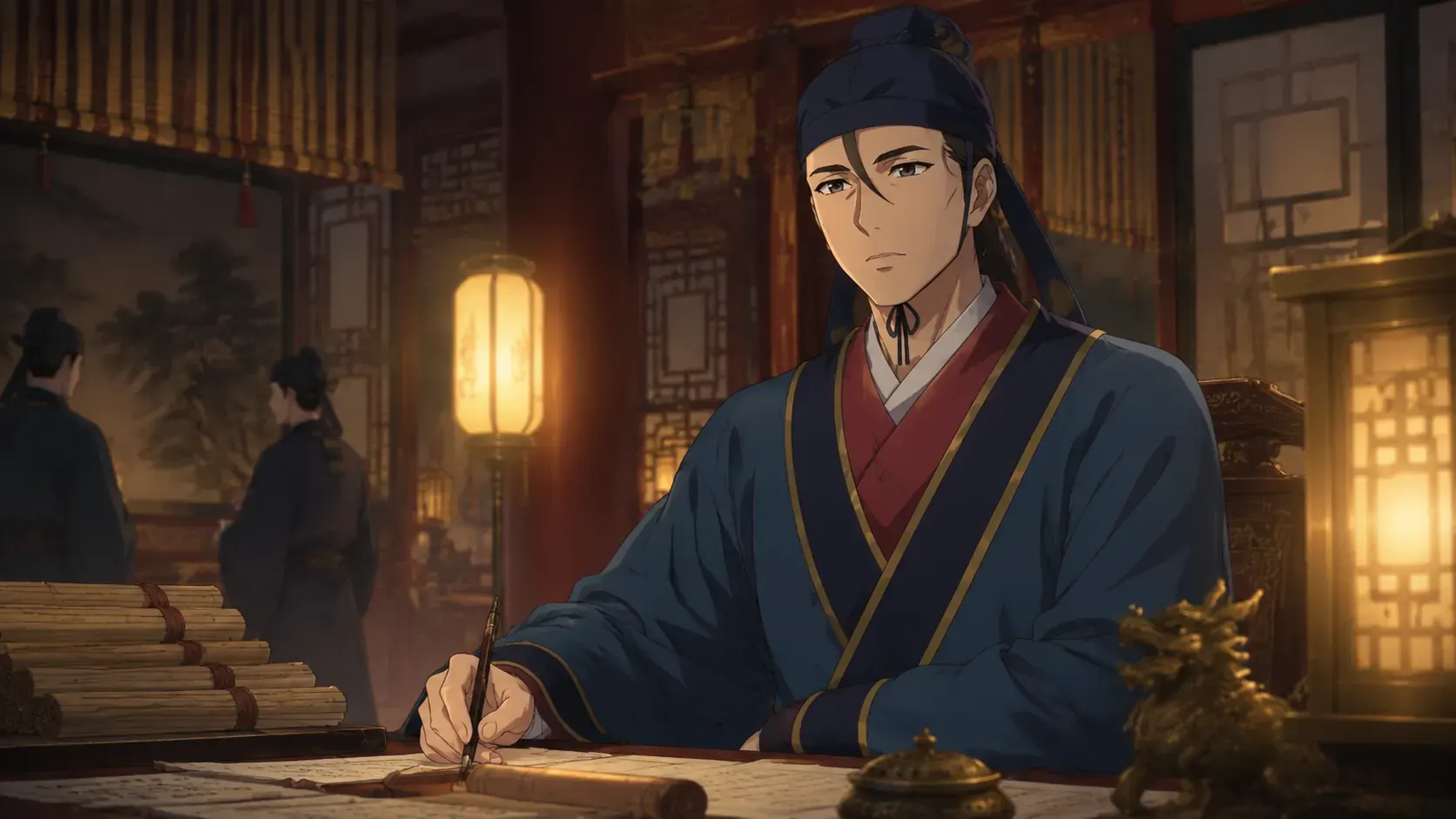
Why the Duty Split Matters
The Ma Clan Logic
The Ma clan context is the cleanest way to understand Gaoshun's absence. Gaoshun and Basen are not merely personal attendants. Their family exists inside the story as a guard family tied to imperial protection. When the emperor and Jinshi are no longer in the same place, the family duty has to split.
From that angle, sending Gaoshun west would create a different risk. The emperor would lose the trusted man who knows his habits, childhood history, private burdens, and political language. Sending Basen west keeps a Ma guard with Jinshi while preserving Gaoshun's stabilizing presence beside the emperor.
This also explains why the arrangement is emotionally restrained. Gaoshun can worry about Jinshi and still not go. Court duty does not always follow personal attachment. In fact, Gaoshun's loyalty is proven by staying where his duty is heaviest, not by chasing the person readers most associate him with.
The Emperor Cannot Leave the Capital
Jinshi's westward mission exists partly because the emperor cannot personally leave the capital to handle every western problem. Jinshi has to act with the weight of the imperial family behind him, especially as the trip touches locust danger, regional governance, foreign contact, and consort politics.
That leaves the emperor in a sensitive position. He is making large decisions at home while Jinshi represents imperial will elsewhere. Gaoshun is one of the few people trusted enough to understand both sides of that pressure. He knows the emperor from childhood, knows Jinshi from years of service, and understands the private truth behind Jinshi's public roles.
So the best reading is not "Gaoshun should have gone but did not." The better reading is that Gaoshun is one half of a two-front protective arrangement. Jinshi needs Basen in the west. The emperor needs Gaoshun in the capital.
Why Basen Instead of Gaoshun?
Basen is not as polished as Gaoshun, and the novels know it. That is part of the point. Gaoshun is the kind of attendant who can read a room, hold back a reaction, and soften danger before anyone else notices it. Basen is more direct, more physical, and often less able to catch Jinshi's emotional nuance.
But those weaknesses do not make him useless. They make him a different tool. Basen is a guard first. In the Western Capital arc, Jinshi needs someone who can react quickly to physical danger, stand beside him in public, and remain loyal even when the social atmosphere becomes complicated. Volume 6 later reinforces that Basen can be awkward, but he is not cowardly.
The decision also gives Basen a necessary trial. Volume 5 reminds readers that Gaoshun is not completely relaxed about sending him. Basen is still immature, and a recent failure involving Jinshi's injury hangs over the assignment. Sending him anyway shows trust, but not blind trust. Gaoshun worries, calculates, and still chooses a son whose strengths match the job well enough.
There is a narrative benefit too. If Gaoshun went west, he would absorb many of Jinshi's awkward edges. He would manage tone, filter mistakes, and quietly protect Jinshi from some of his own emotional excess. With Basen instead, Jinshi has protection but not the same smooth handler. That leaves more room for Jinshi to face Western Capital politics, Maomao, and his own identity without Gaoshun constantly cushioning the scene.
That same practical-versus-personal mix appears in the companion question of why Jinshi took Maomao to the west. Maomao is not a replacement for Gaoshun, but she becomes another kind of support: medical, investigative, and emotionally inconvenient in exactly the way Jinshi needs.
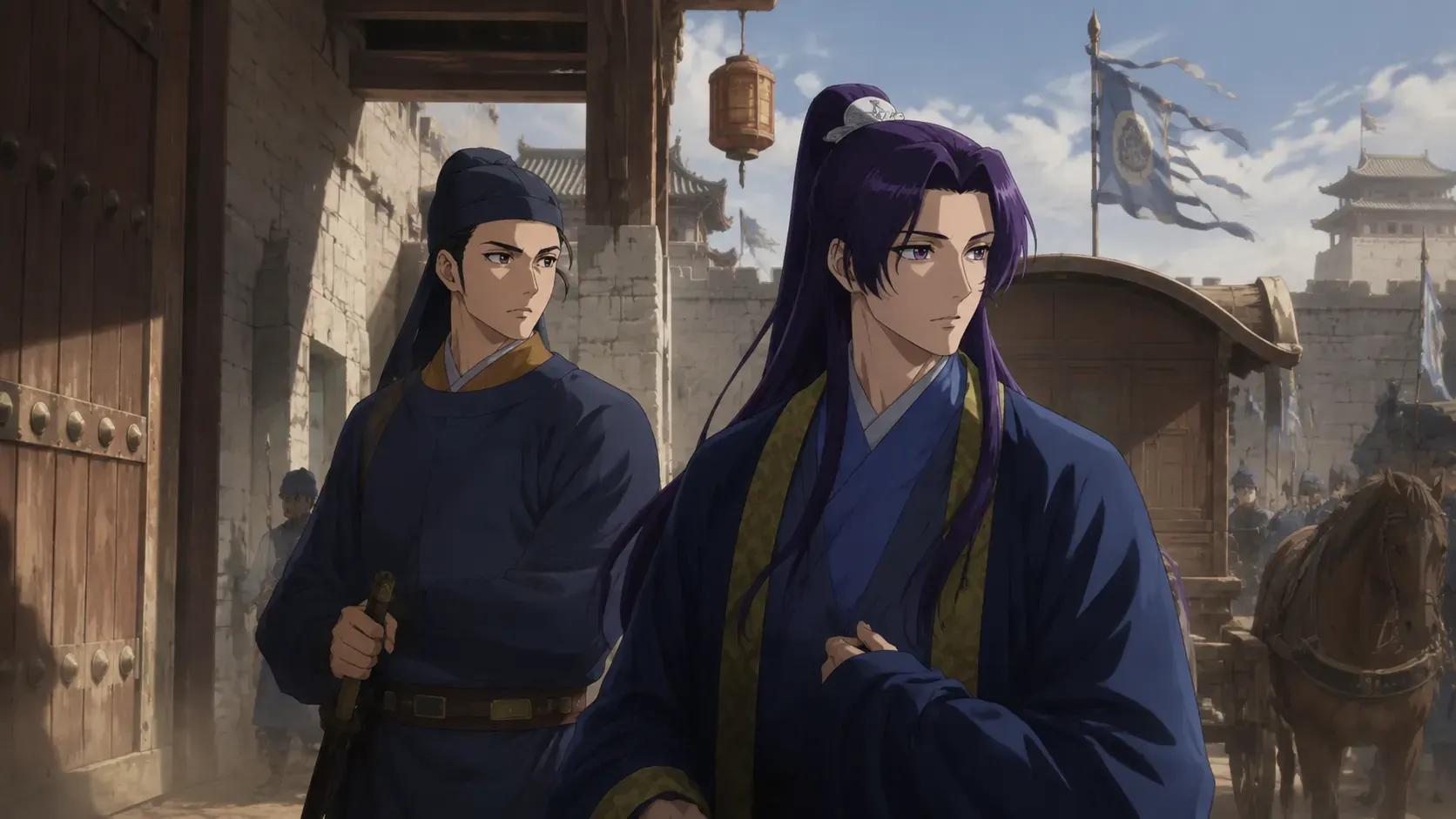
How Volume 6 Proves the Point
Volume 6 is useful because it shows the arrangement in motion. Basen remains the person beside Jinshi after the western banquet crisis. When Jinshi wants space, Basen does not always sense what Gaoshun might have sensed. That contrast is not a mistake. It is the story showing exactly what changed when Gaoshun stayed behind.
Basen gives Jinshi loyalty and physical protection. He does not give him Gaoshun's quiet adult calibration. That difference changes the texture of the Western Capital aftermath. Jinshi is more exposed, more frustrated, and sometimes more ridiculous because the person beside him cannot smooth every emotion before it spills out.
Later, when Maomao and others return while Jinshi and Basen remain in the west for urgent official business, the novels again confirm that Basen's assignment is not symbolic. He is part of Jinshi's working party. He is there when the western trip turns from travel into administrative cleanup.
Volume 6 also shows why Gaoshun could not simply be treated as a spare attendant. The Western Capital is not the only place where danger and pressure exist. The capital still holds the emperor, the empress question, Jinshi's hidden background, Ah-Duo's old history, and the political consequences of everything Jinshi does in the west. Gaoshun's work continues even off-page.
For the Ah-Duo and Lishu side of the same western movement, read the Ah-Duo and Lishu relationship analysis and whether Lishu was forced to go west. Those pieces show how many different agendas are moving through the same trip.
Common Misreadings
Misreading 1: Gaoshun abandoned Jinshi
This reading does not fit the text. Gaoshun is worried about Jinshi, thinks through which son should accompany him, and helps justify Maomao's presence. His absence is an assignment issue, not emotional abandonment.
Misreading 2: Basen replaces Gaoshun because Gaoshun lost trust
The novels give no reason to think Gaoshun has lost trust. The opposite is clearer: Gaoshun is trusted enough to return to the emperor. Basen's role shows the Ma family splitting its protective duty across two imperial figures.
Misreading 3: Jinshi was unguarded in the west
Jinshi is guarded. Basen and other guards are physically present throughout the western arc. The issue is not lack of protection; it is the difference between Basen's blunt loyalty and Gaoshun's experienced tact.
Misreading 4: Gaoshun stayed behind only because he was too old for the trip
That is possible as a minor practical consideration, but it is not the reason the novels emphasize. The text points to duty: Gaoshun has returned to the emperor, while Basen guards Jinshi.
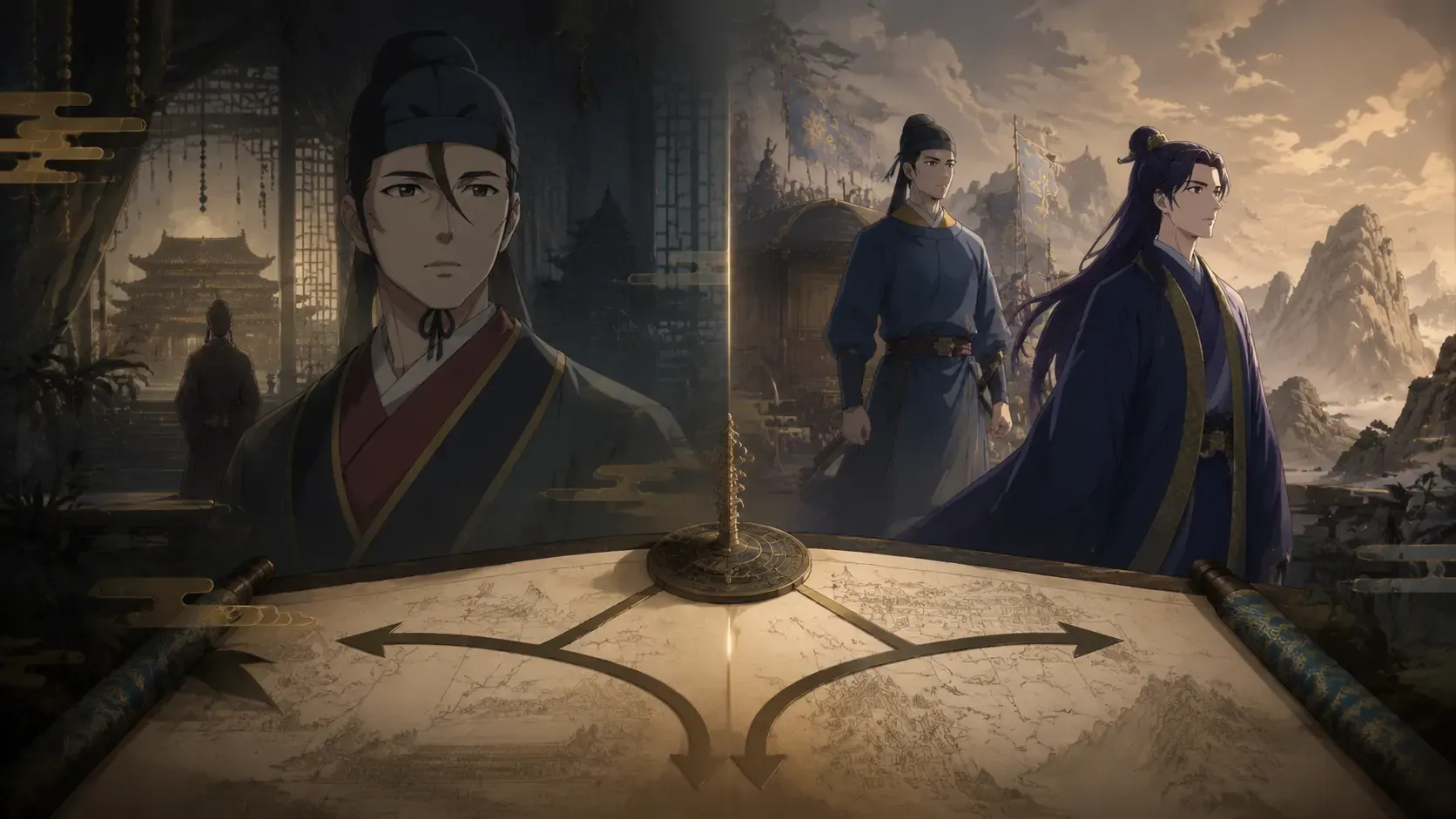
Why This Choice Matters
Gaoshun's absence matters because it marks a change in Jinshi's stage of life. While Jinshi was hidden inside the eunuch role, Gaoshun's constant presence made sense as part of that controlled arrangement. Once Jinshi has to act as the imperial younger brother, the old household pattern can no longer remain unchanged.
That is why this detail connects to Jinshi's real name and hidden rank. The more openly Jinshi moves as an imperial figure, the more his support system changes. Gaoshun cannot simply remain the same attendant in the same place forever. The court needs him differently.
It also sharpens Jinshi's loneliness. Basen is loyal, but he is not Gaoshun. Maomao is useful, but she refuses to behave like a comforting court attendant. The west surrounds Jinshi with people who support him in partial ways. Nobody gives him the exact old safety Gaoshun represented.
That makes the Western Capital arc more than a travel arc. It is a transition arc. Gaoshun staying behind, Basen stepping forward, and Maomao being pulled along all show the same thing from different angles: Jinshi is no longer protected by the shape of his old role. He has to carry imperial responsibility with a new arrangement around him.
FAQ
Why didn't Gaoshun go with Jinshi to the Western Capital?
Because Gaoshun had returned to serving the emperor after Jinshi's eunuch-cover role ended. Jinshi still had a Ma clan guard in the west: Basen, Gaoshun's youngest son.
Did Gaoshun stop caring about Jinshi?
No. Volume 5 shows Gaoshun worrying over the assignment and helping arrange the western party. His absence is about duty placement, not affection disappearing.
Who guarded Jinshi in the Western Capital arc?
Basen guarded Jinshi, along with other attendants and guards. Volume 6 continues to show Basen at Jinshi's side during the Western Capital aftermath.
Was Basen a good replacement for Gaoshun?
He was a good physical guard, but not the same kind of attendant. Basen lacks Gaoshun's tact and emotional perception, which is why the story can use him for both protection and tension.
Is this connected to Jinshi's true identity?
Yes. As Jinshi's old eunuch role ends and he moves as the imperial younger brother, his household and guard arrangement change. Gaoshun returning to the emperor is part of that shift.
What should I read next?
Read why Jinshi had to go west for the mission itself, then why Maomao went west with Jinshi for the support role that develops beside Basen's guard duty.