Spoiler Warning
Major light novel spoilers through Volume 15. This article discusses Ah-Duo's childbirth, the infant exchange and Jinshi's biological parents, Gyokuyou's elevation, Ah-Duo's account of her lost freedom, and the private succession conversation before the Emperor's operation. Anime-only readers should stop here.
Why Say Ah-Duo Should Have Been Empress?
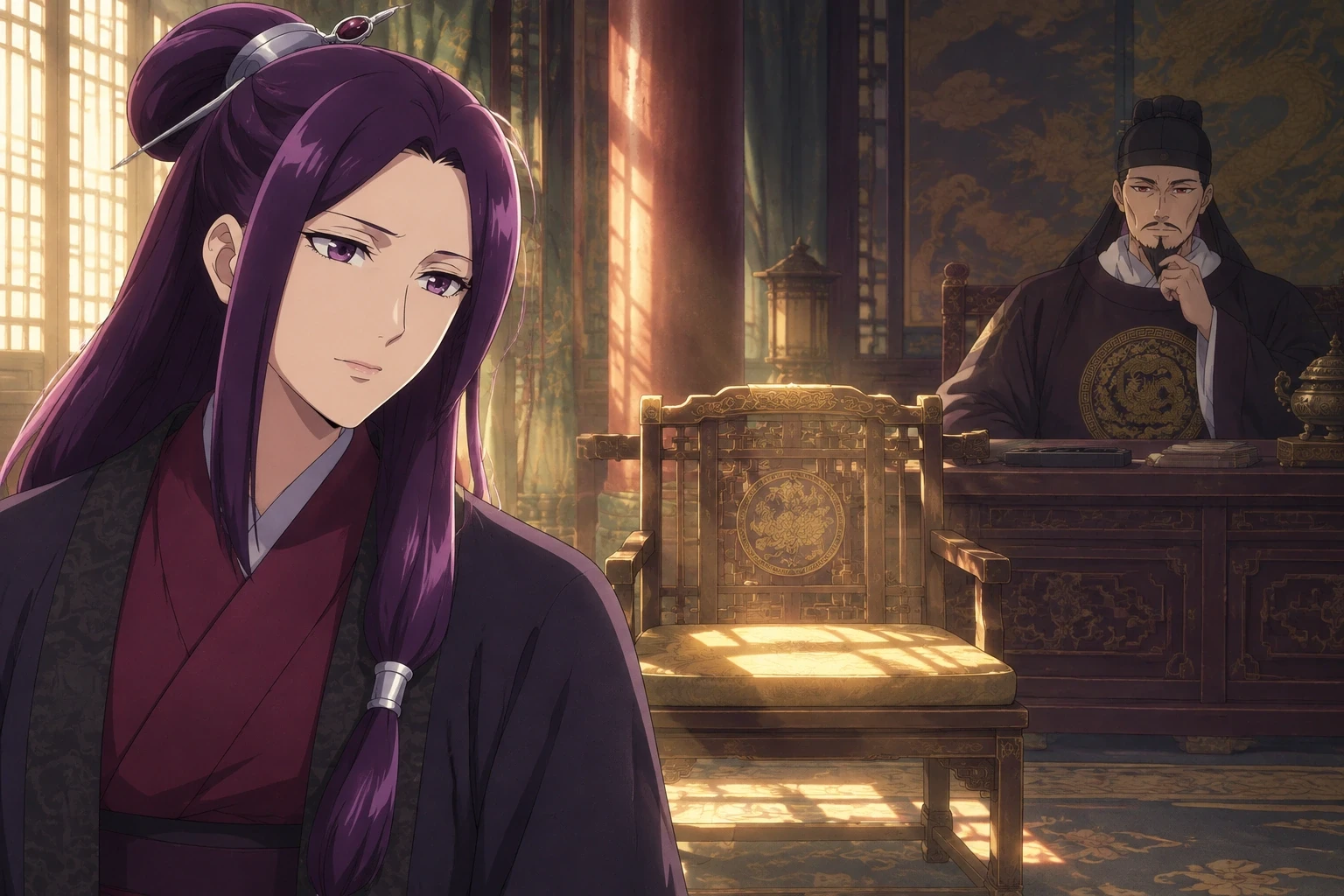
Ah-Duo should have been empress in the future the Emperor once promised her. Volume 5's final chapter gives this reading a concrete foundation: she remembers his promise to take no other woman as a wife, then recalls a second promise to make her the mother of the nation. He agreed. Years later, Gyokuyou occupies the position of empress, while Ah-Duo lives outside the rear palace.
That gap makes the title more than a wish that a favorite character had received a better reward. Ah-Duo's story contains a promised place beside the ruler, a body injured by the demands of the dynasty, and a life redirected by someone whose wishes she could not refuse. The imperial household preserves her importance while denying her the future those promises appeared to offer.
The title is an interpretation of that broken personal future, not a claim that the novel records an official appointment or a legal right to the throne beside the Emperor. The later volumes deepen the argument: Ah-Duo understands that fulfilling an old promise through Jinshi could cost another person the freedom she lost. By Volume 15, that possibility matters more to her than collecting an overdue title.
Scene Locator: The Promise and Its Consequences
- Volume 1, Chapters 27 and 29: pressure to replace Ah-Duo, the truth about her difficult childbirth, and the already-decided move out of the rear palace.
- Volume 5, Chapter 10 and the final chapter: the political reasons for Gyokuyou's elevation, followed by Ah-Duo's memories of the Emperor's two promises and the infant exchange.
- Volume 7, Chapter 9: Gyokuyou's public position as empress and the timing, bloodline concerns, and western relations affecting the decision.
- Volume 13, Chapter 14: Ah-Duo confirms Jinshi's parentage to Maomao, describes the freedom she lost at fourteen, and offers Maomao a way out.
- Volume 15, Chapters 15–16: Jinshi's choice before the Emperor's operation and Ah-Duo's private interpretation of the meeting, the old promise, and Gyokuyou's position.
The argument follows Ah-Duo across these stages. The promises come from her remembered past; the later succession scenario is something she considers, not a proclamation the Emperor carries out in the scene.
Volume-level entry only. The source is community-hosted; availability and rights status may vary.
The Emperor Made Two Promises, Not Just One
The closing passage of Volume 5 brings readers into Ah-Duo's thoughts after the Western Capital banquet. Her memories reach back to an apparently childish agreement: the Emperor had said he intended to marry no woman other than her. She now sees the impossibility of a ruler making such a promise. His position would place other demands on him, particularly once she could no longer bear children.
Yet she also remembers that he tried to keep it. The passage connects his eventual acceptance of other consorts with young Jinshi's request for a younger brother. That detail gives the promise a history. It was not merely a forgotten sentence; it shaped choices until the pressures surrounding the imperial family changed those choices.
The second promise is more pointed. Ah-Duo had asked him to make her the mother of the nation, and he readily agreed. Remembering it after Gyokuyou's elevation, she wonders whether he still remembers what he accepted. The juxtaposition invites the reader to recognize an unfulfilled expectation. Someone else now holds the public position most immediately associated with her old request.
The novel leaves room between that expectation and a formal political arrangement. There is no enthronement decree in this recollection. Ah-Duo herself describes the agreements as childish. Their emotional force comes from the lives they continued to shape, even after neither person could simply recreate the circumstances in which they were made. For the marriage imagery surrounding the passage, see why Jinshi's father wants him to choose a flower.
She Paid the Cost of the Dynasty Before Receiving Its Highest Rank
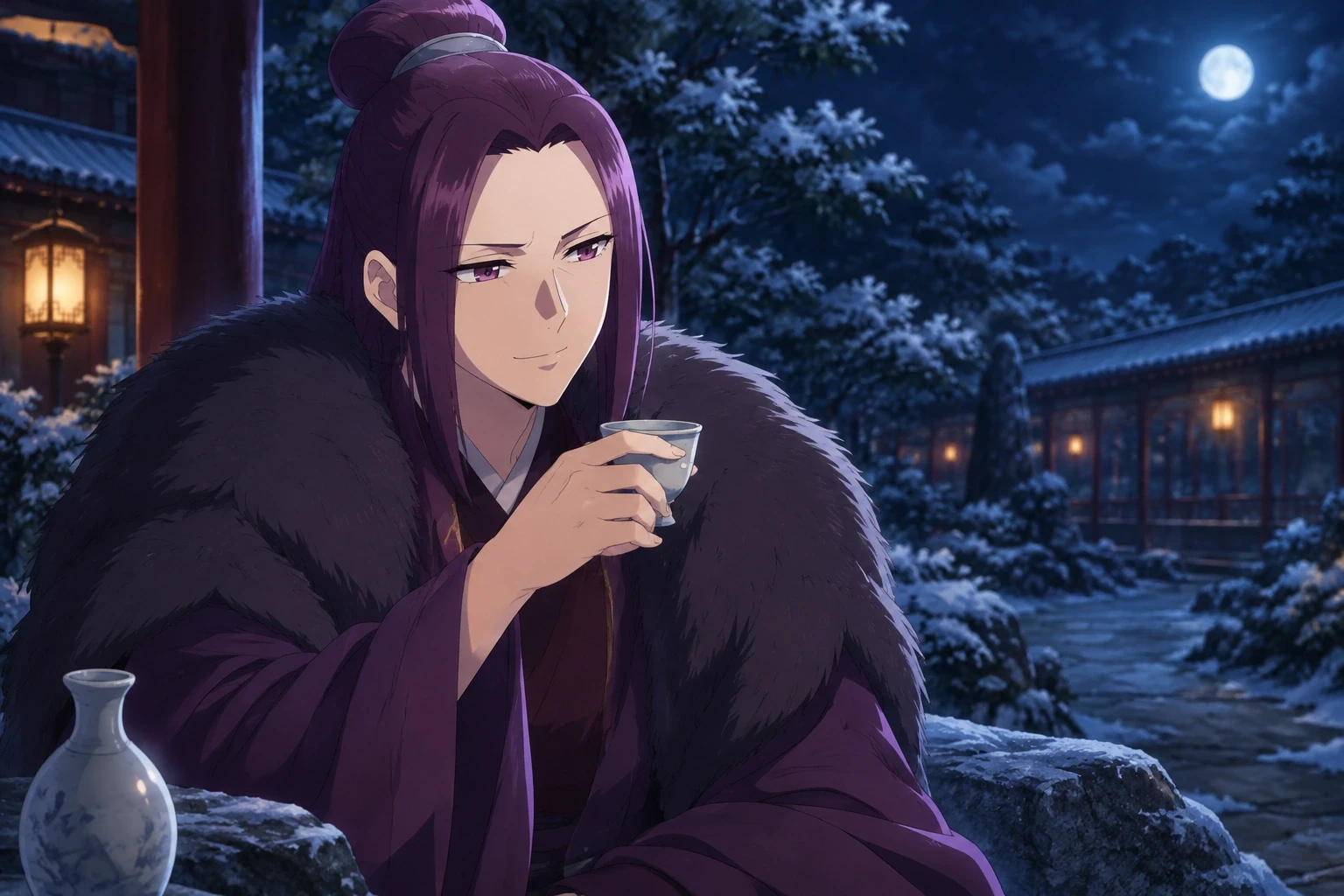
Volume 1 makes the palace's priorities painfully concrete. During Ah-Duo's labor, another imperial birth takes precedence. Her child is delivered, but the ordeal leaves her without her uterus. A woman who has given birth within the ruling family loses the ability to meet the reproductive expectations that govern her standing there.
Earlier discussion of replacing her treats age, service, and the prospect of children as matters of institutional calculation. Maomao recognizes the ugliness of a garden in which flowers are valued for bearing fruit. The later medical revelation makes that calculation harsher: the court's own hierarchy helped produce the injury, and the resulting infertility becomes part of the pressure to look elsewhere.
This is why reducing Ah-Duo's history to an inability to produce another heir misses its meaning. Her body has already borne the cost of an imperial birth. The injustice lies in measuring her future by what she can provide next, as though the previous sacrifice creates no obligation.
Her departure also needs to be read accurately. Jinshi explains that the decision to remove her from senior-consort rank and relocate her had already been made; it was not a new punishment imposed because of Fengming's crime. Life in a detached palace keeps her within the Emperor's reach and protection. It does not restore either the lost promise or the freedom to determine where her own life should go.
Why Gyokuyou's Elevation Cannot Be Explained as a Simple Romantic Choice
Ah-Duo's personal history and the choice of an empress operate on different scales. In Volume 5, Chapter 10, Gaoshun connects Gyokuyou's elevation with the importance of the west, the possibility of conflict, and the value of relations with her family. He also recognizes why others might have regarded Lihua as the nearer candidate at that later moment.
Volume 7, Chapter 9 adds the timing of the births and concerns about bloodline. An empress and a recognized heir give the court a clearer public order. The Emperor's preference for avoiding close intermarriage and the importance of western relations also affect the decision. These are choices about governing a dynasty, not a ranking of which woman he has known longest.
That political explanation makes Ah-Duo's missed future understandable without making it painless. A ruler can have reasons for breaking a personal expectation while the person who trusted him still bears the loss. The early promise does not disappear merely because later policy can be explained.
Gyokuyou consequently should not become the villain of Ah-Duo's story. She occupies an actual office with responsibilities and a vulnerable child of her own. The fuller account of Gyokuyou's road to becoming empress and the analysis of Lihua's continuing place in the succession show why these women cannot be understood as interchangeable rivals for affection.
Would Becoming Empress Have Given Ah-Duo the Life She Wanted?
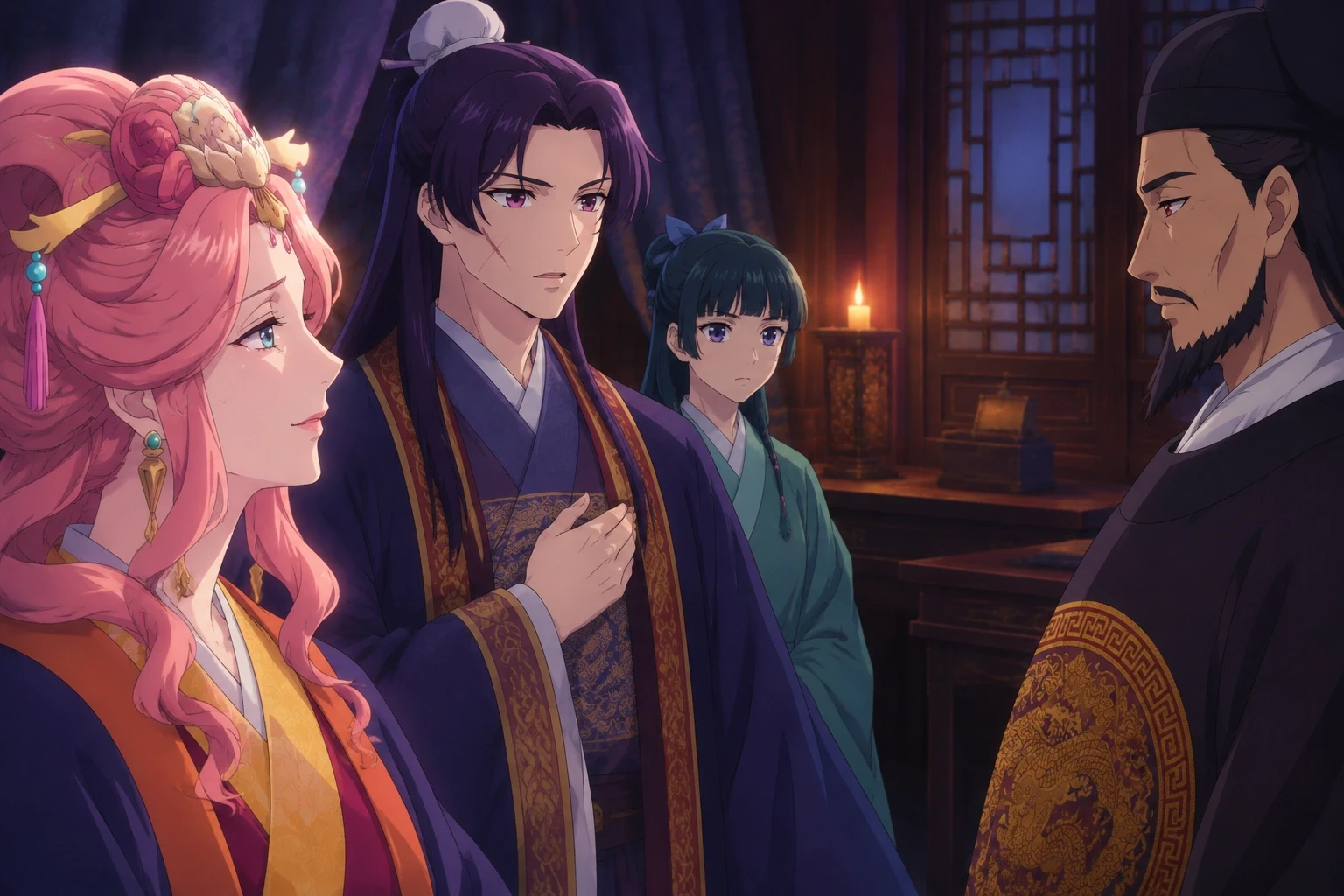
Volume 13, Chapter 14 prevents the title of this article from becoming a simple fairy-tale ending. Ah-Duo once wanted to travel abroad and learn about the wider world. Her recollection places the end of that possibility at fourteen. The boy she regarded as a friend could demand a relationship she had no power to refuse.
She remembers their childhood companionship with unusual specificity: shared mischief, climbing trees, and teasing Gaoshun. What breaks the equality is not a sudden lack of familiarity. It is the discovery that familiarity cannot cancel rank. The same person who shared those moments can give an order that changes her entire future.
Her account therefore does not establish a straightforward mutual romance frustrated only by succession politics. She identifies the loss of choice itself. The Emperor has little freedom because of his birth, but his confinement also gives him power to confine others. Understanding his burden does not make its transfer to her harmless.
An imperial crown might have acknowledged her place. It could not, by itself, return the years, the bodily security, or the possibility of leaving that she had lost. This is the harder meaning behind saying she should have been empress: a promise can remain unfulfilled even when fulfilling it would no longer repair the original injury. Her own account is explored further in how Yang has bound Ah-Duo's freedom.
The Hidden Son Gives the Old Promise Another Possible Meaning
Jinshi complicates the promise because the Emperor's first biological son never died. After Ah-Duo and the Empress Dowager exchanged their babies, the imperial family publicly lost the child identified as the Emperor and Ah-Duo's first son. The baby who actually died was the Empress Dowager's biological child by the former emperor. Ah-Duo's own son survived as Jinshi, publicly raised as the current Emperor's younger brother. The death belongs to one child's recorded identity and another child's biological identity.
Volume 5 recalls the exchange; Volume 13 gives Maomao Ah-Duo's direct confirmation. This distinction changes the succession question. The Emperor has a surviving grown firstborn, but that son occupies the public role of imperial brother. Ah-Duo has lost the public recognition of her motherhood, not her actual son. Revealing the truth would change Jinshi's relationship to the Emperor and the younger princes at the same time.
That history allows a second reading of the phrase mother of the nation. If Jinshi became ruler, Ah-Duo's maternal relationship would carry a significance very different from her current position. Readers can see how an old promise about her place might become entangled with the Emperor's hopes for their son.
But a possible route is not a completed promise or a confirmed plan. The passages do not appoint Ah-Duo empress dowager, announce that Jinshi will reign, or establish what formal recognition would follow a disclosure. Even the attractive idea of a delayed fulfillment has to confront the wishes of the person through whom it would be achieved.
The parentage revelation is therefore essential to the argument without becoming a prediction of the ending. It explains why Ah-Duo's unresolved past can still place pressure on Jinshi's future. Readers who want the identity evidence separately can follow Ah-Duo's direct confession that Jinshi is her son.
Volume 15 Shows What Ah-Duo Values More Than a Delayed Fulfillment
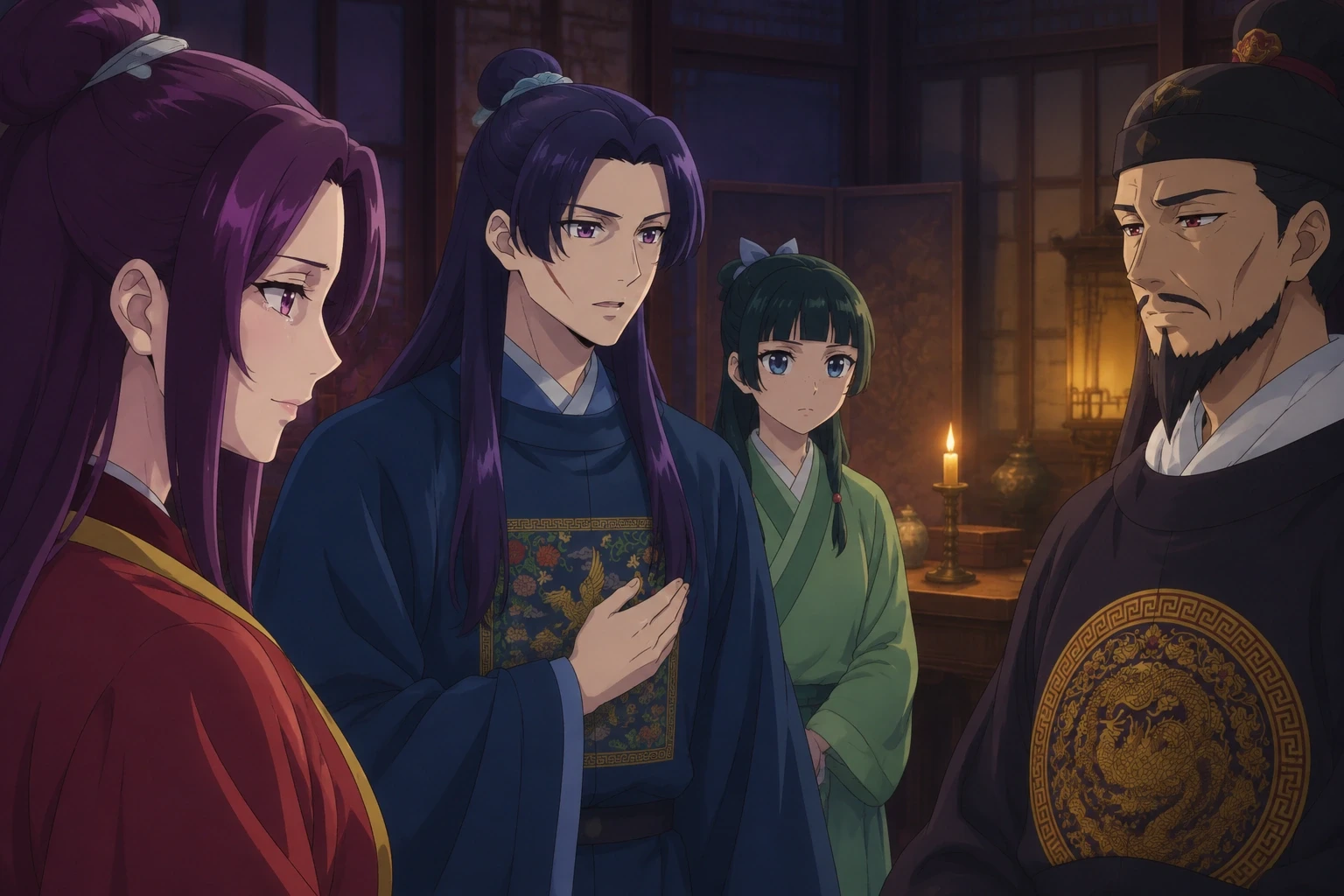
The private meeting before the Emperor's operation brings the promise back into the present. In Chapter 16, Ah-Duo wonders whether the old agreement helps explain why the Emperor has summoned Jinshi and included her. She recognizes the strangeness of her presence: for an official discussion of such importance, Gyokuyou would be the obvious person to call.
Ah-Duo can imagine how the Emperor might bind Jinshi to the succession. He could reveal their true relationship and formally name him heir. She considers the support his age and record could attract despite her own low standing. This is her analysis of what imperial power could do, not an announcement that it has been done.
Her response to the possibility is decisive. She does not want to make things difficult for Gyokuyou, whom she regards as a worthy consort. Bringing a supposedly dead prince back into the public succession would create trouble for the current empress and her family. Ah-Duo rejects that upheaval as foolish. The novel gives her more concern for the people involved than a reading centered on overdue revenge would allow.
Meanwhile, Jinshi says he wants to remain the Emperor's subject and serve the Crown Prince when the time comes. Ah-Duo's tears belong to this larger confrontation with power and choice. Her own perspective frames the question as whether her son will treat another person as the Emperor once treated her. The Volume 15 meeting with Ah-Duo and Maomao places that family question inside the succession dispute.
She wanted to know whether Jinshi and Maomao would reproduce her confinement. Seeing her son act as a person with a choice, rather than simply as an unquestionable royal will, matters deeply. Her past does not become less painful. It becomes a reason to protect someone else's future from the same pattern.
An Unfulfilled Promise Is Not a Debt Jinshi Must Pay
Ah-Duo remains important after losing senior-consort rank because the Emperor's private life, Jinshi's identity, and the political future all run through her. That importance should not be mistaken for having received the recognition she was promised. Nor should it make her suffering seem worthwhile merely because she remains useful.
The strongest reading of “Ah-Duo should have been empress” holds those truths together. The remembered promise gives the lost title meaning. Her account of coercion gives the loss a cost that status cannot measure. Her response in Volume 15 shows why making her son carry the burden would not put the past right.
What she asks of the next generation is more demanding than a ceremonial repair. It is a different way of caring for another person. The wish that Jinshi should be happy gains its depth from that limit: his happiness, Maomao's freedom, and Gyokuyou's existing life all deserve consideration. The mother whose future was decided for her can recognize why nobody else should have to surrender a future to settle it.
FAQ: Ah-Duo and the Position of Empress
Did the Emperor promise to make Ah-Duo empress?
Volume 5's final chapter recalls his agreement to make her the mother of the nation, alongside a separate promise to marry no other woman. This supports the article's interpretation of an intended place beside him. The recollection is not a formal appointment.
Why did Ah-Duo never become empress?
The novels connect her lost reproductive ability with pressure to choose another woman, then give political and dynastic reasons for Gyokuyou's elevation. Ah-Duo's history also shows that personal closeness to the Emperor does not grant control over official decisions.
Was Ah-Duo expelled because of Fengming?
Jinshi says in Volume 1, Chapter 29 that the move and loss of senior-consort rank had already been decided. Treating the decision as a newly imposed punishment for Fengming's crime reverses that sequence.
Does Ah-Duo want Jinshi to take the throne for her?
Volume 15 gives strong reasons to reject that reading. She considers the damage a revived claim would cause Gyokuyou, objects to the upheaval, and cares about whether Jinshi can choose a different relationship to power and freedom.
Will Ah-Duo eventually become empress dowager?
The passages discussed here establish no such outcome. Her connection to Jinshi makes the possibility meaningful to interpretation, but neither his accession nor a future title for her is confirmed by these scenes.