Spoiler Warning
Major light novel spoilers through Volume 8. This analysis reveals Jinshi's biological parents, the exchanged infants, Ah-Duo's old promises, the marriage discussion at the end of Volume 5, and Jinshi's later resistance to succession in Volume 8, Chapter 20. That later scene includes a brief, non-graphic reference to self-harm. Links that discuss later volumes are labeled separately.
Scene Locator: Where the Novel Explains the Flower Choice
The main evidence comes from Volume 5's final chapter, or epilogue. Read it alongside the banquet chapters that precede it; a later confrontation in Volume 8 makes the political stakes more explicit.
- Volume 5, Chapter 15: powerful guests bring their daughters to the western banquet, where Jinshi is the central marriage prospect.
- Volume 5, Chapter 16: Rikuson reminds Maomao that her family name and hairpin place her inside the evening's politics.
- Volume 5, final chapter: Jinshi explains the Emperor's instruction, then Ah-Duo's private reflections connect marriage, parentage, and two old promises.
- Volume 8, Chapter 20: Jinshi challenges the future others see for him and explains why marriage proposals threaten to become succession struggles.
Volume-level entry only. The source is community-hosted; availability and rights status may vary.
Why Does Jinshi's Father Want Him to Choose a Flower?
The Emperor wants Jinshi to choose a prospective wife, and that choice will help determine his political future. In Volume 5, the women gathered around him represent possible alliances with influential families or foreign powers. Choosing a consort means deciding which relationships will support his adult position within the imperial family.
Ah-Duo's closing reflections add a more personal reason to read the scene carefully. The Emperor once made promises about their life together, including her future position. With Jinshi's true parentage in view, his marriage becomes connected to a future that could matter deeply to both parents.
The novel therefore gives the flower image three overlapping meanings: a partner, a political alliance, and a possible step toward a dynastic future. The marriage purpose is explicit. The connection to fulfilling the Emperor's old promise through Jinshi is a strong interpretation of the epilogue's arrangement, rather than a declared succession plan.
Jinshi's Father and His Public Identity
The current Emperor is Jinshi's biological father, and Ah-Duo is his biological mother. Publicly, however, Jinshi occupies the position of the Emperor's younger brother. Ah-Duo's account of the infant exchange in Volume 5 explains why those two family relationships coexist.
This double identity changes how we read the request. To the court, arranging an imperial brother's marriage is a matter of state. To a reader who knows the family history, it also concerns a father considering his son's future and a mother watching from a position she cannot openly claim.
The political calculation works even for people who do not know the secret: Jinshi is already an exceptionally valuable imperial relative. His hidden parentage gives the scene a private emotional dimension. Our broader analysis of the Emperor's treatment of Jinshi as brother and son follows that tension into later volumes.
A Flower Is Also a Political Alliance
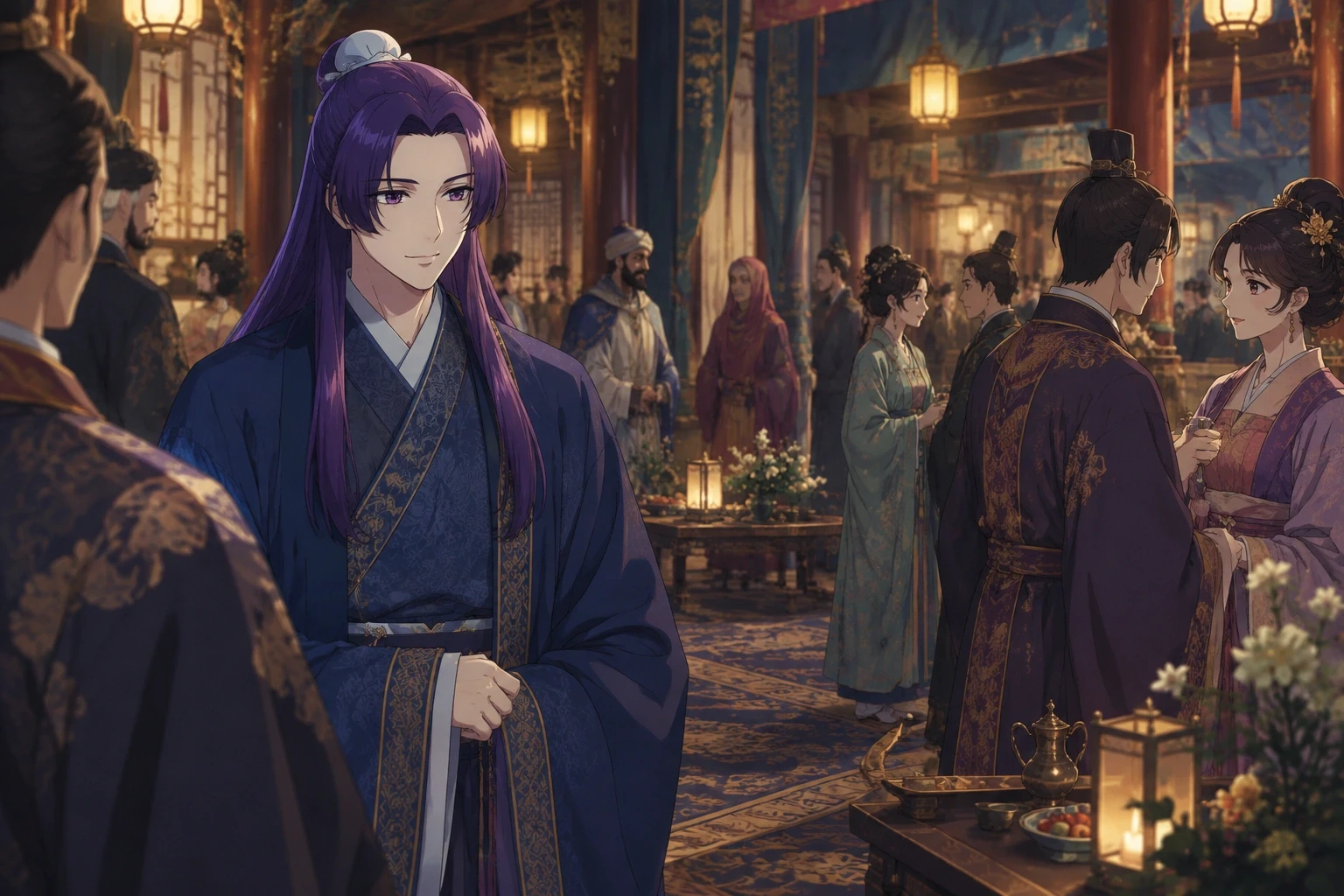
The western banquet makes the metaphor concrete. Volume 5, Chapter 15 places richly dressed daughters beside powerful guests, with their attention directed toward Jinshi. The occasion brings potential marriages into the same room as official business and foreign connections.
In the final chapter, Jinshi tells Maomao that the Emperor instructed him to choose carefully. The narration immediately identifies the subject as selecting a consort. It then considers what different choices would do: strengthen relations with another country, or link Jinshi to an influential group within his own.
That is why the location matters. Maomao reasons that arranging the gathering in the western province points toward closer western ties. Her inference fits the guests and the setting, but the passage does not give us an imperial decree naming a particular western bride.
A marriage can give a prince relatives with resources, connections, and reasons to support him. It can also give those relatives an interest in making him more powerful. The Emperor's request asks Jinshi to enter a relationship whose consequences will extend far beyond the two people marrying.
This helps explain why the apparently private question appears during an official journey. The banquet allows marriage possibilities to become visible while Jinshi is performing a public role. For Maomao's place in that journey, see why Jinshi takes Maomao to the west.
Ah-Duo's Two Promises Give the Choice a Personal Meaning
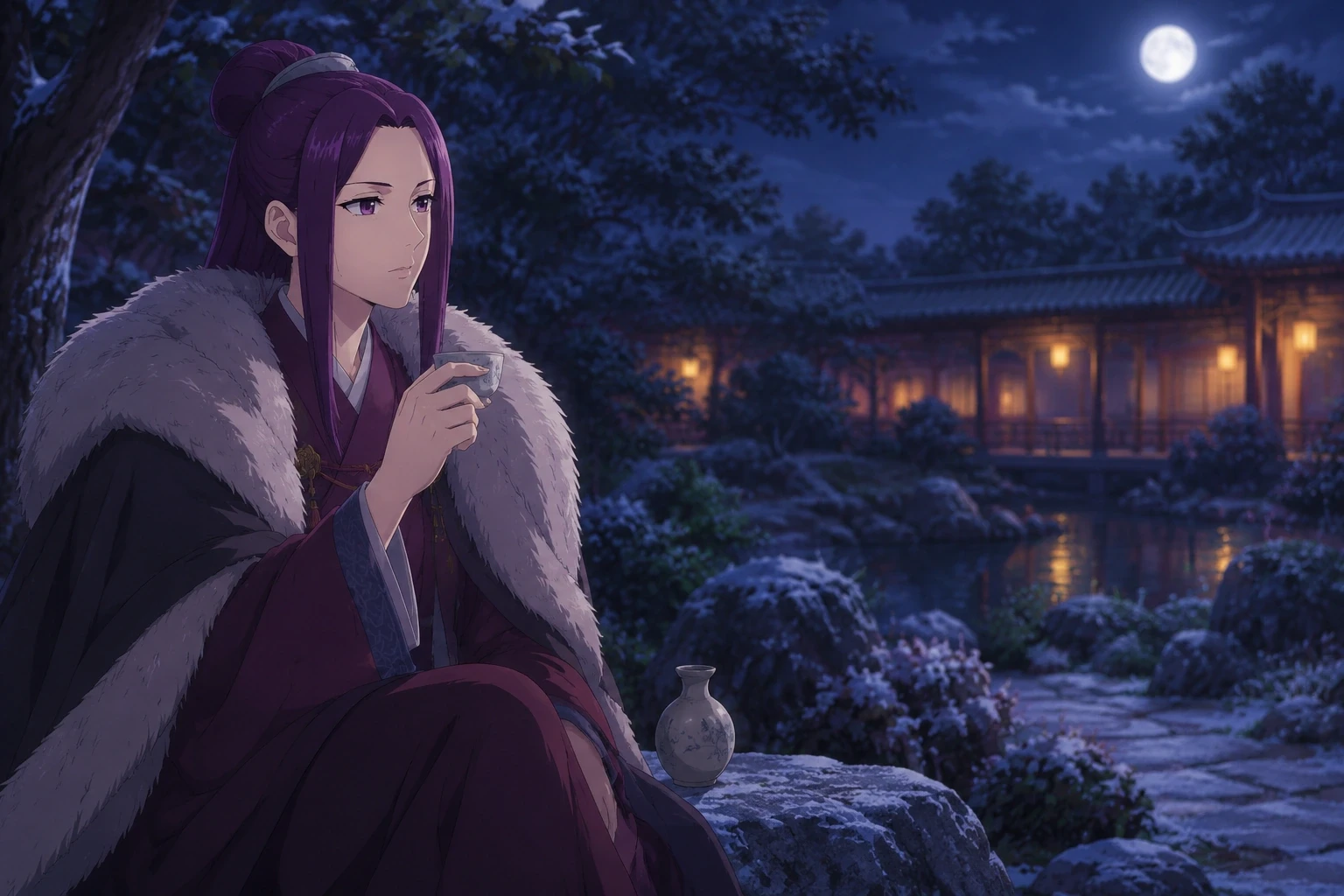
The last part of Volume 5 leaves Jinshi and Maomao and moves into Ah-Duo's thoughts. She is drinking alone after settling Lishu for the night. Her reflections move through failed promises, childbirth, the exchanged infants, and possible partners for her surviving son.
The placement matters. The book closes its marriage discussion inside the history of Jinshi's parents, encouraging us to consider what his future might mean to them.
The Promise to Marry Only Ah-Duo
Ah-Duo remembers the Emperor saying that he would not marry another woman. She recognizes how difficult that promise was for someone in his position. After she could no longer bear children, senior officials pressed him over the imperial marriage and succession problem.
Her memories also connect the growth of his household to young Jinshi's request for a younger brother. The Emperor's affection for the child becomes entangled with the breaking of a promise to the child's mother. Personal wishes keep producing consequences inside the dynasty.
This history makes the next generation's marriage emotionally charged. The Emperor has already learned that a ruler's affection cannot, by itself, protect a relationship from the demands placed on the imperial family. Readers can see those demands gathering around Jinshi as well.
The Promise to Make Her the Mother of the Nation
Ah-Duo then remembers a second childhood promise: she had asked for a future as the mother of the nation, and he had agreed. She wonders whether he still remembers it, even though Gyokuyou now occupies the position of empress.
That combination invites the succession reading. Gyokuyou now holds the position once associated with that promise, but the chapter has just reminded us that Ah-Duo's biological son is alive and belongs to the imperial family. A future in which Jinshi becomes emperor offers another way to understand her old wish: a mother's position through her son.
From this perspective, encouraging Jinshi to choose a wife could help prepare the household of a future ruler. His father's interest in marriage would then carry both a dynastic purpose and the possibility of honoring a promise made to Ah-Duo.
This is an interpretation of the clues the epilogue puts together. Ah-Duo's question about whether the Emperor remembers is still a question. The passage does not announce a completed plan to crown Jinshi, and choosing a wife would not automatically settle the succession. It also does not establish that Ah-Duo intends to force that future on him.
Her final decision is to watch which flower he chooses. That leaves space for Jinshi's own action within a future his parents cannot discuss in ordinary family terms.
The earlier promise also raises a question about Ah-Duo herself. Why Ah-Duo should have been empress follows the unfulfilled expectation through her lost freedom and her response to Jinshi’s choices. Contains later novel spoilers through Volume 15.
Why Maomao Is One of the Possible Flowers
Maomao initially treats the selection as somebody else's problem. She can identify suitable women and understand the political reasoning while imagining herself as an apothecary who will simply continue her work.
The novel steadily undermines that distance. In Chapter 16, Rikuson tells her that the La name carries considerable weight and that she should understand her own value. In the final chapter, Jinshi explicitly tells her that she is among the candidates.
Her connection to the La clan means that choosing her would have political meaning, too. Maomao may define herself through medicine and the pleasure district where she grew up, but other people can see a powerful family relationship. Lakan's likely opposition makes the situation more complicated.
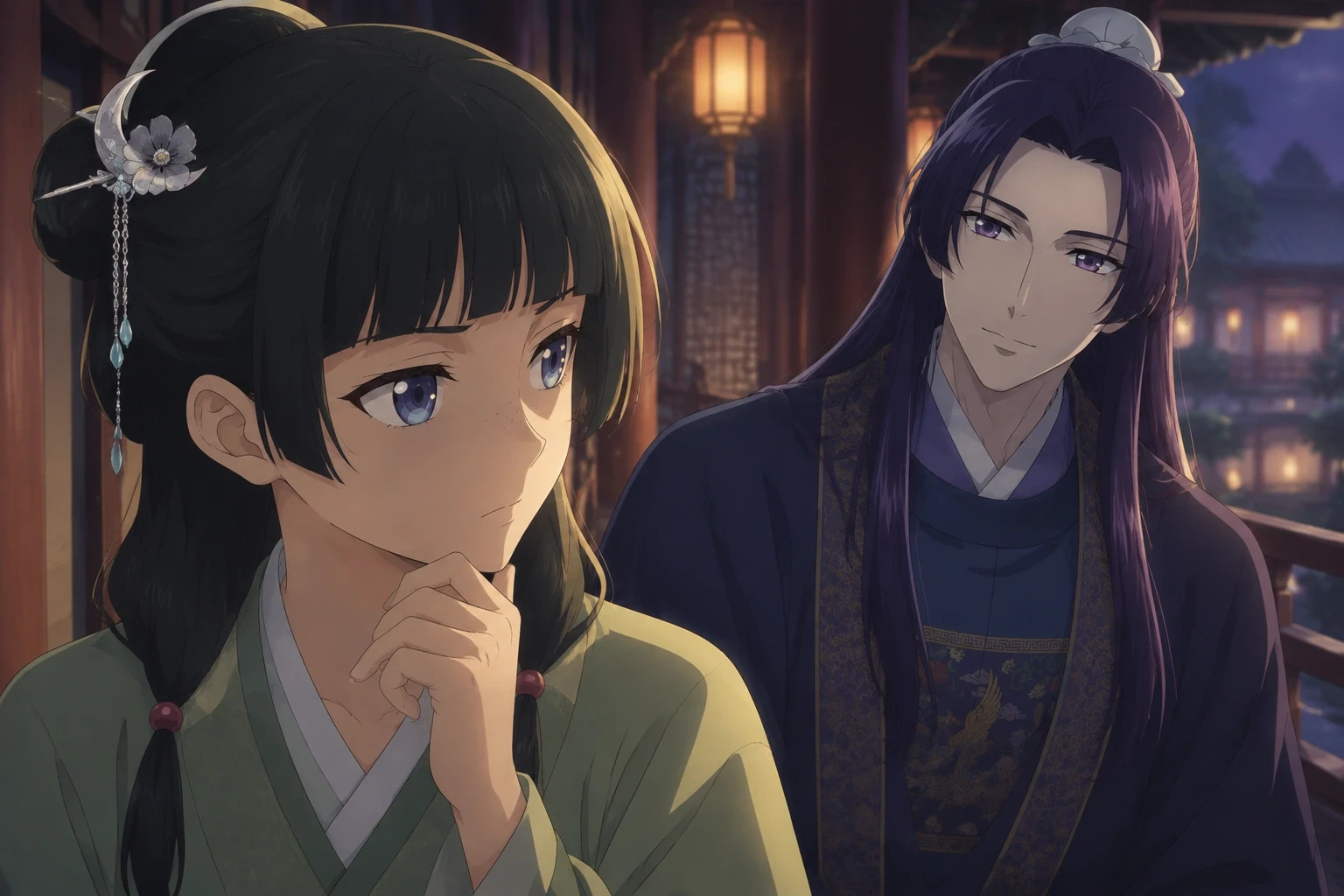
The moon-and-poppy hairpin adds a personal sign: Jinshi reveals that he had it made for her. The ornament connects her to his attention before she has fully acknowledged the significance others see in it. There is no need to invent a flower-species code that identifies every prospective bride; the conversation already explains the marriage question.
The Emperor's instruction therefore gives Jinshi an opening to express a preference that includes Maomao. It does not prove that the Emperor has secretly chosen her for him. Nor does Jinshi's interest establish her agreement: the epilogue includes coercive behavior and her attempts to escape the situation. Her wishes remain essential to understanding Jinshi and Maomao's relationship.
Volume 8 Shows Why Marriage and Succession Stay Connected
The following comparison contains Volume 8, Chapter 20 spoilers. At a private meeting with the Emperor, Gyokuyou, and Maomao, Jinshi explains the danger of the future others are building around him.
He wants the Emperor to live another twenty years so that Gyokuyou's son can reach an age at which he can safely inherit. Jinshi also produces an exceptionally valuable pearl sent with a marriage portrait. The gift shows how a prospective in-law can approach him with ambitions that extend well beyond a wedding.
Jinshi asks to receive a bestowed name and leave the imperial family. The Emperor refuses under the circumstances: his acknowledged sons are still infants, and Jinshi remains important to the succession. Their disagreement exposes the limit of the freedom implied by being allowed to choose a partner.
Jinshi's subsequent act of branding himself with Gyokuyou's crest is an extreme attempt to undermine his position as a rival to her son. He also connects his altered circumstances to the need for a wife he can completely trust. Marriage, loyalty, and his refusal of the throne are now openly part of the same argument.
The Emperor asks whether this is the path Jinshi has chosen and whether he will regret it, then shows sadness. That reaction gives the earlier flower question greater emotional weight. It supports the reading that he is invested in Jinshi's future while leaving the exact mixture of paternal hopes and political expectations open.
For a closer examination, read the four-person meeting in Volume 8 and why Jinshi resists becoming Gyokuyou's enemy.
Who Says the Flower Line in the Anime and the Novel?
The distinction matters if the question comes from the adaptation. In the S3EP1 sequence examined in our episode-to-novel comparison, the Emperor speaks to Ah-Duo about it being time for Moon to choose a flower.
Volume 5 presents the relevant information in a different form. Jinshi reports the Emperor's instruction to choose carefully, and the narration explains the consort selection. Later, Ah-Duo's solitary reflections bring together the old promises and the image of the flower her son will choose.
The adaptation turns that private reflection into spoken anticipation. It is useful to connect the two versions, but the anime's conversation should not be presented as a verbatim exchange from the novel. The novel's evidence for the Emperor's motives comes from Jinshi's report, the political context, and Ah-Duo's memories.
How Much Freedom Is Jinshi Being Offered?
The Emperor leaves room for Jinshi to express a preference. The surrounding choices, however, have already been shaped by imperial rank, family influence, and expectations about the future. Even a deeply personal attachment can become the foundation of a political alliance.
That tension gives the flower image its force. The father can be interested in his son's happiness while still expecting him to choose within a royal future. Jinshi's later resistance concerns the shape of that future as much as the identity of a wife.
Maomao's position adds a further question: what life would the chosen woman want? Being valued by a prince and being willing to share his circumstances are separate matters. For the way Ah-Duo's concern develops much later, Ah-Duo's wish for Jinshi's happiness discusses additional spoilers through Volume 13.
FAQ: Jinshi, His Father, and the Flower Choice
Does choosing a flower mean choosing a wife?
Yes. Volume 5's final chapter directly connects the Emperor's instruction to selecting a consort. Ah-Duo's closing flower image follows her thoughts about the women her son might choose.
Is the Emperor trying to make Jinshi the next emperor?
The old promise to Ah-Duo and Jinshi's dynastic importance support that interpretation as a possible long-term hope. The flower passage does not announce a settled succession plan. Volume 8 shows that Jinshi's wishes and the Emperor's expectations can conflict.
Has the Emperor already chosen Maomao?
The Volume 5 passage does not establish that. Jinshi identifies Maomao as a candidate and shows his own interest in her. The Emperor's reported instruction leaves the selection to Jinshi.
Does Ah-Duo's promise mean she wants Jinshi forced onto the throne?
No such decision is stated in the epilogue. She remembers the promise, considers possible partners, and chooses to watch what her son does. Her reflections leave the outcome open.
Related analysis: For the consort appointments that precede this conversation, follow Jinshi's growing understanding of the Emperor's burden in Volume 15.